Published: 14 March 2025
Last updated: 24 March 2025
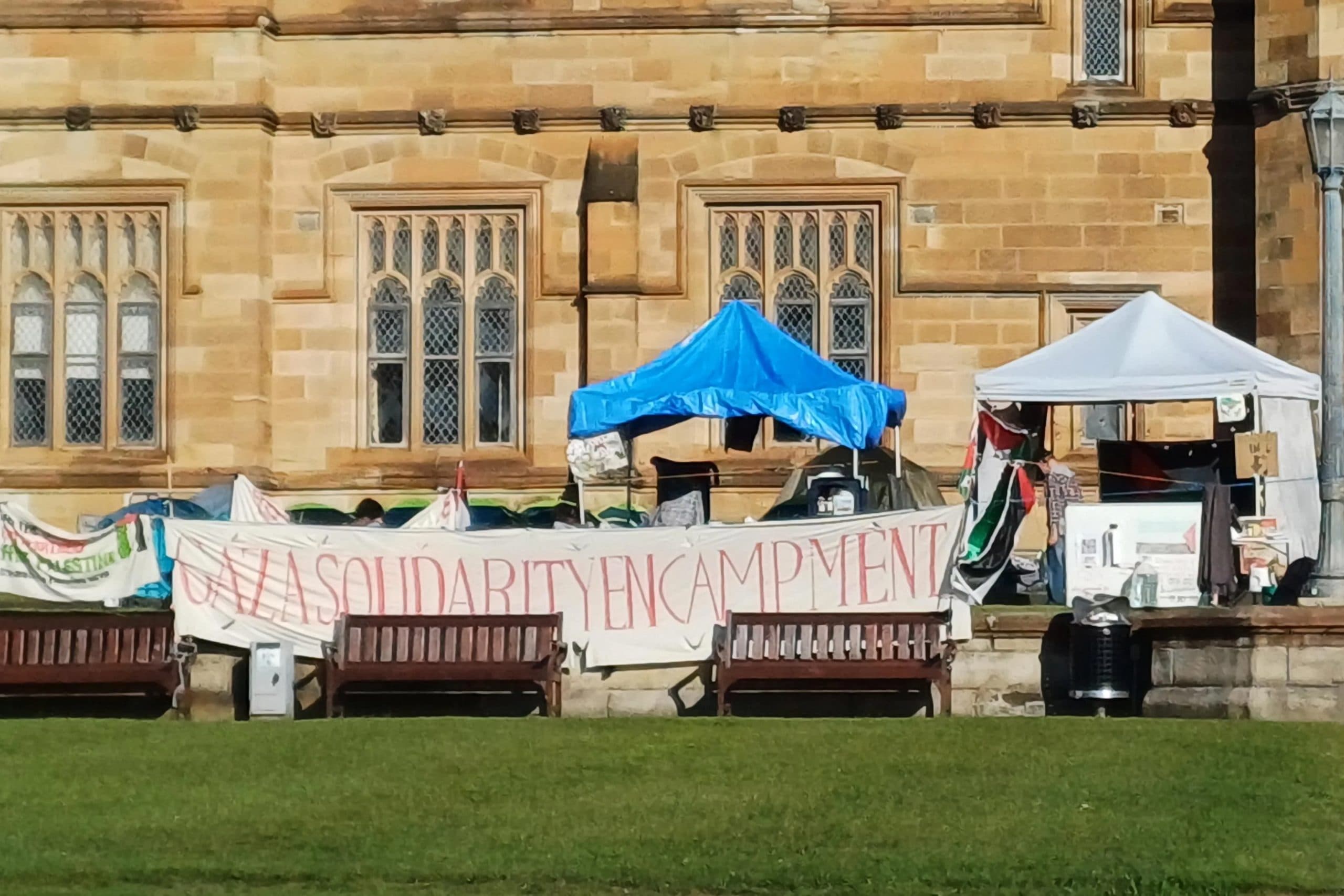
Since Hamas’s attack on Israel on October 7 2023, and Israel’s war in Gaza, there has been a sharp increase in antisemitic incidents, some of these occurring at Australian universities. The war’s ongoing reverberations have led to renewed controversy over the question of when criticism of Israel and support for Palestinian rights becomes antisemitic.
On February 27 2025, Universities Australia issued a statement on racism, acknowledging that racism existed on campuses in all forms, "including antisemitism, Islamophobia and the experience of First Nations people".
It followed a parliamentary report on rising antisemitism on university campuses tabled by Labor MP Josh Burns, which made a number of recommendations to ensure the safety of Jewish students.
The statement was endorsed by 39 members of Universities Australia and included a "clear definition of antisemitism".
Antisemitism, it says, is:
discrimination, prejudice, harassment, exclusion, vilification, intimidation or violence that impedes Jews’ ability to participate as equals in educational, political, religious, cultural, economic or social life. It can manifest in a range of ways including negative, dehumanising, or stereotypical narratives about Jews. Further, it includes hate speech, epithets, caricatures, stereotypes, tropes, Holocaust denial, and antisemitic symbols. Targeting Jews based on their Jewish identities alone is discriminatory and antisemitic.
The Universities Australia definition was developed by a working group consisting of members of the GO8 universities, Australia’s special envoy to combat antisemitism Jillian Segal, and associate professor David Slucki, director of the Australian Centre for Jewish Civilisation at Monash University.
Competing definitions
The Universities Australia definition adds to a list that includes the definition developed by the International Holocaust Remembrance Alliance and what has been seen as a competing Jerusalem Declaration on Antisemitism, which was created in response.
The International Holocaust Remembrance Alliance definition has been officially adopted by over 40 countries, including Australia. Developed by a group of prominent Holocaust scholars and endorsed by others, it has been the subject of fierce debate since its inception in 2016, here and overseas. The definition contains 11 examples of antisemitism, seven of them at least partially related to the state of Israel.
Most of the examples seem self-evident. Controversy has centred on where the definition moves to conflate antizionism and antisemitism. Some scholars and activists believe it mutes legitimate discussion about Israeli state violence towards Palestinians.
The competing Jerusalem Declaration was subsequently endorsed by around 370 leading scholars of Holocaust history, Jewish studies, Antisemitism studies, and Middle East studies. It defines antisemitism as "prejudice, discrimination, hostility or violence against Jews as Jews". Its authors claim the declaration aims "to protect a space for an open debate about the vexed question of the future of Israel/Palestine".
By removing the state issue from the question of antisemitism, the Jerusalem Declaration is seen to give more space to criticism of Israel and Zionism.
Recently, several universities worldwide, including the University of Melbourne and Harvard, adopted the International Holocaust Remembrance Alliance definition. In each case, the official adoption triggered heated discussions about possible infringements on academic freedom.
The Universities Australia definition is closer to the International Holocaust Remembrance Alliance version than to the Jerusalem Declaration. It has been met with opposition from academics, human rights organisations and left-wing Jewish groups.
These opponents feel, firstly, that the definition singles out antisemitism and marginalises other prejudices, and, secondly, that it potentially stifles legitimate criticism of Israel and academic discussion about Palestinian rights.
But the Universities Australia definition has also been criticised for not going far enough. The Executive Council of Australian Jewry and the Australian Academic Alliance Against Antisemitism would prefer if Universities Australia adopted the International Holocaust Remembrance Alliance definition, with its stronger protection of Israel.
Different understandings
At the core of this ongoing debate are genuinely different understandings of what constitutes antisemitism.
The relationship between antizionism and antisemitism has many grey areas. There are many examples from history of campaigns against Zionism that were used to disguise antisemitic sentiments.
During the Cold War, communist countries initiated an antizionist campaign. Officially, they differentiated it from the murderous antisemitism of Nazi Germany. But in the communist mindset, every Jew was a potential Zionist, suspected of disloyalty and subject to persecution.
A majority of Australian Jews identify with Zionism as an integral part of who they are as Jews. Criticism of Israel utilising longstanding anti-Jewish tropes and employing antisemitic rhetoric that simply substitutes "Zionist" for "Jew" has greatly heightened concerns in the Jewish community.
The Universities Australia declaration stresses:
All peoples, including Jews, have the right to self-determination […] Substituting the word "Zionist" for "Jew" does not eliminate the possibility of speech being antisemitic.
The declaration leaves open the question of the future settlement of the Israeli-Palestinian conflict and the subsequent political and territorial arrangement in the region.
Academic freedom
There are, however, legitimate questions here about academic freedom. The Executive Committee of the Australian Historical Association has expressed concern that the definition "places new limits on scholarly scrutiny and criticism of Israel and Zionism by Australian academics". This concern needs to be taken seriously.
The Universities Australia definition specifies conditions under which criticism of Israel could be considered antisemitic – for example, "when it is grounded in harmful tropes, stereotypes or assumptions and when it calls for the elimination of the State of Israel or all Jews or when it holds Jewish individuals or communities responsible for Israel’s actions".
This means that a scholarly, responsible and evidence-based discussion about the state of Israel and its policies is protected by academic freedoms and is not a form of antisemitism.
But more clarity is needed around whether those who demand a different kind of state might be in contravention. What would be the status of arguments for Israel changing its current system in favour of two states, a binational state, a unitary democratic state, a federal state in whatever form?
Moreover, the definition indirectly emphasises that, when evaluating antisemitic allegations, it is important to consider the context in which the contested remarks or actions are made. This is another safeguard to protect academic freedom, but it remains to be seen how this will play out on university campuses.
That this is a challenging discussion is confirmed by the difficult situation at top American universities, including Harvard. The ball is now in our universities’ court. They need to ensure all our students, whatever their backgrounds, feel comfortable to fully experience campus life.
As educators, we should be alert to who is in our classrooms and create space for different perspectives and different knowledges. Students should feel comfortable participating in classes without fear of prejudice.
Universities also have the obligation to give space to all those who want to pursue genuine, evidence-based research on all aspects of current world affairs, and who want to express their considered opinions publicly and with integrity.
Definitions are important, but they are only one part of this vexed issue; they cannot be the sole arbiter.
Jan Lanicek, Associate Professor in Modern European History and Jewish History, UNSW Sydney and Ruth Balint, Professor of History, UNSW Sydney
This article is republished from The Conversation under a Creative Commons license. Read the original article.