Published: 7 December 2021
Last updated: 4 March 2024
GABRIELLE BRINER: Anti-vaxxers are allowed to protest but the Holocaust imagery some of them have embraced is not theirs to use
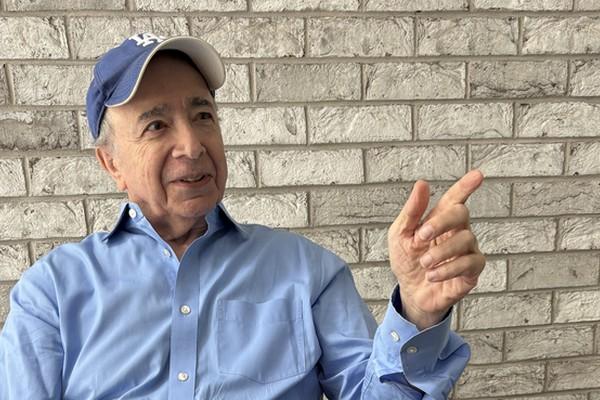
MY MATERNAL GRANDFATHER, my Zayde, didn't have a childhood. While most Australian kids play sport, go to school, pursue passions, and start discovering their independence, my grandfather spent his teenage years fighting for his life.
When the Nazis invaded Poland in 1939, my Zayde's world changed forever. In the coming years, he was to witness horrors that most of us, myself included, cannot even comprehend. The Nazis forced his family and others out of their home, and into a cramped room in the Krakow ghetto, which they shared with four other families.
On the day the Nazis liquidated the Krakow ghetto, his mother hid him, and told him to wait for his father to collect him. He never saw her, or his baby siblings, ever again - they were gassed to death in the chambers of the Majdanek concentration camp.
He endured years of hard labour in the infamous concentration camps of Plaszow and Buchenwald, burying half-dead Jewish bodies after they were shot into mass graves, and paving roads using Jewish gravestones.
This was all before his 18th birthday, an age at which most Australians have completed 12 years of schooling and are enrolling in further education or planning a gap year.
The Nazi regime was fuelled by racism, anti-Semitism, and hate. Six million Jews were killed in the Holocaust.
Yet all over the world, anti-vaxxers are evoking Holocaust imagery to demonstrate the "hardship" and "oppression" they're facing - that is, certain vaccination requirements to uphold public health.
FULL STORY It's hard enough for Jews to preserve the memory of the Holocaust. Anti-vaxxers are making it worse (Canberra Times)