Aa
  • Read, Watch, Listen
  • TJI Series
  • Community Action
  • Events
  • Zedi
Follow us and continue the conversation
  • LinkedIn
  • Instagram
  • FaceBook
  • X
  • YouTube
Test yourself with the TJI Quiz!

Adjust size of text

Aa

Follow us and continue the conversation

  • LinkedIn
  • Instagram
  • FaceBook
  • X
  • YouTube

Your saved articles

You haven't saved any articles

What are you looking for?

Original reporting, insightful analysis and diverse views, delivered straight to your inbox

  • LinkedIn
  • Instagram
  • FaceBook
  • X
  • YouTube
Your support fuels our mission to inform, entertain and inspire.

The Jewish Independent is bound by the Standards of Practice of the Australian Press Council. If you believe the Standards may have been breached, you may approach The Jewish Independent or make a complaint to the Australian Press Council in writing at www.presscouncil.org.au. The Council may also be contacted on 1800 025 712.

  • Our Story
  • Contact us
  • Our Team
  • Support us
  • Guidelines
  • Pitch your idea
  • Republishing us
  • Community Action
  • Our Awards
  • LinkedIn
  • Instagram
  • FaceBook
  • X
  • YouTube
Aboriginal FlagTorres Strait Islanders Flag

The Jewish Independent acknowledges Aboriginal and Torres Strait Islander peoples as the Traditional Owners and Custodians of Country throughout Australia. We pay our respects to Elders past and present, and strive to honour their rich history of storytelling in our work and mission.

© The Jewish Independent 2026All Rights Reserved
Website design and development by Your Creative, MelbourneTerms & ConditionsPrivacy Policy
HomeRead, Watch, ListenLifestyle
Be FruitfulFeatureLifestyle

Facing the pressure to start a Jewish family

In a community so focused on children, Jews struggling with infertility often fight lonely battles.
Ruby Kraner-Tucci
Print this
A series of holding hands against a purple background

Illustration: TJI

Published: 6 June 2024

Last updated: 2 July 2024

This is the first instalment of a six-part series, Be Fruitful: Fertility Journeys in Modern Jewish Lives, which explores the complex and sometimes taboo journey to parenthood in the Jewish community.

Lauren Placks thought it would be easy to start a family. She married at 24 and prepared to have her first child soon after.

“I felt that when I wanted to have a child, it should happen quite easily. We were surprised that when we did start to try, we had no success. I wasn’t ovulating properly.”

A raft of attempted organic remedies followed, from acupuncture to naturopathy, before Placks moved onto medical intervention from a fertility specialist, but all of it failed to kickstart her ovulation. At 26, she started IVF.

“I was very young. I knew little about IVF and none of my friends were even married, let alone trying for a baby themselves. It was an isolated, lonely time.

“There's a lot of new terminology, new concepts from doctors, needles and hormones. It’s quite an overwhelming process. While my family and friends tried and were as supportive as they could be, it was hard for them to fully understand what I was going through.”

Placks successfully conceived through IVF on her second cycle and had her first child. A surprise natural conception around a year later then resulted in a stillbirth at 26 weeks – a “horrible thing to go through” – before she underwent further rounds of IVF, one ending in a miscarriage. Today, Placks is "blessed" with a daughter, now 12, and two sons, 9 and 5.
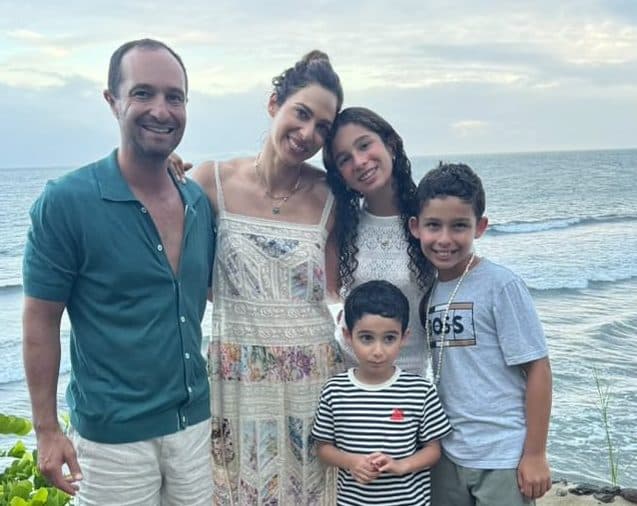
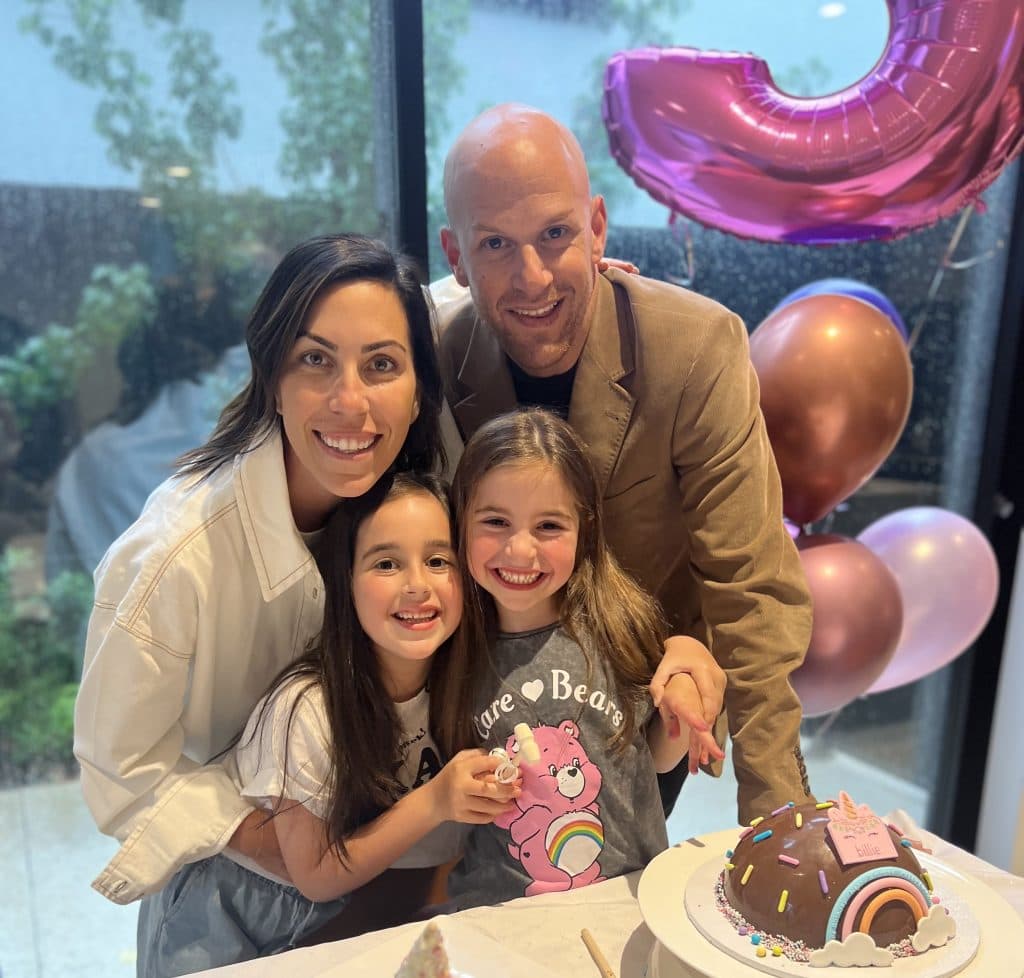
Placks now has a daughter and two sons (Image: supplied).

“I think everyone's journey to becoming a parent is, especially for the first few months, pretty private. But with IVF, you can feel more vulnerable. A mother would do anything to have the family she longs for, and these days, it's good to see more support to help that process.”

‘We’re afraid to talk’

Placks’ story is not unusual, but neither is her isolation.

CEO of the Australian Jewish Fertility Network (AJFN) Justine Saidman says most people engaging with her support organisation have not told their family or friends about their fertility struggles.

"The Jewish community is so family-oriented. Having children is in your face all the time, from Shabbat, where you bless your children, to Pesach, where the obligation is to tell the Exodus story to your children, and Purim, which is about children getting dressed up."

Justine Saidman, CEO of the Australian Jewish Fertility Network

In Australia, one in six couples experience infertility problems, while one in four women under 35 will suffer a miscarriage – a rate that increases significantly to one in two for women over 40.

“The stigma exists, because we're afraid to talk about it,” Saidman told The Jewish Independent.

“The Jewish community is so family-oriented. Having children is in your face all the time, from Shabbat, where you bless your children, to Pesach, where the obligation is to tell the Exodus story to your children, and Purim, which is about children getting dressed up.

“For someone who might have had multiple miscarriages, or who has endometriosis, or a partner with a low sperm count, that is a triggering situation to be in.”

While stigma and the expectation to have children is impactful for all segments of Australia’s very diverse Jewish community – from newlyweds to those single in their 40s and wannabe grandparents – the burden is particularly complex in the Orthodox community, Saidman says.

“In the very Orthodox segments of the community, where having any issues around infertility could compromise your ability to find a partner, there is an extra layer of complexity, and it can be very sensitive, difficult and fraught.”

‘Ultimate emotional roller coaster’

Critical to addressing this stigma is creating safe spaces for all people affected by infertility to talk openly. The AJFN has trained almost 30 companions across Victoria and NSW to offer confidential emotional support to Jews.

Jo Star volunteered immediately upon learning about the program, believing such an offering would have “made a huge difference” to her own fertility experience over two decades ago.

“When you go through this journey, it’s the ultimate emotional roller coaster. I did anything that I thought would increase my chances of falling pregnant."

Jo Star, Peer Support Volunteer

Star, now 54, had difficulty falling pregnant after initially conceiving her first son naturally. She underwent six cycles of IVF over three years, which included two miscarriages, before being “blessed” with twins on her final round.

“When you go through this journey, it’s the ultimate emotional roller coaster. I did anything that I thought would increase my chances of falling pregnant. There was no AJFN at the time, so I spoke to friends and family but there was nobody that actually got what I was going through,” she said.

“You have your days where you just want to cry and scream. It's a constant countdown. You're counting down until egg retrieval, to the growing stage and when the eggs go back in, and to finding out that you're pregnant. If it doesn't work, you're counting down until the day you can start your next cycle.”

Star cannot provide medical advice or false hope to her ‘connections’ – which have so far included a woman in her early 30s struggling to get pregnant, a woman who has suffered two miscarriages and is starting IVF, and a single woman using a sperm donor who is recently pregnant – instead acting as an emotional sounding board.

“It’s just about acknowledging and justifying. I find that it really fills my cup. I feel that I'm making a difference in these people's lives.”

‘Some patients will not succeed’

The financial toll of infertility is also a huge burden.

The costs of IVF are dependent on the model of care chosen across public or private practice. IVF Australia estimates one treatment round costing between $10,000 and $12,000, depending on the state – with around 50% being out of pocket – and an extra $5,000 for each additional cycle.

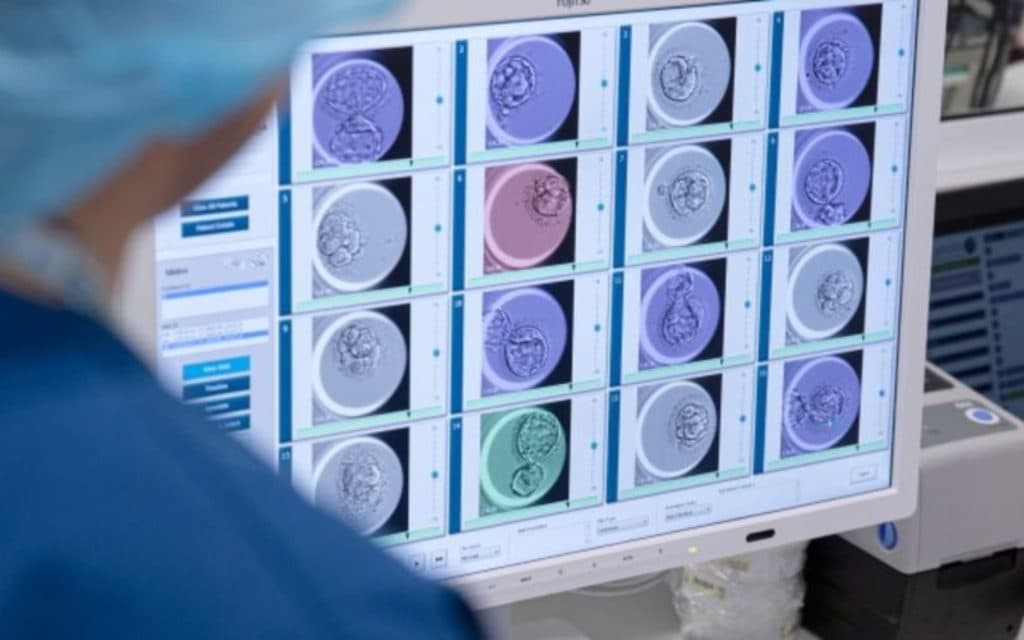
On average, IVF costs upwards of $15,000 to achieve a live birth in Australia (Image: IVF Australia/supplied).

Leading fertility expert Dr Raelia Lew, a gynaecologist and director of Women’s Health Melbourne, says it takes an average of three IVF rounds to achieve a live birth in Australia, costing upwards of $15,000.

“Every couple's prognosis for success is different, as are the barriers they face in requiring IVF. With any average, some patients will conceive faster and others slower than average,” Lew told The Jewish Independent.

“IVF is no woman or couple’s first choice of how to have a family. It carries emotional and physical tolls and is complex. The vast majority of my patients are successful in having a family through [IVF] treatment, however some will not succeed and many who do, require a significant number of treatments.”

Additional fees resulting from fertility specialist consultations, investigations and tests, medications, and in some cases, advanced interventions, are also common, while surrogacy, egg donorship and freezing further increase costs.

‘I took out my superannuation’

The government provides some contribution in the form of Medicare rebates and organisations like AJFN, Tefilat Chana and Bonei Olam offer financial grants, but it’s not always enough. When Lauren Siegel started IVF a decade ago, aged 27, she was not prepared for the economic toll that laid ahead.

“We went into the IVF journey very naively. IVF does not take just one cycle, it’s likely to take three or four for a live pregnancy,” Siegel explained.

“I took out my superannuation to pay for subsequent IVF cycles, and that’s before I was even pregnant – then there were the costs of going through the pregnancy, with all the tests and scans, and actually having a baby and buying cots and prams and clothes.”

IVF was the only option for Siegel to have children: the painful discovery of a previously unknown familial heart condition that tragically killed her brother at 25 meant Siegel required genetic testing on her embryos. She said at the time, the testing was only available overseas and cost an additional $10,000 for each embryo shipment. Today, local and cheaper options exist.

“The financial burden on us was huge because 10 years ago when we started IVF, the technology that was available was very different. The cost was very different. Having a family was really important to us, we were willing to do whatever it took.”

Siegel now has two daughters (Image: supplied).

Like the other women interviewed for this story, Siegel was clear that speaking to people who had similarly walked a difficult fertility journey would have helped enormously. “But no one talks about it, and that’s the problem,” she said.

Saidman says the responsibility to shift the stigma and open the conversation lies with all members of the Jewish community.

“We all have an obligation, not just people who are experiencing any fertility challenges, to never make assumptions. You really, genuinely don't know what is going on in someone else's life,” she concluded.

“If someone does share their experience of infertility, be cognizant of the trauma that is associated with that sharing, be mindful and sensitive. Don’t be afraid to ask how you can help or be scared that you might say the wrong thing.

“We all have to make sure everyone feels like they belong and are accepted regardless of the fertility journey that they have had to take.”

You might also like
  • Confronting the taboo of a child-free life
    Ruby Kraner-Tucci
  • Not my blood and bones, but my heart and soul
    Jeremie Bracka
  • Breaking the silence of early pregnancy loss
    Isabelle Oderberg
logomark.67a07ee3
We believe in the free flow of information

Republish our articles for free, online or in print, by using our Creative Commons licence

You might also like

    single – lead image
    FeatureLifestyle

    On my own (terms)

    Jarod Rhine-Davis
    original-6ACA4B6A-4208-4277-A4EE-E687C3C87523
    FeatureLifestyle

    The right to an ordinary Jewish life

    Jarod Rhine-Davis
    welcome mat
    ReflectionAustralia

    In celebration of Jews by choice

    Benjamin Elton 2

About the author

Ruby Kraner-Tucci

Ruby Kraner-Tucci

Assistant Editor

Ruby Kraner-Tucci is a journalist and TJI's assistant editor. Her writing has appeared in The Age, Australian Jewish News, Time Out and Broadsheet, among others. Ruby was awarded Multicultural NSW’s Best Report in Multicultural Media 2025 and has been named a Top 36 Under 36 Jewish Changemaker by B'nai B'rith.

More from the author

FeatureAustralia

‘True essence of being an ally’: The non-Jews choosing to work in the Jewish community

InterviewAustralia

Elliot Szafran: food that feels like a hug from Zaide

NewsAustralia

Antisemitic incidents down from peak but still triple pre-Gaza war

FeatureArts & Culture

Bringing Terezin music to life 

Comments

No comments on this article yet. Be the first to add your thoughts.