Published: 20 August 2026
Last updated: 21 August 2026
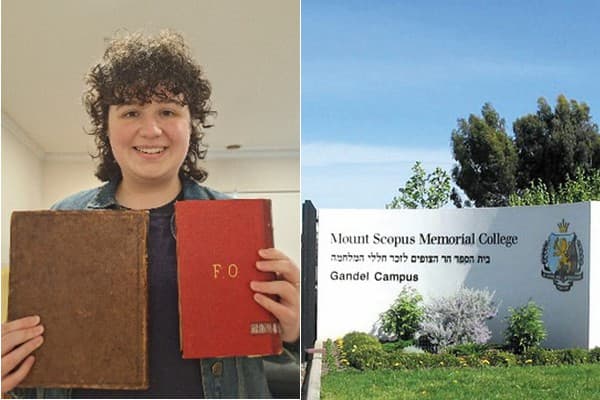
As a volunteer at the Lamm Jewish Library of Australia, 19-year-old Kayla Feldman spends a lot of time around Jewish books. But there are two special books in her personal collection.
The first is a copy of the Mishnah (Seder Nashim) printed in 1766 by Hertz Levi Rofe and Kashman, prominent Hebrew printers in Amsterdam. The second is a German-language Passover machzor printed in 1880 by the Louis Gerschel publishing house in Berlin.
The volumes are not particularly rare, as far as old texts go. But they have a fascinating history. Their journey to Melbourne began some eight decades ago.
During the Holocaust, the Nazis looted millions of cultural objects, including books and Judaica. After the war, the Allies returned what they could to previous owners who could be found. But many previous owners had been killed or could not be located.
A group called Jewish Cultural Reconstruction (JCR) was formed to find new homes for the “heirless” books and Judaica.
Despite the enormity of the project, JCR was a tiny organisation, just a handful of academics, including historian Salo Baron and philosopher Hannah Arendt, and some volunteers and contractors.
From 1949-52, JCR sorted and shipped more than 400,000 books around the world, mostly to Jewish community organisations, but also to universities.
1328 books bound for Australia
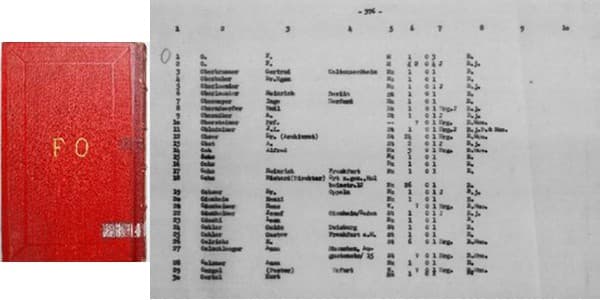
In January 1951, at a facility in Wiesbaden, Germany, JCR packed 10 crates, holding 1,328 books, bound for Australia. The books were categorised as “Rabbinics in Hebrew” and “Judaica in German”. The titles of the books were not recorded, but any markings inside the books, such as names and initials of former owners, were logged in a giant list kept by JCR.