Aa
  • Read, Watch, Listen
  • TJI Series
  • Community Action
  • Events
  • Zedi
Follow us and continue the conversation
  • LinkedIn
  • Instagram
  • FaceBook
  • X
  • YouTube
Test yourself with the TJI Quiz!

Adjust size of text

Aa

Follow us and continue the conversation

  • LinkedIn
  • Instagram
  • FaceBook
  • X
  • YouTube

Your saved articles

You haven't saved any articles

What are you looking for?

Original reporting, insightful analysis and diverse views, delivered straight to your inbox

  • LinkedIn
  • Instagram
  • FaceBook
  • X
  • YouTube
Your support fuels our mission to inform, entertain and inspire.

The Jewish Independent is bound by the Standards of Practice of the Australian Press Council. If you believe the Standards may have been breached, you may approach The Jewish Independent or make a complaint to the Australian Press Council in writing at www.presscouncil.org.au. The Council may also be contacted on 1800 025 712.

  • Our Story
  • Contact us
  • Our Team
  • Support us
  • Guidelines
  • Pitch your idea
  • Republishing us
  • Community Action
  • Our Awards
  • LinkedIn
  • Instagram
  • FaceBook
  • X
  • YouTube
Aboriginal FlagTorres Strait Islanders Flag

The Jewish Independent acknowledges Aboriginal and Torres Strait Islander peoples as the Traditional Owners and Custodians of Country throughout Australia. We pay our respects to Elders past and present, and strive to honour their rich history of storytelling in our work and mission.

© The Jewish Independent 2026All Rights Reserved
Website design and development by Your Creative, MelbourneTerms & ConditionsPrivacy Policy
HomeRead, Watch, ListenAustralia
Israel Hamas WarInterviewAustralia

Kylie Moore-Gilbert on diplomacy, trauma and being held hostage

Few Australians can relate to Israel’s hostage situation and the crisis over Iran as can political scientist Kylie Moore-Gilbert, who spent 804 days in Iranian prisons.
Vic Alhadeff
Print this
Kylie Moore-Gilbert

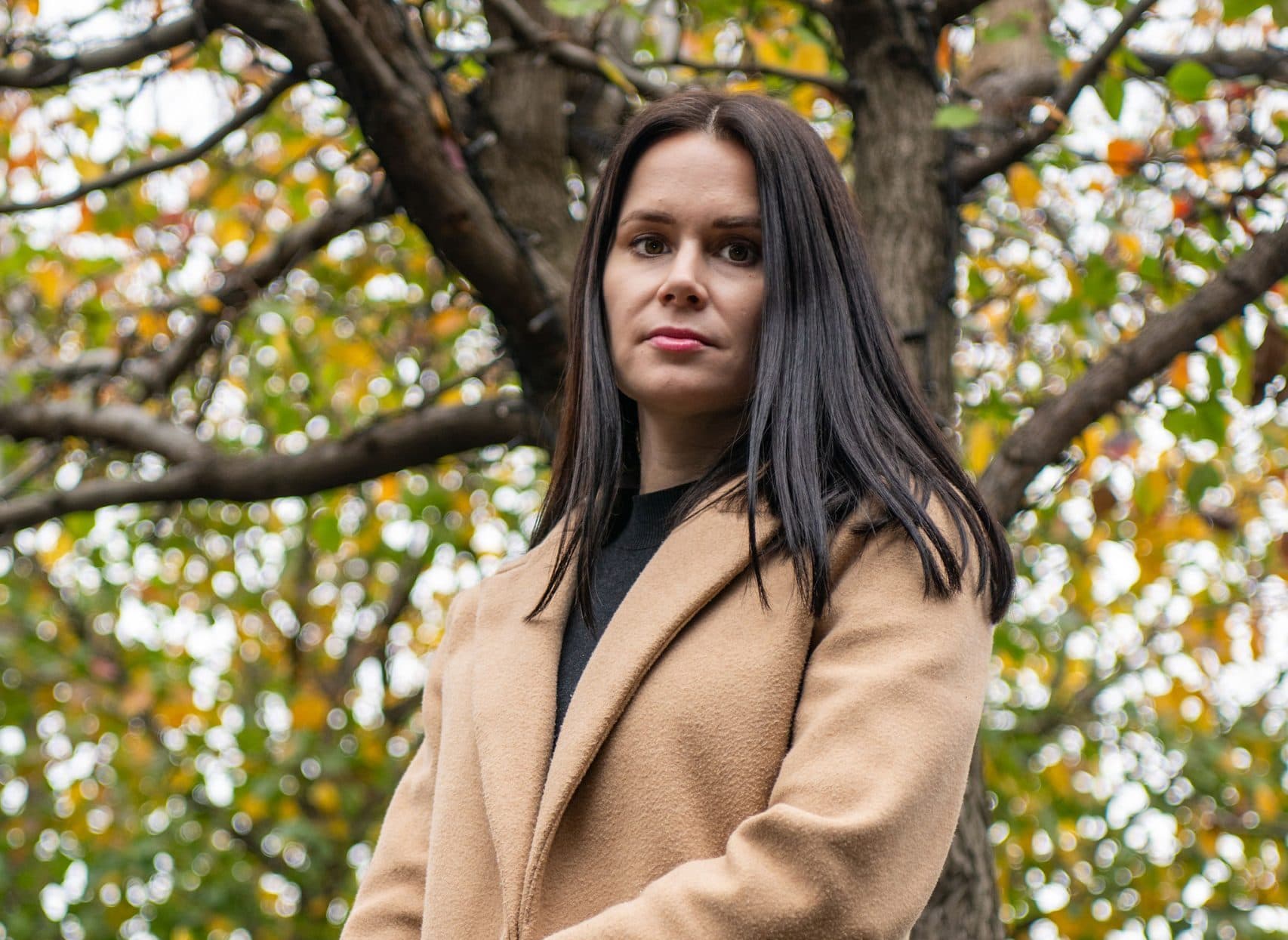
Australian political scientist Kylie Moore-Gilbert (Image: James McPherson)

Published: 6 May 2024

Last updated: 6 May 2024

October 7 has been the most traumatic event Kylie Moore-Gilbert has experienced since her imprisonment in Iran. “It’s had a huge psychological impact on me on a personal level,” she tells The Jewish Independent.

“I can’t watch the clips of people being abducted from their homes and the horrific things which happened at the music festival. Even now.

“I left Twitter as October 7 was happening and I couldn’t look at it for the next five months. I’m horrified by all the hate and double standards of those who profess to care about human rights and women’s rights and racism, but have decided that Jews don’t count, to quote David Baddiel.

“It also upset me as a mother, as I’d just had a baby. I needed to remove myself from it all in order to safeguard my mental health.”

The scars are still raw for Moore-Gilbert, an Australian political scientist who studied at Cambridge and spent a year in Israel as part of her course, before continuing to a PhD at Melbourne University. She was married to a Russian Israeli when she flew to Tehran in 2018 to attend a conference.

A planned two-and-a-half-week academic visit turned into a nightmarish 804 days in Iranian prisons, 12 months of which were spent in solitary confinement. Sentenced to 10 years on a trumped-up charge of espionage, she was abused and beaten, and staged seven hunger strikes.

"You’re in such pain that your brain shuts down. You shut out all thoughts of the past and the future... You go numb as a survival mechanism."

Kylie Moore-Gilbert

Eventually, with no evidence having been produced against her and after several fruitless attempts by the Islamic Revolutionary Guard Corps (IRGC) to recruit her as a spy against the West, she was released in November 2020 in a prisoner exchange for three Iranian terrorists who had been imprisoned in Thailand.
“I saw humanity at its worst,” she says candidly. Placed in solitary confinement, she describes the first cell in which she was incarcerated in Tehran’s Evin Prison as “a two-and-a-half-metre-square box with no window.

"It was psychological torture. My pain related largely to the sensory deprivation I was experiencing and to the prolonged deprivation of human contact. You need both to be mentally and emotionally stable.

“I had absolutely nothing to occupy my mind. I’d pace a couple of steps, I’d huddle on the floor, I’d do the yoga poses that I could remember. I slowed down mentally. I subconsciously slowed the pace of my thinking, turning off the parts of my mind that weren’t necessary for daily survival. I focused on the mundane prison routine. I stayed in the present.

“You’re in such pain that your brain shuts down. You shut out all thoughts of the past and the future. The past evokes regrets, the future is about your fear for what’s going to happen, your fear at what they’re going to do to you. You go numb as a survival mechanism.

“It’s still very vivid for me, years later. When I close my eyes, I often imagine myself back there. I visualise everything in my cell. The graffiti on the wall, the patterns on the carpet. I know where my red lines are in terms of keeping myself psychologically safe and healthy. I know it’s important to speak up, but at the same time I’m still recovering.

“I don’t have PTSD but I’m still very angry at what happened, which is why I’ve become involved in hostage diplomacy and activism against the Iranian regime.”

Kylie Moore-Gilbert spent 804 days in Iranian prisons (Image: James McPherson).

Moore-Gilbert has set up the Australian Wrongful and Arbitrary Detention Alliance (AWADA), with the objectives of supporting the families of Australians and New Zealanders who have been wrongly detained and pressuring the government to strengthen its policies on the issue.

She also contributed to a report that was submitted to the US-based Hostage Aid Worldwide organisation regarding the Israeli hostages. “I’m horrified that more hasn’t been done to bring them home,” she reflected.

Moore-Gilbert says she “knows how the IRGC think": "I’ve spent years talking to them and I know their ideology and the way they see the world. Once you see the darkest side of human nature, you lose all naïveté. But surprisingly, you also find decent people in the darkest of places and I did befriend several of my prison guards.”

She admits to a quiet confidence for the future of Iran, citing a recent survey which showed that 80 per cent of Iranian society is opposed to the Iranian regime, “meaning its base of support has shrunk since the 1979 Islamic revolution. But Iranian activists need the West to stop making deals, funding and trading with the Islamic Republic, to stop enabling it to sponsor terror at home and abroad.”

She believes Iran’s recent mass missile and drone attack on Israel “was a strategic blunder. Until now, it has attacked Israel through its proxies, without significant blowback against the regime; the attack has completely exposed it to the world as the terrorist state that it is.”

Moore-Gilbert’s memoir, The Uncaged Sky: My 804 Days in an Iranian Prison, was shortlisted for the 2022 Age Book of the Year and the 2023 Victorian Premier's Prize for Non-Fiction.

She has featured in numerous Australian and international media, commenting on such issues as Magnitsky sanctions (which target specific individuals), hostage diplomacy and Iran's human rights record.

She and her partner, Sami Shah, a comedian and former ABC presenter, have a daughter, Leah, who will turn one this month and whom Moore-Gilbert intends to bring up Jewish, having converted to Judaism 10 years ago.

You might also like
  • Confronting Richard Flanagan and the myth of the Israel lobby
    Mary Garden
  • Facing a new year with the knowledge life can be better
    The Jewish Independent
  • No action to stop Hezbollah ally beaming antisemitic and anti-Israel content into Australia
    Michael Visontay
logomark.67a07ee3
We believe in the free flow of information

Republish our articles for free, online or in print, by using our Creative Commons licence

You might also like

    Woman with land and houses behind her
    NewsAustralia

    Australia to increase sanctions against West Bank settlements

    Deborah Stone
    funding handouts
    NewsAustralia

    Who will get the money from the Cranbourne windfall?

    Gideon Cohen
    Jewish-diversity copy
    FeatureAustralia

    Why you should take part in the Gen26 community survey 

    Adina Bankier Karp & David Graham

About the author

Vic Alhadeff

Vic Alhadeff

Vic Alhadeff OAM is former CEO of the NSW Jewish Board of Deputies and former editor of the Australian Jewish News.

More from the author

InterviewArts & Culture

‘The battle for the future of Jews will be fought in the cultural arena’

InterviewWorld

IHRA head: discrediting definition means ‘turning a blind eye’ to anti-Zionism

OpinionArts & Culture

40 years since Lanzmann’s Shoah, his central question remains: When is it too late?

OpinionAustralia

A shocking moment at Sydney Writers’ Festival

Comments1

  • Avatar of John Merory

    John Merory7 May at 08:05 am

    I have met and spoken to an Iranian PhD student who described being tortured by the Islamic Revolutionary Guards- bashed and placed in for 2 days into a metal box 1 metre cube. He said that many women no longer wear Islamic scarfs out in public despite the threat of arrest and torture (and murder) by the IRGs. I was interested by Kylie’s comment that the massive drone and missile attack by Iran itself was a huge mistake by the Iranian’s regime, as it was revealed beyond doubt to be a terrorist organisation. Hamas is just an offshoot of the regime, together with Hezbollah and other organisations threatening Israel, USA and other “western” democracies.