Aa
  • Read, Watch, Listen
  • TJI Series
  • Community Action
  • Events
  • Zedi
Follow us and continue the conversation
  • LinkedIn
  • Instagram
  • FaceBook
  • X
  • YouTube
Test yourself with the TJI Quiz!

Adjust size of text

Aa

Follow us and continue the conversation

  • LinkedIn
  • Instagram
  • FaceBook
  • X
  • YouTube

Your saved articles

You haven't saved any articles

What are you looking for?

Original reporting, insightful analysis and diverse views, delivered straight to your inbox

  • LinkedIn
  • Instagram
  • FaceBook
  • X
  • YouTube
Your support fuels our mission to inform, entertain and inspire.

The Jewish Independent is bound by the Standards of Practice of the Australian Press Council. If you believe the Standards may have been breached, you may approach The Jewish Independent or make a complaint to the Australian Press Council in writing at www.presscouncil.org.au. The Council may also be contacted on 1800 025 712.

  • Our Story
  • Contact us
  • Our Team
  • Support us
  • Guidelines
  • Pitch your idea
  • Republishing us
  • Community Action
  • Our Awards
  • LinkedIn
  • Instagram
  • FaceBook
  • X
  • YouTube
Aboriginal FlagTorres Strait Islanders Flag

The Jewish Independent acknowledges Aboriginal and Torres Strait Islander peoples as the Traditional Owners and Custodians of Country throughout Australia. We pay our respects to Elders past and present, and strive to honour their rich history of storytelling in our work and mission.

© The Jewish Independent 2026All Rights Reserved
Website design and development by Your Creative, MelbourneTerms & ConditionsPrivacy Policy
HomeRead, Watch, ListenIsrael
OpinionIsrael

Robert Manne on Israel, occupation and a moral catastrophe

Once ready to fight for Israel, I now believe it is entrenching a permanent quasi-apartheid regime that is a political and moral catastrophe for the Jewish people.
Robert Manne
Print this
manne west bank

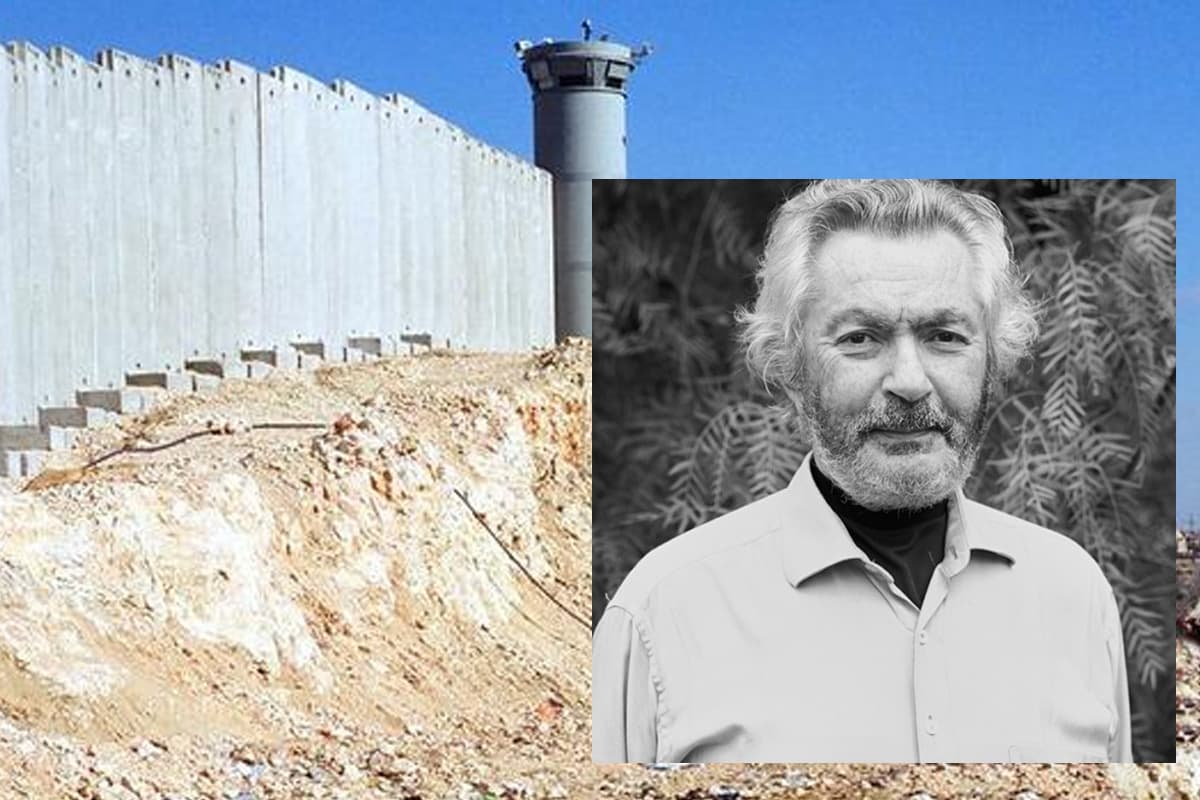
Inset: Robert manne (Black Inc) Background: Security barrier/ wall between the West Bank and Israel (Creative commons)

Published: 11 December 2024

Last updated: 11 December 2024

In 1967 the Holocaust was as close in time as 9/11 is to us today. In June, a war broke out between Israel and the surrounding Arab states. At that time Israel’s military capacity was unknown. Many Jewish students believed that the Arab armies might succeed where the Einsatzgruppen and the Nazi SS had failed.

Hundreds of us attended an evening meeting in a hall on Albert Park Lake. Apart from a small circle of Monash Labour Club rebels that included my childhood friend David Nadel, whose misjudgement angered me but whose courage I privately admired, the atmosphere was one of genuine fear and of heightened patriotism – or perhaps, in George Orwell’s terminology, of transferred nationalism.

I fully shared this emotion, the like of which I have never felt before or since. A thick fog hung over the lake that evening. It somehow seemed appropriate. I rang Uncle Hans to tell him that I had decided to fly to Israel at once to help in whatever way I could. He listened quietly, probably somewhat alarmed.

As the fog lifted next morning, so in small part had my resolve. And before I had made any firm plans, the war was over. I will never know whether I would have volunteered for service if Israel had been under threat.

I feel profoundly ashamed, as a Jew, about the behaviour of the Israeli government

More than half a century later, Israel still controls the territories on the West Bank of the Jordan River and, indirectly, Gaza that it captured in what became known as the Six-Day War. As I write these words, the disastrous consequences are playing out – the vicious murder of 1,200 Israelis by the dominant Palestinian group in Gaza, Hamas, that has been answered by the Israeli Defense Force’s destruction of Gaza with such astonishing cruelty that I feel profoundly ashamed, as a Jew, about the behaviour of the Israeli government and the level of support offered for its actions by the majority of the people of Israel and most Jewish leaders throughout the Diaspora.

Although I considered volunteering in June 1967 if Israel’s existence was threatened, I never believed that Jews in the Diaspora were under some politico-moral obligation to uproot and live in Israel, or even that it would be a good thing if the centre of Jewish civilisation was in Israel and the Diaspora gradually withered away. On my way to Oxford in 1970 I had visited Israel. One evening, on the busy commercial avenue in Tel Aviv, Dizengoff Street, an elderly woman approached me. Where was I from, she asked. I told her. Did I not realise I had a duty to live in Israel? I did not; I was an Australian.

In 1976, I was one of the Jewish academics in Australia offered a free trip to Israel by an enterprise called Academics for Peace in the Middle East. Although of course I knew that its purpose was propaganda, I accepted. My views were unlikely to be influenced by anything that looked like special pleading; if anything, the reverse was true. I went because we would get the kind of access to Israeli politicians and opinion-makers impossible in any other circumstance.

The first Israeli who talked to us was the Defence minister, military hero Moshe Dayan. As he spoke the walls swayed alarmingly, not because of enemy artillery fire but because of my lingering jetlag. Later we were addressed by Yitzhak Rabin, Abba Eban and the Eichmann chief prosecutor, Gideon Hausner. Most of the Israelis we met were Ashkenazi Jews from the cultural circle of the ruling Labour Party. Our bus tour, shared with a group of American academics, did travel to the Golan Heights but not the Arab-populated territories of the West Bank and the Gaza Strip. We visited the Holocaust museum, Yad Vashem. Our working-class bus driver told us we must never let anything like this ever happen again. These are the only words of the visit I still remember.

The most significant event I observed was unplanned by the trip organisers – the ebullient crowds of Mizrahi Jewish Israelis, principally from the Middle East and North Africa, on their way to an election rally for the legendary Zionist Revisionist Menachem Begin, leader of Likud, the right-wing party that had been in permanent Opposition since the creation of Israel.

Almost exactly ten years after the Six-Day War, on June 20, 1977, Begin became the Israeli prime minister. His government began referring to the West Bank by its Biblical names, Judea and Samaria. This was a political disaster. It is one thing to leave territory thought of as the West Bank. It is quite a different matter to leave old Biblical lands you believe God had given to the Jews. The pace of state-supported Jewish settlements on these lands now accelerated.

For decades some right-wing Israelis pretended to the world, and even to themselves perhaps, that they supported a two-state solution, with the Palestinians on the West Bank and in Gaza, and with Jews and a small percentage of Palestinian Arabs in Israel within pre-1967 borders. In recent times, for many Israelis, that pretence has been abandoned. The Jewish settlement of Judea and Samaria has involved a gradual or creeping annexation.

The gradual de facto annexation of both Gaza and then the West Bank will be a political and moral catastrophe

Shortly after the Begin victory, Sam Lipski invited me to speak to young supporters of the Australia/Israel Review, which he edited. The talk I gave was not meant to be published but Sam took a recording and published it. I’m grateful that he did. The critical paragraph read:

I think (and this will be the thing that most offends you), it will become increasingly difficult to deny the charge that has grown over the last few years that Israel resembles South Africa. Israel will increasingly appear to be an isolated and besieged white separatist colony whose political survival rests on the maintenance of armed might against her neighbours while holding down an irredentist and restless unenfranchised native population. I do not believe this is true. But I do believe it is going to be much harder to combat the idea that Israel is like South Africa . . . It appears to me, then, that Begin’s attitude [to the West Bank and Gaza] is obviously disastrous for Israel’s future.

In the next few weeks, I gave talks to Jewish groups along similar lines. At one, an elderly gentleman took me aside and explained, “Now is not the time to be saying such things.” That time has never arrived.

Some problems in politics are appallingly simple. With settlements of Jews on the West Bank now exceeding 700,000 people, no Israeli government could survive the decision to hand the West Bank to the Palestinians. If Israel enfranchises the close to 3 million Palestinians of the West Bank, and allows the more than 2 million Palestinians of Gaza to be united as citizens of Israel with the enfranchised West Bank Palestinians, Israel will no longer be a Jewish state. If it fails to enfranchise the Palestinians, Israel will be required either to administer a permanent quasi-apartheid regime on the West Bank and in Gaza or to commit a great historic crime – the mass expulsion of Palestinians from the West Bank and Gaza.

It now appears that the government of Netanyahu that relies upon the settler extreme right of Smotrich and Ben-Gvir has made its decision: the gradual de facto annexation of both Gaza and then the West Bank. For both Israel and the Diaspora—that is to say for the Jewish people, this will be a political and moral catastrophe.

This is an updated extract from Robert Manne: A Political Memoir, Intellectual Combat in the Cold War and the Culture Wars, La Trobe University Press.

You might also like
  • Fighting for a better Israel 
    Peter Kohn
  • Where are the women in this election campaign?
    Eetta Prince-Gibson
  • Your Israel election cheat sheet
    Deborah Stone
logomark.67a07ee3
We believe in the free flow of information

Republish our articles for free, online or in print, by using our Creative Commons licence

You might also like

    Protest against settler violence in Jerusalem
    Israel

    Record spike in settler violence ahead of election

    Ben Lynfield
    Israel election posters
    Israel Votes 2026ExplainerIsrael

    Stalemate likely in Israel’s election: latest polls

    Shahar Burla 1
    [[:fr:Fez (coiffure)|Fez]] rouge à gland noir, en feutre.
    Israel Votes 2026AnalysisIsrael

    ‘Moroccan monkey’: Israel’s ethnic divide still shapes its elections

    Shahar Burla

About the author

Robert Manne

Robert Manne

Robert Manne AO, FASSA is an Emeritus Professor of Politics and Vice-Chancellor's Fellow at La Trobe University. He is the author or editor of some thirty books and edited Quadrant between 1990 and 1997.