Aa
  • Read, Watch, Listen
  • TJI Series
  • Community Action
  • Events
  • Zedi
Follow us and continue the conversation
  • LinkedIn
  • Instagram
  • FaceBook
  • X
  • YouTube
Test yourself with the TJI Quiz!

Adjust size of text

Aa

Follow us and continue the conversation

  • LinkedIn
  • Instagram
  • FaceBook
  • X
  • YouTube

Your saved articles

You haven't saved any articles

What are you looking for?

Original reporting, insightful analysis and diverse views, delivered straight to your inbox

  • LinkedIn
  • Instagram
  • FaceBook
  • X
  • YouTube
Your support fuels our mission to inform, entertain and inspire.

The Jewish Independent is bound by the Standards of Practice of the Australian Press Council. If you believe the Standards may have been breached, you may approach The Jewish Independent or make a complaint to the Australian Press Council in writing at www.presscouncil.org.au. The Council may also be contacted on 1800 025 712.

  • Our Story
  • Contact us
  • Our Team
  • Support us
  • Guidelines
  • Pitch your idea
  • Republishing us
  • Community Action
  • Our Awards
  • LinkedIn
  • Instagram
  • FaceBook
  • X
  • YouTube
Aboriginal FlagTorres Strait Islanders Flag

The Jewish Independent acknowledges Aboriginal and Torres Strait Islander peoples as the Traditional Owners and Custodians of Country throughout Australia. We pay our respects to Elders past and present, and strive to honour their rich history of storytelling in our work and mission.

© The Jewish Independent 2026All Rights Reserved
Website design and development by Your Creative, MelbourneTerms & ConditionsPrivacy Policy
HomeRead, Watch, ListenIsrael
OpinionIsrael

The political assassination of Ayman Odeh

In a chilling sign of the Israeli government’s far-right psyche, the Arab-Israeli lawmaker is being hung out to dry for showing compassion for both sides.
Jack Omer-Jackaman
Print this
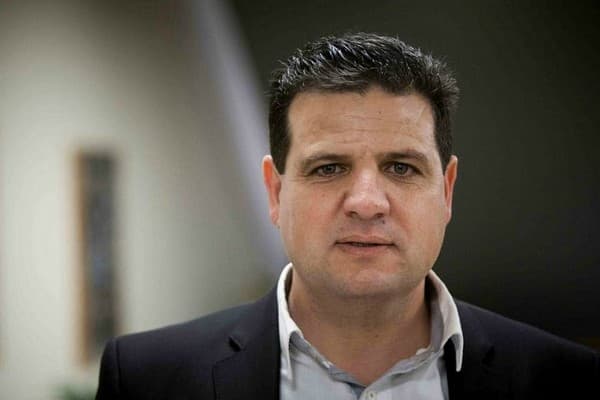
Ayman Odeh

Image: Arab-Israeli lawmaker Ayman Odeh (TOI)

Published: 14 July 2025

Last updated: 14 July 2025

Casual Israel-watchers, understandably preoccupied by the ongoing horrors in Gaza or the fallout from the 12-day war with Iran, may be forgiven for having missed the news that the Knesset House Committee recently voted 14-2 in favour of the impeachment of the Arab-Israeli lawmaker Ayman Odeh.

His political fate will pass tomorrow to the full Knesset, where a vote of 90 of the 120 MKs will be enough to secure his ouster, with the smart money on such a super-majority being achieved.

It is but the latest conflagration in the coalition’s pyromaniacal crusade to destroy Israel’s attenuated democracy.

The justification was a January 2025 tweet from Odeh, following the then-latest agreement between Israel and Hamas, declaring that he was “happy for the release of the hostages and prisoners”.

At the time, Odeh’s words provoked a spate of horror and invective from that rather large portion of the Israeli political spectrum stretching from the far-right to the “liberal” centre. How dare he equate the release of innocent hostages with that of terrorists; to which Odeh replied, not unreasonably, that the releases on the Palestinian side included not only proven and unrepentant killers but also a considerable number of people, including minors, held under administrative detention without trial.

Accusations of treachery

“Ayman Odeh proves once again that he is Hamas’s spokesman in the Knesset,” Yisrael Beiteinu chairman Avigdor Liberman said, in slanderous defiance of all reason, following that up with “whoever compares our hostages to murderous terrorists should go to Gaza with them”.
Fast forward to the recent “hearing”, chaired by Netanyahu fixer and coalition whip Ofir Katz. It saw Likud MK Osher Shekalim telling the committee that if Odeh had his way “he would shoot each one of us in the head. In his subconscious, he wants to eliminate all of us here”.

“In another country,” he told Odeh and the fellow Arab MKs defending him, “they would put you in front of a firing squad.” Chairman Katz lamented that if Odeh “had behaved like this in countries like Syria, they would have hanged him in the city square.” Rather than impeachment, the right to bring a case ought to belong to Odeh – one of defamation and incitement to violence.

There is absolutely nothing in Odeh’s lengthy career, including the tweet in question, to suggest that he is a threat to either Israel’s security or its democracy.

Nevertheless, impeachment it is. Following the 2016 Amendment 44 to Israel’s Basic Law: The Knesset, parliament may impeach a member guilty of “incitement to racism” or “support for an armed struggle by an enemy state, or of a terrorist organization, against the State of Israel”. It was precisely the inappropriateness of the Knesset being empowered to arbitrate, and the likelihood that only certain types of MKs would ever be so arraigned, which led many sensible observers to criticise the addition of Amendment 44 to the Basic Law.

In a sane epoch we would not need to write the following words, but this being an insane one, let us do so. There is absolutely nothing in Odeh’s lengthy career, including the tweet in question, to suggest that he is a threat to either Israel’s security or its democracy. The tweet certainly does not come close to meeting the threshold required by the Basic Law, as was affirmed by expert legal testimony.

While I accept the nuances of his tweet explanation, I don’t doubt that Odeh’s formulation offended many Jewish Israelis. However, if offence were a reasonable criterion for impeachment, and were the process not so nakedly disingenuous, then after the last two years the right-wing benches of the Knesset ought now to stand empty. Another of those sitting in committee judgement of Odeh was Moshe Saada of Likud – he who said both “We need to annihilate the Gazans” and “Yes, I'll starve Gazans, yes, this is our obligation”.

There are also multiple instances of the hypocrisy by which impeachment for having given ‘unpatriotic’ insult is selectively applied. It must certainly be a dangerous Arab MK, for example, who has referred to the State of Israel as “an enemy state,” “an abusive and evil regime,” and “a Hebrew ghetto”; and its secular Jewish population as “a generation of people resembling human beasts who behave like two-legged animals.”

Except, of course, that these were not the words of an Arab member but of United Torah Judaism MK Yisrael Eichler, a man who not only has not faced impeachment but is shortly set to take over the Housing Ministry.

Committed to both sides

This sham procedure has nothing to do with indecent or dangerous language unbecoming a public official, and everything to do with the political defenestration of Ayman Odeh and the disenfranchisement of his Arab-Israeli constituents. Amongst honest observers, even those whose vision for the State of Israel does not accord with his own would be forced to acknowledge that Odeh is an honest and peaceful public servant.

That he is a vehement opponent of the occupation and a passionate advocate for Palestinian rights in the West Bank and Gaza as well as Israel does not lessen this status in the slightest; quite the contrary. This is not to lionise either Odeh or his party: their treatment of Volodymyr Zelensky, for example, was a total disgrace, betraying a classically infantile far-leftist interpretation of the Russian mutilation of Ukraine.

In the (bi)national context, however, Odeh is a parliamentarian Israel ought to be proud of, just as Haaretz is a newspaper it ought to be exceptionally proud of. It is the type of newspaper on which a democracy relies, and is only “anti-Israel” if the Israel one seeks is corrupt, chauvinist, and doomed forever to rule over another people, to the continued degradation and despair of the Palestinian nation and the eventual ruination of Israel itself.

The attempts of the right to destroy Odeh are of the same type as its attempts to destroy Haaretz. Already in November, the Netanyahu hate machine was trying to strangle the paper. And again, the intimidation abounded, most notably from the Mayor of Arad, Yair Maayan, whose response to Haaretz’s expose of the ongoing atrocities at aid distribution sites in Gaza was to announce its banning in the city.

This is the “democracy” of the Israeli right and far-right, whereby one of the most precious concepts in human civilisation is revealed as nothing more than an international public relations punchline. Hate a parliamentarian? Kick him out. Loathe a newspaper? Try to shut it down.

The Kangaroo Committee has nothing on Odeh, for the simple reason that there is nothing to be had. It is a political hit-job in the garb of parliamentary procedure. Its aim is not merely personal but  a concerted campaign to disenfranchise that 20 percent of the electorate made up of Arab Israelis; to send a message that they belong neither in the country nor in its democratic structure.

Faced with such a scandal, one might reasonably have expected the representatives of Israel’s political centre to rise to the defence of Odeh. Sadly, no. Yesh Atid MK Simon Davidson and National Unity’s Pnina Tamano-Shata both voted in favour of impeachment (the only two dissenting votes were both from Arab MKs).

Weak centrist response

Odeh ought to “decide whether he is a Gazan or an Israeli,” said Tamano-Shata. The head of the Yesh Atid party, Yair Lapid, the great hope of Israeli and diaspora soft liberals, declared “anyone who speaks like this should not be a member of Knesset”. National Unity chief Gantz, meanwhile, managed the kind of mealy-mouthed non-committal to which he far too often resorts.

Odeh’s sadness at his abandonment was palpable, and it was hard to disagree with his assertion that “some of them hate us more than they love democracy”.

Further to the Zionist left, Yair Golan was better, as was the increasingly impressive Gilad Kariv. Odeh’s impeachment would be “another victory for the nationalist-extremist government over a secure and democratic Israel,” said Golan. “This morning it’s Ayman. This afternoon it’s the public broadcasting corporation. Tomorrow it’s the attorney general. The day after tomorrow it’s you. Wake up.”

Though Odeh’s persecution ought to be condemned first and foremost for its own sake, the Zionist left would do well also to see the campaign against him as a canary in the mine. Golan himself has already been subject to the most outrageous libels and calumnies for the sin of having objected to the criminal carnage in Gaza.

Amid his ordeal, Odeh spoke well, with dignity and with admirable defiance. “If I back down now,” he thundered, “the fascist right will have succeeded in setting the boundaries of freedom of expression for Arab citizens, exactly as they want us: subjects, not part of a people, not part of a cause, without political or critical positions. That will not happen!”

His most powerful words were spoken in direct accusation of his own accusers: “Those who never condemned, not even once, the killing of a single Palestinian child have no right to judge me… I am not the extremist here; you are the extremists.”

If these prove to be his valedictory remarks, then apt ones they will have been.

This is an edited version of the original story published in Fathom Journal.

You might also like
  • Mansour Abbas’s bold bid to reshape Israeli politics
    Shahar Burla
  • How Netanyahu can stay in power without winning
    Shahar Burla
  • Understanding Israel’s electoral system and the power of small parties
    Shahar Burla
logomark.67a07ee3
We believe in the free flow of information

Republish our articles for free, online or in print, by using our Creative Commons licence

You might also like

    Ibrahim Khatatbe
    NewsIsrael

    Abuse by IDF soldiers humiliates Muslim Palestinians

    Ben Lynfield 1
    fly to vote
    Israel Votes 2026OpinionIsrael

    Flying to vote is an act of love, not impudence

    Shahar Burla
    Protest government election
    Israel Votes 2026FeatureIsrael

    ‘Elections are not a civil war’: the democracy threats worrying Israelis

    Shahar Burla 1

About the author

Jack Omer-Jackaman

Jack Omer-Jackaman

Dr Jack Omer-Jackaman is a historian of Zionism and the Anglo-Jewish experience, and a writer on Israel, Palestine, and antisemitism. He is the author of The Impact of Zionism and Israel on Anglo-Jewry’s Identity, 1948–1982: Caught Somewhere Between Zion and Galut.

More from the author

AnalysisIsrael

Blocking humanitarian aid cannot be justified: we must feed Gaza now

Comments

No comments on this article yet. Be the first to add your thoughts.