Aa
  • Read, Watch, Listen
  • TJI Series
  • Community Action
  • Events
  • Zedi
Follow us and continue the conversation
  • LinkedIn
  • Instagram
  • FaceBook
  • X
  • YouTube
Test yourself with the TJI Quiz!

Adjust size of text

Aa

Follow us and continue the conversation

  • LinkedIn
  • Instagram
  • FaceBook
  • X
  • YouTube

Your saved articles

You haven't saved any articles

What are you looking for?

Original reporting, insightful analysis and diverse views, delivered straight to your inbox

  • LinkedIn
  • Instagram
  • FaceBook
  • X
  • YouTube
Your support fuels our mission to inform, entertain and inspire.

The Jewish Independent is bound by the Standards of Practice of the Australian Press Council. If you believe the Standards may have been breached, you may approach The Jewish Independent or make a complaint to the Australian Press Council in writing at www.presscouncil.org.au. The Council may also be contacted on 1800 025 712.

  • Our Story
  • Contact us
  • Our Team
  • Support us
  • Guidelines
  • Pitch your idea
  • Republishing us
  • Community Action
  • Our Awards
  • LinkedIn
  • Instagram
  • FaceBook
  • X
  • YouTube
Aboriginal FlagTorres Strait Islanders Flag

The Jewish Independent acknowledges Aboriginal and Torres Strait Islander peoples as the Traditional Owners and Custodians of Country throughout Australia. We pay our respects to Elders past and present, and strive to honour their rich history of storytelling in our work and mission.

© The Jewish Independent 2026All Rights Reserved
Website design and development by Your Creative, MelbourneTerms & ConditionsPrivacy Policy
HomeRead, Watch, Listen

A troubling picture of what lies ahead for Victoria’s Jewish day schools

Benjamin Preiss
Print this

Published: 20 August 2021

Last updated: 4 March 2024

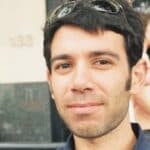
Benjamin Preiss talks to Alan Schwartz, convenor of the Jewish Schools Project, about the challenges posed by heavy fees, rising secularisation and a drift to state schools

FOR ANYONE INVESTED in the long-term future of Melbourne’s Jewish education system, the Jewish Schools Project’s discussion paper makes for uncomfortable reading.

Rising cost pressures and stagnating enrolments paint a troubling picture of what lies ahead for Victoria’s Jewish day schools if current trends continue.

The Jewish Schools Project tackles these challenges in granular detail in the recently released report Rethinking the future of our schools.

While Melbourne has a wide range of Jewish schools, the report examined just four – Mount Scopus Memorial College, Bialik College, Leibler Yavneh College and King David School.

It makes no mention of other well-established schools, including Sholem Aleichem College or Yeshivah-Beth Rivkah Colleges.

Jewish Schools Project convenor Alan Schwartz says the discussion paper focused on these four schools because they are all co-educational and each goes through to VCE.

He says they also provided extensive data that allowed for a high-level analysis. “They were all willing to give us a lot of financial information about their costs, about their revenues on a confidential basis,” he says.

I believe the status quo is no longer maintainable certainly over the next 10 years because of demography alone.

Mr Schwartz has observed a waning commitment to Jewish education due to a range of factors, including rising secularisation and increasing difficulty paying full fees.

“I know that from talking to my children and talking about their friends.”
The proportion of Jewish children attending Jewish schools in Victoria fell from 69 per cent in 2006 to 57 per cent a decade later while the number attending state schools increased sharply, the discussion paper says.

It describes the drift to state schools as a “vicious cycle” with a government education becoming more attractive to Jewish families while the fixed costs of operating Jewish schools drives up the costs for those who remain.

This will spur demand for fee subsidies but that, in turn, will strain budgets and erode quality, prompting more children to leave the Jewish school system.

Many parents currently enrol their children in Jewish preschools because costs are comparable to mainstream childcare but then withdraw them at the end so they can attend a government school.

Future projections provide little comfort for the Jewish schools studied in the project.

“Authoritative demographic projections show that over the next 20 years, the population of Jewish school age children in Victoria will fall by nearly 25 percent – or 2,200 students,” the report says.

This would naturally have financial consequences.  “It could also mean losses to schools of fee and grant income reaching $10 million a year in 2031, and about $18.5 million a year in 2041.”

The report outlines four options to consolidate the future of the four schools. They include: maintaining the status quo, merging four schools into two, creating an independent VCE school with students from each of the four schools or greater collaboration between the schools including a VCE academy and the creation of a new independent fee assessment board.

Mr Schwartz says the status quo is genuinely worth considering but demographic modelling suggests this will pose a major challenge.  

“I believe the status quo is no longer maintainable certainly over the next 10 years because of demography alone.”

It is clear there are no simple answers. Mr Schwartz acknowledges the creation of an independent VCE school would require the four schools, which pride themselves on their elite VCE programs, to relinquish a part of their identity.

However, he says the concept of a shared VCE school had been well thought through. “It’s actually been designed and costed. It would be a three-storey building and it wouldn’t take a huge amount of space.”

Classes would have 18 students on average, which would allow it to offer a wide range of subjects with lower fees for VCE than the other schools where class sizes are sometimes much smaller.

It may also attract some students, whose parents have sent them to state schools, with the lure of a high-end VCE offering.  

The report is notable for a major omission – the possibility of a Jewish education within a state school.

But the report is also notable for another major omission – the possibility of a Jewish education within a state school.

Mr Schwartz says the project’s working group will have to consider whether a bilingual Hebrew program could be established at a government school similar to Japanese and French programs that already exist.

“Clearly that would be an attractive option to many families.”

While a state school could not deliver Jewish religious education, Mr Schwartz says these lessons could be held before or after school.

The paper stops short of recommending any of the four options for the four schools it studied. The Jewish Schools Project is now undertaking consultation about the ideas raised in the report. It will release an updated version with possible recommendations for the next steps in 2022.  

Editor’s Note: Benjamin Preiss is a co-opted council member of Sholem Aleichem College.

Photo: Alan Schwartz (Trawalla Group)

You might also like
  • Jewish schools are the marinade that infuses continuity
    Jeremy Stowe-Lindner
  • Diaspora Jewish philanthropists protest ‘dangerous’ NGO funding bill
    Deborah Stone
  • Limmud Oz 2025: program highlights
    Kathy Laster
logomark.67a07ee3
We believe in the free flow of information

Republish our articles for free, online or in print, by using our Creative Commons licence

You might also like

    Israel Hamas War

    IDF: Hamas will steal fuel for tunnel ventilation systems and rockets

    TJI Wrap
    Israel Hamas WarFeature

    Inside Hamas’s sophisticated spider web of tunnels

    TJI Wrap
    Feature

    Israel bows to pressure by restoring water flow, ICC investigates both sides

    TJI Wrap

About the author

Benjamin Preiss

Benjamin Preiss

Benjamin Preiss is a journalist with The Age in Melbourne

More from the author

InterviewArts & Culture

Grappling with Mark Baker’s last words

FeatureArts & Culture

‘My mother is German-Jewish and my father is Arab-Israeli which makes me Sri Lankan’

Australia

Mira’s insight: ‘In the Holocaust I learnt about the goodness of people’

Australia

New means-assessed places at Melbourne Jewish schools are in demand