Aa
  • Read, Watch, Listen
  • TJI Series
  • Community Action
  • Events
  • Zedi
Follow us and continue the conversation
  • LinkedIn
  • Instagram
  • FaceBook
  • X
  • YouTube
Test yourself with the TJI Quiz!

Adjust size of text

Aa

Follow us and continue the conversation

  • LinkedIn
  • Instagram
  • FaceBook
  • X
  • YouTube

Your saved articles

You haven't saved any articles

What are you looking for?

Original reporting, insightful analysis and diverse views, delivered straight to your inbox

  • LinkedIn
  • Instagram
  • FaceBook
  • X
  • YouTube
Your support fuels our mission to inform, entertain and inspire.

The Jewish Independent is bound by the Standards of Practice of the Australian Press Council. If you believe the Standards may have been breached, you may approach The Jewish Independent or make a complaint to the Australian Press Council in writing at www.presscouncil.org.au. The Council may also be contacted on 1800 025 712.

  • Our Story
  • Contact us
  • Our Team
  • Support us
  • Guidelines
  • Pitch your idea
  • Republishing us
  • Community Action
  • Our Awards
  • LinkedIn
  • Instagram
  • FaceBook
  • X
  • YouTube
Aboriginal FlagTorres Strait Islanders Flag

The Jewish Independent acknowledges Aboriginal and Torres Strait Islander peoples as the Traditional Owners and Custodians of Country throughout Australia. We pay our respects to Elders past and present, and strive to honour their rich history of storytelling in our work and mission.

© The Jewish Independent 2026All Rights Reserved
Website design and development by Your Creative, MelbourneTerms & ConditionsPrivacy Policy
HomeRead, Watch, ListenLifestyle
ReflectionLifestyle

My grandmother’s enduring love beyond dementia

If my grandmother’s love for me didn’t live in her damaged and deteriorating brain, from where else did it flow?
Naomi Dascal
Print this
babushka nina and me

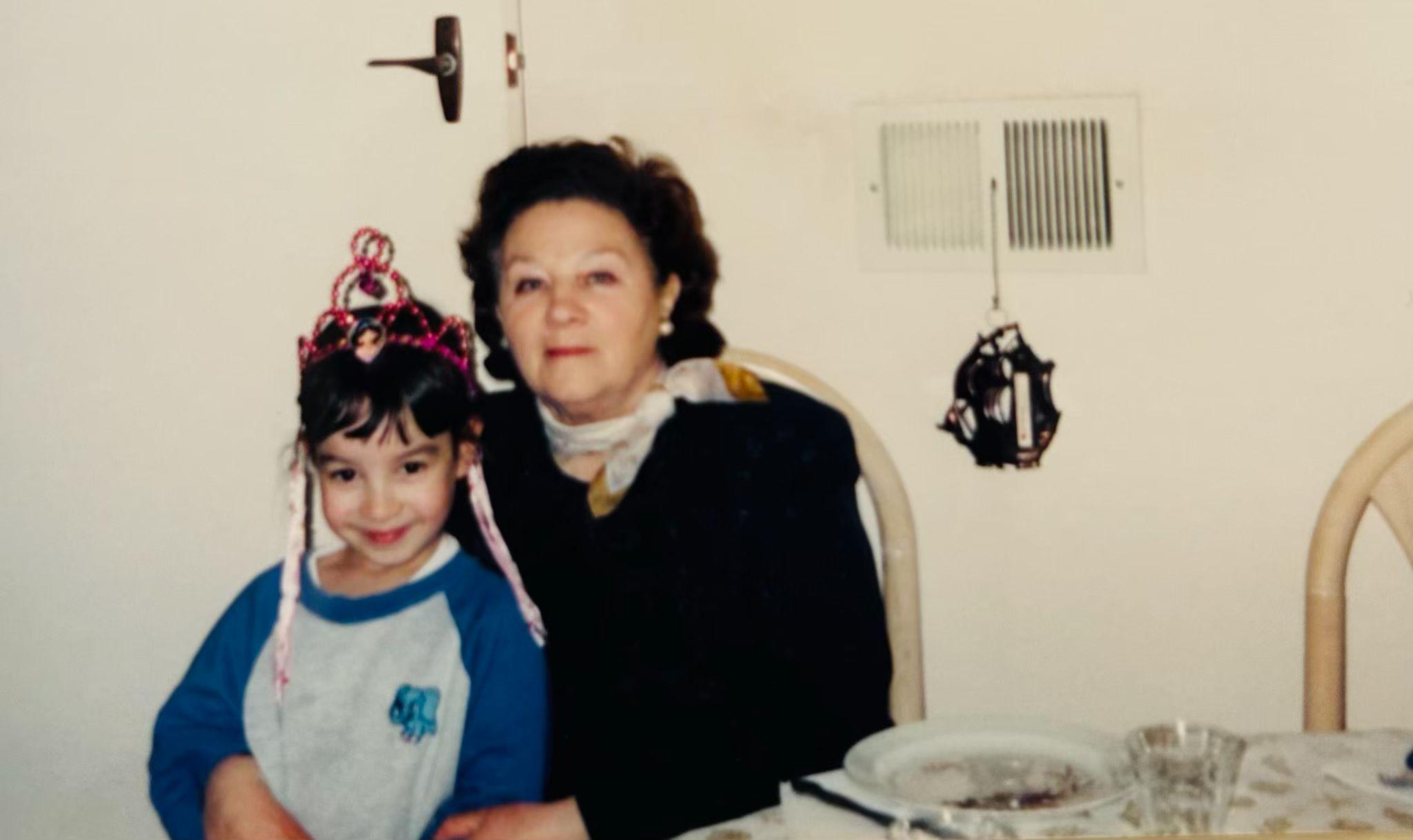
Naomi Dascal as a child with her grandmother Nina (supplied)

Published: 24 November 2025

Last updated: 24 November 2025

My 94-year-old grandmother died earlier this year after suffering from dementia for over a decade. It was a very long and slow decline, and by the end she barely had any quality of life.  

When my mother called me to say she had passed, I broke down crying, but within my grief I actually felt relief. My grandmother had been alive, but not really living, so her passing was more a kindness than a tragedy. 

When my mother suffered from a severe car accident when I was a toddler, my grandmother stepped in to become one of my primary caregivers. We would go to the park, find shapes in the clouds, and read Russian children’s tales together. She would make me the best crepes and rub my cold hands in hers.  

She only ever yelled at me once – I made her so angry she stomped her foot –  but our love for each other endured everything.  

Babushka was born in what is now Belarus, in a shtetl town faded in time. Her family moved to St Petersburg, and they faced many difficulties as Jews in post-WWII Soviet Russia. Despite that, my grandmother went on to become a translator and interpreter of Russian, English and German, and worked under close KGB guard with businesspeople involved in international trade. She was also fluent in Yiddish and always sprinkled some in her conversations with me. 

So it was particularly cruel when a stroke occurred in the language centre of her brain.  

She had lived in a nursing home since. Despite being unable to talk, my babushka, a clever woman with grey-green eyes, still managed to communicate. Sitting in her wheelchair, she would smile and nod, the twinkle of understanding still present in her gaze. But as a teen who was used to the vibrant and energetic woman of my childhood, all I felt was frustration – I just wanted to have my real grandmother back.  
At the time, I felt like I was begging for the scraps of our previous relationship, but now I remember those years fondly, and with compassion for my angst-ridden teen self.   

Dementia followed the stroke and it robbed my babushka of her ability to understand English, so my mum and I switched to Russian. Every Saturday, I would attempt to tell her stories from my week, and my mum would correct my poor grammar while she re-folded Babushka’s clothes.  

In those early days, we wheeled her chair downstairs and visited the rabbits and the budgies in her care home. When it was warmer, we sat outside on the balcony and enjoyed the sunshine and fresh air. Sometimes we arrived to find braids woven in her thin hair by a carer who was especially fond of her. At the time, I felt like I was begging for the scraps of our previous relationship, but now I remember those years fondly, and with compassion for my angst-ridden teen self.   

This year, a week after my babushka’s passing, I sat with my closest girlfriends and poured out my grief. One friend shared that her aunt had recently been diagnosed with dementia and was terrified of what the future would hold for her. Through my tears, I told her that after everything I experienced, I learned that love doesn’t live in the brain – it resides, and comes from, somewhere else.  

Dementia came on hard and fast for my grandmother and she eventually lost everything, including her memories, her ability to recognise people, and to communicate. Yet despite that, I always knew she loved me. While Babushka was usually pleased to see my mother, who was awarded small smiles and nods, I received toothless grins and kisses on my cheeks and knuckles.  

It was so joyous, and painful, to feel so loved by someone so ill, where each maternal smooch brought back memories of what once was.

For years, my mum would shout in her ear “Kto eto?”, “Who’s that?”, pointing at me. Babushka would blink at me blankly and shrug. “Naomi!” my mum would shout, and Babushka would nod in response, sometimes comprehending, sometimes not. But her kisses still came.  

It was so joyous, and painful, to feel so loved by someone so ill, where each maternal smooch brought back memories of what once was. Near the end of her life, when she slept for most hours of the day and had to fight to keep her eyes open, she always tried harder for me. It became a running joke between my mother and me. In between feeding my grandmother spoons of thickened liquids, I gloated to my mum that I was the clear favourite, and she was chopped liver.  

But if my grandmother’s love for me didn’t live in her damaged and deteriorating brain, from where else did it flow?  

In the Zohar, the most significant text of Jewish mysticism, love is a force that emanates directly from the Divine. The continuous flow of love from God to humanity is one of the foundations upon which everything in the universe rests, “and everything endures because of love” (The Zohar, 3:267ab).

As per Jewish tradition, each person is made in the image of the Divine, so in each of us there is a little spark of Divinity, a little piece of that flowing love. 

In the Song of Songs, the famous love poem of the Hebrew Bible traditionally said to be authored by King Solomon, it says that “Many waters cannot quench love, nor can the floods drown it…” (Song of Songs 8:7). The plaques that cause dementia, that flooded my grandmother’s brain for over a decade couldn’t quench her love for me. This love is the kind that could only emanate directly from something sacred, through her little spark, to me.  

My grandmother was my teacher, my guide and my rock. I feel so blessed to have had this strong, loving woman in my life, both in health and in sickness.  

Her love for me never faded or disappeared, but simply changed in the confines of her shrinking abilities. When she couldn’t remember my name or my face, and didn’t know who I was, her love for me continued to flow, and, even in death, endures. 

This essay was written with the support of the Jewish Orthodox Feminist Alliance Australia and edited with help from Nomi Kaltmann.

You might also like
  • The ghosts of Wendy Sharpe’s Jewish grandmother
    Steve Meacham
logomark.67a07ee3
We believe in the free flow of information

Republish our articles for free, online or in print, by using our Creative Commons licence

You might also like

    Rosh Hashanah Customs
    FeatureLifestyle

    10 little-known Rosh Hashanah customs from around the world

    Menachem Posner
    “Pokies” – Gambling in Australia
    FeatureLifestyle

    So addicted, he gambled on Yom Kippur

    Jarod Rhine-Davis
    2
    ReflectionLifestyle

    Ten ways to reflect, repair and renew this Yom Kippur

    Hannah Lundberg

About the author

Naomi Dascal

Naomi Dascal

Naomi Dascal is a creative Jewish educator, writer and editor, and the Learning & Engagement Producer at the Jewish Museum of Australia. She is a nerd for all things Jewish history, text and mysticism, and is passionate about cross-cultural bridge building, Jewish diversity and dynamism.