Aa
  • Read, Watch, Listen
  • TJI Series
  • Community Action
  • Events
  • Zedi
Follow us and continue the conversation
  • LinkedIn
  • Instagram
  • FaceBook
  • X
  • YouTube
Test yourself with the TJI Quiz!

Adjust size of text

Aa

Follow us and continue the conversation

  • LinkedIn
  • Instagram
  • FaceBook
  • X
  • YouTube

Your saved articles

You haven't saved any articles

What are you looking for?

Original reporting, insightful analysis and diverse views, delivered straight to your inbox

  • LinkedIn
  • Instagram
  • FaceBook
  • X
  • YouTube
Your support fuels our mission to inform, entertain and inspire.

The Jewish Independent is bound by the Standards of Practice of the Australian Press Council. If you believe the Standards may have been breached, you may approach The Jewish Independent or make a complaint to the Australian Press Council in writing at www.presscouncil.org.au. The Council may also be contacted on 1800 025 712.

  • Our Story
  • Contact us
  • Our Team
  • Support us
  • Guidelines
  • Pitch your idea
  • Republishing us
  • Community Action
  • Our Awards
  • LinkedIn
  • Instagram
  • FaceBook
  • X
  • YouTube
Aboriginal FlagTorres Strait Islanders Flag

The Jewish Independent acknowledges Aboriginal and Torres Strait Islander peoples as the Traditional Owners and Custodians of Country throughout Australia. We pay our respects to Elders past and present, and strive to honour their rich history of storytelling in our work and mission.

© The Jewish Independent 2026All Rights Reserved
Website design and development by Your Creative, MelbourneTerms & ConditionsPrivacy Policy
HomeRead, Watch, ListenLifestyle
FeatureLifestyle

So addicted, he gambled on Yom Kippur

Gambling addiction is easier to hide than alcohol or drugs, but just as damaging
Jarod Rhine-Davis
Print this
“Pokies” – Gambling in Australia

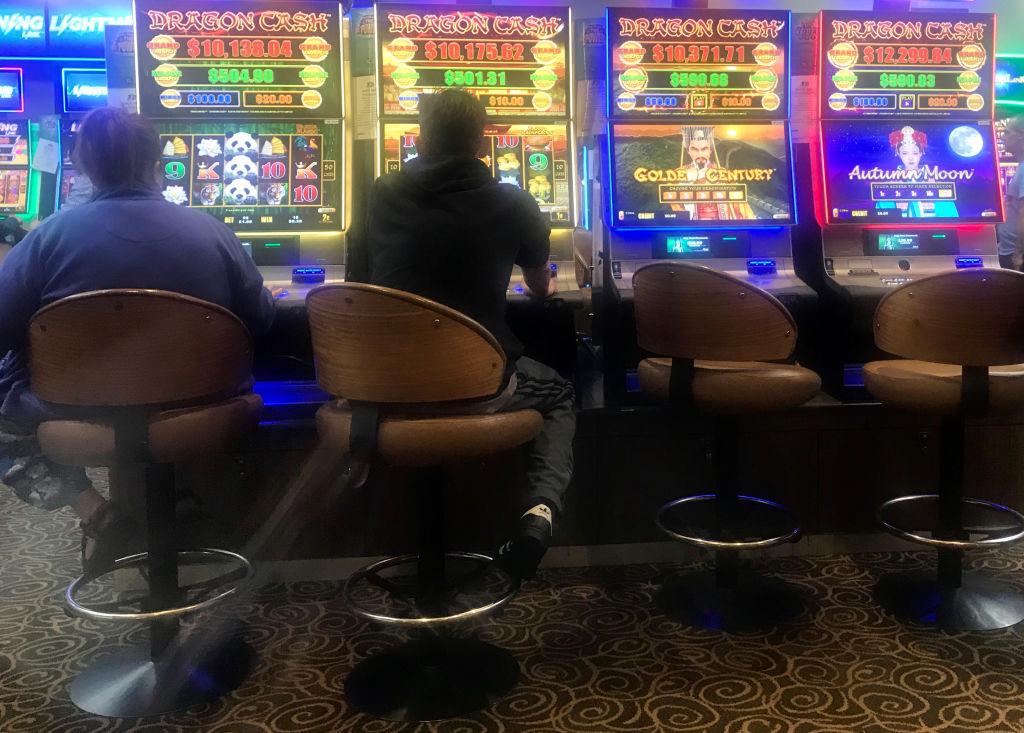
Players sit at poker machines, (Christoph Sator/picture alliance via Getty Images)

Published: 9 November 2026

Last updated: 9 November 2026

When Moshe first went to Gamblers Anonymous (GA), he chose a meeting in Prahran, a couple of suburbs away from Melbourne’s Jewish heartland because he did not want to bump into anyone he knew.

It didn’t work: the first person he saw was Jewish, and they knew each other. But the difficulty in being anonymous did not put him off.

He remembers feeling that his choices had narrowed to trying to fix his life or suicide. “There was no more money I could steal,” he says.

Despite being an Orthodox Jew, Moshe, a pseudonym, found himself gambling on Shabbat and even on Yom Kippur.

He stopped gambling in January 2005. More than 21 years later, he still attends at least two GA meetings a week and also goes to Jews in Recovery, a group for people recovering from addictions including alcohol, drugs, smoking and food.

Gambling is a problem that cuts across all ethnicities and religions. While Jewish tradition frowns on gambling, research has shown gambling disorder among groups of ultra-Orthodox men in Israel. Some researchers have suggested gambling addiction is more common in tight communities than alcohol or drug addiction because it is easier to hide.

At a US conference on addiction in the Jewish community in 1986, psychiatrist Robert Custer claimed Jews made up about a quarter of American compulsive gamblers despite being less than three per cent of the population. But more recent research suggests Jewish gambling is more in line with the general population.

Recent research shows problem gambling is increasing sharply in Australia, with online betting making gambling more accessible and easier to hide.
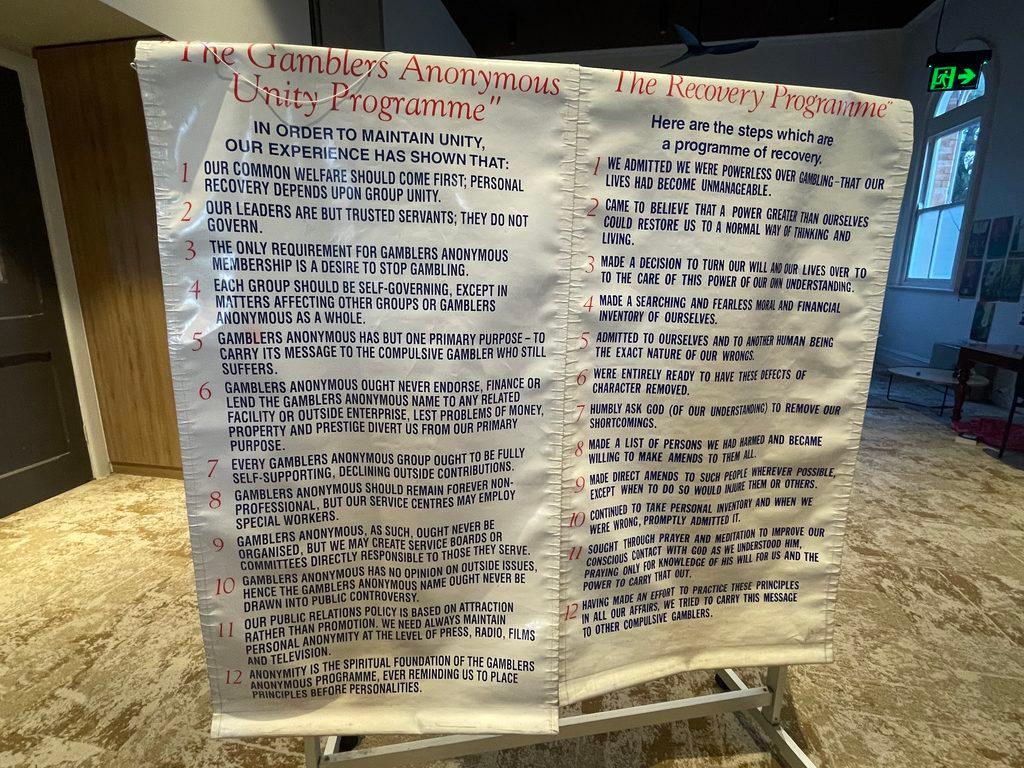
To meet Jewish gambling addicts, TJI attended GA in Caulfield and nearby Oakleigh with members’ consent. The atmosphere was quiet, with groups of a dozen or 20 people sitting in a circle to tell stories, or taking turns at a chair facing a few short rows. Each speaker begins with the classic formula: “I’m … and it’s been … since I last gambled,” then describes their personal challenges and achievements.

Some discuss what it is like to resist the urge to gamble. One member describes standing in the wrong section of a shop so he would not have to look at a racing screen. His wife wondered why he was suddenly interested in tiles.

Others talk about the costs of their addictions: lying to their families, living with fear and anxiety, the sheer amount of money sunk. One man said it would take another eight or nine years to repay his gambling debt.

But the focus is on rebuilt lives: work, family, exercise, budgeting and routines. Sometimes, members acknowledge the sponsors or other members they called when they were struggling.

“One of the principles of GA is we don’t really care why we gambled,” Moshe says. “We care that we stopped gambling.”

The relapse roundabout

Stopping an addiction is not a simple off switch. David, also a pseudonym, is another Orthodox Jewish recovering gambler.

David began gambling as a teen. He thought marriage, then fatherhood, would stop him. It did not.

David found GA in his twenties and stopped gambling. He gradually attended fewer meetings, but remained abstinent for another four or five years, starting a business and becoming financially secure.

He began to think he was older and responsible enough to gamble normally. A social poker game became a relapse. When everybody else was ready to go home, David wanted to keep gambling.

By around 30, David says he had lost what he had built and reached a financial and emotional crisis. He stopped, returned to GA, attended conferences and read about recovery. Again, he became convinced he would never gamble. Again, the meetings and recovery routines fell away. He gambled again, then stopped again.

He now attends meetings every week.

Starting as teenagers

David was only 16 or 17 when he started gambling. Some of those attending the GA meetings TJI visited were still in their teens. At Aliya Youth Space, Ephraim Meyer sees gambling problems emerge among Jewish young people. He notices their excitement about gambling becoming more intense or its use as an escape.

Meyer says winning can be the worst possible result. A teen he knows recently won $1,000.

Meyer says young people are exposed to gambling advertising early and can access betting through phones in a way previous generations could not.

At the Caulfield GA meeting TJI attended, two attendees were under 20. One was attending for the first time. The other had only recently stopped gambling.

Several older members used their turns to speak directly to them. They remembered being young, not taking the problem seriously, or being brought to help before they were ready to listen.

The Jewish Independent

Communal stigma


One of the difficulties of confronting gambling in the Jewish community is the stigma of being known as a problem gambler. Moshe says the stigma can be worse than the shadow around alcoholism because people “assume you’re a thief”.

Last year he spoke at a Jewish community event about addiction. “I knew everyone in the room,” he says. “That was pretty hard.”

David knows some people see him first as “the addict”, and he feels the cost for his wife and children.

Better Health Network’s Gamblers Help told TJI that shame, embarrassment and guilt can stop people from disclosing gambling problems. Some seek help for debt, mental health, substance use or relationship problems without initially mentioning gambling.

If you need help: Gambler’s Helpline provides free confidential support 24 hours a day on 1800 858 858. Gamblers Anonymous Australia lists current local meetings online. Lifeline is available 24/7 on 13 11 14.

You might also like
  • Caulfield and Coogee: a chilling new phase in physical hostility towards Jews
    Michael Visontay
  • Melbourne rally: ‘This is the time to stand up for the democratic Israel’
    TJI Pick
  • Was Jerusalem gold for Southwick?
    Julie Szego
logomark.67a07ee3
We believe in the free flow of information

Republish our articles for free, online or in print, by using our Creative Commons licence

You might also like

    Generation change Template
    Generation ChangeInterviewAustralia

    Ash Densham: Building community through Humanistic Judaism

    Gideon Cohen 1
    2
    ReflectionLifestyle

    Ten ways to reflect, repair and renew this Yom Kippur

    Hannah Lundberg
    chai necklace copy
    ReflectionAustralia

    Facing my mortality, the Book of Life is no metaphor

    Talia Slonim 7

About the author

Jarod Rhine-Davis

Jarod Rhine-Davis

Jarod Rhine-Davis is a Melbourne-based Jewish LGBTQ+ community leader and founder of Jewmos, a grassroots initiative creating spaces for queer Jews to connect, celebrate, and explore identity. Through his work, he advocates for inclusion and belonging at the intersection of Jewish and LGBTQ+ life. He works at The Jewish Independent, helping produce community events.

More from the author

FeatureAustralia

New Victorian law could help with Gett refusal

FeatureAustralia

Rebbetzin’s abuse experience shapes her drive to protect children

FeatureAustralia

When security clashes with hospitality

FeatureAustralia

NDIS changes threaten disabled participation in community life