Published: 6 July 2021
Last updated: 4 March 2024
Germany is celebrating a major milestone but MATI SHEMOELOF thinks the modern state might be creating a history that isn’t strictly kosher
I RECENTLY RECEIVED several requests for interviews about my Jewish life in Berlin. I agreed, not taking them seriously. But when a TV crew from Bavaria came to make a film about me and the Fränkelufer Synagogue in Kreuzberg, I started to wonder.
I asked them: Why on earth have you come all the way from the south of Germany to Berlin? And their answer came with a self-evident tone: Because of the 1700 years of Jewish life in Germany.
What? There were Jews in Europe even before the Middle Ages? I checked the internet. And on Deutsche Welle, Germany’s version of the BBC, I find that in 321, Cologne, the capital of the Lower Germanic province of the Roman Empire, inspired an official edict that marks the earliest evidence of Jewish life in Germany: “When the Cologne City Council wanted to repair a dilapidated bridge but lacked the financial means, a Jew named Isaac wanted to help out. He would, however, have to hold office in the city council.
“A request was submitted to the Roman Emperor Constantine the Great. ‘By law valid throughout the empire, we permit all city councils to appoint Jews to the city council,’ read the resulting edict issued by Constantine, who had unknowingly produced the first written evidence of Jewish life in Europe north of the Alps.”
Germany is marking this “anniversary” year with celebrations costing millions of Euros.
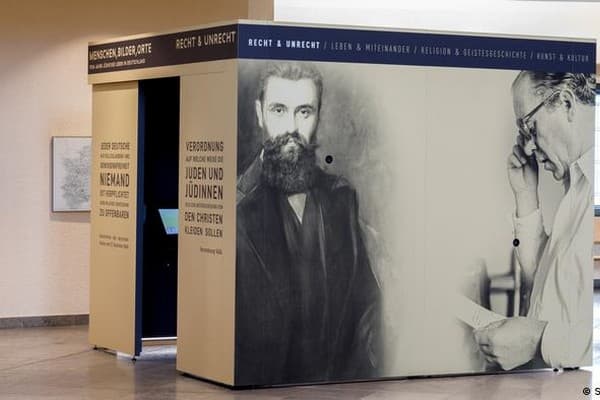
I’ve noticed that many German media outlets have at least one section on their site referring to this phenomenon. But the phenomenon of which Jewish life? And is this something to celebrate? Is the ambivalent life we had in Europe now older and longer? Even this one document, about the first inclusion of a Jew to a city council, speaks of a history of exclusion.

