Aa
  • Read, Watch, Listen
  • TJI Series
  • Community Action
  • Events
  • Zedi
Follow us and continue the conversation
  • LinkedIn
  • Instagram
  • FaceBook
  • X
  • YouTube
Test yourself with the TJI Quiz!

Adjust size of text

Aa

Follow us and continue the conversation

  • LinkedIn
  • Instagram
  • FaceBook
  • X
  • YouTube

Your saved articles

You haven't saved any articles

What are you looking for?

Original reporting, insightful analysis and diverse views, delivered straight to your inbox

  • LinkedIn
  • Instagram
  • FaceBook
  • X
  • YouTube
Your support fuels our mission to inform, entertain and inspire.

The Jewish Independent is bound by the Standards of Practice of the Australian Press Council. If you believe the Standards may have been breached, you may approach The Jewish Independent or make a complaint to the Australian Press Council in writing at www.presscouncil.org.au. The Council may also be contacted on 1800 025 712.

  • Our Story
  • Contact us
  • Our Team
  • Support us
  • Guidelines
  • Pitch your idea
  • Republishing us
  • Community Action
  • Our Awards
  • LinkedIn
  • Instagram
  • FaceBook
  • X
  • YouTube
Aboriginal FlagTorres Strait Islanders Flag

The Jewish Independent acknowledges Aboriginal and Torres Strait Islander peoples as the Traditional Owners and Custodians of Country throughout Australia. We pay our respects to Elders past and present, and strive to honour their rich history of storytelling in our work and mission.

© The Jewish Independent 2026All Rights Reserved
Website design and development by Your Creative, MelbourneTerms & ConditionsPrivacy Policy
HomeRead, Watch, ListenArts & Culture
ReflectionArts & CultureLifestyle

Between Melbourne, Warsaw and Tel Aviv, where was I at home this week?

Home and homeland are complex concepts for a Jewish traveller, especially in this intense week.
Sidra Kranz Moshinsky
Print this
Home is a complex concept for in a complex Jewish identity (TJI)

Home is a complex concept for in a complex Jewish identity (TJI)

Published: 16 October 2025

Last updated: 16 October 2025

If there’s no such thing as a coincidence, then this was a particularly eerie moment. Midway between Germany and Poland, the necklace with the Star of David that I wear night and day just broke. Dropped off my neck. The clasp piece was gone and, luckily, I caught it in my hands.

It’s as if the emotional rollercoaster of being Jewish these past few weeks had taken its toll and the star was done.

I have been passing through Dubai, Tel Aviv, Berlin and Warsaw in quick succession for twelve days and, with each move, there’s an inner dialogue around being openly Jewish: Star of David over or under? In my hometown of Melbourne, I’ve kept it visible everywhere. But in these parts and being a tourist travelling alone, I have to be a bit more wary. So many people in Israel looked at me aghast, saying ‘Surely you’re not wearing that in Europe.’

When I booked this short trip, I knew it would mean being in Israel for the second anniversary of October 7 and the festival of Sukkot. But I could not have known that it would also coincide with the signing of the ceasefire - fragile though it may be - and the last of the Saturday night rallies at Hostage Square. I missed being in the country for the release of the hostages by 24 hours but sensed the growing anticipation and easing of anguish in the days leading up to it. Allowed myself to share in it too, albeit cautiously. The question of what will happen next keeps gnawing at me.

It’s a strange experience to be moving between Australia, Israel and Poland at such an intense time, amplifying the differences and dissonances. Each of these countries is a homeland or motherland of sorts.

Australia is home in the usual sense of the word; it’s where I live, work, shop, make plans, pay taxes, enjoy family, see my friends, walk my dog, travel to favourite places and centre my days. My roots here are not so deep, given my family arrived less than 80 years ago. In the grand sweep and scheme of Jewish history, it’s a relatively recent place for a Jewish community and feels remote. Until two years ago, I would have been sure that its Jewish story that extends back to the first days of European settlement in 1788 would continue in strength. Now I’m not as sure.
In Israel, despite my rusty Hebrew, few family members and difficulty finding my way around, I’m in another homeland. When I hear and speak Hebrew, when people wish each other shabbat shalom, when there’s such a strong sharing of joy and pain, I feel a deep sense of connection.  My heart leaps at street names, as it did at the corner of Ahad Haam and Yohanan ben Zakkai Streets in Tel Aviv - two crucial visionaries, millennia apart.  DNA strands link me to this part of the world. It’s my motherland, if you go back enough generations of mothers.

But my mother and grandmothers were born in Poland and as I approach it, via the train from Germany (there’s something chilling about travelling on a train in this direction), I’m conscious of encountering yet another motherland, but this is one from which I feel very alienated. Intellectually I know the names of towns and streets. I remember stories and snippets of stories. My maternal grandmother had fond memories of her home in Warsaw, her school, family gatherings, trips to the countryside. I can almost picture her apartment, thanks to written descriptions she left. For my mother, it’s a place where she was born, amid the war, and entrusted to a non-Jewish family to be cared for until the time of evading annihilation was over. As I walk the streets of Warsaw, it just feels foreign, despite occasional familiar words, names, tastes. Could Melbourne, my home, place of my memories, be like that to my future grandchildren or descendants?

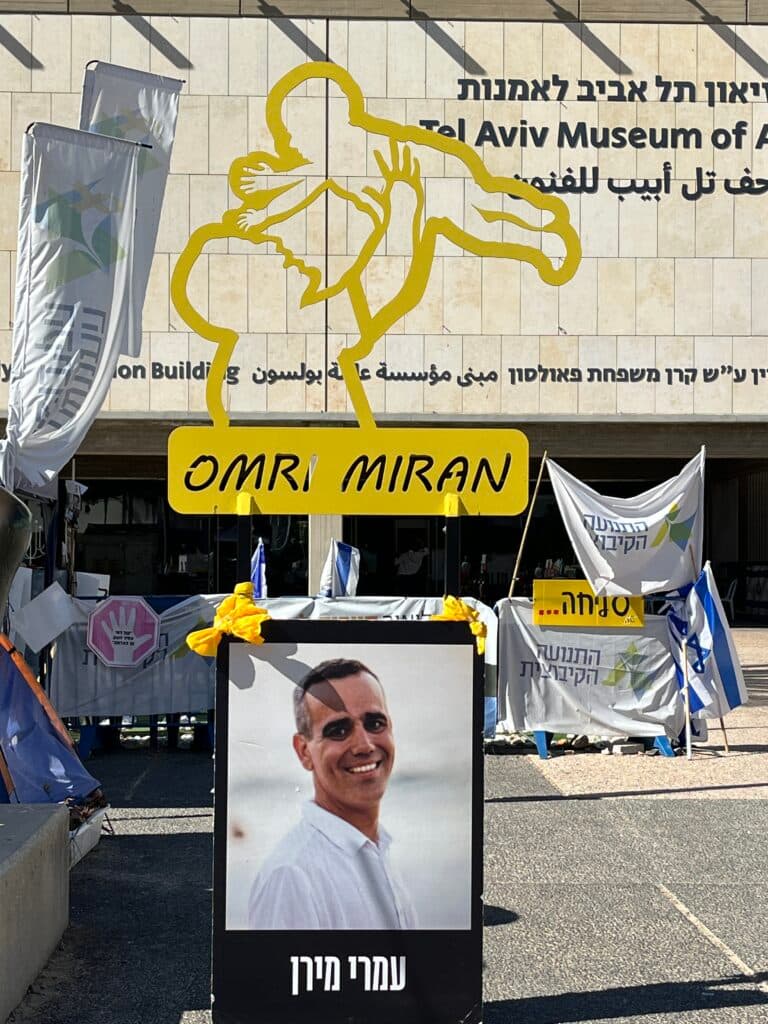
Hostage Square stands next to the Tel Aviv Museum (Sidra Kranz Moshinsky)

As the recently appointed director of the Jewish Museum of Australia, part of the reason for my travels is to explore museums. On October 7, I spent time at Hostage Square in Tel Aviv, grieving at the fate of the hostages, daring to hope their ordeal would soon be over. Then I visited the adjacent Tel Aviv Museum of Art, I wandered around powerful and confronting Israeli artworks, including (M)otherlands by Ruth Patir.

Just a few days later, on Monday of this week, I found myself glued to my computer screen, as did so many around the world, switching between images of the hostages being released, Trump landing, Hostage Square, families reuniting.  By then, I was in Germany and had to tear myself away for a meeting with the director of the Berlin Jewish Museum. I checked my Star of David was tucked in as I walked the streets, then took it back out as I entered.

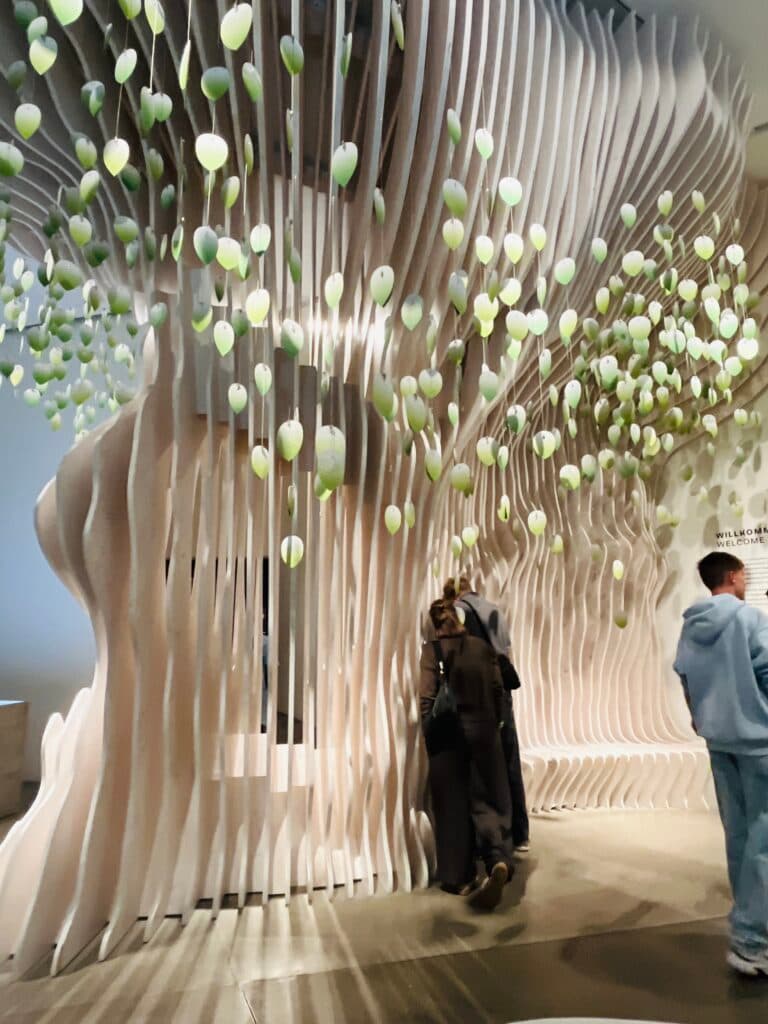
Berlin Jewish Museum Wishing Tree (Sidra Kranz Moshinsky)

Though the museum is 25 years old, it was my first time visiting. I was last in Berlin 30 years ago and much has changed. The design by acclaimed architect Daniel Libeskind is striking and the exhibitions are rich in detail and thoughtful in design, offering a meaningful experience to more than 600,000 visitors each year. But still, the outer world intrudes. The first installation I encountered was a wishing tree where visitors are encouraged to write their aspirations on a paper leaf. Nice idea, but the multiple vertical wooden planks representing the trunk have been vandalised with grafitti scrawled everywhere: Free Palestine, Am Israel Chai, Fuck Zionism and many other messages - political, personal, trivial. I discuss this with the director. She’s upset about the graffiti, of course, and they are having it removed (not so simple) but she says of the anti-Israel, even antisemitic comments, “At least these people are within our space. Maybe by the time they leave the building, they will feel slightly differently.” Maybe…

In each of the places I’m visiting, I’m focusing on their Jewish museums: what is the story they tell and how do they do it? And why? It’s around purpose that the professional and personal collide, taking on a kind of poignancy, particularly in Berlin and Warsaw, where it’s almost as if there’s an inverse proportion between the size and grandeur of the Jewish museum and the continuity of Jewish life. There’s so much history to convey because so little of it is left, including that of my own family. I’m inspired by their scope and also saddened.

‘Shall I bring pierogi to Shabbat dinner?’ my mother asks on the family chat. The food of the old country has become part of the new. I wonder about and wander through homelands, while looking forward to getting home.

You might also like
  • ‘Israel is systemically eliminating Palestinian collective life’:  B’Tselem
    Deborah Stone
  • Tame apologises – but with little grace
    Deborah Stone
  • Confronting Richard Flanagan and the myth of the Israel lobby
    Mary Garden
logomark.67a07ee3
We believe in the free flow of information

Republish our articles for free, online or in print, by using our Creative Commons licence

You might also like

    Apple & rotten core Rosh hashanah
    EditorialAustralia

    Facing a new year with the knowledge life can be better

    The Jewish Independent
    Pro-Palestine Rally Outside Foreign Commonwealth Development Office
    AnalysisWorld

    UK’s dramatic policy change on Israel-Palestine

    Colin Shindler 3
    JDC Joint Nepal
    FeatureWorld

    ‘Your help is extremely needed’: Jewish aid group on the ground after Nepal flood

    Peter Kohn 1

About the author

Sidra Kranz Moshinsky

Sidra Kranz Moshinsky

Sidra Kranz Moshinsky is a writer, researcher, educational leader and museum professional, serving as the Director and CEO at the Jewish Museum of Australia. She has worked across Jewish schools and cultural organisations throughout her professional life and is a founder of the Jewish Educators’ Network of Australia. Sidra is also a freelance contributor to various publications, such as The Jewish Independent, and celebrates Jewish life through many avenues, including by being a board member of Kehilat Kolenu.

More from the author

OpinionLifestyle

When they ask about…the tooth fairy

FeatureWorld

This ambitious treasure trove could help us know our ancestors

AnalysisLifestyle

When they ask about…TikTok

Comments1

  • Avatar of Irene

    Irene16 October at 01:06 pm

    Lovely, Sidra, very emotional and thoughtful. Learning that we are a global people, at home everywhere and nowhere at the same time, even in Israel, takes tme and many visits. We’ll talk.