Aa
  • Read, Watch, Listen
  • TJI Series
  • Community Action
  • Events
  • Zedi
Follow us and continue the conversation
  • LinkedIn
  • Instagram
  • FaceBook
  • X
  • YouTube
Test yourself with the TJI Quiz!

Adjust size of text

Aa

Follow us and continue the conversation

  • LinkedIn
  • Instagram
  • FaceBook
  • X
  • YouTube

Your saved articles

You haven't saved any articles

What are you looking for?

Original reporting, insightful analysis and diverse views, delivered straight to your inbox

  • LinkedIn
  • Instagram
  • FaceBook
  • X
  • YouTube
Your support fuels our mission to inform, entertain and inspire.

The Jewish Independent is bound by the Standards of Practice of the Australian Press Council. If you believe the Standards may have been breached, you may approach The Jewish Independent or make a complaint to the Australian Press Council in writing at www.presscouncil.org.au. The Council may also be contacted on 1800 025 712.

  • Our Story
  • Contact us
  • Our Team
  • Support us
  • Guidelines
  • Pitch your idea
  • Republishing us
  • Community Action
  • Our Awards
  • LinkedIn
  • Instagram
  • FaceBook
  • X
  • YouTube
Aboriginal FlagTorres Strait Islanders Flag

The Jewish Independent acknowledges Aboriginal and Torres Strait Islander peoples as the Traditional Owners and Custodians of Country throughout Australia. We pay our respects to Elders past and present, and strive to honour their rich history of storytelling in our work and mission.

© The Jewish Independent 2026All Rights Reserved
Website design and development by Your Creative, MelbourneTerms & ConditionsPrivacy Policy
HomeRead, Watch, ListenIsrael
Israel Votes 2026AnalysisIsrael

Haredi party may change sides, enabling Eisenkot to form new government

United Torah Judaism has begun discussing coalition terms with the Change Bloc, signalling a possible break in its longstanding alliance with Netanyahu
Shahar Burla
Print this
Haredi United Torah Judaism

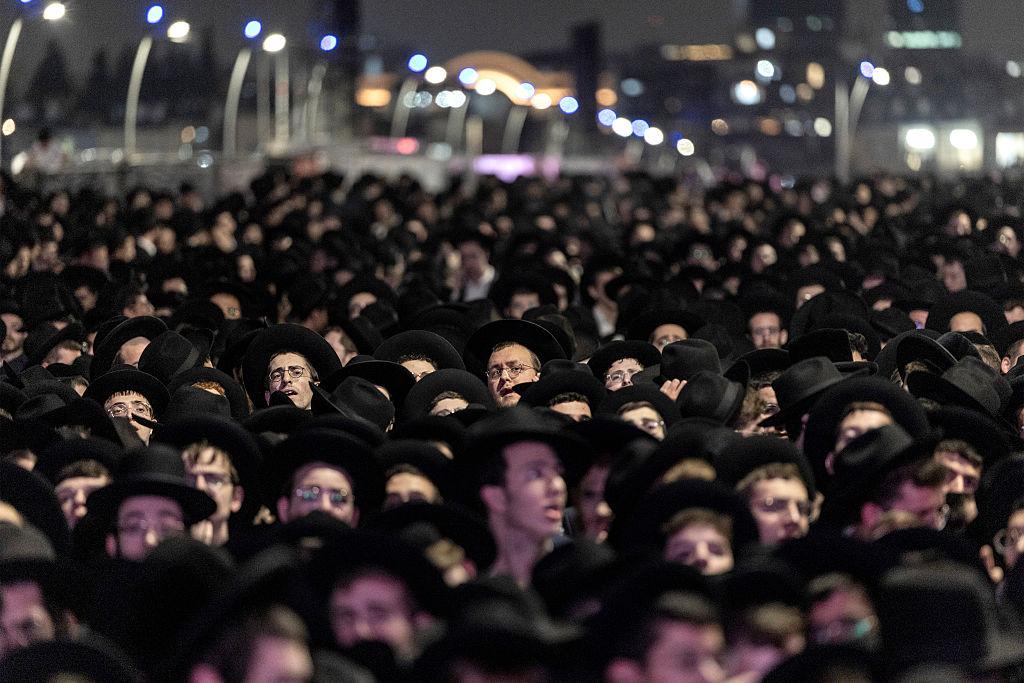
United Torah Judaism’s final campaign rally ahead of the election, in Bnei Brak on October 25, 2026 (Ilia Yefimovich/AFP via Getty Images)

Published: 12 November 2026

Last updated: 12 November 2026

Last month's elections marked a significant setback for the ultra-Orthodox parties, particularly Shas, the Sephardi or Mizrachi ultra-Orthodox party.

While the Ashkenazi United Torah Judaism largely maintained its electoral strength, Shas fell sharply from 11 seats in 2022 to just six, losing considerable support mainly among traditional and religious voters who had backed the party in previous elections.

In addition, both ultra-Orthodox parties have seen their broader political influence weakened by their long-standing alliance with Netanyahu.

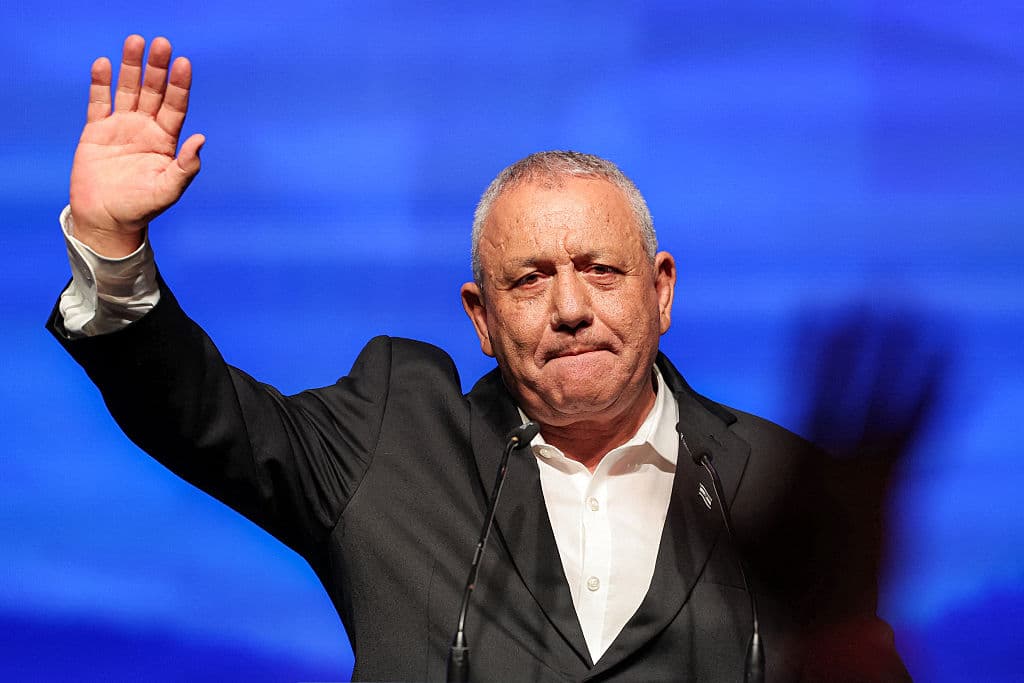
Now, with Gadi Eisenkot given the mandate to try to form a government, the Haredi parties are reconsidering their longstanding alliance with Netanyahu and his bloc for the first time since 2009.

Netanyahu has not always been supported by Haredim. In 2003, as Finance Minister, he implemented major cuts to child allowances and welfare payments. The backlash from ultra-Orthodox contributed to Likud's collapse in the 2006 election, its worst result at the time.

Since then, Netanyahu has built strong ties with the ultra-Orthodox, touting his “right-wing bloc” as built from “natural partners” based on a shared view of Judaism as both a religion and a national identity. Generous state funding for the Haredi education system has strengthened the relationship, making the ultra-Orthodox parties increasingly dependent on Likud.

By aligning themselves so closely with Netanyahu, Shas and United Torah Judaism effectively gave up their traditional role as kingmakers capable of working with the Left and the Right.
The breakdown of the 'natural partners'

The outgoing government appeared to offer the Haredi parties an ideal opportunity to achieve their long-standing goals. The Haredi leadership expected the government to pass legislation regulating military exemptions for yeshiva students, protect the autonomy of their education system, including continued exemption from the core curriculum, and curb the influence of the Supreme Court.

But with increasing community frustration over Haredi self-interest, these policies proved too politically damaging for the coalition. The events of October 7, followed by the war, intensified scrutiny of military service exemptions. Public attention increasingly focused on the unequal sharing of national responsibilities, leaving the ultra-Orthodox parties bearing much of the political cost while receiving little in return.

Haredi parties were left with little incentive to continue backing Netanyahu.

United Torah Judaism's conditions

As coalition negotiations with the Change Bloc take shape, United Torah Judaism has indicated a willingness to talk, but only under several key conditions.

Firstly, it wants changes to the Defence Service Law that would restore a legal framework for exempting yeshiva students from military service. Existing arrangements expired in July 2023, leaving tens of thousands of students in legal limbo.

Secondly, it seeks equal government funding for Haredi schools without requiring them to adopt the full core curriculum taught in other schools, and thirdly, it wants existing religion-and-state arrangements preserved.

Reaching agreement on military service is likely to be the most difficult issue in the negotiations as trust between the sides is limited, particularly after years of promises that never translated into legislation. The legal environment has also changed since October 7, and the High Court has signalled that any future exemption framework will face much stricter scrutiny on equality grounds.

In addition, the political commitments of the parties create an additional obstacle, as several Change Bloc parties campaigned on promises to promote more equal military service, making significant compromises difficult.

Eisenkot's opportunity

Recent reports suggest that Gadi Eisenkot has been exploring a possible compromise with the Haredi parties in which sanctions related to military service would be softened in exchange for support for a government plan aimed at increasing Haredi enlistment. In this case, the Haredi parties could point to concessions on conscription, while Eisenkot could claim a meaningful increase in the number of ultra-Orthodox recruits. The Change Bloc leaders believe that if United Torah Judaism joins such an arrangement, Shas could eventually follow, although its voter base generally remains more closely aligned with the political right.

Even if the negotiations do not lead to a joint coalition, United Torah Judaism's willingness to engage with Change Bloc leaders, and its decision not to endorse Netanyahu during consultations with the President, has already achieved something significant.

It has exposed cracks in Netanyahu's once-solid alliance with the ultra-Orthodox parties and allowed the Change Bloc to demonstrate that it explored every possible coalition option before considering a minority government reliant on support from Arab parties.

It also leaves the door open to a more significant change in Haredi public opinion, countering a shift to the right in the past 20 years. 

You might also like
  • Diaspora Jews urge Israel’s change bloc to form a Jewish–Arab coalition
    Sharon Offenberger
  • Dear Israel, we don’t care who your next prime minister is
    Michal Yaari
  • My vision for Palestinian cancer patients
    David Adler
logomark.67a07ee3
We believe in the free flow of information

Republish our articles for free, online or in print, by using our Creative Commons licence

You might also like

    Gadi Eisenkot
    Israel Votes 2026EditorialIsrael

    Normality or Sparta: Israel’s choice could hardly be clearer

    The Jewish Independent 1
    Eisenkot protester
    Israel Votes 2026OpinionIsrael

    A moment of unity as rare as a minyan in Brisbane

    Rapha Manajem
    Orly Erez-Likhovski at High Court
    InterviewIsrael

    Fighting for a better Israel 

    Peter Kohn

About the author

Shahar Burla

Shahar Burla

Dr Shahar Burla is a Sydney-based researcher, lecturer and Contributing Editor of TJI. Shahar holds a Master’s degree in political science from Hebrew University and a PhD in political science from Bar-Ilan University. He is the author of Political Imagination in the Diaspora: The Construction of a Pro-Israeli Narrative (2013) and co-editor of Australia and Israel: A Diasporic, Cultural and Political Relationship (2015).

More from the author

AnalysisIsrael

Growing pressure for a minority Change government in Israel

ExplainerIsrael

Israel’s election fails to deliver a clear path to a government

AnalysisIsrael

‘Moroccan monkey’: Israel’s ethnic divide still shapes its elections

AnalysisIsrael

Israel now faces 138 sanctions across 63 countries