Aa
  • Read, Watch, Listen
  • TJI Series
  • Community Action
  • Events
  • Zedi
Follow us and continue the conversation
  • LinkedIn
  • Instagram
  • FaceBook
  • X
  • YouTube
Test yourself with the TJI Quiz!

Adjust size of text

Aa

Follow us and continue the conversation

  • LinkedIn
  • Instagram
  • FaceBook
  • X
  • YouTube

Your saved articles

You haven't saved any articles

What are you looking for?

Original reporting, insightful analysis and diverse views, delivered straight to your inbox

  • LinkedIn
  • Instagram
  • FaceBook
  • X
  • YouTube
Your support fuels our mission to inform, entertain and inspire.

The Jewish Independent is bound by the Standards of Practice of the Australian Press Council. If you believe the Standards may have been breached, you may approach The Jewish Independent or make a complaint to the Australian Press Council in writing at www.presscouncil.org.au. The Council may also be contacted on 1800 025 712.

  • Our Story
  • Contact us
  • Our Team
  • Support us
  • Guidelines
  • Pitch your idea
  • Republishing us
  • Community Action
  • Our Awards
  • LinkedIn
  • Instagram
  • FaceBook
  • X
  • YouTube
Aboriginal FlagTorres Strait Islanders Flag

The Jewish Independent acknowledges Aboriginal and Torres Strait Islander peoples as the Traditional Owners and Custodians of Country throughout Australia. We pay our respects to Elders past and present, and strive to honour their rich history of storytelling in our work and mission.

© The Jewish Independent 2026All Rights Reserved
Website design and development by Your Creative, MelbourneTerms & ConditionsPrivacy Policy
HomeRead, Watch, ListenAustralia
AnalysisAustraliaIsrael

Could the West be regained by an Eisenkot coalition?

The future of Israel's relationship with the US, Australia and much of the West may depend on the success of Eisenkot's coalition negotiations
Dean Sherr
Print this
Eisenkot Netanyahu

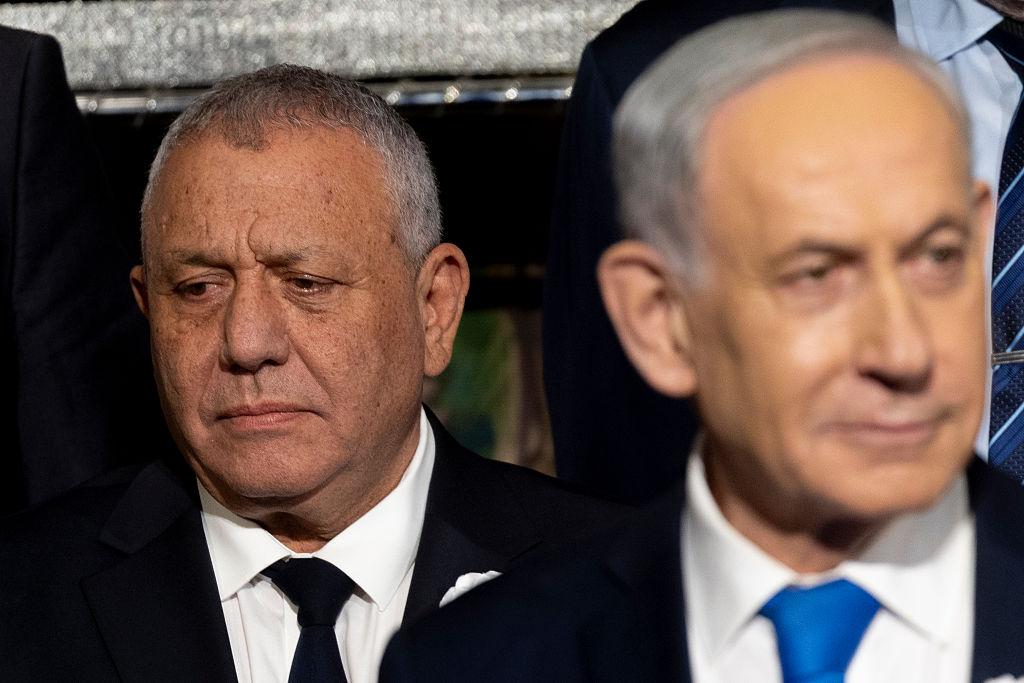
Benjamin Netanyahu (R) walks past Gadi Eisenkot at the opening of the Knesset on November 10, 2026 (Amir Levy/Getty Images)

Published: 17 November 2026

Last updated: 17 November 2026

As Gadi Eisenkot tries to turn his fragile electoral mandate into a government, the Western world is watching with interest.

The results of the US midterm elections coming hard on the heels of Israel’s election underscore just how damaging Benjamin Netanyahu’s brand has become to Israel’s relationship with the United States.

The same is true in other Western countries, including Australia.

There is good reason to expect Israel’s relationship with Australia would improve significantly under an Eisenkot government

Pundits and politicians from President Trump down have conceded that massive swings against the Republicans were substantially caused by the deeply unpopular war with Iran and the economic damage caused by Iran’s response.

Mistrust of Israel and opposition to its influence over American domestic and foreign policy is no longer confined to the populist left or the far-right – it is now an increasingly mainstream view on both sides of the political aisle.

Netanyahu’s diplomatic prowess, particularly in America, was once key to his electoral power. But having sacrificed bipartisanship to put all his chips in on Trump, Netanyahu is now a liability, even for the self-described most pro-Israel President in American history.

And with Trump’s presidency to end in two years, whoever takes the White House next, Democrat or Republican, will certainly drift further apart from Israel.

How far that drift will be – and how much damage it will do to – will largely depend on whether a new Israeli Prime Minister and government is able to repair its standing and relationships abroad.

Israel’s challenges in the wake of October 7, the Iran war and internal divisions have passed any point where a new agenda or strategy from its longest-serving leader could credibly rectify them.

Nor will it be easy for a coalition cobbled together by the former IDF chief to repair the damage.

Israel’s diplomatic relationship with Australia is at a historic low – just as it is with many of Australia’s allies, including the UK and Canada. There is no question that Netanyahu, and his more extreme coalition partners in Itamar Ben Gvir and Bezalel Smotrich, have been at the heart of this decline.

The Albanese Government has walked a tightrope on Israel. It has diverged in recent years from the US on Israel in significant ways, such as voting stances at the UN to recognition of Palestine.

But is has stopped short of the lengths to which the UK, Canada, France and others in Europe have gone, refusing to join them in a full boycott of goods or ban of trade with settlements in the West Bank.

Australian sanctions on Ben Gvir and Smotrich, as well as other individuals, have been confined to their roles in stoking violence in the West Bank, resisting pressure from activists to impose sanctions over the Gaza war.

While many in our community vociferously object to the Albanese Government’s recent shifts in its posture towards Israel, nothing has changed in Labor’s support for Israel’s right to exist in safety and security. A commitment towards a negotiated two-state solution for Israel and Palestine remains the base policy of both major parties.

Prime Minister Albanese’s long-held rejection of the boycott Israel movement – which he has described as a racial-based policy – resist conflating Israel’s government with its people, or to punishing the entire nation over the policies of its government.

Albanese’s decision to invite President Herzog to Australia after the Bondi attacks, knowing full well the protests it would attract from the left, reflected this separation between his view of its government and the nation itself.

In inviting Herzog, he welcomed the president whose role is a symbol of the state, not its politics, and illustrated his willingness to embrace the state and work with its leaders outside of Netanyahu’s government.

So, there is good reason to expect Israel’s relationship with Australia would improve significantly under an Eisenkot government. Australia would expect significant changes in policy, particularly the promised clamp down on violence in the West.

The capacity of a future Israeli government to make significant change will depend on the make-up of Eisenkot’s coalition.

As the fragmented opposition uses its numbers in the Knesset to take the reins of its committees, establish a full Inquiry into the failures of October 7, and to reverse Netanyahu’s controversial judicial reforms, it faces a tense race against the clock to determine what kind of government, if any, it can unite over.

One possibility is a government prepared to compromise over mandatory service for its Haredi citizens in return for the support of the religious parties.

Another pathway is governing with the support of the Arab parties, some of whom may remain outside the government, creating more precarious numbers but potentially less compromise on key policies.

An Israeli minority government with the support of its Arab parties could pave the way to a new political reality for the nation

A minority government would face constant challenges to hold together and legislate critical measures, but it would also pose a powerful reinforcement of Israel’s diverse and democratic character against Netanyahu’s attempts to undermine them.

No democracy should use the ‘tyranny of the majority’ to ride roughshod over the rights or participation of its minorities. The right for Israel’s Arab citizens to vote will remain fundamentally flawed if their elected figures remain permanently ruled out of the ability to be a true participant in the nation’s governance.

Unprecedented times often call for unprecedented measures. Minority governments governing with the support of minor parties and independents were once taboo in Australia, but as support for our two-party system fragments, it is becoming increasingly accepted and common.

An Israeli minority government with the support of its Arab parties would face significant opposition and consternation, but it could also pave the way to a new political reality for the nation beyond its current crisis of societal and electoral division.

And while it would understandably be far from the first priority of Israel’s citizens, such a government would likely create significant improvements in its relationship with Australia and much of the Western world – and that is something we would all benefit from.

You might also like
  • Unlikely bedfellows: How Arab parties could deliver Israel’s next government
    Ben Lynfield
  • Haredi party may change sides, enabling Eisenkot to form new government
    Shahar Burla
  • Memo Usman Khawaja: Jesus was Jewish
    Adam Slonim
logomark.67a07ee3
We believe in the free flow of information

Republish our articles for free, online or in print, by using our Creative Commons licence

You might also like

    Yitzhak Yedid
    InterviewArts & Culture

    Finding hope in the Valley of the Dry Bones

    Jarod Rhine-Davis
    Arab league
    Israel Votes 2026FeatureIsrael

    Dear Israel, we don’t care who your next prime minister is

    Michal Yaari 1
    August Victoria Hospital
    PeacebuildingOpinionIsrael

    My vision for Palestinian cancer patients

    David Adler

About the author

Dean Sherr

Dean Sherr

Dean Sherr is a consultant and a former adviser to state and federal Labor MPs, including media adviser to Prime Minister Anthony Albanese. He has also served as a past AUJS National President and ECAJ councillor.

More from the author

AnalysisAustralia

Social media regulation is a necessary brake on harmful speech

AnalysisAustralia

Now is the time for the Royal Commission to deliver, not be politicised

AnalysisAustralia

Labor MPs joint speeches provide glimmer of hope amid division

AnalysisAustralia

ALP draft stained by Hamas omission but conference set to maintain status quo