Aa
  • Read, Watch, Listen
  • TJI Series
  • Community Action
  • Events
  • Zedi
Follow us and continue the conversation
  • LinkedIn
  • Instagram
  • FaceBook
  • X
  • YouTube
Test yourself with the TJI Quiz!

Adjust size of text

Aa

Follow us and continue the conversation

  • LinkedIn
  • Instagram
  • FaceBook
  • X
  • YouTube

Your saved articles

You haven't saved any articles

What are you looking for?

Original reporting, insightful analysis and diverse views, delivered straight to your inbox

  • LinkedIn
  • Instagram
  • FaceBook
  • X
  • YouTube
Your support fuels our mission to inform, entertain and inspire.

The Jewish Independent is bound by the Standards of Practice of the Australian Press Council. If you believe the Standards may have been breached, you may approach The Jewish Independent or make a complaint to the Australian Press Council in writing at www.presscouncil.org.au. The Council may also be contacted on 1800 025 712.

  • Our Story
  • Contact us
  • Our Team
  • Support us
  • Guidelines
  • Pitch your idea
  • Republishing us
  • Community Action
  • Our Awards
  • LinkedIn
  • Instagram
  • FaceBook
  • X
  • YouTube
Aboriginal FlagTorres Strait Islanders Flag

The Jewish Independent acknowledges Aboriginal and Torres Strait Islander peoples as the Traditional Owners and Custodians of Country throughout Australia. We pay our respects to Elders past and present, and strive to honour their rich history of storytelling in our work and mission.

© The Jewish Independent 2026All Rights Reserved
Website design and development by Your Creative, MelbourneTerms & ConditionsPrivacy Policy
HomeRead, Watch, ListenAustralia
AnalysisAustralia

Social media regulation is a necessary brake on harmful speech

The Government's Digital Duty of Care Bill recognises that current laws are failing to curb online harm, including antisemitism
Dean Sherr
Print this
Online hate

Image (TJI)

Published: 20 October 2026

Last updated: 20 October 2026

At the American Jewish Committee Global Forum this year, I found myself at a small roundtable face-to-face with social media executives. Select representatives from Diaspora Jewish communities were invited to share the impacts of online antisemitism with these tech giants, and to grill them on what their platforms were doing to curb it.

The conversation was off the record, so I will not divulge what was said, other than to say that it gave me no comfort or assurance about the trajectory of antisemitism on social media.

What was obvious to me was that the anger in the room was palpable, as we reflected on the damage social media was inflicting on our communities. Extremist and antisemitic content was spreading like wildfire across their algorithms with no meaningful guardrails or action to stop it.

The influence of alternative media channels, from content creators to podcast hosts, at the expense of traditional media, has accelerated the rise of populism and extremism globally, and the anti-establishment streak rising on the populist right and left serves as a critical driver for rising antisemitism.

For those using their voices to spread hate, the medium through which they spread their message – social media – has globalised this very extremism. Antisemitism is no longer taboo or hidden in the shadows – it’s increasingly finding a popular audience online, pushed through advanced algorithms across the world with minimal effort.

The UK’s recent flood of antisemitic incidents, including stabbing and arson attacks in the heart of its Jewish community – many tied to Iran – has been reminiscent of what we saw in Melbourne and Sydney before Bondi.

So too was the explosion of misinformation, conspiracy theories, denials and “false flag” accusations that flooded the internet within minutes of the attacks, and the complete lack of adequate action from these platforms to remove them.
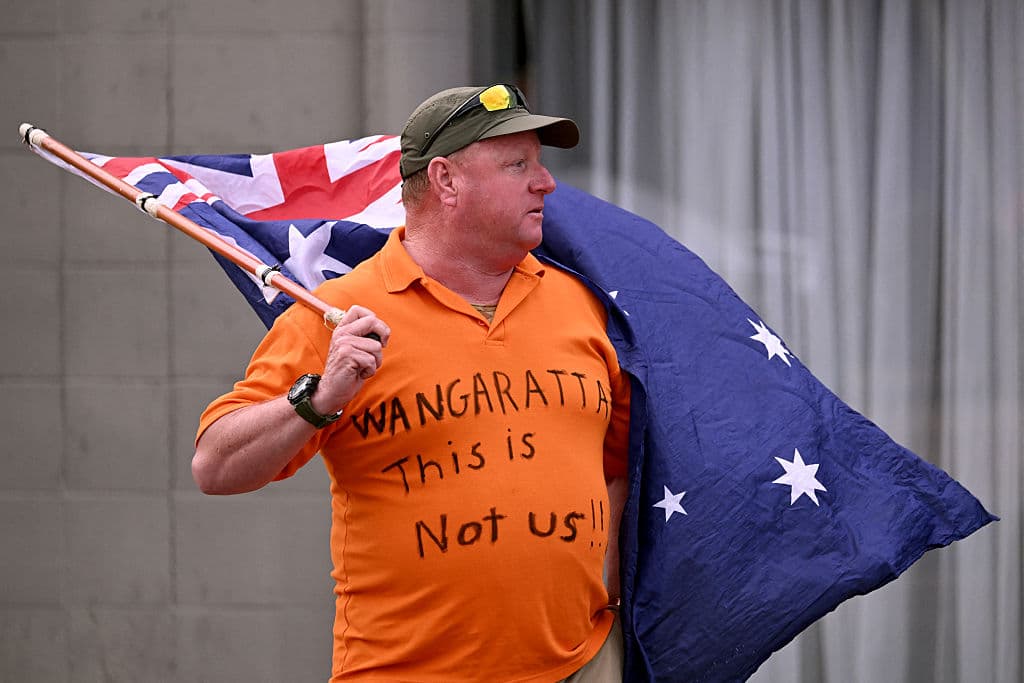
Given the incredible tools they have at their disposal – algorithms driven by rapidly advancing artificial intelligence that are designed to keep people scrolling on their platforms – it seems reasonable to conclude that if their business model benefits from extremism, they will not be changing it unless they are forced to.

This week, the Albanese Government reintroduced its Bill to introduce a “Digital Duty of Care” on social media.

It would allow users to choose to opt out of algorithms and only see content from those they follow, but it will also impose a “duty of care” on social media companies to remove seriously harmful and extreme content.

Australia is taking a leading role in social media regulation, following the government’s ban on under-16-year-olds using the platforms, which enjoyed bipartisan support and has since been adopted by several other countries.

However, the Digital Duty of Care faces a less certain future when it faces the Senate – the Coalition and One Nation have slammed it and all but ruled out supporting it, labelling it an affront to free speech and an attempt to create a regime of political censorship.

The rapid pace of technological change across social media demands new and evolving action to tackle its worst elements

Despite the government scrapping a ministerial power in the Bill to designate new serious harms, leaving these in the sole domain of the parliament, they remain unmoved to date.

Labor’s only pathway now is to negotiate with the Greens, who are demanding it go further in penalties and expectations of the tech giants, and the right for individuals to sue them directly for compensation.

The Coalition’s outright opposition to the Bill puts it at odds with Jewish community leaders and Special Envoy Jillian Segal, who has not only backed the laws as an important action against online antisemitism, but called for social media regulation in her July 2025 Plan to Combat Antisemitism. The ECAJ has also backed the laws, as well as calls for them to go further.

Notably, former Liberal Treasurer Josh Frydenberg also cited the Digital Duty of Care in his Royal Commission submission, describing social media as “a beacon of harm in its own right” and calling for urgent strong measures to make it safer.

Labor faced criticism from both the Jewish community and the Coalition for its delays in responding to or enacting the Plan’s recommendations, especially in the wake of Bondi. But despite the Coalition repeatedly backing the Plan’s full implementation, they now find themselves on the other side of the fence.

When the Royal Commission delivers its final report and recommendations in December, the likelihood of further recommendations on social media regulation begs a critical question about how the Coalition will respond to it.

Of course, this is not the first time the Coalition has cited free-speech concerns in opposing legislation our community was calling for. Their opposition to new Serious Vilification laws in the wake of Bondi forced Labor to back down in its initial Bondi response, and despite widespread condemnation of the doxxing of Jewish creatives and artists, they also voted against anti-doxxing laws, which were ultimately legislated under then-Attorney General Mark Dreyfus.

This tension between legislative action against antisemitic hate speech and the Coalition’s ideologically rigid approach to freedom of speech stretches back to the Abbott and Turnbull governments’ attempts to water down the Racial Discrimination Act, but it has received far less criticism than Labor’s foreign policy shifts away from Israel.

And while we spend immense attention debating and criticising the mainstream media’s coverage of Israel and antisemitism, the truth is that as these institutions decline in influence and reach, social media is doing the opposite.

Facebook, X, Instagram and TikTok reach far more eyes and ears than the ABC or The Age, are far more dangerous platforms for antisemitism, and they face far less regulation or oversight.

Free speech is a vital bedrock of our liberal democracy, but we have all seen the very serious consequences when extremist hate speech is left unchecked.

The Liberal Party was founded on classical liberal principles, although there has always been a recognition that freedoms can be limited where they are being used to cause serious harm to individuals or communities.

It is impossible to argue that the current legislative settings are working against the spread of antisemitism online. The rapid pace of technological change across social media demands new and evolving action to tackle its worst elements.

None of this is to say that the Coalition should wave through legislation Labor puts up just because the Jewish community asks it to. However, its strong rhetoric on antisemitism risks losing credibility if it refuses to make clear what changes it wants to see on the social media Bill, or offers up an alternative to crack down on antisemitic hate online.

Social media companies have demonstrated time and time again that, left to their own devices, they will not take the necessary action to curb it.

Australia cannot solve the global threat posed by online extremism and antisemitism alone, but we can play a role in pushing other nations to act by leading the way, setting new expectations for companies, and promoting the push in diplomatic channels, just as we lead the way with the under-16 ban.

Like the under-16 ban, we do not yet know if it will work or if it will fix the problem, yet the scale of online harm is too great not to try something. And our community will be best served if all our parties that care about combating antisemitism come to the table and try to make it work.

You might also like
  • Traditional antisemitic myths dominate online antisemitism: new study
    Deborah Stone
  • When security clashes with hospitality
    Jarod Rhine-Davis
  • Legendary magicians who made their Jewish identities disappear
    Nina Siegal
logomark.67a07ee3
We believe in the free flow of information

Republish our articles for free, online or in print, by using our Creative Commons licence

You might also like

    Emergency Exit
    FeatureAustralia

    Learning from the Jewish refugee story

    Peter Kohn
    Isabelle oderberg
    NewsAustralia

    ‘The Jewish Independent’ commentary makes finals in Walkley journalism awards

    The Jewish Independent 1
    Helen Haines attack
    NewsAustralia

    Alleged Helen Haines attacker described as anti-Israel activist

    TJI Pick

About the author

Dean Sherr

Dean Sherr

Dean Sherr is a consultant and a former adviser to state and federal Labor MPs, including media adviser to Prime Minister Anthony Albanese. He has also served as a past AUJS National President and ECAJ councillor.

More from the author

AnalysisAustralia

Now is the time for the Royal Commission to deliver, not be politicised

AnalysisAustralia

Labor MPs joint speeches provide glimmer of hope amid division

AnalysisAustralia

ALP draft stained by Hamas omission but conference set to maintain status quo

OpinionAustralia

Segal report backlash reveals the heart of the antisemitism debate’s problem