Aa
  • Read, Watch, Listen
  • TJI Series
  • Community Action
  • Events
  • Zedi
Follow us and continue the conversation
  • LinkedIn
  • Instagram
  • FaceBook
  • X
  • YouTube
Test yourself with the TJI Quiz!

Adjust size of text

Aa

Follow us and continue the conversation

  • LinkedIn
  • Instagram
  • FaceBook
  • X
  • YouTube

Your saved articles

You haven't saved any articles

What are you looking for?

Original reporting, insightful analysis and diverse views, delivered straight to your inbox

  • LinkedIn
  • Instagram
  • FaceBook
  • X
  • YouTube
Your support fuels our mission to inform, entertain and inspire.

The Jewish Independent is bound by the Standards of Practice of the Australian Press Council. If you believe the Standards may have been breached, you may approach The Jewish Independent or make a complaint to the Australian Press Council in writing at www.presscouncil.org.au. The Council may also be contacted on 1800 025 712.

  • Our Story
  • Contact us
  • Our Team
  • Support us
  • Guidelines
  • Pitch your idea
  • Republishing us
  • Community Action
  • Our Awards
  • LinkedIn
  • Instagram
  • FaceBook
  • X
  • YouTube
Aboriginal FlagTorres Strait Islanders Flag

The Jewish Independent acknowledges Aboriginal and Torres Strait Islander peoples as the Traditional Owners and Custodians of Country throughout Australia. We pay our respects to Elders past and present, and strive to honour their rich history of storytelling in our work and mission.

© The Jewish Independent 2026All Rights Reserved
Website design and development by Your Creative, MelbourneTerms & ConditionsPrivacy Policy
HomeRead, Watch, ListenIsrael
OpinionIsrael

My dream for Palestinian cancer patients

West Bank Palestinian patients lack access to clinical trials. Jewish philanthropy could open a path to participation in Israeli trials
David Adler
Print this
August Victoria Hospital

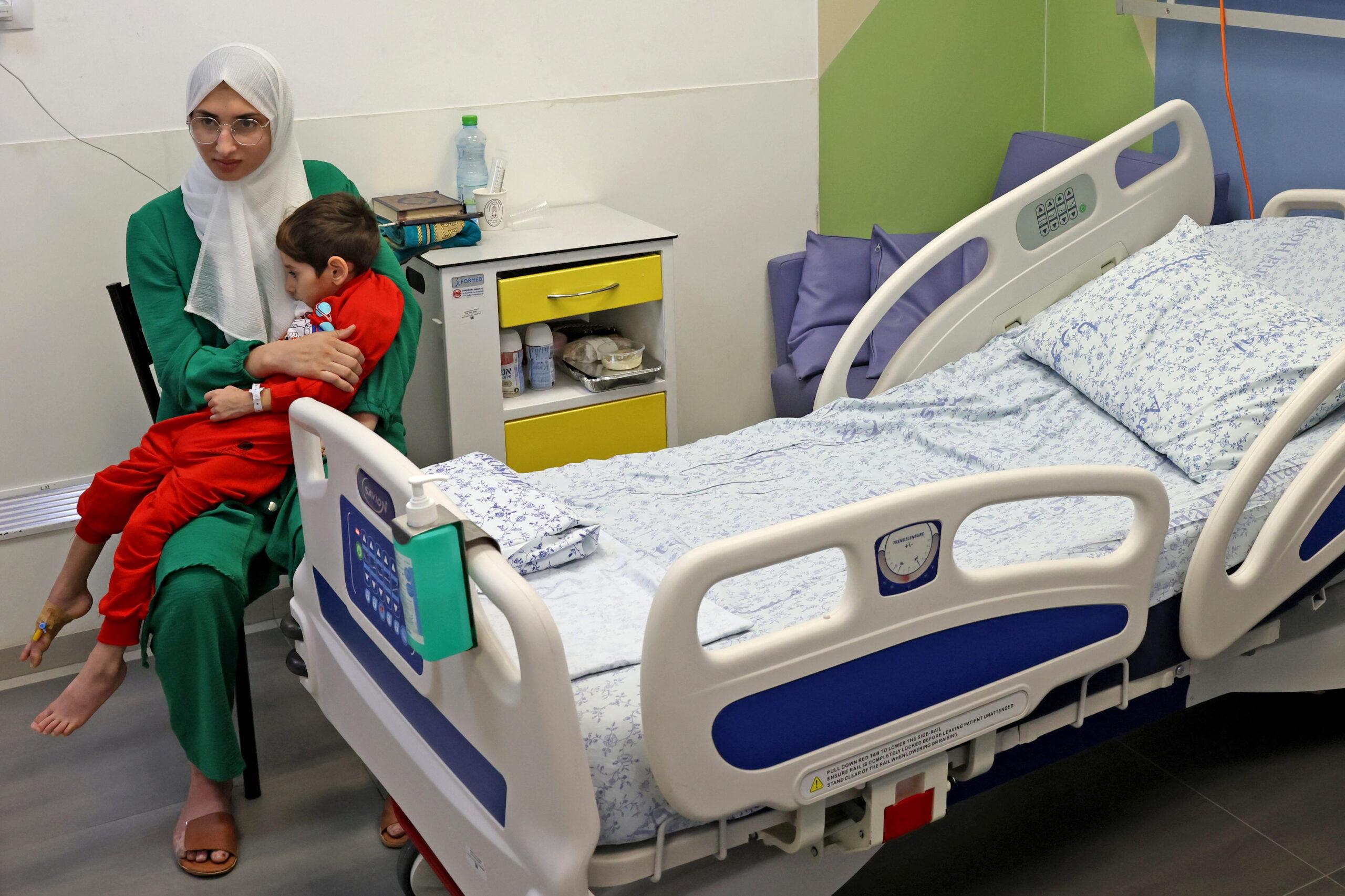
A Palestinian mother from Gaza City, with her 4-year-old son suffering from cancer, at the Augusta Victoria Hospital on October 17, 2023 (Photo by Ahmad Gharabli/AFP via Getty Images)

Published: 9 November 2026

Last updated: 9 November 2026

When a patient's cancer continues to progress despite available treatment, a clinical trial testing an investigational anti-cancer medicine may offer an option worth exploring.  

For Palestinian cancer patients in the West Bank, however, such opportunities may never even be considered because there is no clearly documented, systematic pathway connecting their treating oncologists with Israeli hospitals conducting therapeutic cancer trials. 

This gap is particularly relevant to Augusta Victoria Hospital in East Jerusalem, an important provider of Palestinian cancer care that offers chemotherapy, radiotherapy, surgery and supportive services.  

Although the hospital has participated in clinical research, I could not identify an ongoing program there of industry-sponsored trials testing investigational anti-cancer medicines in publicly available trial registries, nor a documented mechanism through which its oncologists can routinely obtain clinical trial assessments from Israeli research hospitals. Consequently, potentially appropriate research opportunities may never be identified or discussed with patients who might qualify for further evaluation. 

I propose that Jewish philanthropic foundations and individual donors fund the establishment of a structured clinical trial referral and assessment program, connecting Palestinian oncologists at Augusta Victoria Hospital and other hospitals and oncology centres throughout the West Bank with Israeli hospitals conducting therapeutic oncology trials.  

Through such a program, Palestinian oncologists could refer potentially eligible patients to Israeli clinical trial investigators, securely share relevant medical information with patient consent and obtain preliminary assessments before patients need to travel. Philanthropic funding would support dedicated clinical coordinators who would facilitate communication between participating institutions, organise medical assessments and assist patients throughout the referral process and any subsequent trial participation. 

There is already a history of medical cooperation on which such an initiative could build. A 2025 study of children treated at Augusta Victoria reported that 27 of 36 patients referred for bone marrow transplantation were directed to Sheba Medical Center in Israel, demonstrating that Palestinian and Israeli physicians have coordinated specialised cancer treatment. Although these referrals involved established medical procedures rather than therapeutic clinical trials, they provide an encouraging precedent for extending cooperation to clinical trial assessments. 

Jewish donors have also demonstrated how philanthropy can support medical cooperation between Israelis and Palestinians, as illustrated by an August report in eJewishPhilanthropy describing charitable funding for the training of Palestinian pediatric doctors and nurses at an Israeli hospital. While that initiative focused on professional training, it demonstrates how philanthropic support can facilitate practical medical collaboration and provides a relevant example for extending such support to patients seeking access to therapeutic oncology trials. 

To make the proposed referral program operational, it would be essential to build on existing arrangements for coordinating Palestinian patients' access to specialised medical treatment in Israel. The Israeli Health Coordination Unit already works with Palestinian healthcare providers to facilitate access to medical treatment, and the proposed program could coordinate with the relevant Israeli authorities on entry permit applications and scheduled hospital visits.  

Because oncology trials frequently require repeated visits for treatment, imaging, laboratory testing and safety monitoring, philanthropic funding could also support transportation, overnight accommodation when necessary and assistance for accompanying family members, helping patients meet trial requirements while maintaining continuity of medical care. 

A practical pilot could begin with willing Palestinian oncology teams and a small number of Israeli research hospitals, allowing physicians to securely share relevant medical records, with patient consent, for preliminary assessment of potential trial eligibility. This initial review could help determine whether further screening is warranted before patients undertake potentially difficult travel arrangements, while also providing a clear explanation when no suitable study is identified. 

Philanthropic support would be particularly valuable in addressing the practical needs that arise between participating institutions. A bilingual patient navigator and clinical coordinator could facilitate communication, arrange translation of medical records, coordinate appointments and help families navigate the process, while additional funding could cover necessary tests, transportation and accommodation when these expenses are not otherwise supported. Costs that properly belong to research sponsors or healthcare providers should remain their responsibility. 

Importantly, participation in any clinical trial must remain entirely voluntary, with patients receiving understandable explanations of potential risks, uncertain benefits and available alternatives. Clinical decisions would remain with qualified physicians under approved research protocols, and arrangements for safety monitoring, emergency care and continuity of treatment would need to be established before enrolment. Equally important, declining participation must never compromise access to appropriate standard medical care. 

The pilot should initially focus on a manageable number of patients from the West Bank, with success measured by the quality and timeliness of clinical assessments, practical assistance to families and continuity of care rather than enrollment numbers. Palestinian and Israeli clinicians, together with a patient representative, could evaluate the experience before considering expansion, including to Gaza when conditions allow for safe participation and reliable follow-up. 

Jewish philanthropic organisations and individual donors now have an opportunity to build on established medical cooperation by supporting a focused initiative that could open new possibilities for Palestinian cancer patients. I urge foundations interested in healthcare and humanitarian collaboration to work with willing Palestinian and Israeli clinicians to establish a modest pilot, recognising that its greatest achievement would not necessarily be the number of patients enrolled in trials, but ensuring that potentially suitable opportunities are considered and that patients receive trustworthy medical guidance and practical assistance when appropriate.

You might also like
  • Eisenkot’s conditions for forming Israel’s next government
    Ruth Eglash
  • Jews, Muslims and the new Democrat-dominated Congress
    Dan Coleman
  • Widespread destruction as IDF carries out large-scale operation in Hebron
    Ben Lynfield
logomark.67a07ee3
We believe in the free flow of information

Republish our articles for free, online or in print, by using our Creative Commons licence

You might also like

    Resilience
    AnalysisIsrael

    Traumatech Nation: How Israel became a mental health leader

    Maayan Hoffman 1
    ISRAEL-VOTE
    Israel Votes 2026AnalysisIsrael

    Growing pressure for a minority Change government in Israel

    Shahar Burla 1
    Protest against settler violence in Jerusalem
    Israel

    Record spike in settler violence ahead of election

    Ben Lynfield

About the author

David Adler

David Adler

Professor David Adler is Chief Scientific & Medical Officer of the PATHORA Institute of Pathology & Tissue Medicine. He is a senior pharmaceutical leader in oncology drug development and translational medicine with over 15 years of experience, including a decade in senior leadership at Bayer AG’s Global Oncology Clinical Development organisation. He holds academic appointments at the Hebrew University of Jerusalem, Ben-Gurion University of the Negev, and the University of Bonn.