Aa
  • Read, Watch, Listen
  • TJI Series
  • Community Action
  • Events
  • Zedi
Follow us and continue the conversation
  • LinkedIn
  • Instagram
  • FaceBook
  • X
  • YouTube
Test yourself with the TJI Quiz!

Adjust size of text

Aa

Follow us and continue the conversation

  • LinkedIn
  • Instagram
  • FaceBook
  • X
  • YouTube

Your saved articles

You haven't saved any articles

What are you looking for?

Original reporting, insightful analysis and diverse views, delivered straight to your inbox

  • LinkedIn
  • Instagram
  • FaceBook
  • X
  • YouTube
Your support fuels our mission to inform, entertain and inspire.

The Jewish Independent is bound by the Standards of Practice of the Australian Press Council. If you believe the Standards may have been breached, you may approach The Jewish Independent or make a complaint to the Australian Press Council in writing at www.presscouncil.org.au. The Council may also be contacted on 1800 025 712.

  • Our Story
  • Contact us
  • Our Team
  • Support us
  • Guidelines
  • Pitch your idea
  • Republishing us
  • Community Action
  • Our Awards
  • LinkedIn
  • Instagram
  • FaceBook
  • X
  • YouTube
Aboriginal FlagTorres Strait Islanders Flag

The Jewish Independent acknowledges Aboriginal and Torres Strait Islander peoples as the Traditional Owners and Custodians of Country throughout Australia. We pay our respects to Elders past and present, and strive to honour their rich history of storytelling in our work and mission.

© The Jewish Independent 2026All Rights Reserved
Website design and development by Your Creative, MelbourneTerms & ConditionsPrivacy Policy
HomeRead, Watch, ListenIsrael
Israel Hamas WarExplainerIsrael

The ICJ has ruled on genocide in Myanmar. What does it mean for Israel?

The International Court of Justice has found that Myanmar is responsible for genocide against the Rohingya. The landmark decision has definite relevance for South Africa's case regarding Gaza
Shahar Burla
Print this
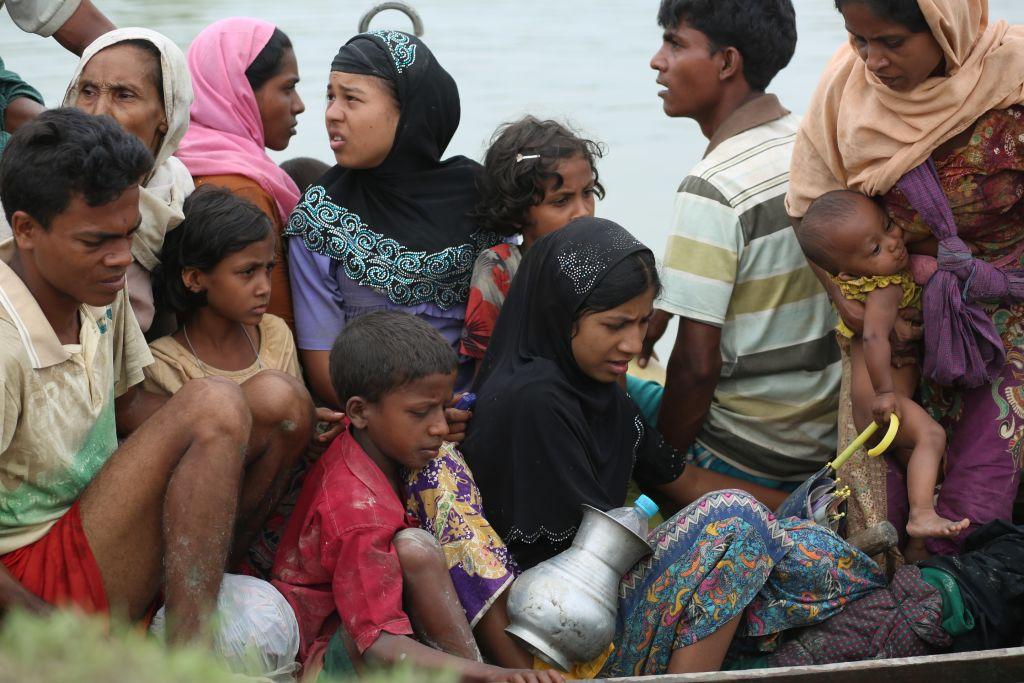
Rohingya people fled from oppression in Myanmar

Rohingya refugees wait to cross the Myanmar border to Bangladesh after attacks in 2017, which the ICJ has now ruled were part of a state genocide (Zakir Hossain Chowdhury/Anadolu Agency/Getty Images)

Published: 25 November 2026

Last updated: 25 November 2026

Last week, the International Court of Justice (ICJ) in The Hague ruled, in a nine-to-six majority, that Myanmar is responsible for having committed genocide against the Rohingya in 2017. In the landmark ruling, the court ordered that Myanmar must provide restitution and compensation to the victims of its “clearance operations” in Rakhine State in 2017. It is the first time since the adoption of the UN Genocide Convention in 1948 that the court has found a state responsible for committing genocide.

At the end of its ruling, the court ordered Myanmar to allow the return of the Rohingya, who were driven from their homes nearly a decade ago and forced into refugee camps in Bangladesh, and to compensate the survivors. Myanmar has two years to report to the ICJ on its orders of restitution. If it is unable to carry out restitution, the court ordered the government to pay reparations to the Rohingya, the amount of which will be determined at a later stage. It is uncertain whether Myanmar will implement the ruling, which is legally binding.

The landmark decision could have significant implications for the legal treatment of cases brought under the 1948 Genocide Convention, particularly South Africa’s pending case alleging that Israel has committed genocide in Gaza.

Key takeaways from the ruling

The new ruling does not mean that the court will necessarily rule in a few years that Israel's actions in Gaza constitute genocide. However, by all accounts, Israel's legal position has been significantly weakened by the judgment against Myanmar. Nir Hason in Haaretz argues that what should worry Israel is how closely Myanmar's arguments resemble those it has made in response to accusations of genocide. The similarities between the two cases are numerous.

  • First state in history to be found responsible for genocide:
    Myanmar became the first state in history to be found responsible for genocide, where previously only individuals had been convicted. Before this case, only Serbia had faced the charge of genocide at the ICJ, in cases brought by Croatia and Bosnia and Herzegovina. The court determined that the killing of thousands of Bosniak men and boys in Srebrenica in 1995 was genocide, but it found insufficient evidence to attribute the killings by Bosnian Serb forces to Serbia. Still, the court ruled that Serbia violated its obligation under the Genocide Convention by failing to use its influence over those forces to prevent genocide. In the second case, brought by Croatia against Serbia, the court made no finding that genocide was committed. Instead, it ruled in a 2015 judgment that the Yugoslav army and Serb forces had the intent to ethnically cleanse Croats from Serb-held areas of Croatia, forcing between 80,000 and 100,000 Croats and other non-Serbs to flee the Krajina region between April 1991 and April 1992.
  • Third parties can bring cases to the ICJ: The case against Myanmar was already significant, in the Israeli context, because it set a new precedent for who can bring cases to the ICJ. The Gambia, a small African nation with no direct connection to the Rohingya, brought Myanmar before the court under the Genocide Convention in 2019. Three years later, the judges accepted that any party to the treaty can enforce it. In the Israeli case, it was South Africa that brought genocide charges against Israel at the ICJ in late 2023.
  • The death toll argument: Like Israel, Myanmar argued that its military operations could not constitute genocide because only a small proportion of the population had been killed. It also argued that if its army had intended to commit genocide, it could have killed civilians on a far greater scale. Israel raised a very similar claim. The judges rejected both arguments outright. “While a high relative number of deaths may well be an important factor from which to infer genocidal intent, a comparatively lower percentage of deaths does not, by itself, necessarily preclude a finding of genocidal intent,” the judges wrote. The death toll offers Israel little grounds for reassurance, either. According to the court, at least 10,000 people were killed in Myanmar's campaign, representing 1.2 per cent of the Rohingya population. In Gaza, at least 75,000 people have been killed, about 3.5 per cent of the population.
  • “Genocidal acts”: The judges also determined that the assessment must include not only those killed but also those who suffered in other ways, including people who were wounded, lost their homes or were displaced, since they, too, were subjected to “genocidal acts”. The majority of judges also ruled that the expulsion of a population, the destruction of homes and forcing people to live in tent camps could, taken together, constitute genocidal acts because of the severe psychological harm inflicted on civilians. This, too, should concern Israel, which has forced nearly two million people to live in tents and left homes across Gaza in ruins, without basic living conditions, for three years.
  • Refusing to cooperate with the UN: Like Israel, Myanmar refused to cooperate with UN investigative commissions, arguing that they were biased. The judges deemed the commissions' reports reliable, relied on them to establish the facts and criticised Myanmar's refusal to cooperate with the investigations.
  • Statements by leaders: The judges also gave considerable weight to inflammatory and racist statements by Myanmar's leaders, viewing them as evidence of genocidal intent. In Israel's case, such statements were even harsher and far more widespread, reaching across all levels of decision-making. South Africa submitted dozens of pages of extreme remarks by Israeli leaders and officials to the court, ranging from ministers and Knesset members declaring that “there are no innocents in Gaza” to Prime Minister Benjamin Netanyahu's reference to Amalek.
  • Failure to meaningfully investigate or prosecute soldiers: Another point of similarity that works against Israel is Myanmar's failure to meaningfully investigate or prosecute soldiers and officers implicated in war crimes. “The court considers that Myanmar has not genuinely investigated, or, if warranted, prosecuted its soldiers and commanders and punished them with penalties that could be considered commensurate with the crime of genocide,” the judges wrote. In the Israeli case, there is no commission of inquiry into the conduct of the war, and there have been just a few military investigations and prosecutions.
  • Targeting of children: The court described the targeting of children as striking at the “foundation” of the Rohingya as a group. The ICJ said up to 2,109 Rohingya children under the age of five had been killed. In Gaza, the estimate is that more than 5,000 Palestinian children under five years old have been killed.
  • The international humanitarian law argument: The ICJ did not state in its ruling whether Myanmar had complied with international humanitarian law, but asserted that the laws on genocide and international humanitarian law are two distinct bodies of rules with different aims. Israel has consistently argued that its military operations in Gaza have abided by international humanitarian law, including obeying the prohibitions on targeting civilians and civilian infrastructure, and only using force proportionate to the military advantage it expected from an attack. But the ICJ’s assertion that complying with such laws does not preclude genocidal intent is another problem for Israel in arguing its case against South Africa’s charges.

Core distinctions

Hamas' October 7 attack involved the mass murder of civilians, the abduction of 251 people to the Gaza Strip, where they were held in harsh conditions, and massive rocket fire targeting Israeli population centres. Nothing comparable happened in Myanmar. Hamas' attack substantially strengthens Israel's argument that it was acting in self-defence. Israel can also argue that Hamas continued to wage war in a densely populated, fortified urban area, using an extensive network of tunnels, thereby contributing to civilian casualties and forcing Israel to evacuate residents and destroy infrastructure across Gaza. In Myanmar, by contrast, there was virtually no military resistance after the initial attack.

Another difference lies in the nature of the atrocities documented in Myanmar. These included mass rape, mass executions, the abduction of infants from their mothers before they were thrown into bonfires or rivers, and killings with machetes, among other horrors. Israel can defend itself by arguing that most of the civilians killed in Gaza were collateral casualties of legitimate military operations.

One further source of reassurance for Israel is that the ruling was not unanimous. Six judges dissented, arguing that the majority had effectively changed the definition of genocide. Israel's representatives at the ICJ will likely seek to rely on their opinions, arguing that the majority lowered the evidentiary threshold for establishing genocide.

Ultimately, there are significant differences between the two cases, the most important being that Hamas is a murderous terrorist organisation, infinitely more dangerous than the Arakan Rohingya Salvation Army, the armed group representing the Rohingya. However, the Myanmar ruling significantly harmed parts of Israel's defence against accusations of genocide, and it is difficult to see how Israel can defend the near-total destruction of the Gaza Strip and the mass killing of civilians.

You might also like
  • Looming fear of political violence in post-election Israel
    Dror Doron
  • Building future beyond fear: a conversation
    Deborah Stone & Orly Erez-Likhovski
  • What visiting the Korean DMZ taught me about the Israel-Palestine conflict
    Ric Benjamin
logomark.67a07ee3
We believe in the free flow of information

Republish our articles for free, online or in print, by using our Creative Commons licence

You might also like

    Planes Flying Over Barcelona
    Israel Votes 2026InterviewAustralia

    The Israelis who flew home to vote

    Gideon Cohen
    Arab Israeli Palestinian election vote
    Israel Votes 2026AnalysisIsrael

    Netanyahu pushed Shin Bet head to spread racist misinformation at election

    Eetta Prince-Gibson
    Eisenkot Netanyahu
    AnalysisAustralia

    Could the West be regained by an Eisenkot coalition?

    Dean Sherr 2

About the author

Shahar Burla

Shahar Burla

Dr Shahar Burla is a Sydney-based researcher, lecturer and Contributing Editor of TJI. Shahar holds a Master’s degree in political science from Hebrew University and a PhD in political science from Bar-Ilan University. He is the author of Political Imagination in the Diaspora: The Construction of a Pro-Israeli Narrative (2013) and co-editor of Australia and Israel: A Diasporic, Cultural and Political Relationship (2015).

More from the author

NewsIsrael

Flooding and illness increase urgency of humanitarian relief in Gaza

AnalysisIsrael

Haredi party may change sides, enabling Eisenkot to form new government

AnalysisIsrael

Growing pressure for a minority Change government in Israel

ExplainerIsrael

Israel’s election fails to deliver a clear path to a government