Published: 25 November 2026
Last updated: 25 November 2026
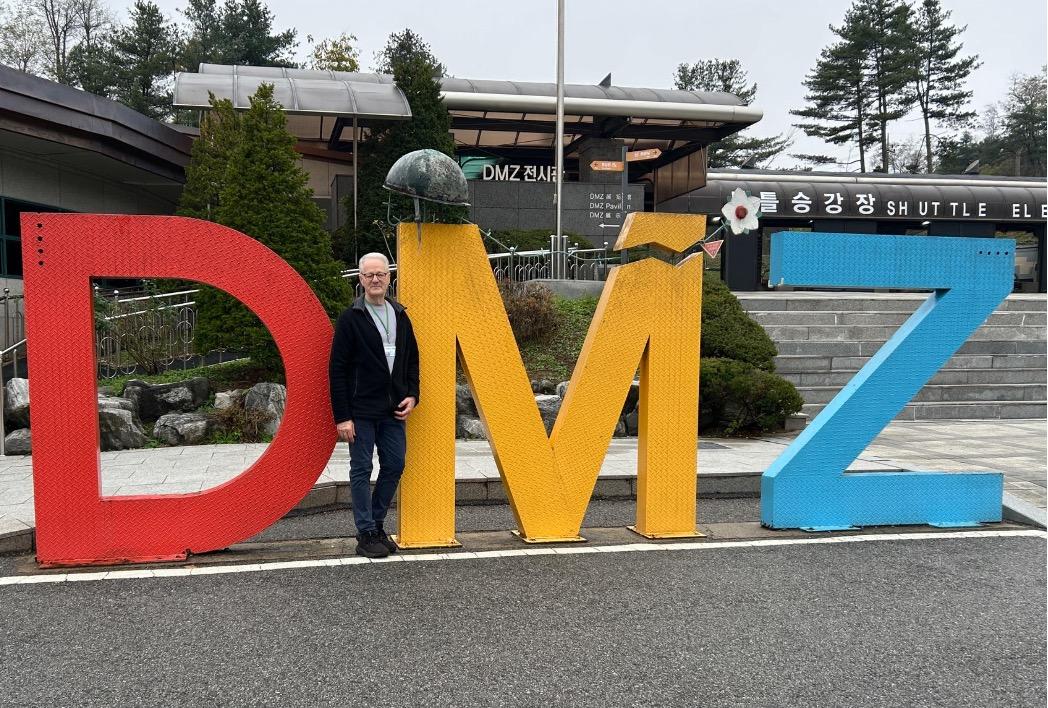
I have just returned from South Korea. Part of the trip was a tour to the Korean Demilitarized Zone (DMZ). I had expected it to look and feel like a tense standoff with soldiers on both sides, separated by four kilometres of no-man's-land with a fence down the middle, neatly identifying the border between these arch enemies.
What I saw and heard was something quite different. This experience, as well as what I learned during the rest of the trip had me reflecting on something much closer to my world, the Israeli-Palestinian conflict.
At the DMZ, there is a wall as high as Israel’s separation barrier, topped with barbed wire. There are guard towers, bomb shelters and a discovered tunnel that North Korea had dug under the border in order to invade. Unnervingly, the tunnel is a major tourist attraction and while you walk its 530 metres under flood lights, with reinforced scaffolding to protect you from harm, it is still a tunnel that you could not stand up in and is barely wide enough for two people to pass each other. The tunnel reminded me of the hostages in Gaza and the image of their suffering in such conditions almost upended the day for me.
But visiting Korea’s DMZ turned out to prompt a much more productive reflection on the conflict between Israelis and Palestinians.
Our guide presented the DMZ, its wall, the towers and the tunnel as historical artefacts, rather than as part of an ongoing conflict. The story he told was not about war but about people, villagers who lived in the DMZ and refused to move at the end of the war in 1953, and the stories of defectors.
The tourist-friendly environment reinforced his attitude. With its souvenir shops and South Korean cafes overlooking North Korea, the DMZ is more like a museum tour than a visit to an on-going zone of conflict.