Aa
  • Read, Watch, Listen
  • TJI Series
  • Community Action
  • Events
  • Zedi
Follow us and continue the conversation
  • LinkedIn
  • Instagram
  • FaceBook
  • X
  • YouTube
Test yourself with the TJI Quiz!

Adjust size of text

Aa

Follow us and continue the conversation

  • LinkedIn
  • Instagram
  • FaceBook
  • X
  • YouTube

Your saved articles

You haven't saved any articles

What are you looking for?

Original reporting, insightful analysis and diverse views, delivered straight to your inbox

  • LinkedIn
  • Instagram
  • FaceBook
  • X
  • YouTube
Your support fuels our mission to inform, entertain and inspire.

The Jewish Independent is bound by the Standards of Practice of the Australian Press Council. If you believe the Standards may have been breached, you may approach The Jewish Independent or make a complaint to the Australian Press Council in writing at www.presscouncil.org.au. The Council may also be contacted on 1800 025 712.

  • Our Story
  • Contact us
  • Our Team
  • Support us
  • Guidelines
  • Pitch your idea
  • Republishing us
  • Community Action
  • Our Awards
  • LinkedIn
  • Instagram
  • FaceBook
  • X
  • YouTube
Aboriginal FlagTorres Strait Islanders Flag

The Jewish Independent acknowledges Aboriginal and Torres Strait Islander peoples as the Traditional Owners and Custodians of Country throughout Australia. We pay our respects to Elders past and present, and strive to honour their rich history of storytelling in our work and mission.

© The Jewish Independent 2026All Rights Reserved
Website design and development by Your Creative, MelbourneTerms & ConditionsPrivacy Policy
HomeRead, Watch, ListenIsrael
AnalysisIsrael

Unlikely bedfellows: How Arab parties could deliver Israel’s next government

The goal of ousting Netanyahu could prompt an unprecedented alliance between ideological opponents
Ben Lynfield
Print this
Joint list

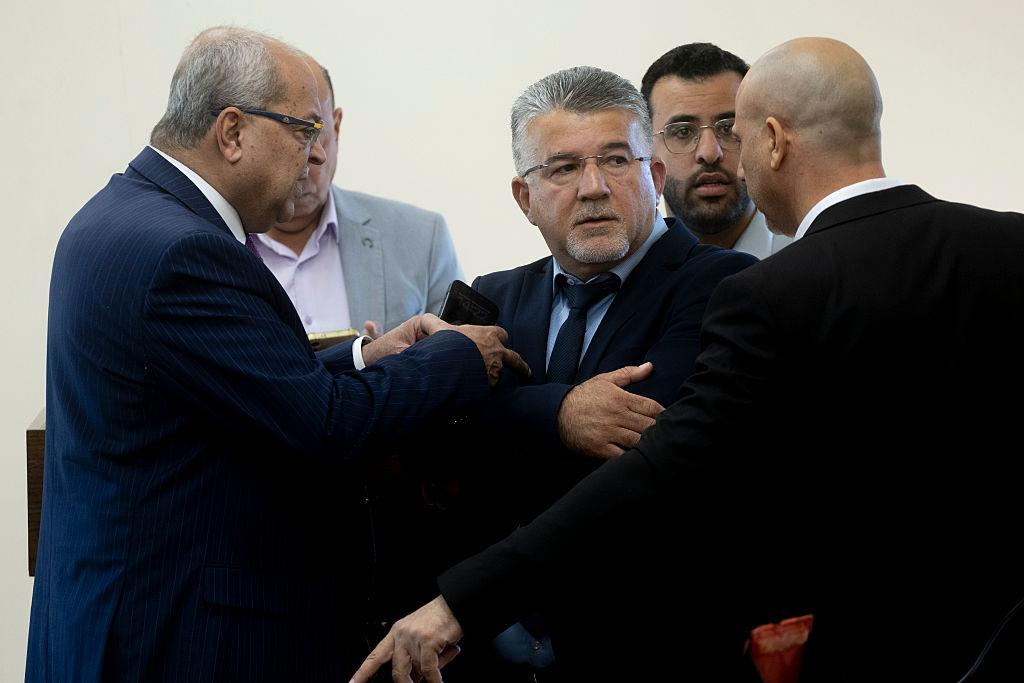
Leader of the Joint Arab List, Ahmed Tibi (L) and Dr Yosef Jabareen (C), attend a party meeting at the Israeli parliament, the Knesset, after the opening of the Knesset (Amir Levy/Getty Images)

Published: 12 November 2026

Last updated: 12 November 2026

Arab leaders who are struggling for relevance and power amid Israel’s coalition negotiations, say they are putting ideological differences with Zionist parties aside in order to pursue an urgent task: ousting Benjamin Netanyahu.

Reem Hazzan, a member of the National Bureau of the Hadash Party in the Arab Joint List, told The Jewish Independent: “We’re not supposed to ideologically get along with them, we’re supposed to have a very clear target of what we want: to get rid of Netanyahu. On that, we and they meet.”

Hadash rejects Zionism and calls for transforming Israel from a Jewish state to a “state of all its citizens”. Eisenkot, a former chief of staff, insists Israel must simultaneously be both a Jewish and democratic state.

During the campaign, Eisenkot appeared to rule out Arab partners, but he will need to compromise in order to oust Netanyahu. The Islamist Ra’am party is likely to enter the coalition, and the anti-Zionist Joint List will need to provide a safety net to foil no-confidence votes.

“In the eyes of Eisenkot, Israel is in danger and needs to be freed from Netanyahu. There is a price for this and he will pay it,” says Salim Brake, a political scientist at the Open University.

What would the Joint List want in exchange for providing a safety net to Eisenkot? Hazzan identifies tackling organised crime, stopping demolitions and repealing discriminatory planning laws, budget allocations for schools and fighting racism and “some sort of political horizon” on the Palestinian issue.

If Eisenkot succeeds in forming a government, it could be guided by the classic Middle Eastern adage: the enemy of my enemy is my friend
The Arab parties view continuation of Netanyahu’s rule as threatening Arab citizens who have suffered from increasing incitement, police negligence in halting a soaring murder rate, and home demolitions. Netanyahu’s extremist finance minister Bezalel Smotrich has also raised the idea of establishing new settlements in order to “Judaize the Galilee”.

The Zionist opposition views Netanyahu as an immediate danger because of security failures and the impression that he pursues his own personal interests rather than the good of the country. As prime minister, he shirked responsibility for the October 7 disaster, failing to establish a state commission of inquiry; he is implicated in corruption scandals, including allegations that close advisers were paid by Qatar and served its interests; and the judicial revolution is seen as threatening the country's democratic principles. Recent Trump-style claims that the opposition “stole” the elections have intensified the sense of threat.

Electoral arithmetic

Despite each side seeing Netanyahu’s continuation in power as a mortal danger, Eisenkot joining with the Arab parties is not a done deal.

Avigdor Lieberman, head of the hawkish opposition party Yisrael Beitenu, opposes any arrangements with Arab parties and is instead trying to bring Haredi parties traditionally in the Netanyahu camp on board.

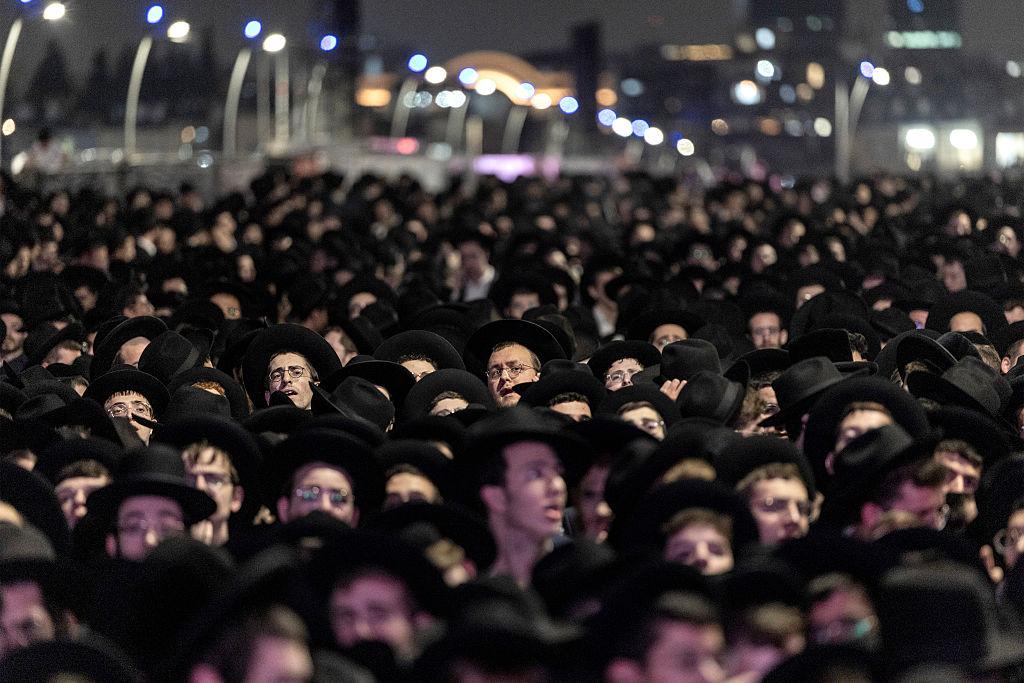
The Ashkenazi United Torah Judaism (UTJ) could bring Eisenkot's coalition to 60 in the 120-member Knesset, but a less likely coalition with the Sephardi Shas would also be needed for a majority. Alternatively, Eisenkot could get a majority with UTJ and Ra'am's eight seats.

Without the Haredi parties, Eisenkot would need both Arab parties.

Even if a coalition is not formed within the 28-day period allotted to Eisenkot, the Arab parties could still be instrumental in helping the Zionist opposition have a majority for passing crucial legislation, paving the way for a commission of inquiry into October 7 and nullifying antidemocratic steps, two bitter legacies of Netanyahu.

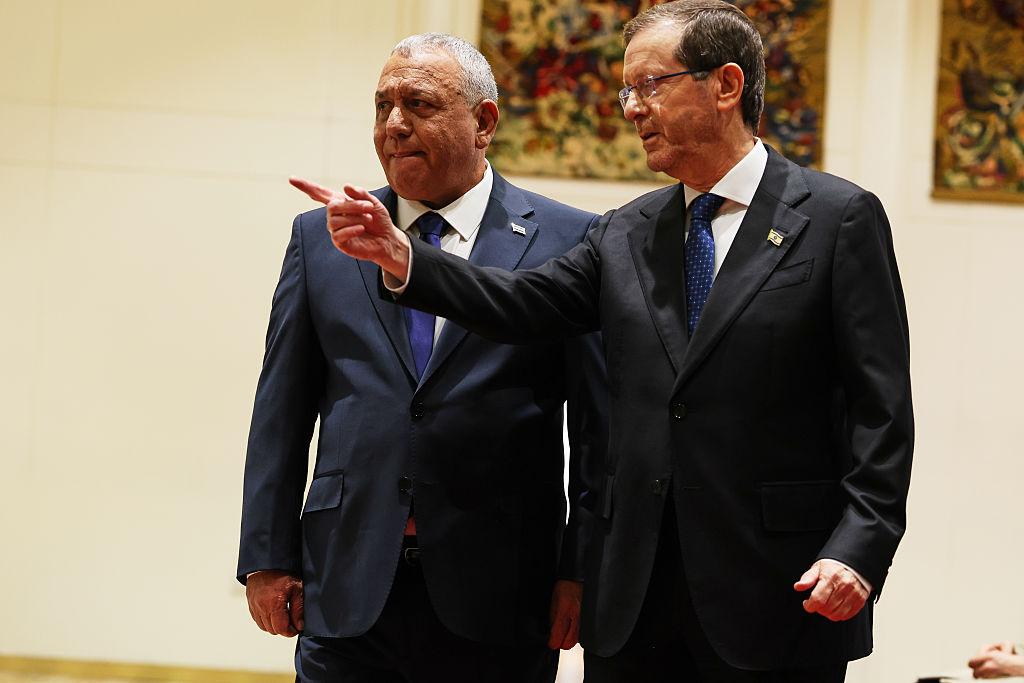
Tacit cooperation began last week when all 19 Arab MKs informed President Isaac Herzog that they back Eisenkot to be the first leader tasked with forming a government. And next Tuesday, another cooperative step is expected to lead to the replacement as speaker of the Knesset of Amir Ohana from Netanyahu’s Likud party.

Ra'am: the easier partner

Ra'am, which served in a previous coalition to the satisfaction of then prime minister Naftali Bennett and has been seen as a moderate force in recent years, is very eager to join the coalition.

Eisenkot during the campaign had set four conditions for a party to join a coalition led by his Yashar party, three of which were met by Ra'am leader Mansour Abbas. He has gone a very long way from any of the militancy associated with the Muslim Brotherhood, his party’s mother movement.

While Abbas has deemphasised the Palestinian issue, strongly condemned October 7, called for Hamas to be disarmed, backed military or national service for all citizens, and placed Yoav Segelovich, a former senior police official and proud Zionist, as number two on his list, he has balked at labelling Hamas a terrorist organisation. His backers say this could endanger his and his family’s safety and reduce his ability to be a player in Palestinian affairs.

Given that Abbas already has credentials as a trusted member of the short-lived coalition that ousted Netanyahu briefly in 2021, Eisenkot could probably just drop the demand because the country is in an emergency situation.

The Joint List: a difficult bedfellow

The Joint List is a much more difficult partner for Eisenkot. That was obvious on Tuesday when Joint List MKs refused to stand for the playing of “Hatikva”, which specifies only the Jewish tie to the “Land of Zion”. Even some dovish Israeli Jews found it offensive.

But Netanyahu seems to have inadvertently brought the Arab parties and most of the Eisenkot bloc closer on the same occasion, by opening the Knesset with a vicious and crude attack on Arab political leaders and, by extension, their public, saying they were intent on destroying Israel. He likened them to Iran and termed them the “nukhba”, the Hamas terrorists who carried out the October 7 massacre. Despite indications to the contrary, he repeated that supposed foreign influence had bought Arab votes and determined the election.

Eisenkot said immediately that the speech was “delusional, divisive, hate-filled and shameful”.

“I have become even more convinced that he is not fit to continue even a minute longer in office,” Eisenkot added. Significantly, because of the speech, Eisenkot cancelled a meeting of Yashar party officials with Likud counterparts that had been set for Wednesday.

Ahmed Tibi, head of the Ta’al faction of the Joint List, is stressing that the best strategy for the Joint List now is to avoid causing delays or complications. “I want to help in the birth of a government. This is what we shall do. There is hope,” he told Israel’s Channel 13 on Tuesday.

Ravit Hecht, a columnist for Haaretz, has predicted that Eisenkot will do what is needed to save Israel from the Likud leader.

“There are many disagreements within the bloc, and it is hard to join Lieberman with Mansour Abbas,” she wrote. “But one line connects everyone and it is emerging as the most important line, which also guides Gadi Eisenkot: the continuation of the tenure of Benjamin Netanyahu is a danger to the state of Israel and the need to replace him takes precedence over any other need.”

If Eisenkot succeeds in forming a government, it could be guided by the classic Middle Eastern adage: the enemy of my enemy is my friend.

You might also like
  • A moment of unity as rare as a minyan in Brisbane
    Rapha Manajem
  • Eisenkot’s conditions for forming Israel’s next government
    Ruth Eglash
  • Widespread destruction as IDF carries out large-scale operation in Hebron
    Ben Lynfield
logomark.67a07ee3
We believe in the free flow of information

Republish our articles for free, online or in print, by using our Creative Commons licence

You might also like

    Eisenkot Herzog
    Israel Votes 2026NewsIsrael

    Diaspora Jews urge Israel’s change bloc to form a Jewish–Arab coalition

    Sharon Offenberger 1
    Haredi United Torah Judaism
    Israel Votes 2026AnalysisIsrael

    Haredi party may change sides, enabling Eisenkot to form new government

    Shahar Burla
    Gadi Eisenkot
    Israel Votes 2026EditorialIsrael

    Normality or Sparta: Israel’s choice could hardly be clearer

    The Jewish Independent 1

About the author

Ben Lynfield

Ben Lynfield

Ben Lynfield covered Israeli and Palestinian politics for The Independent and served as Middle Eastern affairs correspondent at The Jerusalem Post. He writes for publications in the region and has contributed to the Christian Science Monitor, Foreign Policy and the New Statesman.

More from the author

AnalysisIsrael

Widespread destruction as IDF carries out large-scale operation in Hebron

AnalysisIsrael

Historic step forward for Arab Israelis

Israel

Record spike in settler violence ahead of election

FeatureIsrael

Security fears and incitement drive young voters toward far-right