Aa
  • Read, Watch, Listen
  • TJI Series
  • Community Action
  • Events
  • Zedi
Follow us and continue the conversation
  • LinkedIn
  • Instagram
  • FaceBook
  • X
  • YouTube
Test yourself with the TJI Quiz!

Adjust size of text

Aa

Follow us and continue the conversation

  • LinkedIn
  • Instagram
  • FaceBook
  • X
  • YouTube

Your saved articles

You haven't saved any articles

What are you looking for?

Original reporting, insightful analysis and diverse views, delivered straight to your inbox

  • LinkedIn
  • Instagram
  • FaceBook
  • X
  • YouTube
Your support fuels our mission to inform, entertain and inspire.

The Jewish Independent is bound by the Standards of Practice of the Australian Press Council. If you believe the Standards may have been breached, you may approach The Jewish Independent or make a complaint to the Australian Press Council in writing at www.presscouncil.org.au. The Council may also be contacted on 1800 025 712.

  • Our Story
  • Contact us
  • Our Team
  • Support us
  • Guidelines
  • Pitch your idea
  • Republishing us
  • Community Action
  • Our Awards
  • LinkedIn
  • Instagram
  • FaceBook
  • X
  • YouTube
Aboriginal FlagTorres Strait Islanders Flag

The Jewish Independent acknowledges Aboriginal and Torres Strait Islander peoples as the Traditional Owners and Custodians of Country throughout Australia. We pay our respects to Elders past and present, and strive to honour their rich history of storytelling in our work and mission.

© The Jewish Independent 2026All Rights Reserved
Website design and development by Your Creative, MelbourneTerms & ConditionsPrivacy Policy
HomeRead, Watch, ListenAustralia
OpinionAustralia

Owning the problems in Jewish schools is necessary for change

Nomi Kaltmann
Print this

Published: 4 August 2023

Last updated: 5 March 2024

It’s not easy to call out bad behaviour in a tight-knit community, as NOMI KALTMANN learned when she reported parents' experiences of special needs kids in Jewish schools.

“Hey Nomi. I'm enjoying your articles but ...” started the message I received in response to my latest column about families pulling their children with additional needs out of Jewish schools in Melbourne.

I am used to receiving feedback on my pieces, but my article about Jewish schools in Melbourne who are either unable or unwilling to accommodate Jewish children with additional needs hit a nerve. My inbox was overflowing with feedback, and many people took the time to message me on social media or text message to let me know they had read my piece.

Why did this article go semi-viral?

I think it’s because the exclusion that occurs at some Jewish schools in Melbourne has been happening for a long time, but there are very few people willing to call it out. In a tightknit community, it’s not easy to be the one to call out bad behaviour in beloved institutions, where people have strong feelings and deep emotional and nostalgic connections.

There is a general feeling that we should highlight the good and not focus on the negative.

And in our community, there is a general feeling that we should highlight the good and not focus on the negative. I love highlighting beautiful things in our community, including writing in this very publication about the great work Jewish Aussies are doing in supporting young people with disability or supporting those who are sick and in hospital.
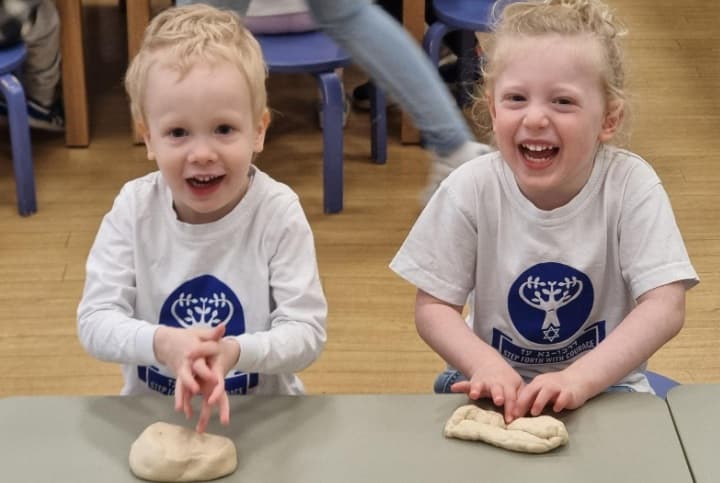
And yet, a failure of policy that results in Jewish children feeling unwelcome in Jewish schools is an important (and sensitive) topic that deserves attention, even if it does not highlight the best of the community.

One of the messages critiquing my reporting noted that “Jewish day schools spend millions helping families out; it's a shame your article didn't reference this and understand how expensive it is. And there is no additional charge for families who benefit from this support”.

I am not denying that Jewish schools do their best in some cases, but rather, my piece focused on the fact that there is a group of children who want to be at Jewish schools but due to their additional needs, were not made to feel welcome or included.

Writing an opinion piece is a fine art and within 800 words I am limited to focusing on the story at hand. Including every detail which makes Jewish day schools look favourable to “balance” a piece that’s about their shortcomings is simply not possible.

The focus of my piece was not about the way Jewish schools spend money to include children. It was focused on the fact that there are families whose children were excluded and were forced to send their children to public schools. These public schools, with significantly less resources than prestigious private Jewish schools, have been much more accommodating and inclusive towards their children.

While I noted this was not necessarily widespread, there were enough stories from enough parents from a range of backgrounds and schools to indicate this was not as isolated and unusual as some people think.

Another consistent piece of feedback was that I included LGBQTI+ children in my piece about kids with additional needs. As one person told me, “I don’t think LGBQTI+ issues and kids with special needs are related. You should have kept the issues separate.”

I don’t agree. Both sets of issues involve extra consideration for the students.

'I’m glad this conversation is finally happening. Someone should hold Jewish schools to account.'

Parent's feedback to Nomi Kaltmann

The crux of my article was that within Jewish schools in Melbourne, there is only a small bandwidth of student that some schools feel equipped to deal with. I highlighted the many challenges that families who have children with additional needs face from a bureaucracy that seems disinclined to accept their children who are in the “too hard basket”.

Among children who don’t fix into the box, there were many parallels between the experiences of children who are members of the LGBQTI+ community and kids with additional needs. In both cases, children were excluded because they required assistance from Jewish schools that schools could not easily accommodate. And once it became too hard, parents often felt unwelcome.

The best part of this undertaking was knowing that it reached the administrators and principals. Parents let me know they had forwarded it on.

There was also positive feedback from my piece. I had many fruitful conversations with parents of children with special needs who finally felt “seen,” as one person told me. “I’m glad this conversation is finally happening. Someone should hold Jewish schools to account.”

Lastly, the best part of this undertaking was knowing that it reached the administrators and principals. Parents let me know they had forwarded it to administrators who had excluded their children, showing them they were on notice.

Whether readers loved my investigation or loathed it, I am glad this conversation is happening - and hope it may lead to a change in the status quo.

Graphic: Avi Katz

You might also like
  • When the state faltered, civil society and Diaspora Jewry stepped up
    Shahar Burla
  • The case for leaving graffiti up for a while
    Adam Slonim
  • ‘To bring joy where there is no joy’: the show goes on for a lost composer
    Zeddy Lawrence
logomark.67a07ee3
We believe in the free flow of information

Republish our articles for free, online or in print, by using our Creative Commons licence

You might also like

    bialik Jewish schools shabbat
    OpinionAustralia

    Jewish schools are the marinade that infuses continuity

    Jeremy Stowe-Lindner
    Protest against settler violence in Jerusalem
    DebateAustralia

    Sanctioning settlements is a defence of Israel, not an attack

    Elisheva Madar 2
    antisemitism online
    NewsAustralia

    Proposed digital care law to offer protection against online antisemitism

    Deborah Stone

About the author

Nomi Kaltmann

Nomi Kaltmann

Nomi Kaltmann is an Australian lawyer and journalist. Her writing has appeared in major Australian and international publications including Crikey, Griffith Review, Mamamia, Tablet Magazine, The Australian Financial Review, The Daily Beast, The Forward, The Guardian, The Jewish Telegraphic Agency and The Spectator. She regularly appears on radio and podcasts to discuss Australia’s Jewish community, including NPR (USA), CBC (Canada), LBC (London), Call Me Back, Unholy: Two Jews on the News, SBS and The Times of Israel. An influential Orthodox feminist leader and founding president of the Jewish Orthodox Feminist Alliance (JOFA Australia), she is a sought-after speaker on religion, interfaith and contemporary Jewish life.

More from the author

OpinionAustralia

Mind the mentality: not every rejection is antisemitism

OpinionAustralia

Cancellation backfires but we are at it again

OpinionWorld

From NY to Melbourne, local politicians are whipping up hate 

ReflectionAustralia

I have lost faith in our multicultural institutions