Aa
  • Read, Watch, Listen
  • TJI Series
  • Community Action
  • Events
  • Zedi
Follow us and continue the conversation
  • LinkedIn
  • Instagram
  • FaceBook
  • X
  • YouTube
Test yourself with the TJI Quiz!

Adjust size of text

Aa

Follow us and continue the conversation

  • LinkedIn
  • Instagram
  • FaceBook
  • X
  • YouTube

Your saved articles

You haven't saved any articles

What are you looking for?

Original reporting, insightful analysis and diverse views, delivered straight to your inbox

  • LinkedIn
  • Instagram
  • FaceBook
  • X
  • YouTube
Your support fuels our mission to inform, entertain and inspire.

The Jewish Independent is bound by the Standards of Practice of the Australian Press Council. If you believe the Standards may have been breached, you may approach The Jewish Independent or make a complaint to the Australian Press Council in writing at www.presscouncil.org.au. The Council may also be contacted on 1800 025 712.

  • Our Story
  • Contact us
  • Our Team
  • Support us
  • Guidelines
  • Pitch your idea
  • Republishing us
  • Community Action
  • Our Awards
  • LinkedIn
  • Instagram
  • FaceBook
  • X
  • YouTube
Aboriginal FlagTorres Strait Islanders Flag

The Jewish Independent acknowledges Aboriginal and Torres Strait Islander peoples as the Traditional Owners and Custodians of Country throughout Australia. We pay our respects to Elders past and present, and strive to honour their rich history of storytelling in our work and mission.

© The Jewish Independent 2026All Rights Reserved
Website design and development by Your Creative, MelbourneTerms & ConditionsPrivacy Policy
HomeRead, Watch, ListenAustralia
Royal CommissionOpinionAustralia

Safety not just security: the last word to the Royal Commission

Given the opportunity to make the final statement to the Royal Commission, the father-in-law of victim Rabbi Eli Schlanger made a heartfelt plea for the kind of Australia his bereaved baby grandson should grow up to know
Yehoram Ulman
Print this
chanukah by the sea bondi

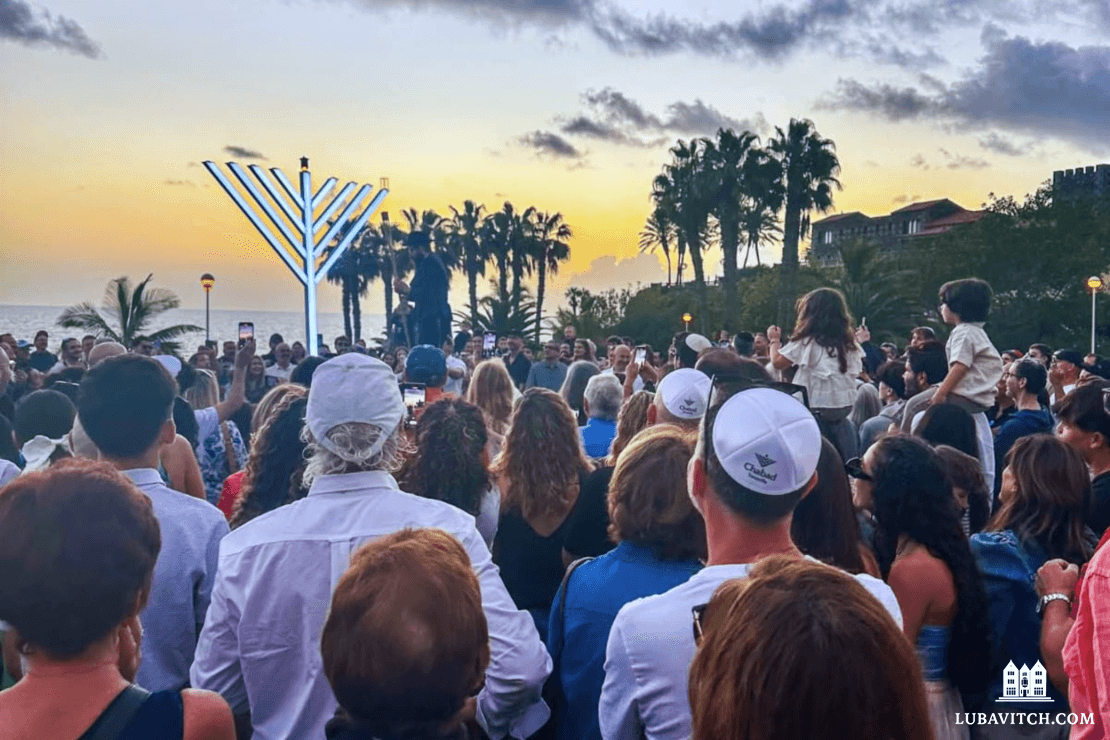
Celebrating Chanukah by the Sea in years before the event was blighted by the 2025 attack (Chabad of Bondi)

Published: 27 August 2026

Last updated: 27 August 2026

At the heart of the Chanukah story is a decision to return.

More than two thousand years ago, after a period when Jewish practice had been outlawed, the Jewish people returned to their Temple in Jerusalem and found it desecrated. They cleared the Temple. They rebuilt the altar. And then they lit the menorah – a symbol of the “Eternal Light”, being God’s unending presence. The miracle of Chanukah is that only a single jar of pure oil could be found in the desecrated temple; only enough for one day, and yet, it burned for eight days until more oil could be sourced.

But before there was this miracle, there was a choice: to return, to rebuild, and to bring light back to a place that had known darkness.

As this Royal Commission draws to a close, Australia too, faces a moment of decision. Over these past months, you have carried a solemn burden: listening to the pain of a community, examining the health of our society, and helping chart a path forward. I thank you for this.

On Sunday, December 14 last year, close to a thousand of us gathered at Bondi Beach for the first night of Chanukah. Families came with their children. Friends found one another in the crowd. And at the centre, stood the menorah we had come to light.

We were there to celebrate Jewish life openly, in a place that for generations of Australian Jewish families, had simply been our home.

We did not get to light the candle that night. We all know why. Fifteen innocent people so tragically lost their lives. May their memories be a blessing.

Among them was a Holocaust survivor. Children lost parents. Parents lost children. Families were shattered, and the impact has rippled far beyond those who were there that night. More than 40 people were seriously injured, and countless others carry wounds that cannot be seen.
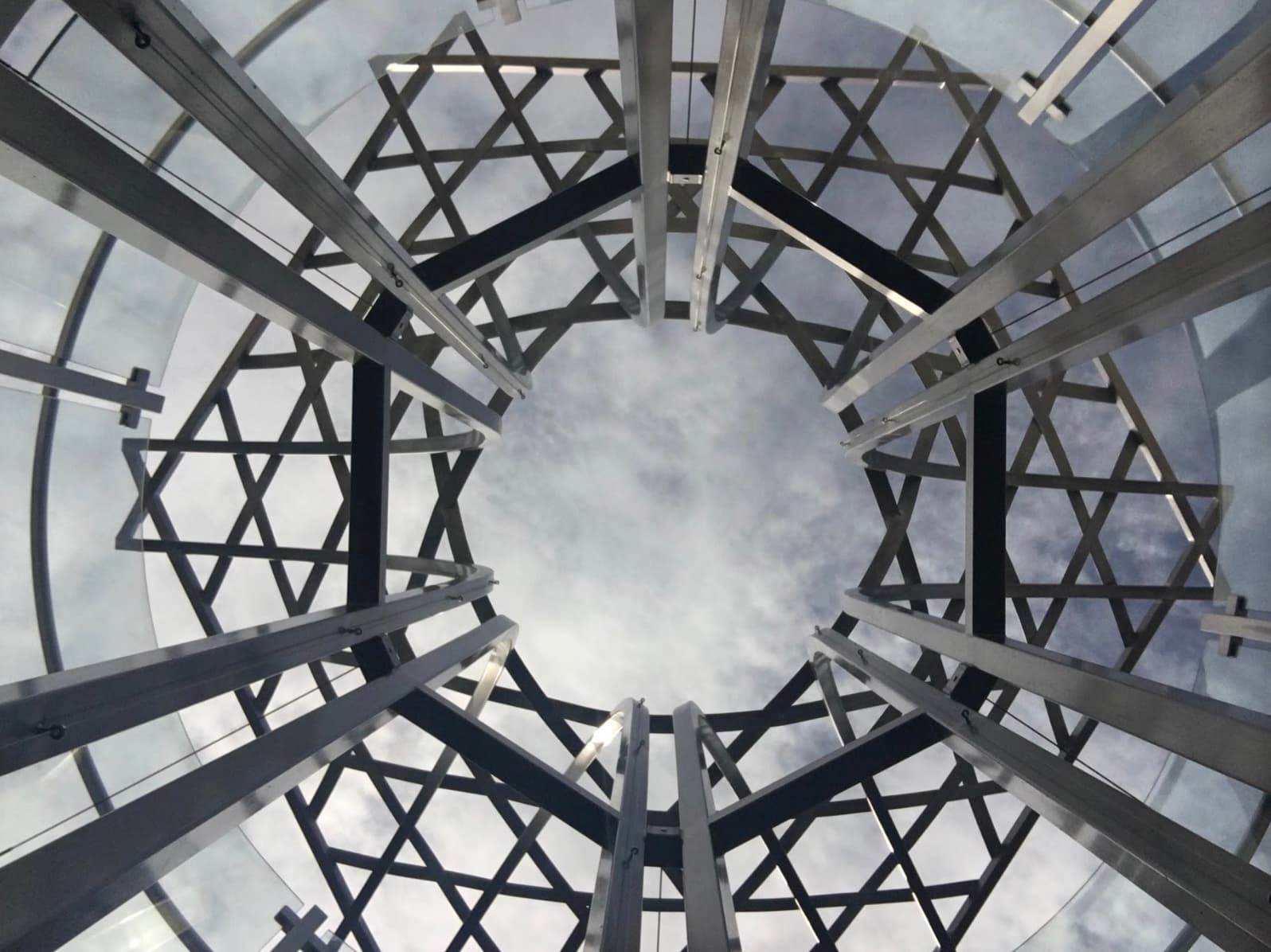
Among those who perished was my son-in-law, Rabbi Eli Schlanger. My daughter and their eight-week-old baby were wounded and hospitalised.

Three days later I stood in Chabad of Bondi, our synagogue, preparing to bury Eli. The mourners overflowed into the street. I looked at the coffin of the man who had married my daughter, who had become my son, who had worked beside me for years, and who was the father of five of my grandchildren. Eli’s was the first of 10 funerals that I presided over in three days. These funerals were for people I was deeply connected to.

At the time of Eli’s funeral, Chanukah was not yet over. There were still five nights to come. And that day, our community made a decision. On the final night of Chanukah, we would return to Bondi Beach, to where the attack had taken place, and we would light the menorah there.

We could not undo what had happened. We could not bring back those we had lost or remove the grief from the families whose lives had been shattered.

But we could decide what we would do next. That is why the work of this Royal Commission matters so deeply.

You have heard confronting evidence. People came forward and re-lived painful experiences because they believe it is important for the truth to be heard, and for Australia to learn from it. I thank them for their courage, and I thank this Commission for listening.

You have heard during these hearings about the reality of antisemitism and the consequences of hatred when it is allowed to grow. You have heard about intimidation and incitement of hatred. About institutions that responded well, institutions that failed to respond, and institutions in which antisemitism was at times tolerated, enabled, or even encouraged. Our institutions need clear boundaries, firm standards and leadership that distinguishes between what is right and what is wrong. What is free speech and what is hate speech. What is a protest and what is intimidation and vilification. We must have the tools and the courage to confront hatred and radicalisation whenever and wherever it emerges.

You have heard of the fear felt by Jewish Australians and the measures that have been necessary to keep our community safe. I want to express my deep gratitude to the police and all those who have worked and continue to work so hard to keep our community safe.

But security and safety are not the same thing. Security protects us from a threat. Safety is the absence of that threat. Security is the guard at the school gate, the police presence at a Jewish event. Safety is when you can walk home from synagogue without fear, and when Jewish Australians participate in public life without needing special protection. Our goal must be a society in which Jewish Australians are not merely protected, but genuinely safe.

The events that brought us before this Royal Commission are for us, not simply a statistic or headline.

For us, this is an empty seat at a shabbat table.

This is a child asking a parent whether it is safe to wear something identifying them as Jewish in public.

For many Australian Jews, something fundamental changed last December.

At the conclusion of this Royal Commission, there is a significant question before us.

What kind of Australia do we choose to be?

This is not only a question for Jewish Australians. A society in which hatred and extremism are allowed to grow is ultimately a threat to the character of the country itself.

Australia has a choice about what it is prepared to tolerate, what it is prepared to defend, and what values it is prepared to stand up for.

I know an Australia where survivors of the Holocaust came and rebuilt their lives. Where Jews built synagogues and schools, raised families and contributed to every part of national life, without having to choose between being proudly Jewish and proudly Australian.

That Australia has not gone.

I believe it is still the Australia that the overwhelming majority of Australians want.

But we should not assume it will preserve itself. Tolerance cannot mean losing the ability to distinguish between disagreement and intimidation. Freedom of speech cannot require indifference to hatred. The right to protest does not require us to accept the dehumanisation of other Australians.

And antisemitism does not become acceptable because it comes from one side of politics rather than another, or because it is expressed in the language of justice, religion, resistance, or some other supposedly noble cause.

Antisemitism must be confronted wherever it comes from.

And institutions entrusted with educating, protecting and leading Australians must have the courage to recognise it and act.

Australian Jews are not asking this country to adopt different values in order to protect us. We are asking Australia to have the courage to live by its own values.

Freedom. Democracy. The rule of law. Mutual respect. The dignity of every human being. A fair go.

These values belong to all of us. And they are worth defending. A society must know not only what it stands against. It must know what it stands for.

You have just heard about Project NOAH, a project close to Eli's heart. It grew from the Noahide principles, the Jewish teaching that there are fundamental moral responsibilities shared by all humanity, regardless of faith, and that people of different backgrounds can find common ground without sacrificing or compromising what makes us different.

Eli's response to a complicated world was not withdrawal from it. It was engagement with it. He believed our Jewishness should make us more capable of contributing to the society around us, not less. That is social cohesion at its best. Not that we all become the same, but that we are confident enough in the values we share that our differences do not make us enemies.

I hope to honour Eli not by simply remembering how he died, but by carrying forward the values by which he lived.

In moments of darkness, we still have a choice. Anger and division, or another path.

In the aftermath of the Bondi attack, I witnessed extraordinary acts of compassion and solidarity. Support came from people of all faiths and backgrounds. Community leaders, public officials and ordinary Australians reached out with messages of support. To them, thank you.

On the final night of Chanukah, we returned to Bondi Beach. Under extra-ordinary security. We returned, and we kindled light in a place that had known darkness.

Not because we had stopped grieving. Not because the pain had disappeared. But because, as I said that night, we refuse to allow darkness to have the final word.

The Jews who returned to the ancient Temple in Jerusalem could not undo its desecration, nor the enormous loss of life. They could only decide what to do next.

They cleared the Temple. They rebuilt. And then they brought back the light.

Perhaps that is the task before Australia now.

There are things that must be confronted. There are boundaries that must be restored. There are institutions that must learn from what has happened. There is hatred that must no longer be rationalised, excused or ignored.

But we also have to build. We have to teach our children what freedom requires of them, not only what it gives them.

We have to rediscover the confidence to say that some things are right and some things are wrong, while making room for Australians who profoundly disagree with one another’s views to share this country in peace.

Commissioner, my grandson was just two months old when his father Eli lost his life. He will come to know his father through his mother, brothers, sisters, his grandparents, aunts, uncles, through stories, and through the legacy Eli left behind.

And one day, he will be old enough to understand what happened on December 14, 2025.

I wonder what Australia he will know by then.

Will he learn that the warning signs were there, that hatred was allowed to grow, and that even after Bondi, Australia failed to change course?

Or will he learn that Bondi became a moment when Australia understood where unchecked hatred can lead, found the courage to confront it, and chose another path?

This Commission has listened. Australia has heard. Soon there will be findings and recommendations. Then the responsibility passes to governments, institutions, communities and every one of us.

Australia is at a crossroads.

On the final night of Chanukah, the Jewish community made its choice. We returned. We rebuilt. And we lit the menorah.

My prayer is that when my grandson is old enough to understand what happened to his father, he will also be able to understand what Australia chose to do about it.

And that he will be proud of the choice we made.

You might also like
  • How not to apologise
    Zac Klugman
  • Proposed digital care law to offer protection against online antisemitism
    Deborah Stone
  • Mind the mentality: not every rejection is antisemitism
    Nomi Kaltmann
logomark.67a07ee3
We believe in the free flow of information

Republish our articles for free, online or in print, by using our Creative Commons licence

You might also like

    Generation change Template
    Generation ChangeInterviewAustralia

    Ash Densham: Building community through Humanistic Judaism

    Gideon Cohen
    Tame
    Australia

    Tame apologises – but with little grace

    Deborah Stone 1
    Lobby
    OpinionAustralia

    Confronting Richard Flanagan and the myth of the Israel lobby

    Mary Garden 9

Comments1

  • Avatar of David Jackson

    David Jackson27 August at 07:38 am

    great article

About the author

Yehoram Ulman

Yehoram Ulman

Rabbi Yehoram Ulman is a rabbi with Chabad of Bondi and the rabbi for Rabbi of Friends of Refugees of Eastern Europe (FREE).