Aa
  • Read, Watch, Listen
  • TJI Series
  • Community Action
  • Events
  • Zedi
Follow us and continue the conversation
  • LinkedIn
  • Instagram
  • FaceBook
  • X
  • YouTube
Test yourself with the TJI Quiz!

Adjust size of text

Aa

Follow us and continue the conversation

  • LinkedIn
  • Instagram
  • FaceBook
  • X
  • YouTube

Your saved articles

You haven't saved any articles

What are you looking for?

Original reporting, insightful analysis and diverse views, delivered straight to your inbox

  • LinkedIn
  • Instagram
  • FaceBook
  • X
  • YouTube
Your support fuels our mission to inform, entertain and inspire.

The Jewish Independent is bound by the Standards of Practice of the Australian Press Council. If you believe the Standards may have been breached, you may approach The Jewish Independent or make a complaint to the Australian Press Council in writing at www.presscouncil.org.au. The Council may also be contacted on 1800 025 712.

  • Our Story
  • Contact us
  • Our Team
  • Support us
  • Guidelines
  • Pitch your idea
  • Republishing us
  • Community Action
  • Our Awards
  • LinkedIn
  • Instagram
  • FaceBook
  • X
  • YouTube
Aboriginal FlagTorres Strait Islanders Flag

The Jewish Independent acknowledges Aboriginal and Torres Strait Islander peoples as the Traditional Owners and Custodians of Country throughout Australia. We pay our respects to Elders past and present, and strive to honour their rich history of storytelling in our work and mission.

© The Jewish Independent 2026All Rights Reserved
Website design and development by Your Creative, MelbourneTerms & ConditionsPrivacy Policy
HomeRead, Watch, ListenAustralia
NewsAustraliaIsrael

Australia recognises state of Palestine

Catch up on the PM's full statement, his answers to key questions, and the reaction from across the Australian community.
Deborah Stone
Print this
Australia recognises state of Palestine

Published: 11 August 2025

Last updated: 12 August 2025

Prime Minister Anthony Albanese has announced Australia will recognise Palestine as a state at the United Nations General Assembly in September.

Australia's recognition includes an affirmation of Israel's right to exist and a demand that Hamas has no role in a future Palestinian state.

Australia joins more than 140 countries in recognising the legitimacy of a Palestinian state, most recently its allies France, the UK and Canada. New Zealand announced almost simultaneously that it was considering a similar move.

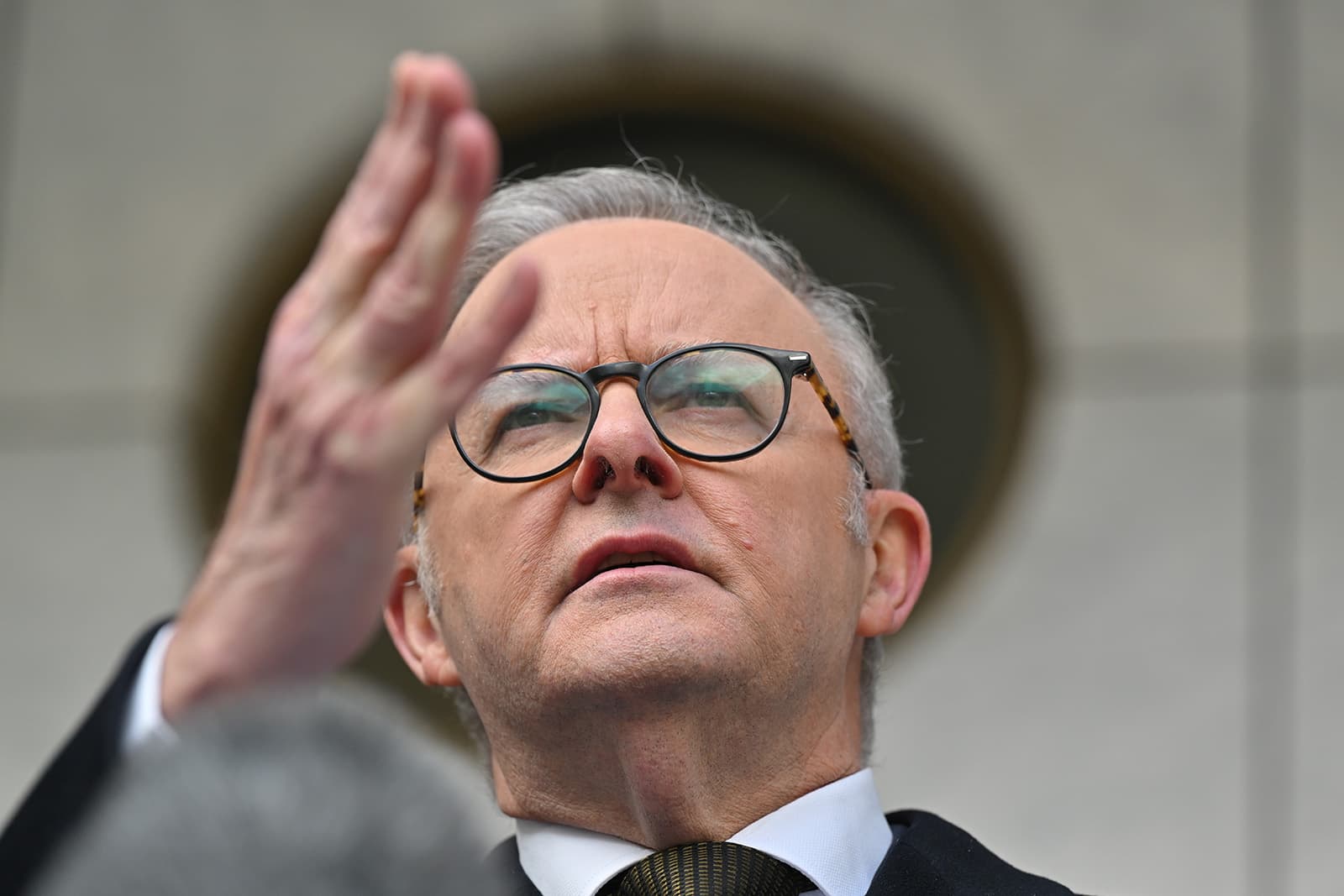
"A two-state solution is humanity’s best hope to break the cycle of violence in the Middle East and to bring an end to the conflict, suffering and starvation in Gaza," Albanese told a media conference in Canberra, following a cabinet meeting this morning.

"The international community’s vision for a just and lasting peace in the Middle East always encompassed two states – living side-by-side with internationally recognised borders, a state of Israel and a state of Palestine with security for the people of both nations."

Albanese emphasised Australia's continuing support for Israel.

"When we recognise the long-held and legitimate aspirations of the people of Palestine, we are also upholding and strengthening our commitment to the people of Israel and their right to live in freedom, security and safety."

He repeated Australia's call for the release of all hostages and emphasised, "our government has made it clear that there can be no role for the terrorists of Hamas in any future Palestinian state."

Albanese said he had received commitments from Palestinian Authority President Mahmoud Abbas of the PA's recognition of Israel's right to exist in peace and security; to demilitarise; to hold general elections; to abolish payments to the families of prisoners and "matyrs"; to government reform including financial transparency and education; and to international safeguards to guard against incitement to violence.

Albanese also expressed concern about the Netanyahu government's expansion of settlements in the West Bank, settler violence and threats to annex the occupied Palestinian territories. "The actions together with the humanitarian catastrophe in Gaza risk putting a two-state solution out of reach for a generation."

The full statement

Anthony Albanese, Prime Minister: Today, I can confirm that at the 80th Session of the United Nations General Assembly in September, Australia will recognise the State of Palestine. Australia will recognise the right of the Palestinian people to a state of their own, predicated on the commitments Australia has received from the Palestinian Authority. We will work with the international community to make this right a reality. Australia is making this statement today, following our Cabinet meeting, as part of a co-ordinated global effort, building momentum for a two-state solution. Over the past fortnight I have discussed this with Prime Minister Starmer, President Macron, Prime Minister Luxon and Prime Minister Ishiba – as well as Prime Minister Netanyahu last Thursday and President Abbas last Tuesday. A two-state solution is humanity’s best hope to break the cycle of violence in the Middle East and to bring an end to the conflict, suffering and starvation in Gaza. The international community’s vision for a just and lasting peace in the Middle East always encompassed two states living side by side with internationally recognised borders, a State of Israel and a State of Palestine with security for the people of both nations. This is the plan Australia was the first member of the United Nations to vote for back in 1947, when we proudly supported the creation of the modern State of Israel as a state for the Jewish people alongside a state for the Palestinian people. And that is why, when we recognise the long held and legitimate aspirations of the people of Palestine, we are also upholding and strengthening our commitment to the people of Israel and their right to live in freedom, security and safety. Because until Israeli and Palestinian statehood is permanent, peace can only be temporary.

Ever since the atrocities perpetrated by Hamas on the 7th of October 2023, Australia has stood with the people of Israel and our partners and allies around the world in calling for the release of the hostages. For the sake of their loved ones and all who share in their pain, we repeat that call today. Our Government has made it clear that there can be no role for the terrorists of Hamas in any future Palestinian state. This is one of the commitments Australia has sought – and received – from President Abbas and the Palestinian Authority. The Palestinian Authority has re-affirmed it recognises Israel’s right to exist in peace and security. It has committed to demilitarise and to hold general elections. It has pledged to abolish the system of payments to the families of prisoners and martyrs. And promised broader reform of governance, financial transparency and the education system, including international oversight to guard against the incitement of violence and hatred. These detailed and significant commitments have been given even greater weight by the Arab League’s unprecedented demand for Hamas to end its rule in Gaza and surrender its weapons to the Palestinian Authority. This is an opportunity to deliver self-determination for the people of Palestine in a way that isolates Hamas, disarms it, and drives it out of the region once and for all.

The international community is moving to establish a Palestinian state, and it is opposing actions which undermine the two-state solution. The Netanyahu Government is rapidly expanding illegal settlements; settler violence in the West Bank has increased; there have been threats to annex the Occupied Palestinian Territories and proposing the permanent forced displacement of the Palestinian people. These actions, together with the humanitarian catastrophe in Gaza, risk putting a two-state solution out of reach for a generation. I have said it publicly – and I said it directly to Prime Minister Netanyahu – the situation in Gaza has gone beyond the world’s worst fears. Far too many innocent lives have been lost. The Israeli Government continues to defy international law and deny sufficient aid, food and water to desperate people, including children. This vital aid must be allowed to get to the people who need it most. This is about much more than drawing a line on a map – this is about delivering a lifeline to the people of Gaza.

I understand that on this issue, history casts a long shadow. Every generation has known failures and false dawns, yet the story of this struggle is also one of opportunities not taken. That is where the risk of trying is nothing compared to the danger of letting this moment pass us by. The toll of the status quo is growing by the day, and it can be measured in innocent lives. The world cannot wait for success to be guaranteed – that only means waiting for a day that will never come. There is a moment of opportunity here, and Australia will work with the international community to seize it. I invite Minister Wong to make some remarks and then we will take questions.

Penny Wong, Minister for Foreign Affairs: Thank you, Prime Minister. Well, it’s been more than 77 years since the world promised a Palestinian state knowing that there cannot be lasting peace for both peoples without a two-state solution. And in the nearly two years since October 7, we have been working with the international community on breaking the cycle of violence that the Middle East has known for generations. Across the world, nations have agreed that we cannot keep doing the same thing and hoping for a different outcome. We can’t keep waiting for the end of a peace process that has ground to a halt. So, last April, our Government started a conversation with the Australian people about changing Australia’s approach. We have made clear we would recognise Palestine when it would best contribute momentum to peace. September is that time. When the world says this has gone on far too long, when the world says the heartbreak, death and destruction must end.

The world watched in horror the attacks by Hamas on October 7, the worst loss of Jewish lives on a single day since the Holocaust. Hostages are still cruelly held, and we want them all released and reunited with their families and loved ones. And the world has watched in horror since, as tens of thousands of Palestinian civilians are killed, thousands starving, the faces of children we cannot forget. Australians, people around the world, have been haunted by these images. We have always said that Palestinian civilians cannot be made to pay the price of defeating Hamas, but a whole population has been shattered.

So, this September, the international community has the chance to forge hope from despair as the world seizes the opportunities that are presented by the new commitments of the Palestinian Authority and as the world seeks to support the Arab League’s efforts to isolate Hamas. The Netanyahu Government has ignored international opposition to its conduct of the war in Gaza. It’s ignored international opposition to rapidly expanding illegal settlements that are extinguishing the prospect of a two-state solution. And we know that two states is the key. It is the key to a just peace for Israelis and Palestinians alike. We also know this is not the end, it is just the beginning. There is much more work to do in building a Palestinian state. We will help build the capacity of the Palestinian Authority and with the international community, Australia will hold the Palestinian Authority to its commitments. The practical implementation of our recognition will be tied to progress on these commitments. We will continue to provide humanitarian aid with our partners to try and help vulnerable civilians to get basic supplies they need, and we will work with partners to build a pathway out of the cycle of violence to a peace that is enduring and is just, with recognition of each others' right to exist, recognition by the countries of the region. Two states. Israel and Palestine.

Journalist: When you spoke to Benjamin Netanyahu, Prime Minister, I imagine he argued that in recognising Palestinian statehood, it would be rewarding Hamas. He’s said that publicly, we’ve heard the same comment from Marco Rubio, and indeed we’ve heard it from the Coalition as well. What’s your answer to that assertion?

Prime Minister: Hamas don’t support two states. Hamas support one state, in their words, from the river to the sea. Hamas do not support recognising the right of Israel to exist. This is an opportunity to isolate Hamas that has been forged by the very clear statements of the Palestinian Authority on June 10 and the very clear statements of the Arab League.

Journalist: Prime Minister, just on that call with the Israeli leader, did he warn you against this? Can you give us an explanation of the tone of that call? And just on the PA, just briefly, you mentioned a bunch of conditions that you say you’ve secured. How much of them were briefed to you by Mahmoud Abbas versus his assurances given to the French President? Are any of them new conditions, briefed to you in the call last week?

Prime Minister: Well, they were – it wasn’t just a call, there was follow-up to that. And the conditions are ones that are consistent with the declaration in June, that recognition of the State of Israel, which of course the Palestinian Authority would argue had occurred with the Oslo Accords. But also, I think, new and important statements. Demilitarisation of any future Palestinian state; the potential role for international forces in security; the reform of governance, including of education as well as a call for elections; the isolation and opposition to Hamas playing any role in a future Palestinian state. The discussion that I had with Prime Minister Netanyahu was one which was a civil discussion, and I thank him for the conversation that we had. It was a long discussion in the context of leaders’ discussions can often be pretty brief, but we had an opportunity. I was able to say that the arguments that he put to me were very similar to the arguments that he put more than a year ago. It seems to me very clearly and I put the argument to him that we need a political solution, not a military one, because a military response alone has seen the devastation in Gaza. And that has contributed to the massive concern that we see from the international community, not just from leaders, but from community members, at the catastrophe that we are witnessing in Gaza.

Key questions

Journalist: Prime Minister, Benjamin Netanyahu said overnight that just recognising a State of Palestine isn’t going to bring peace. Did he make that point to you as well during your call, and what do you say to that? And Senator Wong, did you tell Marco Rubio in your call overnight about this move that Australia made today?

Prime Minister: Well, Prime Minister Netanyahu put arguments to me consistent with what he has made internationally as well, publicly. I put arguments which are consistent with what I have said publicly over a long period of time as well.

Minister Wong: Yes, I spoke to Secretary Rubio ahead of the announcement and as a matter of diplomatic courtesy, advised him of our intention to announce.

Journalist: For Senator Wong, on the Rubio phone call, did you get any assurances that our decision on this will not affect the rest of the bilateral relationship with the US given the Trump Administration's opposition? You're not expecting any blowback on things like trade or AUKUS or anything else?

Minister Wong: We speak for Australia and we make our sovereign decisions, but you will see from the readout I think that the State Department have issued since the call, we spoke about a range of matters including the Indo-Pacific and security in the Indo-Pacific. And I think you can discern from that, that the project that we are engaged in with the United States and others – which is peace, stability, and security in our region – is something we both remain very committed to.

Journalist: Prime Minister, just on the conditionality that you've expressed with the Palestinian Authority, can you just clarify or explain where you're at on the release of the hostages and ceasefire itself?

Prime Minister: Well, we want to see the hostages released. We wanted to see the hostages never taken. I mean, my heart goes out to the families of those who are impacted by this. We want to see, as well, an immediate ceasefire. I think Australians want two things. I've said this before very clearly. They want the killing to stop. They want peace and security in the Middle East. They know this is a complex issue, but they also know that the violence has gone on for far too long. And the second thing they want is that they do not want conflict brought here to Australia. They want a harmonious community, which is what we have.

Journalist: Prime Minister, can I ask you, for the everyday Australian watching on here, is this a symbolic gesture? Are we expecting the US to veto this at the Security Council at the UN? What would your argument be to Australians who think this is symbolic?

Prime Minister: This is a practical contribution towards building momentum. This is not Australia acting alone. What we are seeing is a range of countries engaging, engaging in detailed dialogue as well, behind the scenes, if you like, talking about what a peace looks like in the region. And it's something that has had an impact on the world. This conflict, which has gone on for such a long period of time, I think Australians want to see an end to it. And an end to it can only be secured when both Israelis and Palestinians can live in peace and security.

Journalist: Speaking of practicalities, does Australia intend to open an embassy in the West Bank, for example, or will Australia accredit our ambassador in Israel to Palestine? And further, will we convert the General Delegation to Palestine to full embassy status?

Minister Wong: First, in response to that, as I said in my opening statement, is that we will tie the various practical steps towards recognition – you referenced some, not all – to the Palestinian Authority's commitments and ensuring that those indeed take place and the other actions of the international community. Can I just make this point in response to an earlier question? We have an opportunity as a nation to contribute to momentum towards two states, and that is the only prospect for peace.

Journalist: There have been concerns raised and perhaps you share them, that since the UK, Canada and France made their announcements, that it's only emboldened the Netanyahu Government in its actions. Do you have any concerns that making these announcements now is actually worse for civilians in the short term given that the Netanyahu Government seems committed to continue regardless of what the international community's message is? And Senator Wong, just after your phone call, what do you say to those who think the potential for statehood to be meaningful will only really work if the US was to also take that step?

Prime Minister: Well, Prime Minister Netanyahu foreshadowed the announcements that have been made over the last couple of days as well. I, of course, expressed my concern with such a direction that the Netanyahu Government was determined to go in, and certainly I think that I expressed it in a very clear way. But the Prime Minister's comments were similar to what he had made a year ago, which is that they were determined to remove Hamas. I, of course, indicated our complete abhorrence of the existence of Hamas and our complete opposition to Hamas, as a terrorist organisation, having any future role in a Palestinian state.

Minister Wong: Well, the US obviously has a unique role in the world, and we support President Trump's work to attain a ceasefire for hostage release and for humanitarian relief. Australia has an opportunity now, as I've said, to contribute to the momentum towards two states, which is the way in which the cycle of violence can be broken. In relation to ceasefire on the ground, I would make the point that the Israeli security cabinet's decision to launch a large-scale offensive into Gaza is counter to the prospect of a ceasefire.

Journalist: Prime Minister, you've often spoken about the importance of general elections as a condition for recognition. I guess given the state of Gaza at the moment, I think many people would question whether they're in a position to hold, as you know, elections. Given your conversations with other world leaders, when would you like to see that happen and any of the details?

Prime Minister: I'd like to see it happen as soon as possible, but we are in – that is one of issues that will be debated going forward. It's a part of the reform of the Palestinian Authority, which is required. The PA have not had an election for some time. And when Hamas took over Gaza, of course there was violence by Hamas against Palestinians as well. I do want to make this point, Hamas is not just an enemy of Israelis, it's an enemy of the Palestinian people as well. And their actions, including during the current conflict where opposition to Hamas has been met with brutality, is recognised by not just by Australia, but by the international community.

Journalist: Minister Wong, can I just get you to expand a bit on the practical measures? Firstly, if there isn't progress in the conditions, is there any situation in which Australia would revoke its recognition? And on the actual practical measures themselves, would we be looking to move with, say, the UK and France on things like borders, a capital, sea rights, those kinds of issues?

Minister Wong: Look, those are all matters we would want to work with the international community on, and I think I can safely say that given how much we've engaged with some of the countries that you referenced, that we are of very similar mind in terms of ensuring that there is progress on the commitments that you've outlined.

Journalist: Just on – there's no situation in which we would revoke that recognition now that it's been –

Minister Wong: Well, our expectation is the international community will work with all parties to ensure not only that those commitments are adhered to, but there is progress towards two states. Again, I repeat, there is no sustained peace unless we see a two-state solution. I think we all know that.

Journalist: Sorry PM, I don't want to over complicate this, but the whole effort to get the Palestinians to decouple from Hamas is obviously going to require cooperation from Tehran. I mean, Hamas won power in a general election in '06 on the back of disgruntlement over the Iraq war. They're firmly entrenched there. Are we being a bit simplistic to say that's inseparable down there? I mean, how do you pressure Iran to play its role in this to back off in that region?

Prime Minister: Not at all. I think that one of the key moments, if you like, when people will look at how we've got to where we are today, will be not just 10 June, the statement by the Palestinian Authority, but importantly the statement by Arab nations, which was very historic. The meeting convened by France and Saudi Arabia in New York produced very clear and unequivocal statements of opposition to Hamas, of disarming of Hamas and of Hamas not playing a future role.

Opposition reaction

Opposition leader Susan Ley released a statement criticising the decision to recognise Palestine before all hostages were released, and against the advice of the United States.

"This decision, at this time, puts Australia at odds with the United States of America, our most important ally, and the most consequential player in the conflict in Gaza. The United States will have an essential role to play in brokering a viable peace process and establishing a sustainable Palestinian state. It is critical to note that the US Secretary of State Marco Rubio has said that decisions to recognise a Palestinian state ahead of a proper peace process scuttled ceasefire talks between Israel and Hamas."

"Anthony Albanese has committed Australia to recognising Palestine while hostages remain in tunnels under Gaza and with Hamas still in control of the population of Gaza.

"The decision by the Albanese Government does not appear to make the world a safer place, expedite the end of the conflict, deliver a two-state solution, see the free flow of aid, support the release of hostages or put an end to the terrorist group Hamas."

Official Israel and Palestine reaction

In 2024, the Knesset overwhelmingly passed a resolution opposing a Palestinian state west of the Jordan River, calling it an “existential danger” that would perpetuate conflict and destabilise the region. The resolution warned such a state would quickly fall under Hamas control, becoming a base for “radical Islamic terror” aligned with Iran.

This week Israel Prime Minister Benjamin Netanyahu condemned the decision. "To have European countries and Australia march into that rabbit hole, just like that, fall right into it and buy this canard is disappointing, and I think it's actually shameful," Netanyahu said.

"It's not going change our position. Again, we will not commit national suicide to get a good op-ed for two minutes."

Israel's ambassador to Australia Amir Maimon said the recognition of a Palestinian state will do nothing to end the war in Gaza.

"It will not change anything on the ground, it will not bring a ceasefire, it will not bring the two parties closer, " he told the ABC's 7.30.  "The only solution, the only way out is if the two parties will sit down and will negotiate directly and bilaterally."

The General Delegation of Palestine to Australia welcomed recognition as a “principled decision” that could contribute to peace, but said it was only a “vital starting point” and would not alleviate suffering in Gaza without concrete action to protect civilians and uphold international law.

Jewish community reaction

Many Jewish organisations immediately expressed concern about the government's move, although the New Israel Fund endorsed it.

Executive Council of Australian Jewry (ECAJ) president Daniel Aghion KC said the recognition departed from bipartisan consensus which has envisaged Palestinian statehood and recognition as part of a comprehensive peace agreement between Israel, the Palestinians and Arab states.

“Today’s announcement acknowledges the need for all the hostages to be released and for Hamas to be disarmed and removed from power. It accepts that the Palestinians and the Arab States have to recognise and make peace with Israel as the State of the Jewish people, and normalise relations with it. The major flaw in the announcement is that it relegates all of these conditions to the status of a mere promise to be fulfilled at some future time, and says nothing about what will happen if those conditions are not met," Aghion said.

“For this reason, we feel that the course of action announced by the government is a betrayal and abandonment of the Israeli hostages who continue to languish in appalling conditions in Gaza without even access to the Red Cross.

“Australia is now committed to recognising as a state an entity with no agreed borders, no single government in effective control of its territory, and no demonstrated capacity to live in peace with its neighbours. This commitment removes any incentive or diplomatic pressure for the Palestinians to do the things that have always stood in the way of ending the conflict, specifically the recognition of Israel as a Jewish state and the need to negotiate the five final status issues that separate the sides."

The Zionist Federation of Australia (ZFA) strongly opposes the Government’s intention to recognise a Palestinian state at the UN next month, saying while it supports a negotiated two-state outcome, moving forward while Hamas remains in power and the Palestinian Authority has not delivered verified reforms will only undermine peace efforts and reward terrorism.

"Recognition without agreed borders, a single governing authority, or a demonstrated capacity for peaceful coexistence does not advance peace. It departs from Australia’s bipartisan position and risks delaying, rather than resolving, the conflict," ZFA President Jeremy Leibler said.

It said Australia's recognition should be tied to independently verified benchmarks including recognition of Israel as a Jewish and democratic state, removing Hamas from power, releasing the hostages and sustained humanitarian access.

The New Israel Fund (NIF) Australia commended the Albanese Government for its "principled decision" to pursue recognition of a Palestinian state.

“While this move alone won’t end the conflict, it affirms that Palestinian rights are not up for negotiation, and that equality must be the foundation for any lasting future.

"NIF has always championed a future where both Israelis and Palestinians live in peace, safety, and the right to self-determination. Today, that vision feels more distant than at any other point in recent memory. Recognition of a Palestinian state alongside Israel is a necessary step toward making that vision a reality," said NIF Executive Director Kate Rosenberg.

She said the pre-conditions made by the Palestinian Authority to Prime Minister Albanese, including the disarmament and exclusion of Hamas from future Palestinian governance, were essential.

The Australia Israel Jewish Affairs Council (AIJAC) said recognition would further endanger the lives of the hostages and do nothing to accelerate the creation of a Palestinian state.

"AIJAC is deeply disappointed at the Government’s misguided and counter-productive decision, because it sets back the positive possibility of a peaceful, viable, negotiated Palestinian state being established alongside Israel.

"Regardless of the Government’s intentions, recognition will be seen by both Israelis and Palestinians as a reward for Palestinian terrorism and as punishment for Israel."

Palestinian community reaction

The response from within Australia's Palestinian and Muslim communities was also mixed.

The Australian Federation of Islamic Councils (AFIC) welcomed the announcement but emphasised it must not divert attention from the urgent need to protect Palestinian lives.

“Recognition at the UN is a welcome step, but justice cannot be delayed. The world must act now to end the killing, ensure unfettered humanitarian access, and hold those responsible for atrocities to account. The Palestinian people deserve both recognition and protection. There can be no compromise on either front,” AFIC President Dr Rateb Jneid said.

The Australian Palestine Advocacy Network (APAN) President Nasser Mashni said the move was "meaningless" without Australia cutting ties with Israel. He described recognitiion as a shield protecting Israel from legal accountability for its war on Gaza.

"Australia continues to trade, to supply arms, to have diplomatic relations and to diplomatically protect and encourage other states to normalise with this very state that is committing these atrocities," he told the ABC. The government has repeatedly denied it has sold arms to Israel.

Susan Wahhab, the president and co-founder of Palestinian Christians in Australia said recognising the state of Palestine would acknowledge the existence of Palestinians and might end "the genocide and the starvation".

"By recognising the state of Palestine, the world acknowledges that there are Palestinian people, and that the Israelis need to stop killing us," she said.

RELATED STORIES

Explainer: What does Australia’s recognition of Palestine really mean? (TJI)

Recognition of Palestine is only a beginning (TJI)

Recognising Palestine is both a strategic and moral act (TJI)

Recognition without resolution won’t bring peace (TJI)

You might also like
  • Abuse by IDF soldiers humiliates Muslim Palestinians
    Ben Lynfield
  • Beinart takes a wrecking ball to Israel
    Michael Visontay
  • Zomi investigation delivers new low in Australia-Israel relations
    Michael Visontay
logomark.67a07ee3
We believe in the free flow of information

Republish our articles for free, online or in print, by using our Creative Commons licence

You might also like

    ISRAEL-TRANSPORT-AVIATION-STRIKE
    Israel Votes 2026AnalysisIsrael

    Bennett’s balancing act: can he win over the right without losing the centre?

    Shahar Burla 1
    Jewish word map
    FeatureArts & Culture

    Was the barmi a shemozzle? How Australians use Jewish words 

    Caroline Hendy & Emma Breslow 1
    Royal Commission final
    Royal CommissionNewsAustralia

    Strategies for cohesion final focus of Royal Commission hearings

    Peter Kohn 1

About the author

Deborah Stone

Deborah Stone

Deborah Stone is Editor-in-Chief of TJI. She has more than 30 years experience as a journalist and editor, including as a reporter and feature writer on The Age and The Sunday Age, as Editor of the Australian Jewish News and as Editor of ArtsHub.

More from the author

NewsAustralia

Humanitarian organisations fail on antisemitism: new research

NewsAustralia

AJN pulls article criticising abuse of Sarah Schwartz

NewsIsrael

Israel leads use of military AI: a threat to global peace

NewsAustralia

NSW government marks six months since Bondi with $8.3 million in community support

Comments3

  • Avatar of Eric Lundberg

    Eric Lundberg12 August at 08:03 am

    Australia will “recognise Palestine”

    As what? With what borders?

    Under what government?

    When will the hostages be released?

    A pointless gesture, devoid of meaning without a broader context.

    I support a two state solution much more than demonstrators holding photographs of Nasrallah and Khomeini, with Hamas and Hezbollah flags.

    There will be no two state solution without security in Israel to build a constituency to support it.

    Netanyahu is dragging Israel to the precipice, isolated and without support.

  • Avatar of Ian Light

    Ian Light11 August at 08:07 am

    Can Mohammed Abbas convince the Palestinian People that Demilitarisation and Changing to a Humane Educational System promoting peace with the Jewish People is by far the best path Forward ?
    If Elections were held a year after a Ceasefire and Release of all Israeli Hostages and the Replacement of Hamas by a Tough but Humane Arab Force would there be a clear Majority Vote for the Demilitarisation DeRadicalisation Policy ?
    This is the Concern that worries the great majority of Israeli Parties in the Israeli Parliament and the People of Israel .

  • Avatar of Ian Light

    Ian Light11 August at 05:55 am

    Prime Minister Albanese has spoken to PA Chairman Mohammed Abbas but can he deliver a Jewish Respectful Education System .
    Right now the educational system is full of information denying the Jewish People a Right to a State in the Holy Land and Hamas is strongly supported in the West Bank .
    Australian and other European Countries ought not Recognise Palestine until all twenty live Hostages are released or transferred for medical care according to the Geneva Conventions.
    With Hamas floating pictures of starving hostages and promising to repeat the October 7 2023 massacre of Israelis with atrocities and barbarism it is not the time to
    Recognise Palestine because the support for Hamas is still very high among Palestinians .