Aa
  • Read, Watch, Listen
  • TJI Series
  • Community Action
  • Events
  • Zedi
Follow us and continue the conversation
  • LinkedIn
  • Instagram
  • FaceBook
  • X
  • YouTube
Test yourself with the TJI Quiz!

Adjust size of text

Aa

Follow us and continue the conversation

  • LinkedIn
  • Instagram
  • FaceBook
  • X
  • YouTube

Your saved articles

You haven't saved any articles

What are you looking for?

Original reporting, insightful analysis and diverse views, delivered straight to your inbox

  • LinkedIn
  • Instagram
  • FaceBook
  • X
  • YouTube
Your support fuels our mission to inform, entertain and inspire.

The Jewish Independent is bound by the Standards of Practice of the Australian Press Council. If you believe the Standards may have been breached, you may approach The Jewish Independent or make a complaint to the Australian Press Council in writing at www.presscouncil.org.au. The Council may also be contacted on 1800 025 712.

  • Our Story
  • Contact us
  • Our Team
  • Support us
  • Guidelines
  • Pitch your idea
  • Republishing us
  • Community Action
  • Our Awards
  • LinkedIn
  • Instagram
  • FaceBook
  • X
  • YouTube
Aboriginal FlagTorres Strait Islanders Flag

The Jewish Independent acknowledges Aboriginal and Torres Strait Islander peoples as the Traditional Owners and Custodians of Country throughout Australia. We pay our respects to Elders past and present, and strive to honour their rich history of storytelling in our work and mission.

© The Jewish Independent 2026All Rights Reserved
Website design and development by Your Creative, MelbourneTerms & ConditionsPrivacy Policy
HomeRead, Watch, ListenAustralia
AnalysisAustralia

Broken Bridges: schools interfaith program closes

Melbourne's school interfaith program has collapsed under the pressure of conflict over the Israel-Hamas War, sending a message to students that multiculturalism is too hard.
Ittay Flescher
Print this
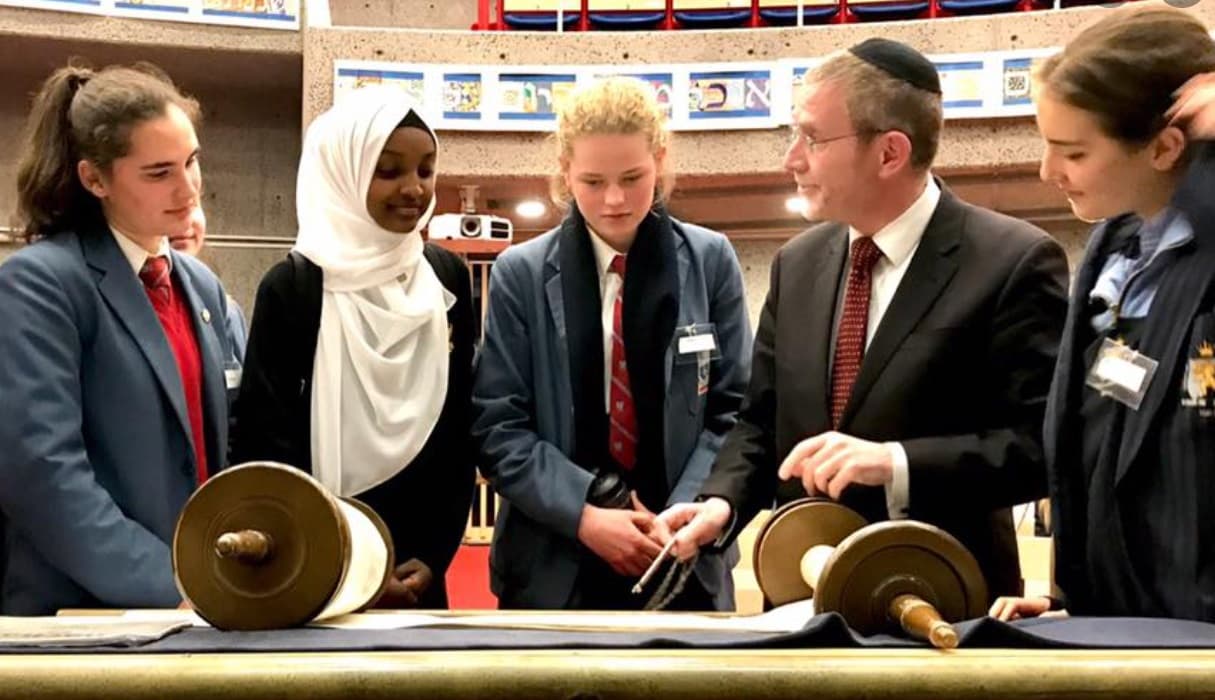
Teacher wearing a Jewish skullcap with students, including one in a hijab, looking at a Torah scroll

Former Mount Scopus principal Rabbi James Kennard shows a Torah to a group of Building Bridges students (Mount Scopus)

Published: 2 April 2024

Last updated: 2 April 2024

More than any other time in history, decisions made by Israeli and Palestinian leaders are shaping the fabric of multicultural Australia.

A few hours before the Easter began, staff involved in the Building Bridges program across Melbourne received an email from the Wellspring Centre, which has run the program to bring together students from Jewish, Christian and Muslim schools since 2004.

The Centre said it was no longer able to provide a safe space for students with different religious affiliations or to secure the participation of schools from all three faiths.

The Jewish Independent understands no Muslim school had agreed to participate.

“In 2024 the need for safe places for effective dialogue is as urgent as ever. However, in the current climate the polarisation of opinions raises challenges for us. The emotional wellbeing of our facilitators and students is paramount. Whilst we have been exploring additional training to equip our young facilitators, we recognise that holding a safe space for dialogue is complex, and risks stretching our team too far,” the Centre said,

“This year, we have not been able to secure the participation of schools across all three Abrahamic faiths. The cornerstone value and method of Building Bridges has been interaction between young people from different faith traditions. Without this diversity of voices, particularly in the small group discussions, the fruitfulness of dialogue is diminished,”

The cancellation sends a message that even in faraway Australia, we can no longer play icebreaker games and eat pizza together.
The Building Bridges decision follows the breakdown of relations between the Islamic Council of Victoria and the Jewish Community Council of Victoria and the collapse of the Jewish Christian Muslim Association.

Teachers who have participated in Building Bridges, me among them, are shocked and saddened by the decision to close the program.

Frances Prince, who together with Rabbi Ralph Genende initiated Mount Scopus College’s involvement, said the Year 11 students who participated had benefitted greatly from their interfaith experience.

“The program enabled young participants to meet with peers from faith communities different from their own. They met in a warm, supportive, and educationally-sound environment with people whose religious beliefs and practices differed from their own. The knowledge they gained, the open-mindedness they harnessed and the respectful attitudes they displayed reflected the best of multicultural Australian values.

“It greatly saddens me to hear of its demise precisely at the time when our society needs such encounters, face-to-face,”

Bialik College principal Jeremy Stowe-Lindner said, “Now more than ever we need to connect and share our humanity with others. Bialik’s door was and is always open to Building Bridges and we are so sad that others are finding it hard right now to grasp our outstretched hand of friendship and dialogue.”

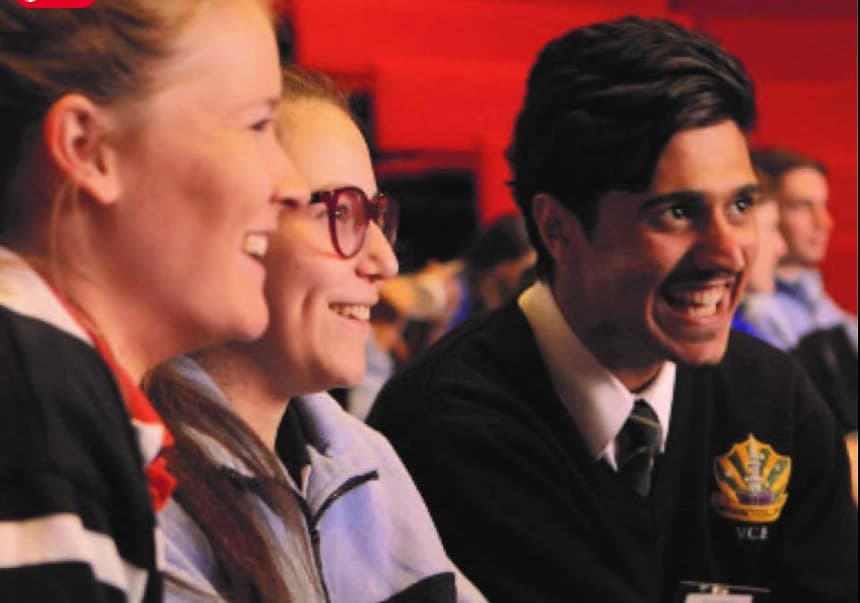
Students enjoying their interfaith experience (Building Bridges)

I, too, was deeply shocked and saddened at this news from what I thought was a tolerant and multicultural Australia. I was the co-coordinator of the Building Bridges through Interfaith Dialogue in Schools programme (Eastern Region) between 2011-2017, together with my dear friend Kellie Lohrey from Luther College,

I have been able to report on interfaith programmes that are still happening in Jerusalem but in Australia, the program I was involved in has collapsed.

Interfaith dialogue is deeply challenging in the current climate. The devastating destruction of Gaza has made this one of the saddest Ramadans in recent memory for Australian Muslims. Australian Jews are still reeling from the horrifying attack on October 7 and are facing a rise in antisemitism which means many have never felt less secure.

Had Building Bridges commenced this year, it would have required exceptionally skilful facilitators with incredible patience and resilience to manage the anger and conflict likely to emerge from the dialogue.

No matter how much preparation each school did, mistakes would have been made, feelings would have been hurt, and there may even have been tears. In a time when safe spaces are so important to faith communities, I can understand why some schools didn’t want to take the risks of putting their students in this situation.

Yet what’s the alternative?

The message sent to the hundreds of teenagers who were eagerly awaiting this program is heartbreaking. At a time when dialogue is so important as a tool for resolving ideological differences, the cancellation sends a message that even in faraway Australia, we can no longer play icebreaker games, eat pizza together and use the many tools of informal education to share our cultural differences as a means of building bridges over the great flood of hatred and fear that engulfed so many of our lives.

Our students are seeing enhanced security systems but reduced opportunities for dialogue.

We can only hope that when this war is over, a new generation of educators will emerge among faith schools who realize that the safety that comes from humanising one another and understanding each other’s narrative is greater than can be provided by any physical or metaphoric wall.

You might also like
  • Confronting Richard Flanagan and the myth of the Israel lobby
    Mary Garden
  • Facing a new year with the knowledge life can be better
    The Jewish Independent
  • No action to stop Hezbollah ally beaming antisemitic and anti-Israel content into Australia
    Michael Visontay
logomark.67a07ee3
We believe in the free flow of information

Republish our articles for free, online or in print, by using our Creative Commons licence

You might also like

    Albanese Bondi
    Royal CommissionAnalysisAustralia

    Prime minister’s absence exposes weakness in Royal Commission hearings

    Michael Visontay
    Tame
    Australia

    Tame apologises – but with little grace

    Deborah Stone
    Royal Commission final
    Royal CommissionNewsAustralia

    Strategies for cohesion final focus of Royal Commission hearings

    Peter Kohn 1

About the author

Ittay Flescher

Ittay Flescher

Ittay Flescher is the Jerusalem Correspondent for The Jewish Independent. For over twenty years, he has worked as an educator, journalist, and peacebuilder in Melbourne and Jerusalem. His book, The Holy and the Broken: A Cry for Israeli-Palestinian Peace from a Land that Must Be Shared, was longlisted for the 2025 Walkley Book Awards.

More from the author

AnalysisIsrael

What ‘Zionism’ means in Israel:  it’s not what you think

AnalysisIsrael

From haven to hotbed: how Israel’s perception of Australia has changed

FeatureIsrael

New wave of Russian-speaking migrants may be key to Israel’s future

AnalysisIsrael

How a new International Peace Fund could make a tangible difference

Comments2

  • Avatar of Miriam Feldheim

    Miriam Feldheim3 April at 07:19 am

    Bella, not having Muslims at a program designed to bring together the three Abrahamic faiths defeats the purpose of the program.

  • Avatar of Bella Ceruza

    Bella Ceruza2 April at 02:24 pm

    Closing the interfaith programme at a time when Victorian schools have frequently been shown to provide political perspectives against Israel is a tragedy that we cannot allow to happen. Once again, eg as with the arts, protests, meetings and all strata of our education system – esp tertiary- the ‘education’ is anti-Israel, with anti-Israelis intimidating organizers and thereby calling the shots.
    If one of the three faiths refusing to co-operate, why do the other two have to miss out?
    INSTEAD OF ALLOWING TROUBLE MAKERS TO BULLY THE GROUP TO CLOSE DOWN, INTERFAITH SHOULD INCLUDE ALL FAITHS WHICH WISH TO UNITE – CHRISTIANS, SIKHS, BAHAI, JEWS AND OTHERS. TROUBLEMAKERS WILL NOT BE MISSED.