Published: 24 June 2021
Last updated: 4 March 2024
As Australia’s most famous art prize celebrates its centenary, STEVE MEACHAM explores the history of Jewish sitters and artists who have made the headlines
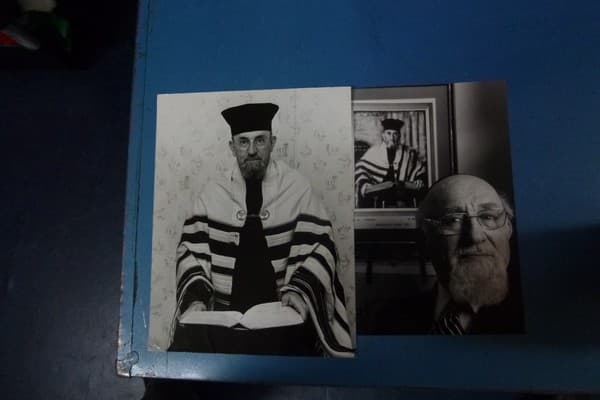
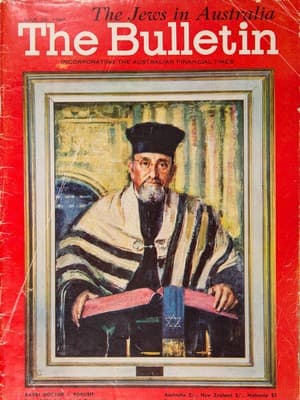
AUSTRALIA’S OLDEST AND MOST prestigious portraiture prize - the Archibald - has never been a stranger to controversy. So it was 60 years ago when the portrait of Rabbi Dr Israel Porush by WE Pidgeon - better known then as the cartoonist/illustrator “Wep” - won the 750 pound prize, compared to the $100,000 for Peter Wegner’s winning depiction of fellow artist and centenarian Guy Warren this year.
In 1961, the Sydney Morning Herald published a story by “our art critic” dismissing Wep’s work as “tame, conventional, a mediocrity, merely dull … it has no attitude, no style … a completely pedestrian level of achievement”.
Interestingly, the anonymous critic felt the portrait by Jewish artist Judy Cassab of ballet dancer Sir Robert Helpmann was far superior, though he was unable to resist a snarky jibe.
“A marked improvement on her previous attempts”, the critic wrote, knowing that the year before, 1960, the Holocaust survivor had become only the second woman after Nora Heysen to be awarded the prize.
As for the winning work on Porush, the critic failed to acknowledge the social significance of the portrait.
Yes, it’s yet another depiction of a white middle-aged man, dressed in the ceremonial robes of his office like the vast majority of the portraits that have won the Archibald in its 100-year history.
Yet Wep’s portrait was significant because it celebrated the life of the man then known as “Australia’s uncrowned Chief Rabbi”.
Born in Jerusalem in 1907, in then-Palestine, the 15-year-old Israel was sent by his parents in 1922 to school in Germany, where he excelled in mathematics. He was awarded a PhD in algebra at the University of Marburg in 1933 while simultaneously studying rabbinics in Berlin.