The three questions that will define the Jewish future
The shape of the Jewish people in the next century will depend on the ability of Jewish leaders to manage internal diversity without fragmentation, a new report into Jewish demography argues
Shahar Burla
Image: TJI
Published: 3 June 2026
Last updated: 3 June 2026
DellaPergola is clearly aware of the precarity of his enterprise. His report opens with a warning from the Talmud about the dangers of prophecy: “From the day the Sanctuary was destroyed, prophecy was taken from the prophets and was given to fools and infants.”
That caution shapes the entire report. DellaPergola, widely regarded as the leading scholar of Jewish demography, repeatedly stresses that the future is too unstable, too contingent and too vulnerable to unforeseen upheavals for anyone to offer a precise prediction. The Jewish experience itself offers countless examples: few could have foreseen the Holocaust, the creation of Israel, the collapse of the Soviet Union or October 7, 2023.
And indeed, the report does not provide a definitive forecast of the Jewish future. Rather, it maps the forces at play, outlines plausible trajectories and sharpens the questions that Jewish communities, and more importantly, current and future leaders, should ask about what lies ahead.
Israel is on track to become home to the majority of the world’s Jews within the next decade
Published by the London-based Institute for Jewish Policy Research (JPR), the report is less an exercise in prediction than an attempt to think strategically about long-term Jewish continuity, identity and power in an era of immense uncertainty.
Three defining questions for the Jewish future
DellaPergola argues that the future of the Jewish People will ultimately revolve around three underlying questions.
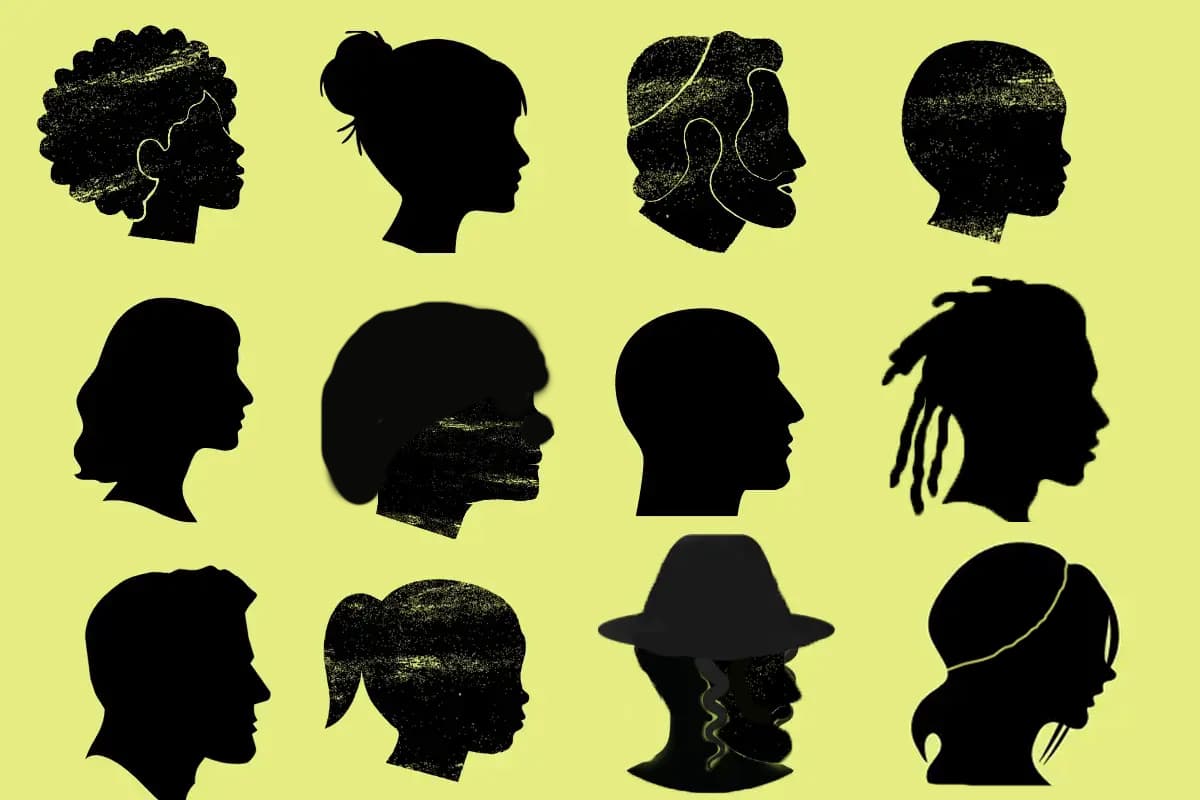
The first concerns identity itself: what defines Jewish peoplehood, who belongs to it and how Jewish identity is transmitted across generations.
The second concerns the relationship between Jews and the non-Jewish majority societies in which they live. Jews, he notes, will remain a minority in virtually every scenario outside Israel, forcing communities to continually negotiate questions of security, integration and distinctiveness.
The third concerns collective strategy: how Jews identify and defend shared interests across a fragmented global landscape.
These questions become even more complicated because the Jewish world today exists in three overlapping realities. The first is Israel: a sovereign Jewish state experiencing extraordinary demographic and technological growth, while simultaneously confronting unresolved military, political and religious conflicts. The second is the Diaspora: diverse Jewish minority communities that are often disproportionately visible and influential relative to their size. The third, and perhaps most fragile, is the relationship between Israel and the Diaspora itself. DellaPergola asks whether there is truly still “one Jewish People”, or whether Jews are gradually evolving into multiple distinct collectives with diverging interests and identities.
Israel is becoming the centre of Jewish life
One of the report’s clearest conclusions is demographic: Israel is on track to become home to the majority of the world’s Jews within the next decade. The shift is historically extraordinary. Before World War II, the global Jewish population stood at around 16.5 million. In 2025, despite decades of recovery, it is estimated at 15.8 million, still below the pre-Holocaust peak. Yet the internal balance of world Jewry is changing rapidly.
According to DellaPergola, Jews living in Israel already account for approximately 46 per cent of the global Jewish population. At current growth rates, Israel could surpass the 50 per cent threshold as early as 2035.
That transformation is fundamentally reshaping Jewish life. For nearly 2,000 years, Jewish civilisation largely existed as a dispersed Diaspora civilisation. Even after the establishment of Israel in 1948, the Diaspora, especially the United States, remained numerically dominant. A Jewish majority living in Israel would alter not only demographics, but also the cultural and political centre of gravity of global Jewry.
The report also highlights the growing demographic divergence between Israel and the Diaspora. Most Diaspora Jewish communities now resemble wider Western societies: ageing populations, low fertility and high rates of assimilation and intermarriage. Israel, by contrast, continues to record fertility rates well above replacement level, including among secular Israelis.
Rising antisemitism and growing polarisation may be pushing at least some Jews back towards stronger forms of communal identification
“Even in the secular and nonconformist city of Tel Aviv,” DellaPergola notes, “an average of two children are born per family, more than in any European country.”
The differences are even sharper among religious communities. Haredi Jews in Israel currently average six to seven children per family, compared with just over two among secular Jews. If these patterns continue, the internal composition of Israeli society, and by extension world Jewry, could change dramatically over the next century.
The unresolved Israeli-Palestinian question
The report also directly confronts one of the central dilemmas facing Israel: the demographic balance between Jews and Arabs in the land between the Jordan River and the Mediterranean Sea.
Within Israel’s internationally recognised borders, including East Jerusalem and the Golan Heights, DellaPergola projects that Jews will likely remain around 80 per cent of the population in the foreseeable future.
However, the equation changes significantly once the West Bank and Gaza are included. Adding the West Bank reduces the Jewish share of the population to roughly 60 per cent. Including Gaza brings the demographic balance close to parity.
For DellaPergola, this carries profound implications, “It is now clear that a Jewish state cannot be viable without an absolute majority of the Jewish nation on its sovereign territory,” he writes.
The report argues that the long-term balance between Jews and Palestinians cannot simply be left to demographic drift. Ultimately, it suggests, the conflict will require some form of territorial and political resolution between competing national movements.
At the same time, the report captures the deep uncertainty that now shapes Jewish migration patterns. Israel historically served as the primary destination for Jewish migration and recorded positive migration balances for most of its history. But the aftermath of October 7, combined with internal political tensions, has complicated that picture. Some Israelis are considering leaving while growing antisemitism in parts of the West is pushing many Diaspora Jews to contemplate Aliyah.
DellaPergola describes this paradox as a “cage effect”: Jews simultaneously wanting to leave and yet unsure where they truly belong. Such a situation "vaguely reminiscent of the pessimistic perceptions of many European Jews in the 1930s, is unsustainable in the long run," DellaPergola notes.
Assimilation, identity and the future of Diaspora Jewry
The report also explores the long-running challenge of assimilation. Rates of intermarriage in countries such as the United States have risen dramatically over the past century, reshaping Jewish identity and communal structures. Yet DellaPergola suggests the story may not be entirely linear.
Rising antisemitism and growing polarisation may be pushing at least some Jews back towards stronger forms of communal identification. Even highly assimilated Jews, he argues, often rediscover a sense of collective belonging when confronted with hostility from the outside world.
The report is particularly striking in its analysis of the United States. For decades, American Jewry represented perhaps the most successful Jewish Diaspora community in history: economically integrated, politically influential and socially mobile. However, demographic and cultural changes in America are reshaping that environment.
The Jewish future will depend not only on birth rates or migration patterns, but on whether Jewish leaders can build institutions and political cultures capable of managing enormous internal diversity without fragmentation
As the United States becomes increasingly diverse and less culturally centred around the old white Protestant mainstream, DellaPergola warns that the relationship between Jews and wider American society could become more fragile and distant, "the future level of intimacy, communication, mutual empathy, and cultural exchange between Jews and American society could become significantly less relevant."
Combined with rising polarisation and growing hostility towards Israel, this may lead American Jews to increasingly resemble other vulnerable Diaspora communities, rather than the uniquely secure and integrated American Jewish model of the late 20th century.
Leadership for an uncertain century
Ultimately, DellaPergola’s report is not really about statistics. It is about leadership. He argues that the Jewish future will depend not only on birth rates or migration patterns, but on whether Jewish leaders can build institutions and political cultures capable of managing enormous internal diversity without fragmentation.
The report repeatedly warns against divisive leadership, personality cults and ideological absolutism. Instead, it calls for leaders capable of uniting different sectors of Jewish life around shared strategic goals.
DellaPergola invokes Herzl and Ben-Gurion not as flawless figures, but as leaders who understood how to identify existential challenges and mobilise broad coalitions to address them.
His message is especially pointed in relation to Israel’s internal divisions, “The government must be of and for the entire people, not just half of them,” he writes, warning against a future in which sections of the Jewish collective are effectively excluded from the national project.
At the same time, the report insists that neither Israel nor the Diaspora can afford to dismiss the other. Israel cannot remain Jewish without also remaining democratic, DellaPergola argues, while Diaspora communities cannot simply imitate Israeli political debates without recognising their own very different realities and vulnerabilities.
The report ends with a line that is simultaneously hopeful and unsettling, “If there is still a world in 2126,” DellaPergola concludes, “there will be a Jewish People. It will be a Jewish People very different from the current one, in a world even more unrecognisable than the one we live in today.”
About the author
Dr Shahar Burla is a Sydney-based researcher, lecturer and Contributing Editor of TJI. Shahar holds a Master’s degree in political science from Hebrew University and a PhD in political science from Bar-Ilan University. He is the author of Political Imagination in the Diaspora: The Construction of a Pro-Israeli Narrative (2013) and co-editor of Australia and Israel: A Diasporic, Cultural and Political Relationship (2015).