Published: 16 August 2022
Last updated: 5 March 2024
EETTA PRINCE-GIBSON: As election news builds, analysts blame individuals who want to hobble the government, rather than an underlying structural flaw, for Israel's democratic stalemate.
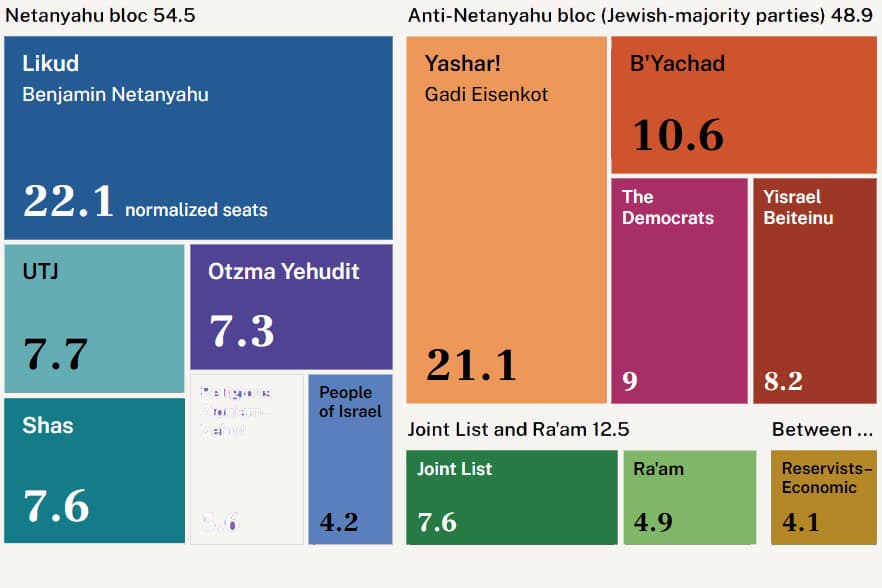
In a political version of the movie Groundhog Day, in November Israelis will go to the polls yet again, for the fifth time in four years.
Like the self-centered, hapless Phil Connors (played by Bill Murray) in the movie, we are in an endless loop. Elections. Fail to form a stable government. Repeat. Until we get it right. Connors eventually got it right. But if the current political predictions are correct, Israeli voters aren't likely to get it right this time, either.
Yet, most experts insist that, despite its obvious faults, the electoral system is not failing and may, in fact, be the best system for Israel, even at this time. Or perhaps, some say, especially at this time.
"The system isn't the problem Israel is facing, and fixing it isn't the solution," says Dr Or Anabi, researcher at the Israel Democracy Institute, an independent think tank in Jerusalem.
The consensus from political scientists is that the electoral system works, and is viable, but it is being held hostage by individuals intent on stopping the government from doing its job. In short, a temporary problem of governance rather than an underlying structural flaw.
This system suits Israel, because we are deeply diverse. Broad representation is less stable than a presidential system.
Israel's complex, nation-wide electoral system is proportional, which means that voters cast their ballots for a party, not a person. The percentage of votes that a party receives translates into the number of seats that that party will take in the 120-seat Knesset. To be part of the Knesset, each party must pass the threshold, that is, it must garner at least 3.25% of the votes cast.