Aa
  • Read, Watch, Listen
  • TJI Series
  • Community Action
  • Events
  • Zedi
Follow us and continue the conversation
  • LinkedIn
  • Instagram
  • FaceBook
  • X
  • YouTube
Test yourself with the TJI Quiz!

Adjust size of text

Aa

Follow us and continue the conversation

  • LinkedIn
  • Instagram
  • FaceBook
  • X
  • YouTube

Your saved articles

You haven't saved any articles

What are you looking for?

Original reporting, insightful analysis and diverse views, delivered straight to your inbox

  • LinkedIn
  • Instagram
  • FaceBook
  • X
  • YouTube
Your support fuels our mission to inform, entertain and inspire.

The Jewish Independent is bound by the Standards of Practice of the Australian Press Council. If you believe the Standards may have been breached, you may approach The Jewish Independent or make a complaint to the Australian Press Council in writing at www.presscouncil.org.au. The Council may also be contacted on 1800 025 712.

  • Our Story
  • Contact us
  • Our Team
  • Support us
  • Guidelines
  • Pitch your idea
  • Republishing us
  • Community Action
  • Our Awards
  • LinkedIn
  • Instagram
  • FaceBook
  • X
  • YouTube
Aboriginal FlagTorres Strait Islanders Flag

The Jewish Independent acknowledges Aboriginal and Torres Strait Islander peoples as the Traditional Owners and Custodians of Country throughout Australia. We pay our respects to Elders past and present, and strive to honour their rich history of storytelling in our work and mission.

© The Jewish Independent 2026All Rights Reserved
Website design and development by Your Creative, MelbourneTerms & ConditionsPrivacy Policy
HomeRead, Watch, Listen
Feature

‘I listen to Zelensky’s addresses, translate and tell people what’s really happening’

Steve Meacham
Print this

Published: 20 May 2022

Last updated: 4 March 2024

Journalist Zoya Sheftalovich arrived in Sydney as a child refugee from Ukraine. She tells Steve Meacham about how she digs beneath the surface of Putin’s lies

ZOYA SHEFTALOVICH WAS an aspiring writer studying journalism and law when she introduced herself to one of the most fearless and uncompromising investigative reporters of the past 50 years.

That took considerable chutzpah. 

Russian journalist and human rights activist Anna Politkovskaya had already survived at least one assassination attempt ordered by the Kremlin (poison in her Aeroflot tea: sound familiar?) and was attending the 2006 Sydney Writers’ Festival to publicise her new book, Putin’s Russia.

Politkovskaya had made her international reputation through covering the initial incompetence of the Russian military forces, followed by the brutal extermination tactics during the Chechnya wars from the late 1990s to the early 21st century. That was after residents of the former independent country had a brief chance to escape the rapidly self-destructing USSR in 1991.

Many commentators see parallels between the tactics then prime minister Vladimir Putin used when he prised power from the ailing president Boris Yeltsin in 2000 and those we watch in horror being enacted on our TV screens in Ukraine now.

Zoya’s interview with Politkovskaya, which won her the first of two nominations for the Walkley Awards (Australian journalism’s equivalent of the Pulitzer Prize), is a textbook example of “shirt-fronting” a formidable foe. 

A mother of two grown-up children, Politkovskaya wasn’t welcoming. Student journalism was beneath her. Yet Zoya, who speaks fluent Russian, persevered with her questions. 

That interview, says Zoya - now a contributing editor at the influential political website Politico (where the draft US Supreme Court opinion on Roe V Wade was leaked) - “was one of the last Anna ever gave. She was murdered in the lift of her block of Moscow flats in October 2006, shot at point-blank range”.
Zoya won her second Walkley nomination in 2019 for a series of investigative stories she co-wrote with her Politico colleague Josh Gerstein, exposing “the secret deal Malcolm Turnbull did with [Obama]”, to exchange refugees who had tried to get to Australia by boat for Rwandan war criminals imprisoned in the US.

That’s an immense curricula vitae, especially for someone who is still only 36 - by far the youngest of the four participants in a panel titled Reporting in Times of Crisis, at Glen Eira Town Hall on May 29 as part of Melbourne Jewish Book Week.

Moderated by veteran journalist and The Jewish Independent columnist Deborah Stone, the panel will also include Nobel prize-winning scientist Peter Doherty, author and Walkley winner Margaret Simons and Dr Norman Swan, probably the highest-profile Australian journalist during Covid-19.

Zoya is bound to remind Swan that she was in the same class in years 5-6 at Sydney’s Woollahra Public School as his son, Jonathan. 

The two went their separate ways after primary school - she to Sydney Girls High, Jonathan to Sydney Boys High - but both worked in traditional media before making their names in new media.

The younger Swan is now national political reporter for Axios (launched in 2017 by former Politico executives) and won an Emmy last year for his forensic interview skewering then-president Donald Trump before the 2020 US election.

While Swan had journalism in his DNA, Zoya didn’t. 

As a teenager, “I knew I wanted to be a professional writer, but I can’t remember deciding to become a journalist,” she says. “I just wasn’t sure how it would be possible to make any money writing fiction.”

The Jewish Independent

Despite that, she took a journalism elective in Year 9 before enrolling for a double degree in journalism and law at the University of Technology Sydney, graduating with first class honours in journalism and a humble honours in law.

Her first job as a full-time journalist was working for consumer magazine Choice, as an investigative reporter. Her favourite Choice scoop was exposing animal testing in science labs for “beauty products”.

For Politico, Zoya has been based in Sydney since 2016, working while Brussels and the rest of Europe sleeps, filing breaking news and editing the morning news updates which appear around the European capitals of power.

For the past two months, her articles on Russia’s assault on Ukraine have become essential reading. 

One recent story, quoting the few Jews who remained in Ukraine after the Soviet Union imploded, is a must read: it ridicules Putin’s “big lie” that his conscript army is “liberating” Ukrainians from neo-Nazis.

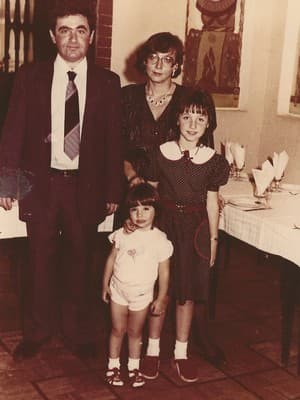
Zoya was born in 1985 in the west Ukrainian city of Chernivtsi, near the border with Romania, the second daughter, after Rina, of Issaak and Rita. 

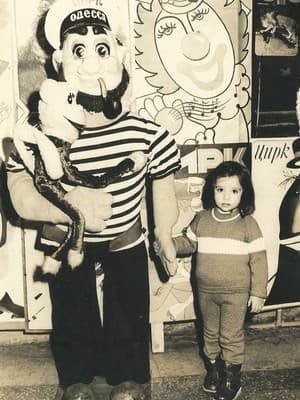
She still has a handful of black and white photos of herself in Ukraine, including one of her posing a little nervously at a circus in Odessa (the historic Black Sea port immortalised in Sergei Eisenstein’s classic 1925 movie, Battleship Potemkin and now a key objective of Putin’s ambitions).

Her family fled Ukraine after the Soviet Union collapsed in 1991. Zoya was six years old and spoke no English. Fleeing Ukraine was a “schism … an earthquake in my life. I know exactly what went before and what came after,” she says. For centuries, Jews had been subject to pogroms and treated as second-class citizens under czars and communist dictators. 

Her mother - full name “Margarita, like the cocktail” - drove the family’s decision to become refugees. “But any Jewish family that could was escaping while they had the opportunity.”

The Sheftalovich family arrived in Sydney in 1992. Again, her mother took the lead, enrolling her daughters in a yeshiva that was free to refugee Jewish children.

In Ukraine, the family had not been practising Jews. “We are classic cultural Jews,” Zoya says. “We celebrated the High Holidays, but never kept a kosher kitchen.”

Zoya’s mother insisted her daughters practised their Russian when they arrived in Sydney: “Villagers spoke Ukrainian when we left, but people in the cities spoke Russian. My mother insisted I take private Russian lessons until year 12.”

Professionally, that has paid dividends, and even though Zoya doesn’t “speak fluent Ukrainian, I understand enough to translate”.

We have interns covering breaking news who don’t understand the context; speed has become more important than accuracy; there’s a premium in not being an hour behind your rivals.

In this crisis, Zoya sees her role as “providing context” to what’s happening in Ukraine.

Perhaps much to the chagrin of her UTS journalism lecturers, she eschews “both siderism” - the basic tenet of Western journalism until Fox News, Facebook and Twitter changed not only the playing rules but the dimensions of the pitch.

“Putin is a war criminal,” she says. “Nothing he says can be relied on as accurate.

“It’s a dictatorship where one man controls all the levers of power. Anyone in the upper echelons of Russian society, from oligarchs to (generals), owe their position to the grace of Putin.”

She’s particularly frustrated by respected western media outlets which quote Putin without providing analysis.

“My concern is that we have young interns covering breaking news who don’t understand the context.”

That’s because speed has become more important than accuracy, she says: “There’s this real premium in not being an hour behind your rivals.”

Even when what the rivals are reporting is wrong.

“When the Ukraine crisis started I had around 10,000 Twitter followers. Two months later I have around 88,000.  I think that’s because I add context.

“I listen to Ukrainian President Volodymyr Zelenskyy's nightly video addresses, translate them and tell people what’s really happening.”

CLICK HERE FOR DETAILS OF THE PANEL AT MELBOURNE JEWISH BOOK WEEK

READ MORE
How many Jews fought at Mariupol's Azovstal plant? Depends who's counting
(Haaretz)
After weeks of closure, Israel envoy to Ukraine raises flag in front of Kyiv embassy
(Times of Israel)

Photo: Zoya Sheftalovich (supplied)

You might also like
  • No action to stop Hezbollah ally beaming antisemitic and anti-Israel content into Australia
    Michael Visontay
  • Rachel Moshel: Creating a space for Jewish art and joy
    Gideon Cohen
  • Why you should take part in the Gen26 community survey 
    Adina Bankier Karp & David Graham
logomark.67a07ee3
We believe in the free flow of information

Republish our articles for free, online or in print, by using our Creative Commons licence

You might also like

    Feature

    Israel bows to pressure by restoring water flow, ICC investigates both sides

    TJI Wrap
    Israel Hamas War

    IDF: Hamas will steal fuel for tunnel ventilation systems and rockets

    TJI Wrap

    Alerts over antisemitic threats and attacks in Europe and US

    TJI Wrap

About the author

Steve Meacham

Steve Meacham

Steve Meacham is a senior features writer whose work has appeared in many Australian and British publications. He has also written several authorised biographies.

More from the author

Australia

‘Never seen anything like this’: Aussies watched war from their balcony

Arts & Culture

Is this show still funny after so many years? Well, it helps if you’re Jewish

FeatureAustralia

Living – and dying – with motor neurone disease: one family’s story

FeatureArts & Culture

A musical about lynching a Jew is striking a new chord