Published: 22 April 2026
Last updated: 26 April 2026
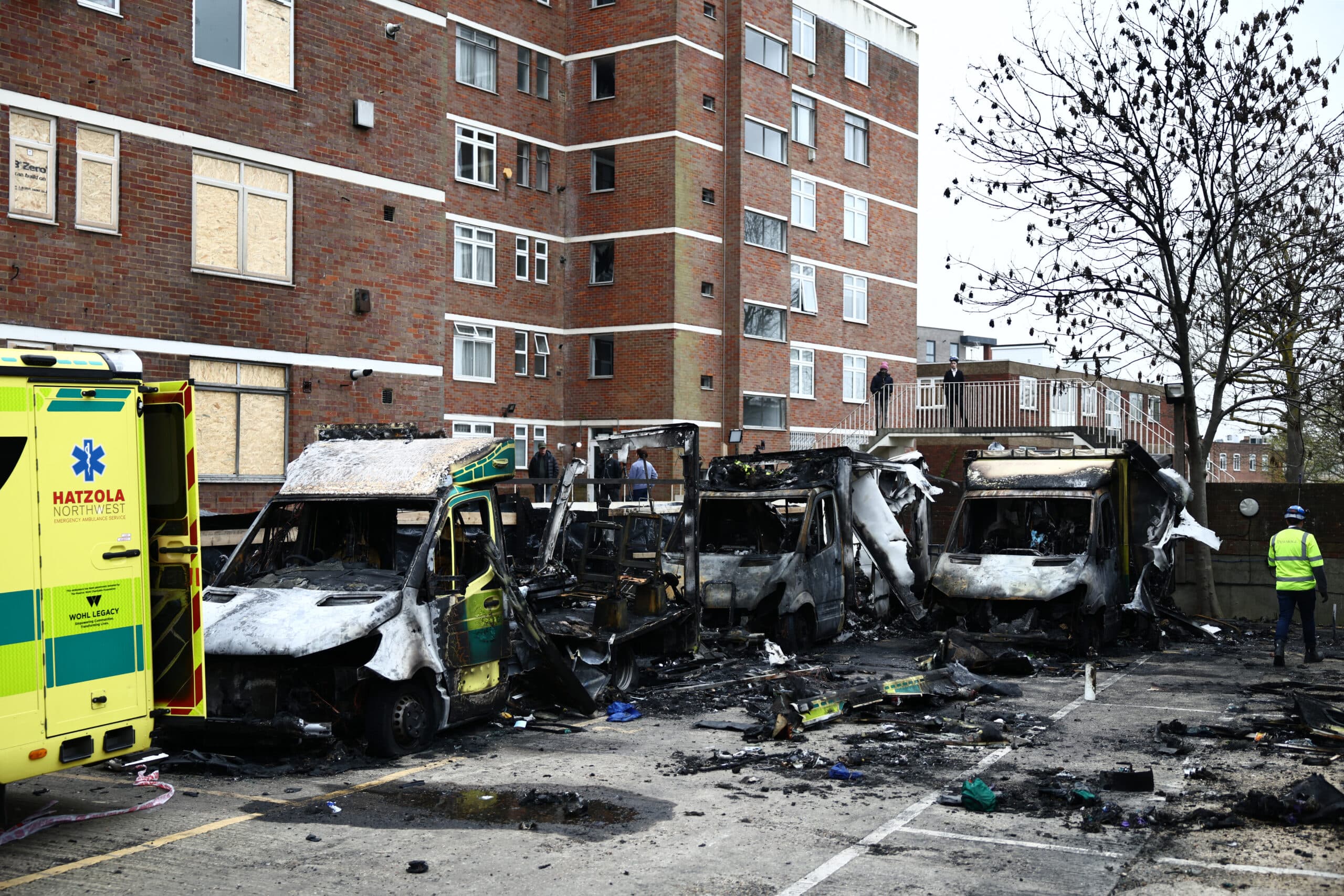
When I heard at 2am on a Monday that Hatzola ambulances had been set on fire, I felt the same mix of anger and exhaustion that many Jews have become used to. Hatzola volunteers are paramedics who respond to medical emergencies. Targeting them was not a protest against a government or a foreign policy, but an attack on Jews.
I posted about it online, and the responses I received from outside the Jewish community was, for the most part, a flood of abuse. I was told the attack was a false flag. I was called a “white coloniser,” told to “go to Israhell” but also told to “go back to Poland.” What struck me most was not the hostility, but the implication behind those words.
When someone tells a Jew to go back to Poland, in 2026, they are not suggesting we return to a peaceful ancestral homeland. They mean Auschwitz. They are telling us, in coded language, that we belong in the place where our families were murdered, and likely that we should meet the same fate.
For years, I had believed in the idea that most antisemitism came from ignorance. I hoped that if people understood more about Jewish history or Israel, then much of this hatred would fade. I believed in education as the primary solution. But you cannot educate someone out of wanting you dead.
There are people in this country who are willing to set fire to ambulances because they are associated with Jews. There are people who will respond to that by accusing Jews of staging it themselves. There are people who will ram their cars into synagogues, plan terror attacks at Jewish institutions and kill Jews. These are not people who are waiting for a workshop or an awareness campaign to change their minds. They know exactly what they are saying and doing.