Aa
  • Read, Watch, Listen
  • TJI Series
  • Community Action
  • Events
  • Zedi
Follow us and continue the conversation
  • LinkedIn
  • Instagram
  • FaceBook
  • X
  • YouTube
Test yourself with the TJI Quiz!

Adjust size of text

Aa

Follow us and continue the conversation

  • LinkedIn
  • Instagram
  • FaceBook
  • X
  • YouTube

Your saved articles

You haven't saved any articles

What are you looking for?

Original reporting, insightful analysis and diverse views, delivered straight to your inbox

  • LinkedIn
  • Instagram
  • FaceBook
  • X
  • YouTube
Your support fuels our mission to inform, entertain and inspire.

The Jewish Independent is bound by the Standards of Practice of the Australian Press Council. If you believe the Standards may have been breached, you may approach The Jewish Independent or make a complaint to the Australian Press Council in writing at www.presscouncil.org.au. The Council may also be contacted on 1800 025 712.

  • Our Story
  • Contact us
  • Our Team
  • Support us
  • Guidelines
  • Pitch your idea
  • Republishing us
  • Community Action
  • Our Awards
  • LinkedIn
  • Instagram
  • FaceBook
  • X
  • YouTube
Aboriginal FlagTorres Strait Islanders Flag

The Jewish Independent acknowledges Aboriginal and Torres Strait Islander peoples as the Traditional Owners and Custodians of Country throughout Australia. We pay our respects to Elders past and present, and strive to honour their rich history of storytelling in our work and mission.

© The Jewish Independent 2026All Rights Reserved
Website design and development by Your Creative, MelbourneTerms & ConditionsPrivacy Policy
HomeRead, Watch, ListenAustralia
AnalysisAustralia

Pros and cons in Antisemitism Envoy’s new proposals

Jillian Segal's new report proposes sensible initiatives in education, health and media but overreaches with authoritarian recommendations over protests and police powers
Michael Visontay
Print this
Jillian Segal

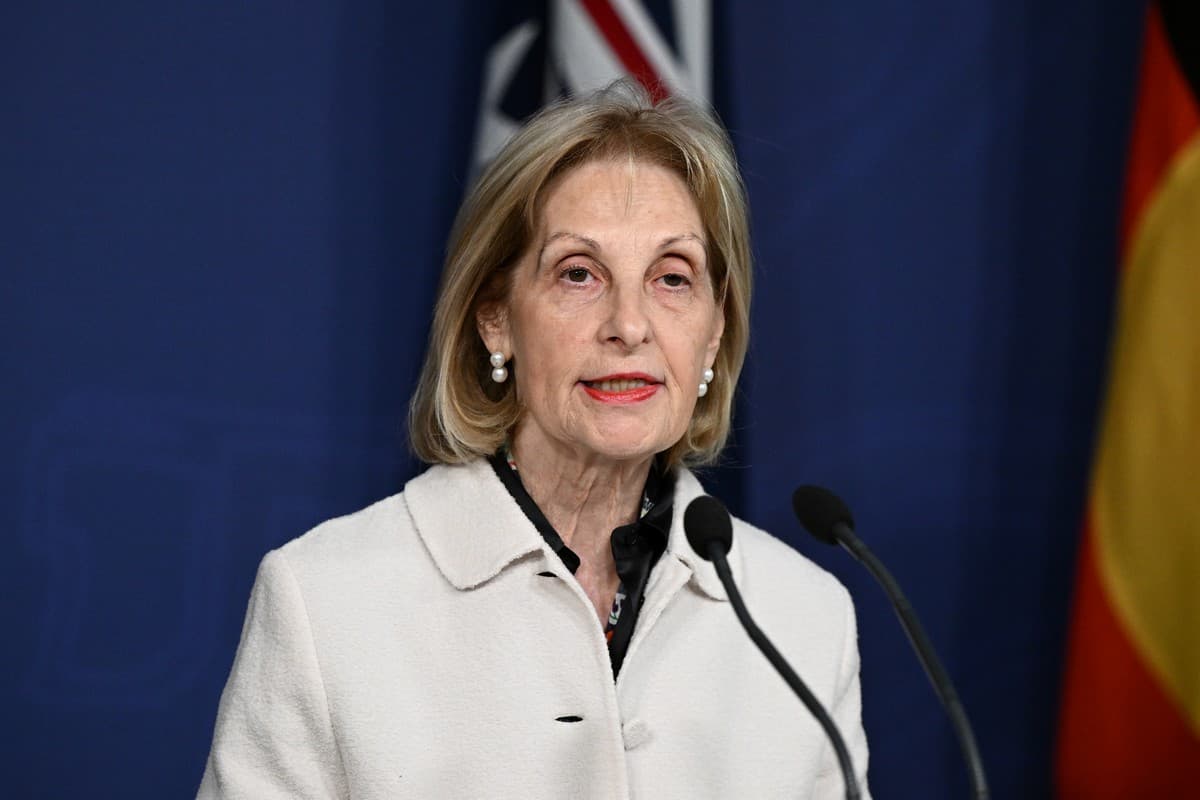
Antisemitism Envoy Jillian Segal at the launch of the report on July 10 (Image: AAP/Dan Himbrechts)

Published: 5 November 2026

Last updated: 5 November 2026

As we reach the one-year mark since the Bondi attack, there is a vague feeling that after the Royal Commission recommendations are digested and memorials completed, Australian society will tick off the antisemitism box. The focus of social concern will move onto the simmering grievances around cost-of-living and housing crises, and AI.

Antisemitism envoy Jillian Segal is determined that this will not happen. Her new report, Combatting Antisemitism: Special Envoy’s priorities, sets out to remind us of the extent to which antisemitism has taken root in the community and the ways it has shapeshifted since her first report in June 2025.

She has again unveiled a broad raft of new hard-hitting recommendations, while doubling down on contentious proposals from the first report. The new report’s proposals include sensible and nuanced initiatives in the education, health, media and sport sectors, but Segal again overreaches with authoritarian recommendations in relation to public protests and police powers.

These new proposals have been informed by a changed landscape, Segal argues. “Modern, progressive antisemitism is the most pervasive manifestation of antisemitism facing Australia today”, she writes, and it has become “fashionable by laundering far-left antisemitism and Islamic extremism through a progressive lens, such as social justice and human rights”.

Segal argues this context has created “ambient antisemitism which generally sees anti-Israel hostility (while not necessarily inherently antisemitic) utilised to create an environment where that sentiment can so easily morph into hostility towards Jewish people and see them ostracised or unsafe”.

Within this environment, the report notes the growing use of the word Zionist “as a proxy for Jews, particularly where Jews in Australia are treated as collectively responsible for the actions of Israel” and “allow for the depiction of anyone who associates or aligns with Israel as complicit in its purported evil”.

One of the battlegrounds for this conflict is the IHRA working definition of antisemitism, which has been a cornerstone of Segal’s advocacy and has been widely attacked by progressive critics for allegedly conflating criticism of Israel with antisemitism. In response, the report quotes the definition in bold: “Criticism of Israel similar to that levelled against any other country cannot be regarded as antisemitic”.

This declaration has been largely overlooked by progressive critics, who demand more specific clauses around criticism of Zionism as a form of nationalism. Their widespread attacks on the legitimacy of Zionism underscore the climate of hostility and intimidation that Segal articulates.

Education, health and sport

With regard to education, Segal’s original focus on the Holocaust has evolved to a more nuanced framework. The report advocates a “layer cake” with ethics at the base, Holocaust education sitting above, and bespoke antisemitism education on the top.

Significantly, this report – unlike the earlier one – acknowledges the need for students to “understand not only the Holocaust in isolation but the mechanisms by which prejudice, scapegoating and social targeting take root”.

The report also addresses problems in the hospital and health sector (which came to light in media reports and were amplified at the Royal Commission), with recommendations for systemic antisemitism training and stronger regulatory accountability for administrators and health professionals.

Another welcome proposal is the adoption of formal antisemitism guidelines and codes of conduct in sporting bodies.

Terminating university funding and arts bodies grants

The report reiterates her earlier recommendations for termination of university funding and arts grants over inadequate responses to antisemitism. It should be noted that in the case of universities, the government has already rejected that proposal in favour of a framework of fines to be overseen by the university regulator, TEQSA. Legislation that outlines the details of this framework is due to be introduced into parliament at the end of this month.

External ombudsmen for ABC and SBS

Having made a compelling argument that attitudes to the Israel-Palestine conflict impact antisemitism, the report goes into extensive detail about alleged unbalanced coverage of Israel and the Middle East by the ABC and SBS.

Segal proposes the appointment of external ombudsmen, rather than the existing internal appointees, to adjudicate complaints, “consistent with other sectors such as telecommunications and banking”.

This is a reasonable suggestion. Internal self-assessment is inevitably beholden to internal bias, and although the Australian Communications and Media Authority (ACMA) does have power to respond to complaints about broadcasting outlets, its resources are stretched thin, and its appetite for public adjudications has been muted.

Complaints about the print media, including online, can be taken to the Australian Press Council, which has the power to make newspapers publish its findings. There is good reason for public broadcasters to face similar scrutiny.

Restrictions on protests

Most controversially, the report urges governments to introduce measures that would control the location and duration of protests, restrict identity concealment and give police the discretion to break up a demonstration using “move on” powers.

The report cites as precedent the safe access zone limitations on free expression introduced in many jurisdictions across Australia a decade ago in response to aggressive anti-abortion protests around reproductive healthcare clinics.

“It is neither draconian nor antidemocratic to set proportionate time, place and manner limitations on protests to safeguard the rights of other members of society, including their right to participate fully and freely in public life,” Segal argues.

In effect, Segal is urging a restriction on the right of pro-Palestinian/anti-Israel demonstrators to choose where they can gather in a public space. The primary aim would be to limit protests near synagogues and other Jewish buildings to lessen their potential intimidation.

The recommendation for heavy police powers may also be a response to the protest against Israeli President Herzog’s visit in January, and possibly the pro-Palestinian march across the Sydney Harbour Bridge in 2025. In both cases, the organisers chose locations that were symbolically provocative (Sydney Town Hall and the bridge) and awkward from a security perspective.

Both events raised uncomfortable feelings for many Jews through their size, location and intensity. NSW police tried unsuccessfully to persuade the organisers to choose different locations in both cases.

But discomfort does not justify giving police the arbitrary power to decide where and when future demonstrations can be held, and when to end them. Such powers are only justified if demonstrations are actually a threat – and the report does not provide evidence that the pro-Palestinian protests actually constitute such a threat to Australian Jews.

There are alarming ramifications in assigning police “move on” powers, allowing them the discretion to exercise this authority. If adopted, they could be used by the government of the day to curtail all manner of protests beyond those about the Middle East. They could be applied to protests against the Russian or Chinese governments, AI, mining and oil companies, and to rallies by unions against working conditions, or in support of indigenous rights.

The Albanese government was rightly criticised for taking so long to respond to Segal’s first report, a delay which incensed the Jewish community and which contributed to public criticism of the PM after Bondi.

While the government faces increased pressure to act more promptly this time, it should not be swayed from judging each of the recommendations on its merits.

You might also like
  • Australian universities to face $2 million fines over antisemitism
    Michael Visontay
  • The first step in antisemitism education: teaching the teachers
    Michael Visontay
  • Social media regulation is a necessary brake on harmful speech
    Dean Sherr
logomark.67a07ee3
We believe in the free flow of information

Republish our articles for free, online or in print, by using our Creative Commons licence

You might also like

    Who Are We JIFF
    FeatureAustralia

    From the footy field to the film festival: the AJAX story onscreen

    Gideon Cohen
    EDITH BRUTMAN FUNERAL
    ExplainerAustralia

    Why the Bondi victims’ bodies were not ritually cleansed before burial

    Nomi Kaltmann
    Isabelle oderberg
    NewsAustralia

    ‘The Jewish Independent’ commentary makes finals in Walkley journalism awards

    The Jewish Independent 1

About the author

Michael Visontay

Michael Visontay

Michael Visontay is a Senior Writer at TJI and was Editor-in-Chief from 2017-22. Michael is a former Assistant Editor of The Sydney Morning Herald and columnist with The Australian Jewish News. He has written six books, including Who Gave You Permission? with Manny Waks, and Welcome to Wanderland: Western Sydney Wanderers and the Pride of the West. His most recent book is Noble Fragments: the Maverick who broke up the world's greatest book (Scribe, 2024).

More from the author

InterviewArts & Culture

The publishing house that Henry built

NewsAustralia

The first step in antisemitism education: teaching the teachers

ReflectionWorld

My memory of Gloria Steinem

NewsAustralia

No action to stop Hezbollah ally beaming antisemitic and anti-Israel content into Australia