Aa
  • Read, Watch, Listen
  • TJI Series
  • Community Action
  • Events
  • Zedi
Follow us and continue the conversation
  • LinkedIn
  • Instagram
  • FaceBook
  • X
  • YouTube
Test yourself with the TJI Quiz!

Adjust size of text

Aa

Follow us and continue the conversation

  • LinkedIn
  • Instagram
  • FaceBook
  • X
  • YouTube

Your saved articles

You haven't saved any articles

What are you looking for?

Original reporting, insightful analysis and diverse views, delivered straight to your inbox

  • LinkedIn
  • Instagram
  • FaceBook
  • X
  • YouTube
Your support fuels our mission to inform, entertain and inspire.

The Jewish Independent is bound by the Standards of Practice of the Australian Press Council. If you believe the Standards may have been breached, you may approach The Jewish Independent or make a complaint to the Australian Press Council in writing at www.presscouncil.org.au. The Council may also be contacted on 1800 025 712.

  • Our Story
  • Contact us
  • Our Team
  • Support us
  • Guidelines
  • Pitch your idea
  • Republishing us
  • Community Action
  • Our Awards
  • LinkedIn
  • Instagram
  • FaceBook
  • X
  • YouTube
Aboriginal FlagTorres Strait Islanders Flag

The Jewish Independent acknowledges Aboriginal and Torres Strait Islander peoples as the Traditional Owners and Custodians of Country throughout Australia. We pay our respects to Elders past and present, and strive to honour their rich history of storytelling in our work and mission.

© The Jewish Independent 2026All Rights Reserved
Website design and development by Your Creative, MelbourneTerms & ConditionsPrivacy Policy
HomeRead, Watch, ListenArts & Culture
AnalysisArts & Culture

Regina Spektor escaped Soviet anti-Zionism. In America, Bowen Yang called her a ‘Zio’

The comedian has apologised for calling the Jewish singer a “Zio,” but the history behind the word means many Jews aren’t treating it as a throwaway line.
Gideon Cohen
Print this
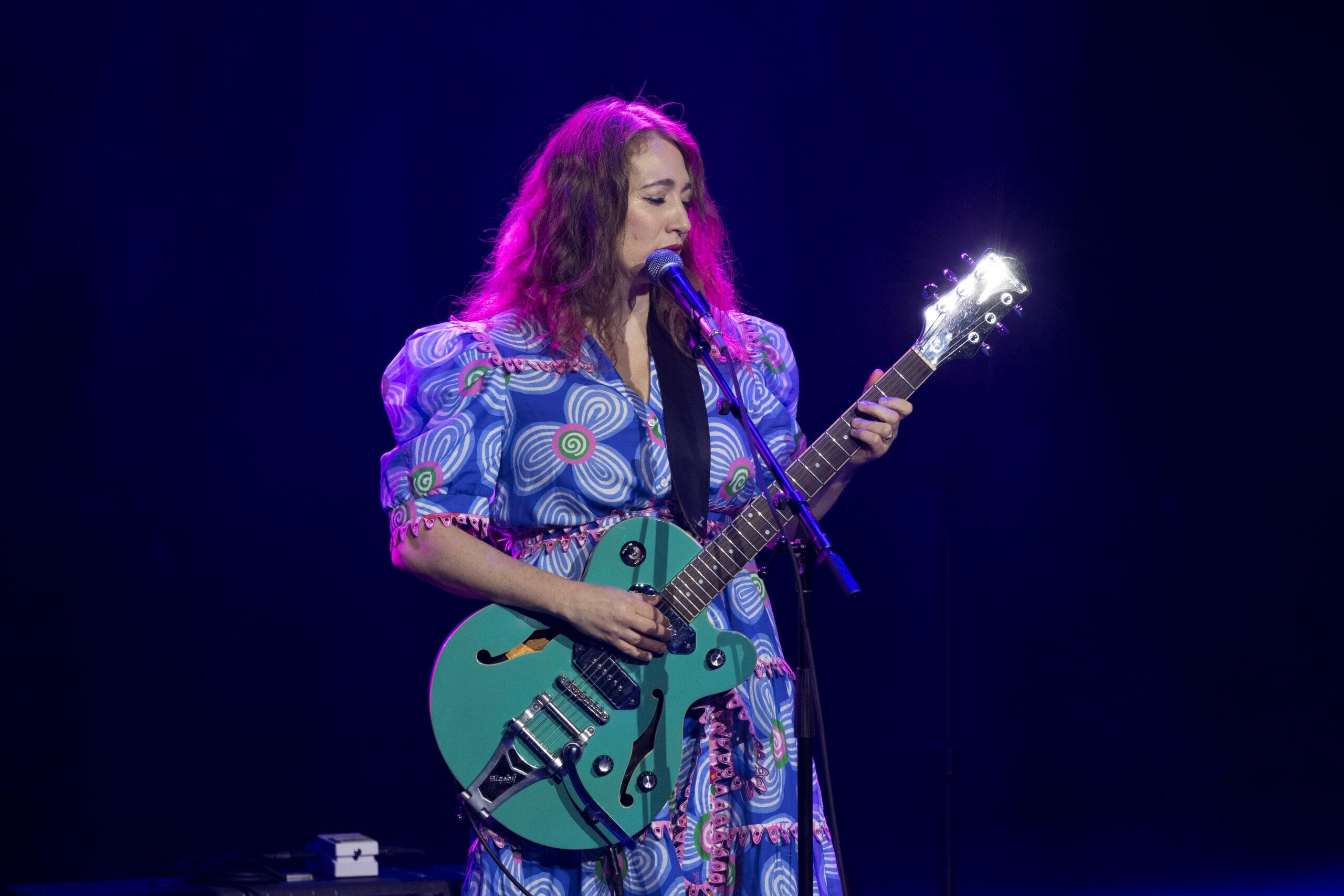
Regina Spektor In Concert – Boston, MA

Regina Spektor performs on July 31, 2024 in Boston, Massachusetts. (Photo by Lisa Dragani/Getty Images)

Published: 24 November 2026

Last updated: 24 November 2026

Regina Spektor was nine when her family left the Soviet Union in 1989, arriving in the Bronx as Jewish refugees. They were leaving a state that, for decades, had treated Jews as suspect, recording “Jew” as a nationality on official documents and quietly limiting access to education and work.

Alongside this ran an overt, state-run propaganda campaign in the name of “anti-Zionism”. Soviet-born scholar Izabella Tabarovsky argues that the state cast Zionism as fascist, Nazi-like and imperialist, recycling older antisemitic conspiracy tropes in socialist language. In that vocabulary, “Zionist” was an accusation used to persecute Jews.

Spektor grew up to become a celebrated singer-songwriter. In October, on a podcast, comedian Bowen Yang called her “Zio,” a term the Anti-Defamation League (ADL) and other Jewish groups describe as an antisemitic slur, popularised by former Ku Klux Klan leader David Duke.

This month, a clip of the remark spread, drew backlash, and Yang apologised, saying he had not known the word’s history. However, the ADL’s chief executive and the comedian whose post helped spark the backlash have said the apology falls short.

Who’s involved?

Bowen Yang is an American comedian and actor, best known as a cast member on Saturday Night Live from 2019 to 2025 and for his supporting role in the 2024 film adaptation of Wicked and its sequel.

Since 2016, he has co-hosted the comedy and pop-culture podcast Las Culturistas with fellow comedian Matt Rogers. The show, known for irreverent riffs on entertainment and celebrity interviews, is produced by iHeartMedia and Will Ferrell’s Big Money Players Network. Since November 18, it has streamed weekly on Hulu and Disney+ as a video podcast.
Regina Spektor is a Soviet-born American singer-songwriter and pianist who emerged from New York’s anti-folk scene in the early 2000s. Her 2006 album Begin to Hope went gold in the US and made her a mainstream name. She also wrote and recorded “You’ve Got Time,” the Grammy-nominated theme to the Netflix series Orange Is the New Black.

Spektor has spoken in interviews about her family’s decision to leave the Soviet Union because of antisemitism. She has also been publicly outspoken about Israel since Hamas’s October 7, 2023 terrorist attack.

On October 17, 2023, she posted an Instagram statement mourning the “murdered, raped, and kidnapped innocent Jews” in Israel and the “bombed innocent Palestinians” in Gaza. She condemned Hamas and said neither the Israeli government nor Prime Minister Benjamin Netanyahu speaks for all Israelis or for Jews worldwide. She closed with a call to return the hostages, stop the bombing and denounce Hamas, signing off with Am Yisrael Chai.

At a July 2025 concert in Portland, Oregon, audience members shouted “Free Palestine!” at her. “You’re just yelling at a Jew,” she told one of them, JTA reported. When another audience member said there was a genocide happening in Gaza, she told him the show was not an internet comment section, and it was not the place for that conversation. After several people left, she continued:

“The only reason I even speak English is that I came here to escape this shit. I only speak English because I came from a country where people were treating Jews as others, and now I’m being othered here, and it sucks. It’ll be nice if one of my family’s generation didn’t have to go to a new country and learn a new language.”

What happened?

Comedian and filmmaker Edy Modica appeared on the October 14 episode of Las Culturistas. During a conversation about Spektor, Modica described her as “out to lunch.” The conversation continued:

Rogers: “Are you upset with Regina, lately?”

Modica: “She’s just like a little Israel hardcore.”

Yang: “Yeah, she’s Zio.”

Modica: “Yeah, hardcore.”

Five weeks later, the podcast’s Hulu debut on November 18 featured Hasan Piker, a booking the Israeli newspaper Israel Hayom reported raised eyebrows. Critics, including the ADL, accuse Piker of expressing support for Hamas and Hezbollah, and the ADL also says he has called for the eradication of Zionism and described it as a “mental illness”. Piker disputes the characterisations.

Soon after, a clip of Yang calling Spektor a “Zio” began circulating on social media. Jewish comedian Eitan Levine’s Instagram post calling out Yang gained widespread traction, bringing the remark to a far wider audience. Levine told Israel Hayom he began receiving messages about the Spektor segment right after the Piker episode went up, and posted when he found nothing written about it online.

Hen Mazzig, an Israeli-born author and activist who is a senior fellow at the Tel Aviv Institute, also weighed in. His Instagram video in response to Yang had been viewed more than 590,000 times by Tuesday. In it, Mazzig explained the word’s link to David Duke, saying the former KKK leader used it to spread conspiracies about Jews controlling the media and the world. In his caption, he wrote that he wanted to believe Yang had not known where the word came from.

In a post on X, the ADL said Yang should have read up on the history before casually calling a Jewish singer a “Zio.” It said the term was popularised by Duke as a way to attack Jews without saying “Jews,” and has since found a home in parts of the anti-Israel left. Whether or not a speaker knows that history, the ADL said, using white supremacists’ language helps normalise it.

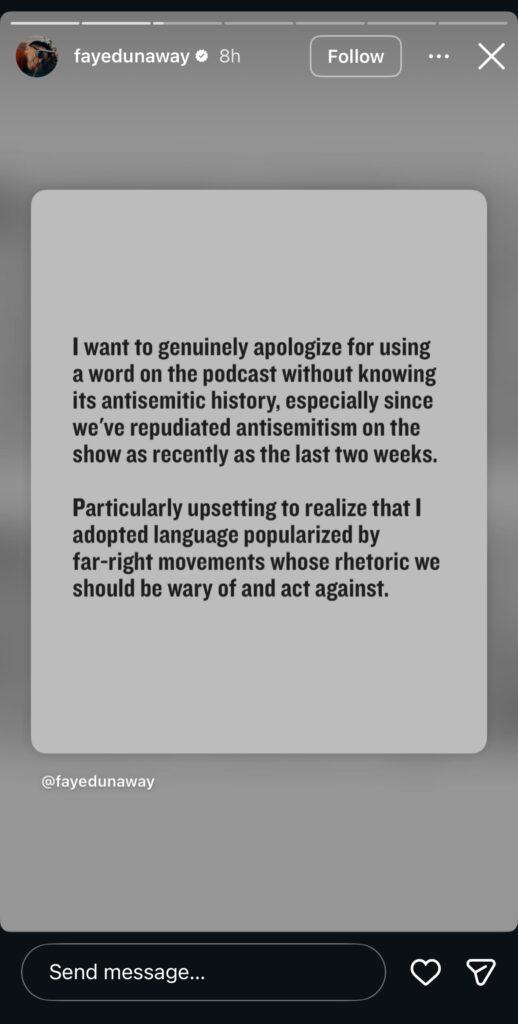
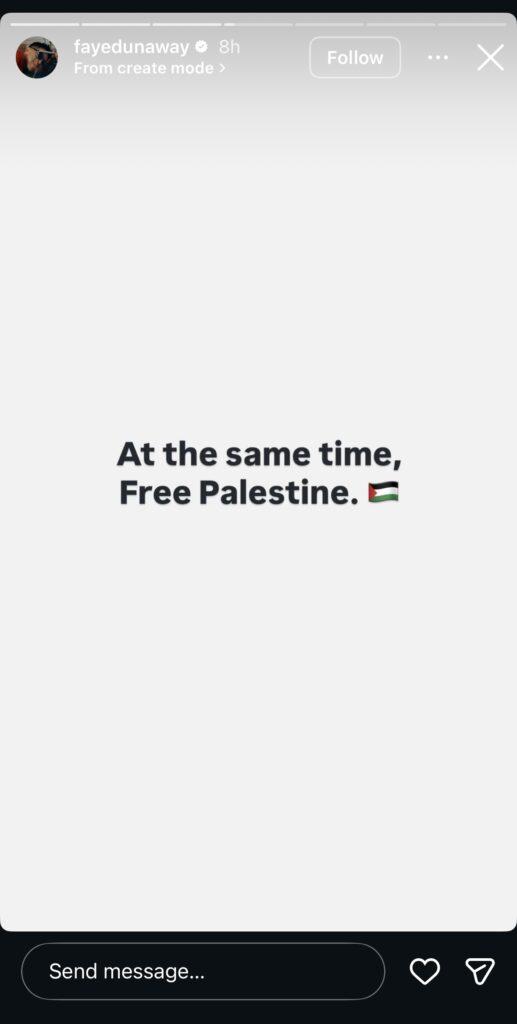
On Friday (US time), Yang apologised in an Instagram post, saying he had used the word “without knowing its antisemitic history” and acknowledging he had adopted language popularised by far-right movements. He shared the apology on his Instagram Story, followed immediately by another story reading, “At the same time, Free Palestine.”

ADL chief executive Jonathan Greenblatt called it a meagre apology. Writing on X, he said Yang seemed to regret using the wrong slur rather than using a slur at all. He also took aim at the “Free Palestine” follow-up, saying an apology hedged with two qualifications was not an apology at all. It was a reminder, he said, that Yang did not feel Jews deserved the same respect as everyone else, and he described it as prejudice rather than political speech.

Levine called the apology “completely insincere” and said the hosts of Las Culturistas should give an on-air apology and explain why using the term is inappropriate. 

Screenshots of Bowen Yang's Instagram stories
The Jewish Independent

Why it matters

Yang’s casual use of the word “Zio” shows how normalised antisemitic rhetoric has become in progressive spaces.

Spektor’s own statement after October 7 mourned Jewish and Palestinian victims alike, condemned Hamas, and said Prime Minister Benjamin Netanyahu does not speak for all Israelis or Jews. None of that nuance survived the conversation on Las Culturistas. Instead, a Jewish woman became “hardcore,” “out to lunch” and “Zio”: a caricature to be disparaged.

Spektor’s family left the Soviet Union, a state that used “Zionist” to mark Jews as suspect. Now “Zio” has been thrown at her as a slur, to mark her as politically undesirable. Whether Yang knew the word’s history is beside the point.

A Jewish refugee who arrived in America as a child, built a successful career and chose empathy in a painful debate was written off in a single word. At her Portland concert, Spektor lamented that, again, she was being othered. It is hard to argue she was wrong.

You might also like
  • Why I’m still voting Labor in Victoria
    Dean Sherr
  • Why Menachem Vorchheimer keeps taking people to court 
    Max Gross
  • The secret to successful Holocaust education
    Lauren Chalk & David Slucki
logomark.67a07ee3
We believe in the free flow of information

Republish our articles for free, online or in print, by using our Creative Commons licence

You might also like

    Adelaide Hermann magicianHarvard_Theatre_Collection_-_Hermann_TCS_28
    FeatureArts & Culture

    Legendary magicians who made their Jewish identities disappear

    Nina Siegal
    Scribe main
    InterviewArts & Culture

    The publishing house that Henry built

    Michael Visontay
    At the Edge of the Desert
    FeatureArts & Culture

    How this artist went from hiding to embracing her Mizrahi heritage

    Elana Benjamin

About the author

Gideon Cohen

Gideon Cohen

Gideon Cohen is a Melbourne-based journalist and a content creator and editorial assistant at TJI. He holds a master's degree in journalism from the University of Melbourne and his work has appeared in various publications including Broadsheet and The Jewish Chronicle.

More from the author

InterviewAustralia

The Israelis who flew home to vote

FeatureAustralia

Josh Frydenberg weighs political return as he releases his new memoir

FeatureAustralia

From the footy field to the film festival: the AJAX story onscreen

FeatureAustralia

‘Our children already belong’: Petition calls Jewish schools to cooperate for disabled support