Aa
  • Read, Watch, Listen
  • TJI Series
  • Community Action
  • Events
  • Zedi
Follow us and continue the conversation
  • LinkedIn
  • Instagram
  • FaceBook
  • X
  • YouTube
Test yourself with the TJI Quiz!

Adjust size of text

Aa

Follow us and continue the conversation

  • LinkedIn
  • Instagram
  • FaceBook
  • X
  • YouTube

Your saved articles

You haven't saved any articles

What are you looking for?

Original reporting, insightful analysis and diverse views, delivered straight to your inbox

  • LinkedIn
  • Instagram
  • FaceBook
  • X
  • YouTube
Your support fuels our mission to inform, entertain and inspire.

The Jewish Independent is bound by the Standards of Practice of the Australian Press Council. If you believe the Standards may have been breached, you may approach The Jewish Independent or make a complaint to the Australian Press Council in writing at www.presscouncil.org.au. The Council may also be contacted on 1800 025 712.

  • Our Story
  • Contact us
  • Our Team
  • Support us
  • Guidelines
  • Pitch your idea
  • Republishing us
  • Community Action
  • Our Awards
  • LinkedIn
  • Instagram
  • FaceBook
  • X
  • YouTube
Aboriginal FlagTorres Strait Islanders Flag

The Jewish Independent acknowledges Aboriginal and Torres Strait Islander peoples as the Traditional Owners and Custodians of Country throughout Australia. We pay our respects to Elders past and present, and strive to honour their rich history of storytelling in our work and mission.

© The Jewish Independent 2026All Rights Reserved
Website design and development by Your Creative, MelbourneTerms & ConditionsPrivacy Policy
HomeRead, Watch, ListenArts & Culture
FeatureArts & CultureAustralia

Joan Nathan, matriarch of Jewish food, is tasting Melbourne

Rita Erlich
Print this

Published: 9 December 2022

Last updated: 5 March 2024

RITA ERLICH talks to the Jewish food guru headlining the first Melbourne Jewish Food Festival at the Kadimah on Sunday.

On her first visit to Australia, American Jewish cooking authority Joan Nathan is doing what she has always done. She is exploring and tasting, and taking notes. She’s been along Carlisle Street, and after we speak, she is heading off for an afternoon tea of Melbourne’s best pasteis de nata (Portuguese custard tarts) and later, dinner at a Georgian restaurant.

On Sunday. she is the guest of honour at the first Jewish Food Festival, held at the Kadimah. She will be judging domestic baking, giving cooking demonstrations, and will be in conversation with food writer/broadcaster Alice Zaslavsky (a conversation moderated by me.)

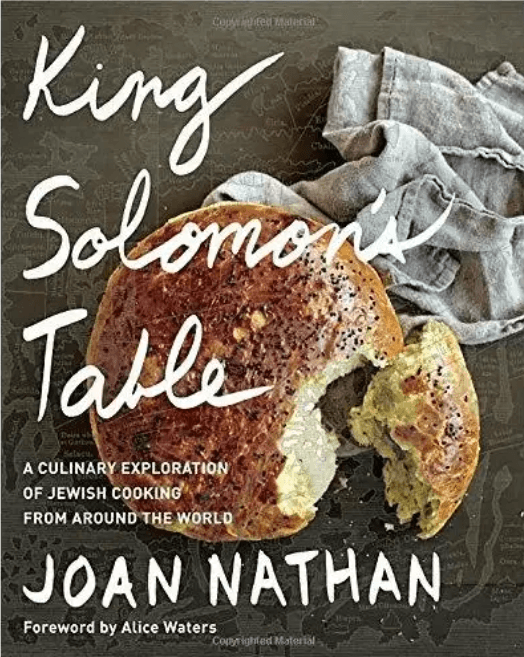
Nathan is a matriarch of Jewish food. She has been exploring it, travelling for it, cooking it, recording it, talking, televising and writing about it for nearly 50 years, winning innumberable awards along the way. Her home base is Washington, her interest is the world-wide span of Jewish food. Her latest book, King Solomon’s Table (Knopf) is an exploration of Jewish cooking from all over the world. It is, she says, the book that brings all the others together. There is Sicilian eggplant, an Indian fish curry, Eastern European tchav (a green soup that includes sorrel), Greek zucchini fritters – and much more, all bound by her recollections and her knowledge of the food and its history.

Her next book, to be published in 2024, will be her memoirs.

Because Mayor Teddy Kollek knew so many people, and because he brought them together over food, Nathan came to understand its importance.

Her first book, in 1975, The Flavor of Jerusalem, was, as the title says, about the food of Jerusalem. She had not planned to be a food writer; she had studied French literature at the University of Michigan, and then went to Israel. While she was learning Hebrew at an ulpan, a journalist writing about the range of people studying Hebrew there, suggested she apply for a job as the then mayor’s foreign press attache. The job had suddenly become vacant.

The mayor was Teddy Kollek. Through him she became interested in food. She has said that in Jerusalem at the time all the journalists got together and talked politics. But Kollek did things differently.

“He knew everyone in Jerusalem. And I noticed the importance of the table, the food and the table where people could talk,” she recalled.

Because Kollek knew so many people, and because he brought them together over food, she came to understand its importance. “Food breaks down barriers,” she said. “And the other way is laughter and jokes, and Teddy was a genius at that.”

One thing led to another. She started cooking classes for journalists and their wives, and then had a thought. “Why not do a book on the food of Jerusalem – Muslim, Jewish and Christian?”

Nathan's latest cookbook

She wrote it with another woman, Judy Stacey Goldman, who had more experience of writing books, and it wasn’t an instant success. They went to 16 different publishers. It was rejected by many Israel publishers because it wasn’t kosher – and couldn’t have been, because it included Christian recipes. It was eventually published by Little, Brown, with photographs by the renowned photographers of the Magnum Agency. Its leader, Robert Capa, was one of the many photographers she got to know through Kollek. “He said to me, ‘If you get a publisher, I’ll make sure the Magnum photographers take the pictures’. He was true to his word.”

Kollek wrote the foreword. The book sold 25,000 copies and its impact endures: the Jerusalem cookbook by Yotam Ottolenghi and Sami Tamimi covers much same ground. Of course, it’s the same city. And yes, Joan Nathan and Yotam Ottolenghi know each other, and have become friends.

The importance of that first book, historically, is as a record of an open Jerusalem, where people and cultures mingled easily.

Its importance for her personally was that it defined the direction she would take. Food meant people, and cultures, and approaches to eating. Her next book, published in 1979, was The Jewish Holiday Kitchen, one of the early books to combine history, research, folklore and recipes. When I tell her that my copy, which I bought in 1983, is falling apart, she smiles: “Oh, good! It’s still in print. 1979! It’s unheard of.”  

She has won numerous awards, including a Lifetime Achievement award from the James Beard Foundation – perhaps prematurely, since that was given in 2001, and there was so much more to come.

Her work continues. “I can discover a food tradition somewhere and write about it and my New York Times readers love it because it’s something new that’s very old,” she said.

What’s the future of Jewish food?  The question leads to a long discussion of the demise of cooking (“everyone does take-out”) to the availability of every recipe through the internet and social media, and intermarriage. And that’s where the hope lies, because she has observed that so many of the women who convert to Judaism are ensuring that the tradition of the Shabbat dinner endures.

Joan Nathan will appear at the Melbourne Jewish Food Festival on Sunday, December 11, at Kadimah.

Photo: Joan Nathan (Rita Ehrlich)

You might also like
  • Antisemitism, homophobia and a radical response to both
    Dennis Altman
  • Facing a new year with the knowledge life can be better
    The Jewish Independent
  • Was the barmi a shemozzle? How Australians use Jewish words 
    Caroline Hendy & Emma Breslow
logomark.67a07ee3
We believe in the free flow of information

Republish our articles for free, online or in print, by using our Creative Commons licence

You might also like

    2
    ReflectionLifestyle

    Ten ways to reflect, repair and renew this Yom Kippur

    Hannah Lundberg
    Generation change Template
    Generation ChangeInterviewAustralia

    Ash Densham: Building community through Humanistic Judaism

    Gideon Cohen
    Fauda
    Israel Hamas WarAnalysisArts & Culture

    Fauda and the illusion of vengeance

    Ittay Flescher

About the author

Rita Erlich

Rita Erlich

More from the author

Arts & Culture

When ‘A Lady’ taught the English to cook kugel and Jews to be English