
Aa
  • Read, Watch, Listen
  • TJI Series
  • Community Action
  • Events
  • Zedi
Follow us and continue the conversation
  • LinkedIn
  • Instagram
  • FaceBook
  • X
  • YouTube
Test yourself with the TJI Quiz!

Adjust size of text

Aa

Follow us and continue the conversation

  • LinkedIn
  • Instagram
  • FaceBook
  • X
  • YouTube

Your saved articles

You haven't saved any articles

What are you looking for?

Original reporting, insightful analysis and diverse views, delivered straight to your inbox

  • LinkedIn
  • Instagram
  • FaceBook
  • X
  • YouTube
Your support fuels our mission to inform, entertain and inspire.

The Jewish Independent is bound by the Standards of Practice of the Australian Press Council. If you believe the Standards may have been breached, you may approach The Jewish Independent or make a complaint to the Australian Press Council in writing at www.presscouncil.org.au. The Council may also be contacted on 1800 025 712.

  • Our Story
  • Contact us
  • Our Team
  • Support us
  • Guidelines
  • Pitch your idea
  • Republishing us
  • Community Action
  • Our Awards
  • LinkedIn
  • Instagram
  • FaceBook
  • X
  • YouTube
Aboriginal FlagTorres Strait Islanders Flag

The Jewish Independent acknowledges Aboriginal and Torres Strait Islander peoples as the Traditional Owners and Custodians of Country throughout Australia. We pay our respects to Elders past and present, and strive to honour their rich history of storytelling in our work and mission.

© The Jewish Independent 2026All Rights Reserved
Website design and development by Your Creative, MelbourneTerms & ConditionsPrivacy Policy
HomeRead, Watch, ListenAustralia
AnalysisAustraliaLifestyle

How not to apologise

The apologies of Yom Kippur require change. Public apologies are more often a status management tool.
Zac Klugman
Print this
tame kostakidis west

Mary Kostakidis, Grace Tame, Kany West

Published: 17 September 2026

Last updated: 17 September 2026

Yom Kippur requires us to ask what it means to apologise and repent. Public life often gives us the answer by showing us what an apology is not.

The public apology has become almost a spectacle: a status game of conceding nothing and getting away with everything.

Grace Tame dismissed reports of rape on October 7 as “propaganda”, then apologised for “any harm their mischaracterisation has caused”. Mary Kostakidis said the Israeli government was “getting some of its own medicine”, then apologised “for the hurt and distress it caused” but not for the post.

These case are part of a trend in public relations where apology is not about genuine regret. It's not even about managing a reputation and stopping a controversy. Rather can be used to dig in and fuel controversy to the speaker’s benefit, while painting objectors as petty or oversensitive. It becomes a status game, designed to galvanise existing supporters. And if the continued anger of those hurt makes them seem unreasonable, all the better.

Jews have very strong opinions about apologies — about teshuvah, repentance. The hardest part of teshuvah is that you don’t control the outcome. So you have to work hard to make it mean something and to show that you sincerely regret what you’ve said.

But when you set up your apology to keep control of the outcome, it becomes an exercise in manipulation. Teshuvah asks us to seek forgiveness from the people we have hurt. It does not let us dictate their response.

You can choose your words, but you cannot choose how the other person hears you. It's very different from the complex machinations around public apologies, as well illustrated by the Kostakidis case, which was formally resolved last week without an apology.
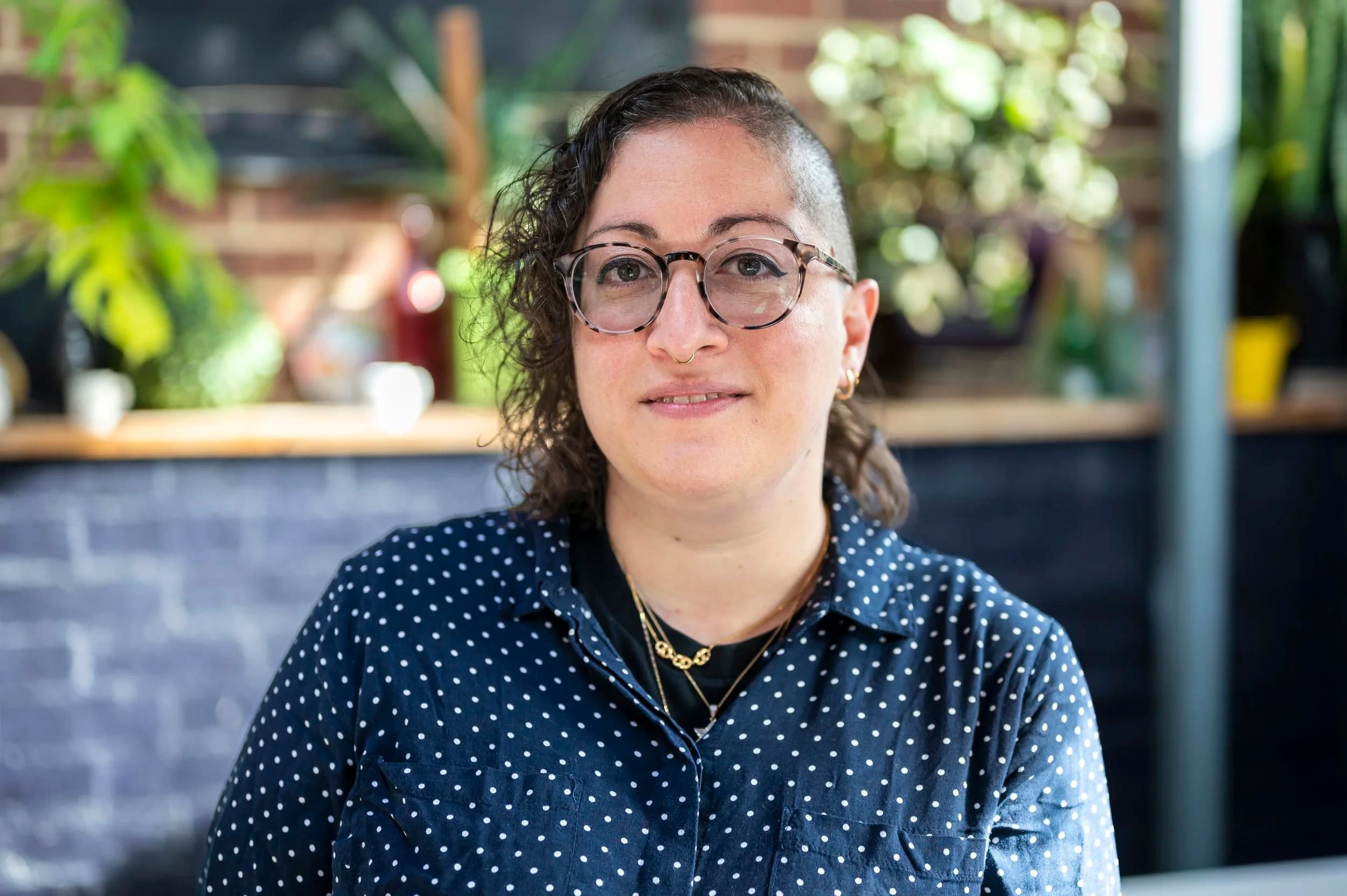

On 4 January 2024, during the war in Gaza, Kostakidis shared on X a video of Hezbollah leader Hassan Nasrallah urging Israelis with foreign passports to leave Israel, telling them they had no future there. Her accompanying comment was: “The Israeli govt getting some of its own medicine”.

Following conciliation at the Australian Human Rights Commission, Kostakidis issued an apology in January 2025. She denied endorsing Nasrallah’s speech and apologised to Jews and Israelis in Australia “who took my posts as an endorsement” but she also issued a statement insisting she had apologised for the hurt, not for the post.

In a media release announcing the case’s resolution, the Zionist Federation of Australia said her online behaviour had not changed after the apology. The statement said she had amplified claims that a firebombing of Jewish volunteer ambulances was an Israeli “false flag”; that Chabad was a “Jewish supremacist network” with historical Nazi links; and that a “billionaire class of Zionist supremacists” controlled and corrupted American institutions. And of course, like Grace Tame, she made sure to amplify claims that reports of rape on October 7 were a hoax. The federation also cited her March 2026 repost of a message “barracking” for Iran, Hezbollah, the Houthis and Hamas.

Last week, the Federal Court case brought by ZFA chief executive Alon Cassuto, ended by agreement. Cassuto said that another compelled apology would “ring hollow”. Kostakidis declared a “win for press freedom”.

The court has not vindicated her post but this is how the status game can work: someone gives up on extracting remorse, and the person they have given up on claims vindication.

Kanye West (aka Ye) has a long history of antisemitic comments, praising Hitler and denying the Holocaust. But he has also taken out a full-page ad apologising for his statements, which he attributes to bipolar disorder. Last November, West met Rabbi Yoshiyahu Pinto in New York and said he wanted to make amends for his antisemitic statements. It was an awkward exchange, and it’s hard to know what to make of it.  

What is revealing is not West's confused public postures but Rabbi Pinto's response. “Judaism lives on repentance,” said Pinto, explaining that Judaism had brought the world a way for someone who regrets what they have done to begin putting it right.

There is generosity in that answer, but also a demand. The person being welcomed back still has work to do.

Maimonides describes complete repentance through a practical test: when the opportunity to repeat the wrongdoing arises, you refrain because you have changed.

For a public figure, that might mean refusing the applause the same provocation would once have earned. It might mean disappointing your supporters, or accepting that those you hurt still don’t trust you.

Yom Kippur asks us to do that work without knowing how it will end. A meaningful apology begins when repairing the harm matters more than repairing a reputation.

You might also like
  • A new generation reckons with 9/11
    Gideon Cohen
  • Proposed digital care law to offer protection against online antisemitism
    Deborah Stone
  • Mind the mentality: not every rejection is antisemitism
    Nomi Kaltmann
logomark.67a07ee3
We believe in the free flow of information

Republish our articles for free, online or in print, by using our Creative Commons licence

You might also like

    Generation change Template
    Generation ChangeInterviewAustralia

    Ash Densham: Building community through Humanistic Judaism

    Gideon Cohen
    chai necklace copy
    ReflectionAustralia

    Facing my mortality, the Book of Life is no metaphor

    Talia Slonim 4
    Apple & rotten core Rosh hashanah
    EditorialAustralia

    Facing a new year with the knowledge life can be better

    The Jewish Independent

About the author

Zac Klugman

Zac Klugman

Zac Klugman is a digital multimedia artist, designer, filmmaker and writer. He has a bachelor degree in technology and innovation and is currently studying a masters of advertising and public relations. He is neurodivergent and is passionate about diverse representation for marginalised voices.

More from the author

OpinionLifestyle

Want to be more resilient? Try popping your Jewish bubble

Comments

No comments on this article yet. Be the first to add your thoughts.