Aa
  • Read, Watch, Listen
  • TJI Series
  • Community Action
  • Events
  • Zedi
Follow us and continue the conversation
  • LinkedIn
  • Instagram
  • FaceBook
  • X
  • YouTube
Test yourself with the TJI Quiz!

Adjust size of text

Aa

Follow us and continue the conversation

  • LinkedIn
  • Instagram
  • FaceBook
  • X
  • YouTube

Your saved articles

You haven't saved any articles

What are you looking for?

Original reporting, insightful analysis and diverse views, delivered straight to your inbox

  • LinkedIn
  • Instagram
  • FaceBook
  • X
  • YouTube
Your support fuels our mission to inform, entertain and inspire.

The Jewish Independent is bound by the Standards of Practice of the Australian Press Council. If you believe the Standards may have been breached, you may approach The Jewish Independent or make a complaint to the Australian Press Council in writing at www.presscouncil.org.au. The Council may also be contacted on 1800 025 712.

  • Our Story
  • Contact us
  • Our Team
  • Support us
  • Guidelines
  • Pitch your idea
  • Republishing us
  • Community Action
  • Our Awards
  • LinkedIn
  • Instagram
  • FaceBook
  • X
  • YouTube
Aboriginal FlagTorres Strait Islanders Flag

The Jewish Independent acknowledges Aboriginal and Torres Strait Islander peoples as the Traditional Owners and Custodians of Country throughout Australia. We pay our respects to Elders past and present, and strive to honour their rich history of storytelling in our work and mission.

© The Jewish Independent 2026All Rights Reserved
Website design and development by Your Creative, MelbourneTerms & ConditionsPrivacy Policy
HomeRead, Watch, ListenAustralia
OpinionAustraliaZedi

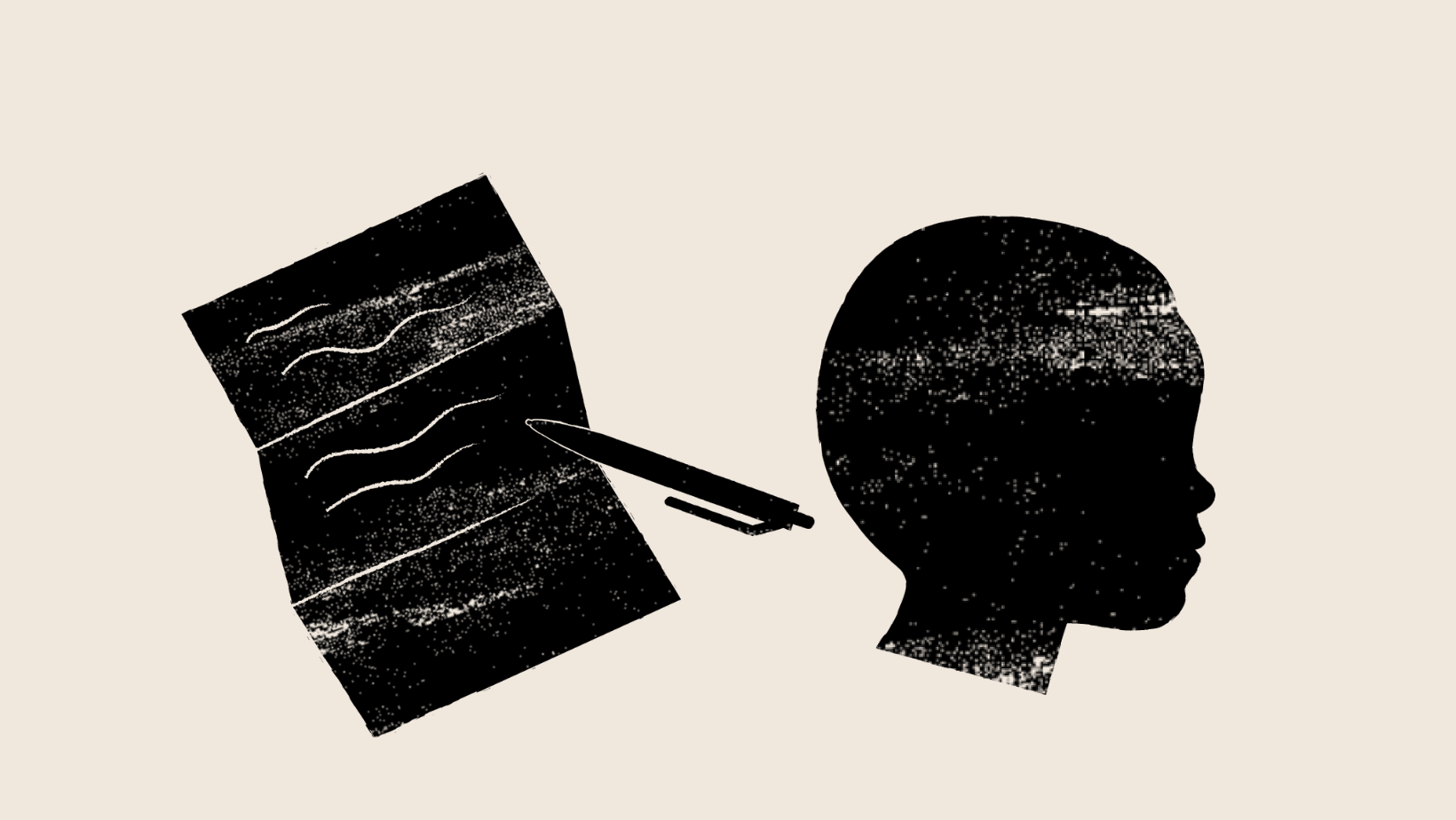
Neurodivergent children are being quietly excluded from our schools 

Jewish schools boast that every child deserves a Jewish education but when inclusion becomes difficult parents are told their child is ‘not the right fit’.
A parent
Print this
Article Image

(Image: TJI)

Published: 27 January 2026

Last updated: 17 February 2026

For thousands of years, Jewish life has been built on the idea that “all of Israel is responsible for one another”. 

That ethic has travelled with us across centuries and continents to the many excellent welfare organisations we have in our community. 

This commitment to seeing and holding those at the margins sits at the heart of who we are as a community.  

But the experience I have observed of neurodivergent children in Melbourne's Jewish day schools is a gap in our communal care that deserves attention. 

I have watched distress be labelled as defiance. I have seen shutdowns reframed as refusal, and sensory overload treated as misbehaviour or rudeness

The first time a Jewish school told me they could no longer meet my neurodivergent child's needs, it was framed as concern. The second time, it was framed as capacity. By the third time, I understood what was happening as the conversation quietly shifted from how to support a child to how to manage an exit: exclusion.  

What makes this especially confronting is how it begins. Families are welcomed under the promise that a Jewish child deserves a Jewish education. They are reassured with values statements and glossy brochures about care and inclusion. 

But over time, belonging becomes conditional. You can stay if your child can comply. If they can regulate. If they can be quiet. If they do not disrupt the system. 

And when inclusion collapses the moment that a child becomes "too hard," it isn't inclusion at all. 
This is not a fringe issue or the experience of a handful of families. Repeatedly, I have seen neurodivergent children quietly pushed out of Jewish day schools across Melbourne, not through formal exclusion, but through a process that wears families down slowly and painfully. 

Exclusion by attrition allows schools to preserve their reputation while families absorb the harm 

I have watched distress be labelled as defiance. I have seen shutdowns reframed as refusal, and sensory overload treated as misbehaviour or rudeness. Support plans exist on paper but collapse the moment things get hard. Eventually, families are told gently, politely, but devastatingly, that the school is "not the right fit." 

I have learned, both personally and professionally, that meaningful inclusion requires written policies, clear accountability structures, specialist-informed practice, staff training, and defined pathways for support when complexity increases.  

Exclusion by attrition allows schools to preserve their reputation while families absorb the harm. For children and teenagers that harm includes internalised shame, anxiety and disengagement. For parents it is exhaustion, self-doubt, the scramble for alternatives, and grieving. 

They do not just lose a school. They lose community, identity, and a sense of belonging they believed was unconditional. 

Jewish day schools are not merely educational institutions. They are cultural, spiritual, and communal anchors. When neurodivergent children are excluded either formally or quietly, they are being told that there is no room for their full selves in Jewish communal life. 

Since October 7, and again following the Bondi attack, Jewish families have been forced to look inward for safety, continuity, and solidarity. Trust in the outside world has been shaken. Community has never mattered more. 

For families who are pushed out of Jewish schools now, the burden is compounded. They are not simply searching for alternative education. They are frightened. 

Inclusion fails not because schools lack resources, but because it is rarely funded or prioritised with the same urgency and strategic intent as buildings and capital works. 

Schools are driven by compliance-based models and reputation management that are failing our children. 

If Jewish education in Melbourne cannot hold its most vulnerable students at a time when our community itself feels under threat, then it is a moral failure.  

I do not doubt that schools care deeply, work hard, and feel stretched. But leadership is not measured by effort. It is measured by outcomes, especially for those who are the most vulnerable. 

School leaders should ask themselves whether their school has a clear, documented, consistently applied framework that ensures decisions affecting neurodivergent students are fair, lawful, and reviewable, rather than situational, relational, and opaque. 

Silence, ambiguity, and discretion feel easier in the short term, but they are costly in the long term not just for families but for staff and for school values. The lessons children learn from being educated alongside neurodivergent peers such as empathy, flexibility, humanity, and justice, matter.  

Schools routinely make sophisticated decisions about staffing, timetabling, compliance. Complexity is not new to school leaders. 

What is new and confronting is being asked to apply that same sophistication to children whose needs do not align neatly with existing structures. 

Before pressuring a family to leave, leaders might consider not, "Did we mean well?" but "Would we stand by this decision if required to explain it formally, transparently, and in writing?" 

Our community has built systems of care for the vulnerable for generations. The question is whether we are willing to extend that same responsibility to neurodivergent children in our schools. 

You might also like
  • Neurodivergence and inclusion in the Jcom
    The Jewish Independent
  • The Australian families sending their kids to high school in Israel
    Nomi Kaltmann
  • Jewish spaces that welcome neurodivergent children
    Nomi Kaltmann
logomark.67a07ee3
We believe in the free flow of information

Republish our articles for free, online or in print, by using our Creative Commons licence

You might also like

    Woman with land and houses behind her
    NewsAustralia

    Australia to increase sanctions against West Bank settlements

    Deborah Stone 2
    vandalism car woollahra fuk israel farhat
    Australia

    Court decision fails to understand when ‘Fuk Israel’ becomes antisemitic

    Jeremie Bracka 6
    neo-nazis white supremacists corowaTEST
    Royal CommissionOpinionAustralia

    Antisemitism, homophobia and a radical response to both

    Dennis Altman

About the author

A parent

The author is a parent of neurodiverse children who attend a Melbourne Jewish school, a practitioner specialising in trauma, and an advocate for other families. TJI has agreed to publish this article anonymously to avoid identifying her children.

Comments11

  • Avatar of maayan siegel

    maayan siegel1 February at 04:29 am

    Thank you for writing so honestly about your child’s neurodivergence. So many parents live this every day, especially with jewish schools mishandle it and then turn around with vague “we’re all in this together” speeches. It’s exhausting and isolating, and it’s not talked about nearly enough.

  • Avatar of Talya Bassin

    Talya Bassin1 February at 01:42 am

    Gabby – JCAS are wonderful, they do this training every year with every school, provide so much support but the buck stops with the schools.

  • Avatar of Mordy

    Mordy31 January at 04:49 pm

    Same thing happens here at the only Jewish school in Perth. Our neurodivergent son was inexplicably kicked out a few years ago. Our neurodivergent daughter was not believed when being bullied. Our other younger neurodivergent son has also been unfairly targeted. Thank you for writing this article. Something needs to ge done.

  • Avatar of Gabby Walters

    Gabby Walters29 January at 10:34 am

    Today , the Jewish Children’s Aid Society( JCAS) held an education workshop for 140 special education aids at Bialik College. The workshops focussed on strategies to assist children with the above mentioned situations. JCAS will donate 1 million dollars this year to support children with special needs in Jewish day schools in Melbourne.

  • Avatar of Malki Rose

    Malki Rose29 January at 09:48 am

    Thank you ‘Parent’ for speaking out for so many parents of neurodivergent children.
    I was invited to apply for a place at one of our Jewish schools for my son with the phrase “Your son DESERVES a #insert name of school# education and to be part of this community.”
    Only to be advised after meeting they met with him, that “we don’t have the resources to accommodate him”.
    It was lovely to hear that the school just purchased a new property recently.

  • Avatar of Caryn Granek

    Caryn Granek29 January at 06:39 am

    This also happens in government schools. However the author points out correctly that more than ever all our Jewish kids need community support. Thank you for this added layer of need which I had not considered. Perhaps improved community funding could help Jewish schools provide the structures needed. Really appreciate sharing this important issue.

  • Avatar of Lots

    Lots29 January at 05:53 am

    I thank this parent and TJI for naming, describing so beautifully & publishing this piece on the unspoken issue for kids who are neurodivergent. To have experienced this treatment in the way we did has left a lasting trauma for my child.

  • Avatar of Keren

    Keren29 January at 12:25 am

    Well written and truthful – reflects an all too common experience in our community

  • Avatar of Ms V F Resofsky

    Ms V F Resofsky29 January at 12:18 am

    Thank you for publishing this.
    It is time we as a community dealt honestly with this.
    Neurodivergent children are not on the margins of Jewish life — they are Jewish life. They belong in our schools, our classrooms, our youth groups, and our future.
    And the problem is not only when families feel pushed out of Jewish education.
    Sometimes it is even worse when neurodivergent children remain in Jewish schools but are not met with the expertise, resources, and informed support they require to truly thrive.
    A child can stay enrolled, yet spend years being misunderstood, labelled, or quietly managed instead of taught with skill and insight. That long-term impact can shape identity, confidence, and mental health for life.
    Inclusion is not a slogan. It requires training, specialist knowledge, and a cultural shift.
    A community built on memory, responsibility, and care cannot afford quiet exclusion — or quiet neglect.
    This conversation is overdue, and it matters deeply.

  • Avatar of Inna

    Inna28 January at 10:23 pm

    Not only was my child excluded weeks into his prep year, the rest of the community stands up for the school not the child. Every time I speak of my experience at the school I’m attacked and blamed for what happened. My child now attends a catholic school where he is warmly welcomed and made to feel safe seen and heard. I’m still devastated.

  • Avatar of Shevy

    Shevy28 January at 08:26 pm

    This is my experience, and the experience of many families I know. If we can’t properly support and care for our own children, then we are failing them as a community.