Aa
  • Read, Watch, Listen
  • TJI Series
  • Community Action
  • Events
  • Zedi
Follow us and continue the conversation
  • LinkedIn
  • Instagram
  • FaceBook
  • X
  • YouTube
Test yourself with the TJI Quiz!

Adjust size of text

Aa

Follow us and continue the conversation

  • LinkedIn
  • Instagram
  • FaceBook
  • X
  • YouTube

Your saved articles

You haven't saved any articles

What are you looking for?

Original reporting, insightful analysis and diverse views, delivered straight to your inbox

  • LinkedIn
  • Instagram
  • FaceBook
  • X
  • YouTube
Your support fuels our mission to inform, entertain and inspire.

The Jewish Independent is bound by the Standards of Practice of the Australian Press Council. If you believe the Standards may have been breached, you may approach The Jewish Independent or make a complaint to the Australian Press Council in writing at www.presscouncil.org.au. The Council may also be contacted on 1800 025 712.

  • Our Story
  • Contact us
  • Our Team
  • Support us
  • Guidelines
  • Pitch your idea
  • Republishing us
  • Community Action
  • Our Awards
  • LinkedIn
  • Instagram
  • FaceBook
  • X
  • YouTube
Aboriginal FlagTorres Strait Islanders Flag

The Jewish Independent acknowledges Aboriginal and Torres Strait Islander peoples as the Traditional Owners and Custodians of Country throughout Australia. We pay our respects to Elders past and present, and strive to honour their rich history of storytelling in our work and mission.

© The Jewish Independent 2026All Rights Reserved
Website design and development by Your Creative, MelbourneTerms & ConditionsPrivacy Policy
HomeRead, Watch, Listen
Opinion

‘No visitors could sit with me or hold me’: Death in the time of Covid

Deborah Stone
Print this

Published: 6 August 2021

Last updated: 4 March 2024

After her mother’s death during Melbourne’s lockdown, DEBORAH STONE reflects on the painful contrast between the passing of her two parents, from family farewells to funerals

MY MOTHER DIED during Melbourne lockdown. She was 84 and terminally ill so, as deaths go, it was not the hardest, especially when compared to the untimely death of my father 27 years ago.

But the process of grieving has been so different due to the stringencies of Covid restrictions.

 Many of these difficulties are inevitable, given the unarguable first principle that saving lives matters more than easing the suffering of the bereaved. But there were also unnecessary bureaucratic cruelties that could be handled differently with more efficient and kinder processes for exemptions – with no risk of further Covid cases.

When my father was dying in Auckland, I jumped on a plane from Melbourne as soon as his diagnosis sunk in and was with him for part of his short illness.

When my mother was dying in Melbourne, my youngest brother, who lives in Hong Kong, could not come to see her unless he spent five weeks in quarantine – two at the Australian end and another three on his return to Hong Kong.  
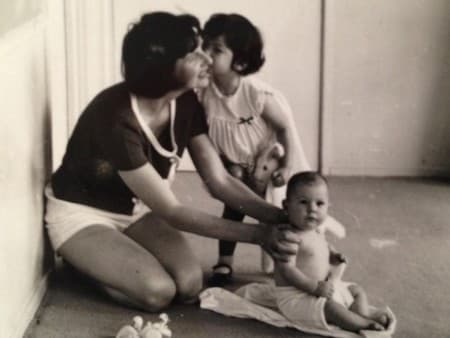
The author playing with her mother

My uncle, her younger brother, in New Zealand spent a month on forms and changing regulations before he could visit her, then ended up stuck for an extra week because New Zealand closed the border while he was here.

When my father was dying, friends and family visited constantly. When my mother died, in Cabrini Palliative Care, only two people could be with her. I left the building so a grandchild could spend time with her in what turned out to be the last moments, so was sitting in the car in the pouring rain when she drew her last breath.
My niece, her eldest granddaughter Camille, didn’t make it to say goodbye. She was in isolation after a visit to a café the previous week and her request for an exemption to visit her grandmother went unanswered. Camille is an unusually conscientious young woman studying public health.

She had been told by the Department of Health and Human Services (DHHS) that she didn’t need to isolate because she would have left the café by the time the Covid case entered but calculated they were wrong so subjected herself to isolation.

Because she did the right thing, she was denied the opportunity to visit her dying grandmother. She had two negative Covid tests, would have worn full PPE, and had direct access from outside that meant no one else would have been in contact with her. The problem wasn’t risk, it was bureaucratic processing.

When my father died, he was buried as soon as possible in accordance with our Jewish tradition. My brother in San Diego and I, in Melbourne, received prompt attention from airlines who provided us with immediate compassionate places, and we were in Auckland as quickly as flight times allowed.

When my mother died, it took five days of phone calls before we could get my son from Canberra to Melbourne.

When my mother died, it took five days of phone calls before we could get my son from Canberra to Melbourne.  He had a negative Covid test, submitted his forms immediately, and lived in a city that had not a single case but none of that matters when you can’t get a response out of the bureaucracy.

 I wanted nothing more than my son with me and was worried about him being without family support while grieving, but our emails went into a black hole. A series of frustrated young people in call centres told me there was no one they could put me through to.

I spent aninut, the painful period between death and burial, calling, in increasing desperation, the ombudsman, talkback radio and my MP. My efforts yielded an exemption for my son to travel for his grandmother’s funeral that was clearly within the regulations but would not have been granted without accessing extraordinary measures that someone without my privilege probably could not have achieved.

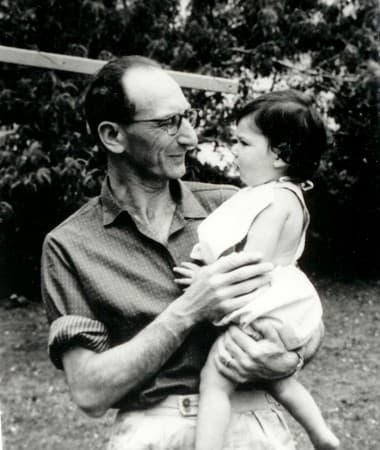
The author with her father

When my father died, the funeral was massive. I was too much overcome by grief to have a sense of who was there, but I had the overwhelming sense of being enclosed in a press of caring family and friends, the air resonating with the responses to my kaddish. At the minyan, the people spilled out of the house into the garden and the trail of comforters coming to wish us long life as we sat in our low chairs seemed endless.

When my mother died, one brother and I were accompanied by our spouses, children and their partners, a bare minyan looking down the barrel of a streaming camera.

When my father died, we were never alone in shiva, the seven days that follow the funeral. A constant stream of people came to the house, sitting and sharing grief, good memories, and food. Someone was always in the kitchen, making tea or heating up a casserole. I was hugged constantly, and my tears mingled with those of others who cared for him.

When my father died, we were never alone in shiva; when my mother died, our friends and family were faces on a screen during the minyan.

When my mother died, our friends and family were faces on a screen during the minyan. People left soup at the front door. I took a few walks with friends – keeping to the tradition of not leaving the house during shiva made no sense when no one could cross the threshold.  No visitors could sit with me or hold me.  I couldn’t even see the reflection of shared grief behind the masks.

Mine has not been the hardest Covid story. There are those who have died and those who have been disabled for months by the virus. There are parents separated from children and people who did not even get to say goodbye to dying loved ones. There are people stuck in foreign countries without support or sustenance.

There are grandparents who have never seen their new grandchildren because they can’t travel and single parents in small apartments trying to home school and hold down jobs.

There are people who have lost businesses and works, who cannot pay their mortgages, who have been unable to share long-awaited simchas with friends and family.

There are many ways of being alone and if this virus has taught us one thing, it is how much community matters.

You might also like
  • Anger, hatred and conspiracy theories: the rise of One Nation
    Michael Gawenda
  • Do Jews ever become empty nesters?
    Kerri Sackville
  • Reviving Israel’s democracy: a TJI vodcast
    The Jewish Independent
logomark.67a07ee3
We believe in the free flow of information

Republish our articles for free, online or in print, by using our Creative Commons licence

You might also like

    tame kostakidis west
    AnalysisAustralia

    How not to apologise

    Zac Klugman
    Feature

    Israel bows to pressure by restoring water flow, ICC investigates both sides

    TJI Wrap
    Jewish-diversity copy
    Feature

    The three questions that will define the Jewish future

    Shahar Burla 1

About the author

Deborah Stone

Deborah Stone

Deborah Stone is Editor-in-Chief of TJI. She has more than 30 years experience as a journalist and editor, including as a reporter and feature writer on The Age and The Sunday Age, as Editor of the Australian Jewish News and as Editor of ArtsHub.

More from the author

NewsAustralia

Sydney Uni commissions independent review after ‘Globalise the Intifada’ campaign

NewsArts & Culture

Jerusalemites photos cancelled by Indian Festival

ReflectionArts & Culture

On despair: A reflection after watching ‘Cancelled’

NewsAustralia

Proposed digital care law to offer protection against online antisemitism