Aa
  • Read, Watch, Listen
  • TJI Series
  • Community Action
  • Events
  • Zedi
Follow us and continue the conversation
  • LinkedIn
  • Instagram
  • FaceBook
  • X
  • YouTube
Test yourself with the TJI Quiz!

Adjust size of text

Aa

Follow us and continue the conversation

  • LinkedIn
  • Instagram
  • FaceBook
  • X
  • YouTube

Your saved articles

You haven't saved any articles

What are you looking for?

Original reporting, insightful analysis and diverse views, delivered straight to your inbox

  • LinkedIn
  • Instagram
  • FaceBook
  • X
  • YouTube
Your support fuels our mission to inform, entertain and inspire.

The Jewish Independent is bound by the Standards of Practice of the Australian Press Council. If you believe the Standards may have been breached, you may approach The Jewish Independent or make a complaint to the Australian Press Council in writing at www.presscouncil.org.au. The Council may also be contacted on 1800 025 712.

  • Our Story
  • Contact us
  • Our Team
  • Support us
  • Guidelines
  • Pitch your idea
  • Republishing us
  • Community Action
  • Our Awards
  • LinkedIn
  • Instagram
  • FaceBook
  • X
  • YouTube
Aboriginal FlagTorres Strait Islanders Flag

The Jewish Independent acknowledges Aboriginal and Torres Strait Islander peoples as the Traditional Owners and Custodians of Country throughout Australia. We pay our respects to Elders past and present, and strive to honour their rich history of storytelling in our work and mission.

© The Jewish Independent 2026All Rights Reserved
Website design and development by Your Creative, MelbourneTerms & ConditionsPrivacy Policy
HomeRead, Watch, ListenWorld
NewsWorld

Reform movement to ordain intermarried rabbis

To replace the intermarriage ban, HUC is adopting a new requirement that students with children pledge to raise them exclusively as Jews.
Philissa Cramer
Print this
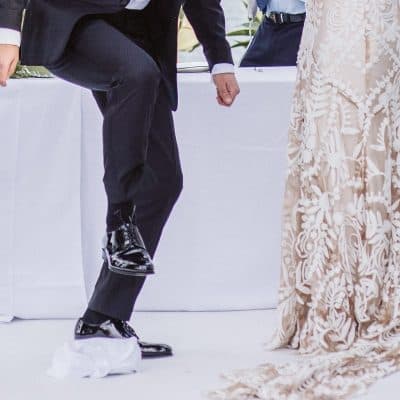
Breaking_glass_jewish_wedding-1-e1678286946647

Breaking the glass at a wedding (Jewish ceremony)

Published: 24 June 2024

Last updated: 26 June 2024

(JTA) - Hebrew Union College, the Reform movement’s rabbinical seminary, will begin admitting and ordaining students who are in relationships with non-Jews, following a decision by its board to drop a longstanding ban on interfaith relationships for rabbinical students.

The decision brings the rules for rabbinical and cantorial students at HUC in line with norms across the Reform movement, where intermarriage is prevalent. It also means that within less than a decade, three of the largest Jewish seminaries in the United States will have all begun admitting students in interfaith relationships, with only the Conservative movement’s two seminaries continuing to bar them — a significant shift from a once widespread Jewish communal rejection of intermarriage.

HUC’s president, Andrew Rehfeld, said in an interview that the policy change — which followed a series of discussions over 18 months — reflected the school’s educational values, as well as recent data undercutting the idea that intermarriage is a death knell for Jewish identity.

“We’re not backing down from the statement that Jewish endogamy is a value,” Rehfeld said. “But we are saying that a prohibition around Jewish exogamy … is no longer rational because intermarriages can result in engaged Jewish couples.”

To replace the intermarriage ban, HUC is adopting a new requirement that students with children pledge to raise them “exclusively as Jews engaged with Jewish religious practice, education, and community.”

The commitment is in line with what Reform rabbis are asked to require of couples they wed and reflects the movement’s stance on determining who is a Jew: While historically Judaism was largely conferred through conversion or matrilineal descent, for four decades, Reform Judaism has considered any child of one Jewish parent to be Jewish as long as they are raised with a “positive and exclusive Jewish identity.”
We are losing great leaders of the Jewish people, for reasons that make no sense.

HUC President Andrew Rehfeld

The change at HUC comes nearly a decade after the last time the school publicly reconsidered the policy barring rabbinical students from being in interfaith relationships. Since then, two other major seminaries have dropped their own requirements: Reconstructionist Rabbinical College did so in 2015 and the pluralistic Hebrew College followed suit last year — amid increasing competition over a shrinking pool of aspiring rabbis.

Dwindling enrollment at HUC caused it to begin phasing out most operations at one of its four campuses, its original location in Cincinnati, in 2022. But Rehfeld said the admissions change was not a gambit to woo more applicants. He noted that neither RRC nor Hebrew College had expanded rapidly once they began admitting students in interfaith relationships.

“This is a principled decision about the kind of leaders we should have in the institution,” he said. “For every student that we’re going to get because of this, we risk losing students who will not come to us because of this.”

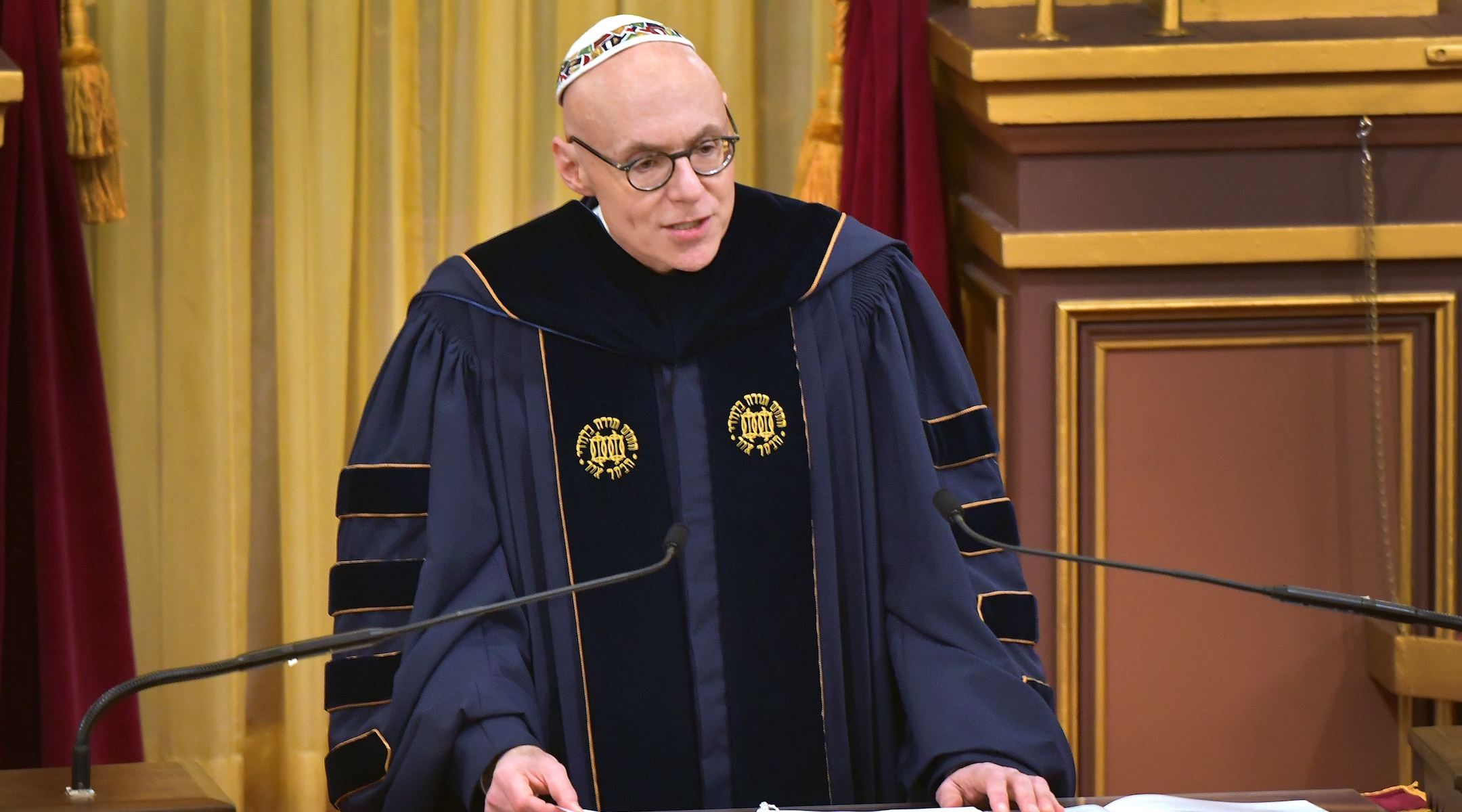
Andrew Rehfeld delivers his inaugural address as president of the Hebrew Union College-Jewish Institute of Religion at the Plum Street Temple in Cincinnati, Ohio, Oct. 27, 2019. (Courtesy of HUC)

He also emphasized that the decision’s timing was unrelated to Hebrew College’s rule change last year and to the unexpected death in December of Rabbi David Ellenson, HUC’s widely beloved former president, who was a staunch defender of the ban on interfaith relationships. Rehfeld said the process had begun in the fall of 2022, prior to the Hebrew College announcement. It had effectively concluded, he said, prior to a planned board meeting in October that was scuttled because of Hamas’ Oct. 7 attack on Israel.

In a position paper prepared for the October meeting, HUC Provost Andrea Weiss wrote, “I believe our focus should be on our students, not their partners (if they have one),” and urged the school to give its students tools “to lead authentic, engaged, meaningful Jewish lives.”

Rabbi Rick Jacobs, who heads the Union of Reform Judaism representing the movement’s nearly 900 congregations, said he did not expect the policy change to affect many applicants directly. But he said he believed many current students and congregations would “strongly support” it.

“Many of our best rabbis and cantors were raised in homes with only one formally Jewish parent. … Many of our temple lay leaders are married to people who are not formally Jewish,” Jacobs said. “I think it’s pretty clear at this moment in time that it is possible — demonstrably more than possible — to have a deeply committed Jewish family with only one partner who is formally Jewish.”

For its critics, HUC’s ban on intermarried rabbinical students had long been seen as out of step with the Reform movement’s values. Marriages between Jews and non-Jews are prohibited under traditional Jewish law, known as halacha. But the Reform movement, which emerged in the 19th century and is by far the largest denomination in the United States, has always regarded halacha as a cultural tradition and spiritual tool — but not as binding law. In keeping with that outlook, HUC does not require students to keep kosher or observe Shabbat, making the requirement around relationships stand out.

Many people have called for change in the past. In 2007, a student named Yael Shmilovitz used her senior sermon, a rite attended by many members of the seminary community, to decry the policy and call for a broad embrace of intermarriage.

In 2012, Daniel Kirzane, now a pulpit rabbi in Chicago, likewise used his senior sermon to call for a policy change. “It flies in the face of Reform values and reflects an obsolete and narrow-minded understanding of the Jewish community,” Kirzane said about the ban. “It shuts out those who should be brought in.”

A chuppah at a Jewish wedding. More than 60% of American Jews who married in the last decade have married non-Jewish partners, according to a study from the Pew Research Center. (Photo: Scott Rocher via Flickr Commons)

The following year, Rabbi Ellen Lippmann, the leader of congregation Kolot Chayeinu in Brooklyn, wrote an open letter to HUC’s board of governors urging the end of the rule, amid an open debate in which the requirement was affirmed. Lippman said she would have been barred from HUC had she not kept her relationship with a non-Jewish woman private because students were not allowed to have same-sex partners during her time at the school in the 1980s.

“You must choose between an inclusive vision of Jewish leadership and an exclusive one,” Lippmann wrote. “Let your bold decisions to ordain women, lesbians, gay men and transgender rabbis show you the way.”

And four years ago, an aspiring rabbinical student named Ezra Samuels, then a 20-year-old college student in a relationship with a non-Jewish man, ignited an outcry after writing about feeling “crushed” after learning about the rule while exploring how to become a rabbi in the denomination in which they were raised.

“All my life, my community had told me that no matter who you are or who you love, you are equal in our community and according to the divine. But now it feels like I’ve been betrayed, lied to, misled,” Samuels wrote.

Some students have lied about or, like Lippmann, obscured their relationship status until they are ordained, at which point they are permitted to intermarry while working in the Reform movement. Rehfeld said he believed those who had lied had done so out of a principled objection to the policy. He noted that the ban meant they could not bring their whole selves to their studies and could not fully contribute to conversations around ministering to communities with many intermarried couples.

Others who were honest suffered because of it. Rehfeld recounted an applicant with a stellar resume — including a stint in the armed forces and time working in Jewish education — who was turned away after disclosing a relationship with a non-Jew and instead sought ordination elsewhere.

“It was to me the most tangible way of showing that this policy is just not consistent with our values or the society in which we live,” he said. “We are losing great leaders of the Jewish people, for reasons that make no sense.”

Rehfeld, who became president in 2018, emphasized that the decision was not easy and that there are members of the HUC community and the broader Reform movement who will be unhappy about the change. He said he thought dissatisfaction would be largely generational. Older Reform rabbis came of age at a time when intermarriage was widely feared within the movement, he said, while many younger ones are products of interfaith marriages themselves.

Rehfeld said he hoped that both camps would resist the urge to take the decision personally, especially cautioning against celebrations by “those who have been waiting for this decision” and who have decried the policy as discriminatory, language that he rejects.

“I think that’s the wrong comportment,” he said. “We need to be, in our comportment and in our reaction, respectful and not personalizing our disagreement.”

Opposition to the policy change reflects longstanding concern among American Jewish leaders that high rates of intermarriage would endanger the future of Judaism by shrinking an already small Jewish population. Jewish leaders once assumed that Jews who intermarried, and their children, would not engage in Judaism or identify with the Jewish people.

At a 1991 conference of the Jewish federations, speakers likened intermarriage to the Holocaust. Even as organizations later adopted a less hostile posture, some sociologists posited that rising intermarriage rates signified an American Jewish demographic decline. (One of the most outspoken advocates of this view was Steven Cohen, who worked at HUC until 2018, when he resigned amid allegations of sexual misconduct.)

As data has piled up, however, there is mounting evidence that intermarriage does not mean the end of Jewish identity. The 2020 Pew survey of American Jews found that nearly three-quarters of non-Orthodox Jews who married in the previous decade did so to non-Jews — and that most intermarried couples with children are raising those children Jewish. An additional 12% reported raising their kids partly Jewish.

The study did report that the Jewish identities of children raised by intermarried parents differed from those of children with two Jewish parents. The survey found that in-married Jewish couples raise their children Jewish at higher rates and more frequently with markers traditionally associated with Judaism. Advocates for embracing interfaith families say the gap can be explained in part by the tendency of Jewish institutions not to fully welcome such families.

For those advocates, HUC’s policy change is likely to register as a powerful signal of inclusion. Still, Rehfeld said some expressions of interfaith partnership would remain out of bounds as the school’s personalized admissions process continues to elicit conversations about how Judaism is experienced in applicants’ homes.

“If you say, ‘Well, on Saturday morning, we are in shul, and on Sunday morning, we go celebrate Mass,’” he said, “we would say to you, ‘Thank you, it sounds like the home and family life is not exclusively Jewish. We’re not the place for you.’”

You might also like
  • UK Jewish leaders’ surprising response to Farage’s antisemitic comments
    Colin Shindler
  • Rival rabbis face off over ethics of Gaza starvation
    Ittay Flescher
  • Violence disrupts shared grief on Israel’s Memorial Day
    TJI Wrap
logomark.67a07ee3
We believe in the free flow of information

Republish our articles for free, online or in print, by using our Creative Commons licence

You might also like

    Pro-Palestine Rally Outside Foreign Commonwealth Development Office
    AnalysisWorld

    UK’s dramatic policy change on Israel-Palestine

    Colin Shindler 3
    Jewish word map
    FeatureArts & Culture

    Was the barmi a shemozzle? How Australians use Jewish words 

    Caroline Hendy & Emma Breslow 1
    Erdogan Turkey
    AnalysisIsrael

    Turkey emerges as military threat to Israel

    Dror Doron

About the author

Philissa Cramer

Philissa Cramer

Philissa Cramer is the Jewish Telegraphic Agency's editor in chief. Prior to joining JTA in 2020, she was a founder and editor at Chalkbeat, the nonprofit news organization covering education.

More from the author

NewsWorld

Police eye Iran involvement as London synagogues are targeted in arson attacks

NewsWorld

Firebombing attack on Americans demonstrating for hostage release

NewsIsrael

Three hostages return home as ceasefire begins

FeatureWorld

Christopher Columbus was genetically Jewish, new DNA study says

Comments1

  • Avatar of David D. Knoll AM

    David D. Knoll AM25 June at 08:39 am

    A very saddening decision. May I urge readers to read also: “The anguished dilemma of a Reform rabbi” by Rabbi Mark Cohn – https://blogs.timesofisrael.com/the-anguished-dilemma-of-a-reform-rabbi/.