Aa
  • Read, Watch, Listen
  • TJI Series
  • Community Action
  • Events
  • Zedi
Follow us and continue the conversation
  • LinkedIn
  • Instagram
  • FaceBook
  • X
  • YouTube
Test yourself with the TJI Quiz!

Adjust size of text

Aa

Follow us and continue the conversation

  • LinkedIn
  • Instagram
  • FaceBook
  • X
  • YouTube

Your saved articles

You haven't saved any articles

What are you looking for?

Original reporting, insightful analysis and diverse views, delivered straight to your inbox

  • LinkedIn
  • Instagram
  • FaceBook
  • X
  • YouTube
Your support fuels our mission to inform, entertain and inspire.

The Jewish Independent is bound by the Standards of Practice of the Australian Press Council. If you believe the Standards may have been breached, you may approach The Jewish Independent or make a complaint to the Australian Press Council in writing at www.presscouncil.org.au. The Council may also be contacted on 1800 025 712.

  • Our Story
  • Contact us
  • Our Team
  • Support us
  • Guidelines
  • Pitch your idea
  • Republishing us
  • Community Action
  • Our Awards
  • LinkedIn
  • Instagram
  • FaceBook
  • X
  • YouTube
Aboriginal FlagTorres Strait Islanders Flag

The Jewish Independent acknowledges Aboriginal and Torres Strait Islander peoples as the Traditional Owners and Custodians of Country throughout Australia. We pay our respects to Elders past and present, and strive to honour their rich history of storytelling in our work and mission.

© The Jewish Independent 2026All Rights Reserved
Website design and development by Your Creative, MelbourneTerms & ConditionsPrivacy Policy
HomeRead, Watch, ListenIsrael
AnalysisIsraelWorld

Turkey emerges as military threat to Israel

Tensions between Israel and Turkey have escalated into a mutual military threat perception, driven by Israeli strikes on Syrian airbases and a new Israeli alliance with Greece
Dror Doron
Print this
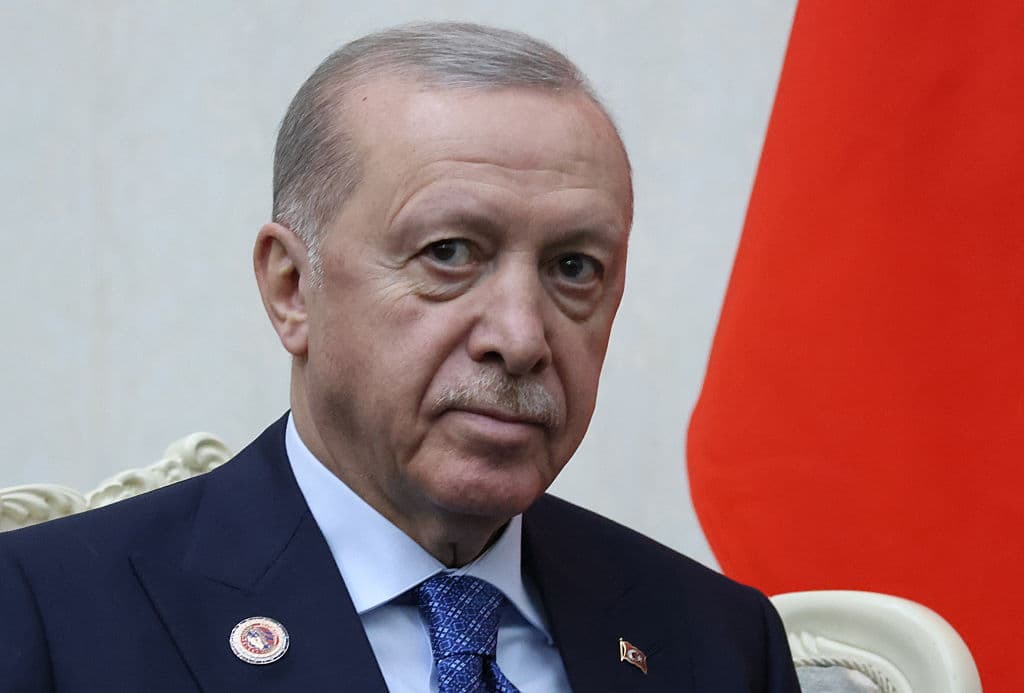
Erdogan Turkey

Turkish president Recep Erdoğan (Getty Images)

Published: 3 September 2026

Last updated: 3 September 2026

Turkey and Israel have had a tense relationship under the presidency of Recep Erdoğan, but until now Turkey has not been seen as an active military threat.

In recent weeks, that has changed. While the IDF is engaged militarily on several fronts stretching from Yemen to Gaza, Iraq, Lebanon and the West Bank, and the possibility of a renewed direct confrontation with Iran is still looming, Israeli decision-makers and media outlets have turned their attention to Turkey in recent weeks.

The immediate trigger for this concern was the unusual Israeli Air Force strike on a Syrian airbase located only 70 kilometres from the Turkish border, where, according to Israel, Turkey was planning to position advanced radar and air-defence systems.

Israeli officials referred to the strike as a “kinetic message” to both Turkey and Syria, after a message delivered earlier through a more conventional method had failed to convey Israel’s “red line” regarding the ongoing military cooperation between Ankara and Damascus.

The Israeli airstrike was heavily criticised by Turkey, Syria and the United States, and was seen as an Israeli “overreach” that could have led to an unwanted escalation. Critics argued that the strike was motivated mainly by Netanyahu’s need to strengthen his image as a “strong leader” in the domestic arena ahead of the upcoming elections.

Whether that was the real motivation behind the strike or not, the event demonstrated Israel’s genuine concern over Turkey’s expanding military presence in Syria specifically, and in the Eastern Mediterranean in general.

Declining relations

It is no secret that during President Erdoğan’s 23 years in power, Turkey has moved from being a strategic partner of Israel to becoming a fierce rival. Until Erdoğan’s rise to power in 2003, Israel and Turkey maintained an extremely close alliance that included joint military drills and the upgrading of Turkish military aircraft and tanks by Israeli companies. Erdoğan, an Islamist politician affiliated with the Muslim Brotherhood, pursued a consistently anti-Israeli policy that dramatically changed the nature of the bilateral relationship.


Over the years, Turkey has become a safe haven for Hamas’s leadership, operational units and financial networks. In 2010, a Hamas-affiliated Turkish “humanitarian” group attempted to breach the Israeli maritime blockade of Gaza aboard a ship called the Mavi Marmara. The Israeli Navy’s interception of the ship led to the deaths of 10 Turkish citizens and created a diplomatic crisis that marked a turning point in the relationship between the two countries, which has never fully recovered since.

Erdoğan’s toxic, and in many cases antisemitic, discourse against Israel intensified dramatically after the October 7 Hamas attack and the subsequent war in Gaza. But it was the toppling of the Assad regime in Syria in late 2024 by rebel groups heavily supported by Turkey that created a major shift in Israel’s approach toward Ankara.

Turkish forces in Syria

For the first time, the possibility of Turkish forces operating across the border from Israel became a real concern. As the Turkish army maintains a significant presence in northern Syria, the fear was that Ankara could deploy its forces further south, potentially all the way to the Golan Heights. In January 2025, a special committee headed by Israel’s former national security adviser to assess the future needs of the IDF, identified Turkey as a potential direct military threat.

In the following months, Israel attacked Syrian airbases in central Syria after intelligence indicated that Turkey was planning to deploy air-defence systems there in a way that could threaten Israeli Air Force operations. Those attacks led to the establishment of a deconfliction mechanism, which was able to prevent further such incidents – until last week.

Gas field flashpoints

So far, Syria has been the most obvious source of friction between Israel and Turkey, but it is not the only one. Another potential flashpoint is the maritime arena in the Eastern Mediterranean, with its significant hydrocarbon potential. In this area, both Israel and Cyprus possess major gas fields, while Turkey also has claims due to its control over occupied Northern Cyprus. The potential for naval friction in the area has brought Israel, Cyprus and Greece – Turkey’s regional archrival – closer together in a strategic alliance aimed at securing the production and flow of energy from the region to Europe.

This trilateral alliance, dubbed by some as the “Hellenic alliance,” has taken the form of joint naval and aerial drills. Just this week, it was further strengthened by a massive $3.5 billion deal signed between Israel and Greece to supply Athens with advanced Israeli air- and missile-defence systems. Turkey, of course, views this alliance, and any military dimension of it, in a very negative light and considers it a challenge to its own national interests in the region.

Under these circumstances, and with multiple players pursuing conflicting strategic interests, it seems that the tense Israeli-Turkish relationship will continue in the foreseeable future. Yet, both sides will have to ensure their actions are not interpreted by the other as a threat that could lead to an unwanted escalation.

You might also like
  • The Altalena should be a warning, not a political weapon
    Shahar Burla
  • Because of my Zionist values, I’m joining an Arab party
    Yoav Segalovitz
  • Western ‘Palestinianism’ colonises everything – and hurts Palestinians
    Andres Spokoiny
logomark.67a07ee3
We believe in the free flow of information

Republish our articles for free, online or in print, by using our Creative Commons licence

You might also like

    Segalovitz Abbas
    Israel Votes 2026AnalysisIsrael

    Segalovitz decision to join Arab party is a paradigm change for Israel

    Eetta Prince-Gibson
    fly to vote
    Israel Votes 2026OpinionIsrael

    Flying to vote is an act of love, not impudence

    Shahar Burla
    Ibrahim Khatatbe
    NewsIsrael

    Abuse by IDF soldiers humiliates Muslim Palestinians

    Ben Lynfield 3

Comments

No comments on this article yet. Be the first to add your thoughts.

About the author

Dror Doron

Dror Doron

Dror Doron is a senior political analyst specialising in the Middle East, and is a senior adviser at United Against Nuclear Iran (UANI) focusing on Hezbollah and Lebanon.

More from the author

AnalysisWorld

New Saudi-Pakistan-Turkey alliance driven by failure of US to subdue Iran

AnalysisIsrael

Trump’s Hamas disarmament deal a mirage that’s quickly faded

AnalysisIsrael

Syria reimagined: From military threat to geostrategic competitor