Published: 6 August 2026
Last updated: 6 August 2026
Over the past week, politicians and Middle East experts have been tossed into a spiral of conflicting reports, positions and interpretations about the future of Hamas’s weapons in the Gaza Strip.
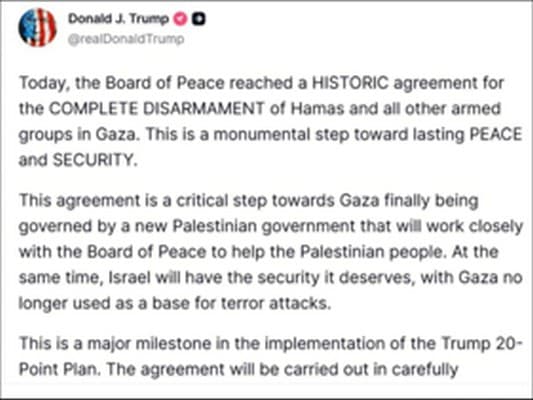
As with many events in recent months, the starting point was a surprise social media announcement by President Trump declaring a “historic” achievement that would secure the “complete disarmament of Hamas”.
In the days that followed, it became clear that Trump’s dramatic announcement was premature. It appears his motivation was largely to gain global praise by presenting an unprecedented diplomatic achievement in the Middle East, especially as he faced an unresolved crisis with Iran.
A few days after the announcement, Hamas declared its in-principle approval of the plan. But, as happened with the recent memorandum of understanding facilitated by the Trump administration with Iran, it soon became clear that Hamas’s interpretation differed markedly from Trump’s.
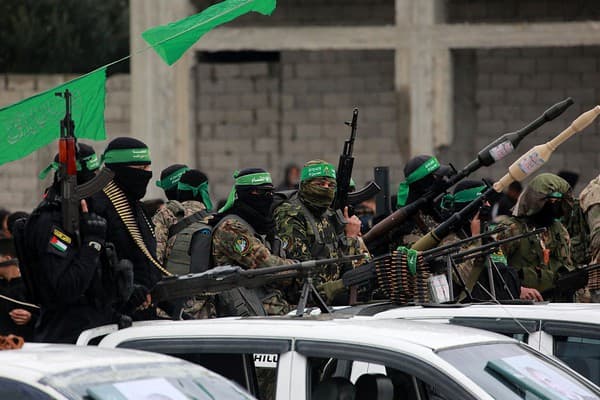
Hamas officials, who have repeatedly rejected disarmament in the past, said they agreed to the “storage” or “freezing” of arms in a gradual manner under the control of a Palestinian body in Gaza. Hamas also said it would hand over only its “heavy weapons” and conditioned any such move on Israel’s withdrawal from its current positions in Gaza.
From Israel’s perspective, the demand to disarm Hamas, a critical condition of its acceptance of Trump’s “20-point plan” that ended the war in Gaza 10 months ago, requires a very different outcome: full and verifiable dismantling of all Hamas military capabilities, and only then an Israeli withdrawal from the areas it took control of in the Gaza Strip.