Aa
  • Read, Watch, Listen
  • TJI Series
  • Community Action
  • Events
  • Zedi
Follow us and continue the conversation
  • LinkedIn
  • Instagram
  • FaceBook
  • X
  • YouTube
Test yourself with the TJI Quiz!

Adjust size of text

Aa

Follow us and continue the conversation

  • LinkedIn
  • Instagram
  • FaceBook
  • X
  • YouTube

Your saved articles

You haven't saved any articles

What are you looking for?

Original reporting, insightful analysis and diverse views, delivered straight to your inbox

  • LinkedIn
  • Instagram
  • FaceBook
  • X
  • YouTube
Your support fuels our mission to inform, entertain and inspire.

The Jewish Independent is bound by the Standards of Practice of the Australian Press Council. If you believe the Standards may have been breached, you may approach The Jewish Independent or make a complaint to the Australian Press Council in writing at www.presscouncil.org.au. The Council may also be contacted on 1800 025 712.

  • Our Story
  • Contact us
  • Our Team
  • Support us
  • Guidelines
  • Pitch your idea
  • Republishing us
  • Community Action
  • Our Awards
  • LinkedIn
  • Instagram
  • FaceBook
  • X
  • YouTube
Aboriginal FlagTorres Strait Islanders Flag

The Jewish Independent acknowledges Aboriginal and Torres Strait Islander peoples as the Traditional Owners and Custodians of Country throughout Australia. We pay our respects to Elders past and present, and strive to honour their rich history of storytelling in our work and mission.

© The Jewish Independent 2026All Rights Reserved
Website design and development by Your Creative, MelbourneTerms & ConditionsPrivacy Policy
HomeRead, Watch, ListenIsrael
Israel Votes 2026EditorialIsrael

Normality or Sparta: Israel’s choice could hardly be clearer

Israel needs change: it can only happen if the Change Bloc abandons exclusionary pledges and works with Arab parties
The Jewish Independent
Print this
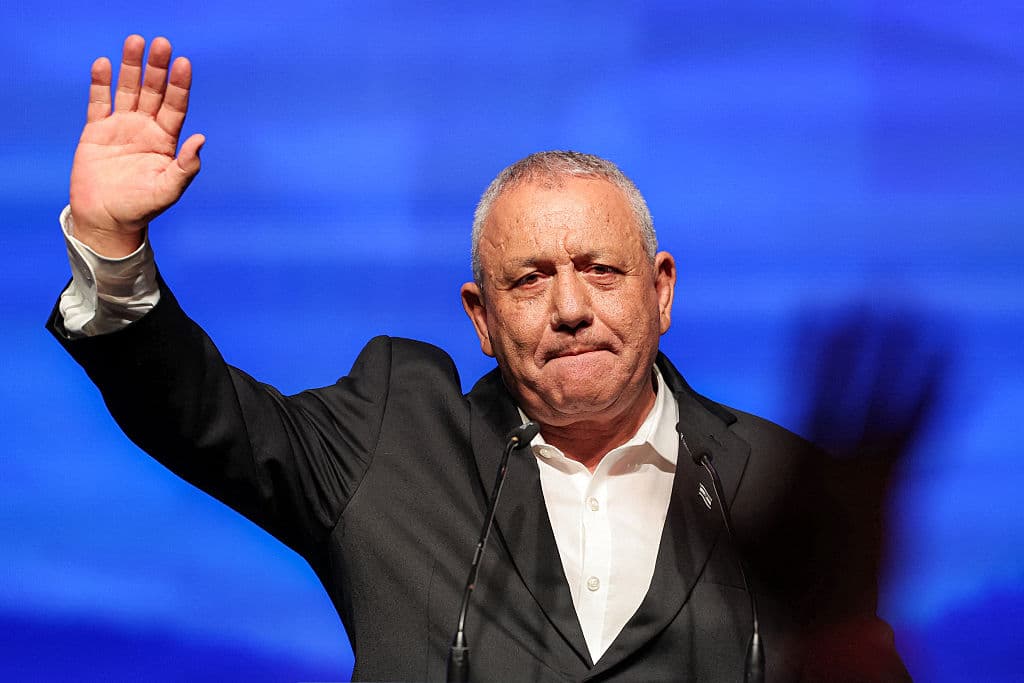
Gadi Eisenkot

Gadi Eisenkot could be a prime minister who changes Israel dramatically – but only if he works with the Arab parties (Jack Guez/AFP via Getty Images)

Published: 26 October 2026

Last updated: 26 October 2026

Israelis have repeatedly been told they are facing the most important election in their country’s history. Ahead of Tuesday’s vote, another description seems equally compelling: this is an election with an exceptionally clear choice. The past week has exposed two competing visions of Israel’s future. One offers permanent mobilisation, deepening isolation and religious coercion. The other carries the possibility of something Israelis desperately need: normality.

The choice is between normality and Sparta, a characterisation that Netanyahu himself gave as his vision for the country. But making that choice meaningful requires more than removing Benjamin Netanyahu. It requires the leaders of the Change Bloc to recognise that a democratic alternative cannot be built by excluding the elected representatives of Israel’s Arab citizens.

Netanyahu’s campaign has made the stakes unmistakable. His renewed threats against Iran offer voters the prospect of another war, while his economic vision prepares them for the international isolation his government’s policies are helping produce.

On Sunday, just two days before polling day, Netanyahu sharpened that message by sharing an AI-generated image depicting an atomic bomb falling on Tel Aviv. The image distilled Netanyahu’s electoral offering: a future dominated by existential fear, in which demands for accountability and shared responsibility are pushed aside. This is the Sparta Israelis are being asked to accept.
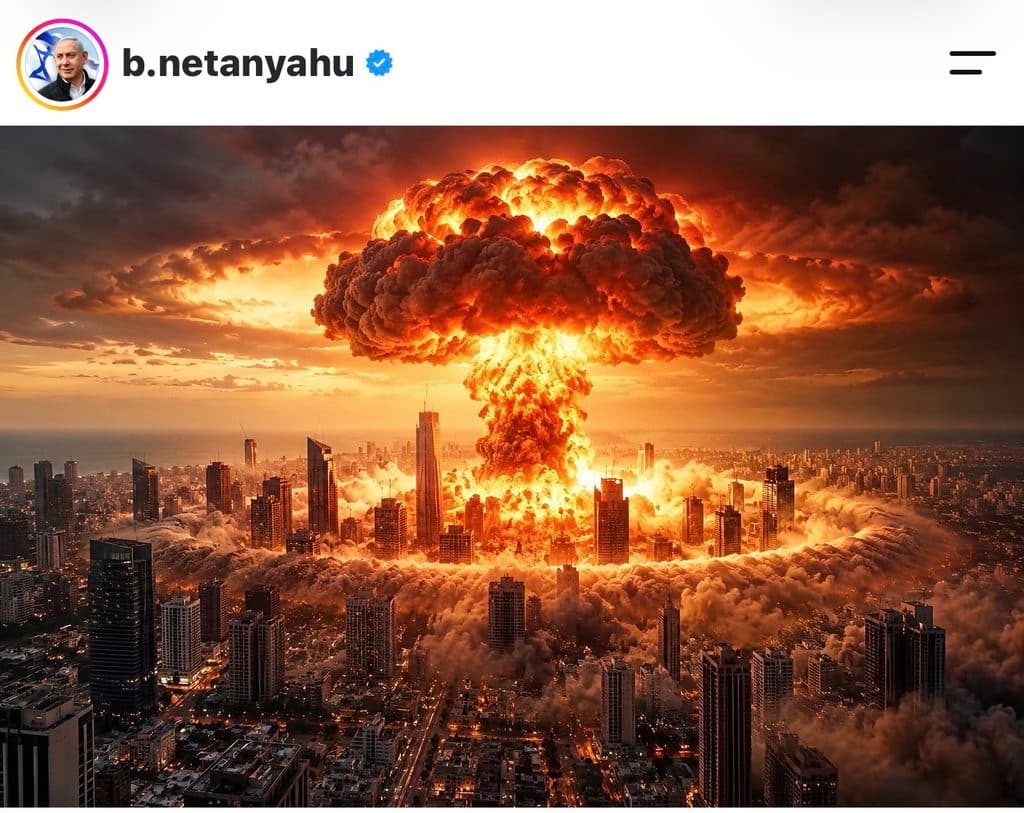

AI image of atomic bomb over Tel Aviv: ‘Nothing else will matter’ (Photo: Prime Minister Benjamin Netanyahu's Instagram account October 25, 2026)<br><br>
AI image of atomic bomb over Tel Aviv: ‘Nothing else will matter’ (Photo: Prime Minister Benjamin Netanyahu's Instagram account October 25, 2026)

In his TV10 interview, Netanyahu discussed an alternative financial system, including cryptocurrency, to circumvent possible sanctions. He also warned that American military assistance could not be relied upon indefinitely. Taken together, these remarks sketch a future in which Israel adjusts to estrangement rather than changes course to prevent it.

This is the logic of Sparta: a country permanently organised around confrontation, asking its citizens to accept shrinking horizons as the price of survival. Diplomacy becomes an exercise in circumventing consequences. Economic policy becomes preparation for exclusion. Another war becomes an electoral offering.

The vision is also profoundly unequal. Ultra-Orthodox leader Yitzhak Goldknopf’s dismissal of demands for Haredi conscription, alongside his resistance to core educational studies, exposes the contradiction. Some Israelis are expected to fight, work and carry an increasing burden; coalition partners demand continued exemptions from shared responsibilities.

Against this stands the apparently modest aspiration to live in a functioning country: one governed by accountable institutions, where obligations are distributed fairly and disagreement does not make someone a traitor.

Recent days have provided moving evidence that this aspiration still has a constituency.

Israelis living abroad have returned to vote, accepting substantial financial costs and personal disruption. Their journeys express an attachment that distance has not extinguished. They are making an effort because they believe Israel’s direction can still be changed.

Arab citizens preparing to vote offer another, particularly significant, expression of democratic hope. Communities enduring violence, neglect and political hostility are nevertheless placing their trust in the ballot box.

The Change Bloc cannot welcome those votes as a route to replacing Netanyahu while treating the people casting them as politically untouchable. Arab participation is democratic citizenship, carrying the same entitlement to representation and influence as anyone else’s.

Then there were the young Israelis dancing to Shir Lashalom at InDNegev. Near communities scarred by catastrophe, they sang a song associated with the peace movement and Yitzhak Rabin’s final rally. Many of them were born after Rabin’s assassination. Their singing need not imply confidence that peace is imminent. Its significance lies in their refusal to surrender the possibility: the insistence that another future remains imaginable.

Peace may not arrive during the next parliamentary term. A government can, however, create space in which young people may advocate it without being denounced as disloyal. That would already mark a substantial return to normality.

These expressions of hope impose an obligation on the opposition. If the Change Bloc and Arab parties together secure a parliamentary majority, its leaders must take that mandate seriously. A majority capable of replacing Netanyahu must not be squandered to preserve campaign promises ruling out cooperation with Arab representatives.

Respectful negotiations will involve disagreements and difficult compromises. That is what parliamentary democracy requires. A partnership need not erase differences to establish common ground around democratic institutions, public safety, equality and responsible government.

All Israelis, including Arab citizens trusting the democratic process and young people singing for peace, and even those overseas Israelis flying home to vote, deserve leaders prepared to turn participation into political change.

Netanyahu has made the danger clear. The Change Bloc must now make the alternative credible: abandon its exclusionary pledges, engage respectfully with Arab parties and replace his government at the earliest democratic opportunity. Normality will require the courage to build it.

You might also like
  • Fighting for a better Israel 
    Peter Kohn
  • Where are the women in this election campaign?
    Eetta Prince-Gibson
  • Your Israel election cheat sheet
    Deborah Stone
logomark.67a07ee3
We believe in the free flow of information

Republish our articles for free, online or in print, by using our Creative Commons licence

You might also like

    election maze copy 3
    Israel Votes 2026ExplainerIsrael

    There are three likely outcomes in Israel’s election. None is simple

    Sharon Offenberger 2
    Boycott Israel sign
    Israel Hamas WarAnalysisIsrael

    Israel now faces 138 sanctions across 63 countries

    Shahar Burla 2
    [[:fr:Fez (coiffure)|Fez]] rouge à gland noir, en feutre.
    Israel Votes 2026AnalysisIsrael

    ‘Moroccan monkey’: Israel’s ethnic divide still shapes its elections

    Shahar Burla

About the author

The Jewish Independent

The Jewish Independent

More from the author

NewsAustralia

‘The Jewish Independent’ commentary makes finals in Walkley journalism awards

NewsIsrael

Parties, polls, processes: detailed election guide

EditorialIsrael

Three years after Oct 7: an anniversary of reckoning

VideoArts & Culture

Highlights from Melbourne Jewish Book Week