Published: 21 November 2024
Last updated: 18 November 2024
This year I was lucky enough to visit Venice, one of the most romantic cities in the world (see Pasta, Wine + Jews: My Trip to Italy). I have come home with one question. Has art - art that is supposed to be for everyone - been hijacked?
Every two years, we go to the Biennale Arte in Venice, Italy. It is a magical experience to be in that unique and delicious floating city whilst it is completely inundated with art. So much art. So much art I adore, some I don’t understand, often much I dislike, some I hate. That is what makes it so fabulous, there is something for everyone. To enlighten, to excite and to challenge.
The year’s theme is Stranieri Ovunque - Foreigners Everywhere, based on a concept that we will always encounter foreigners everywhere we go, and that we are all, in fact, foreigners ourselves. To put it in perspective, this art event is so huge, it takes over the entire city. The largest area, the Giardini, houses the permanent pavilions of 29 nations, including Australia and Israel.
Our lead-up to Venice is always fuelled with debate. My husband Danny and I argue over which restaurants we need to book, when we should book them and debate whether we really can do two pasta meals per day for six days. We need to argue over where we had THE BEST melanzane parmigiana, that most incredible veal cotoletta milanese or the unforgettable fiordilatte (the only flavour I truly love) gelato.
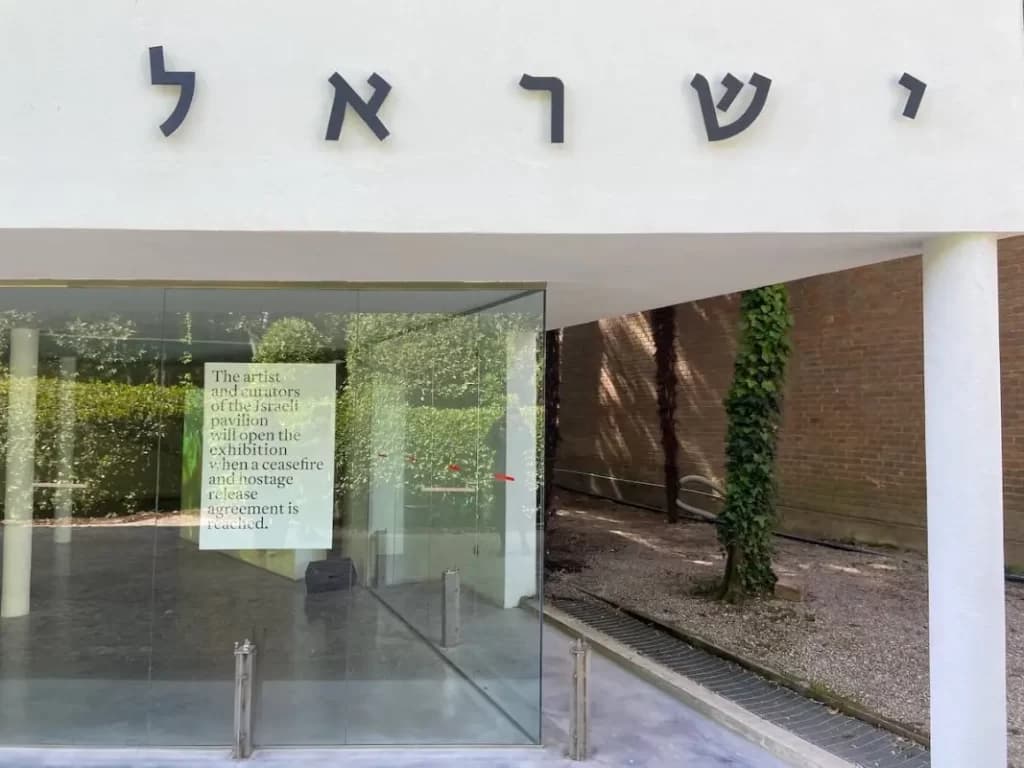
The leadup to the actual Biennale is also fuelled with debate. This year, the Israeli and the Australian pavilions both generated controversy.
Israel’s history with the Venice Biennale started in 1948 with the Erez Israel, Artisti Palestinesi pavilion, sponsored by Italian Jews. Two years later Israel opened its own permanent pavilion. In the 2024 lead-up, there were (unsurprisingly) calls for a boycott of the Israeli pavilion with an open letter from the Art Not Genocide Alliance (ANGA) stating “any work that officially represents the state of Israel is an endorsement of its genocidal policies” as well as an ongoing social media campaign. It appears ANGA was created specifically to target Israel’s “genocide” “apartheid” and “colonisation” in this year’s Biennale.

Comments2
Ruth Wilson21 November at 12:00 pm
This is a story that needs to be told; and Lisa Goldberg tells it with courage and a sense of righteous outrage. Her exposure of the weaponisation of art to misrepresent Israel and Zionism is riveting.
Debbie Wiener21 November at 07:16 am
A great article. I fear that “ the arts” have been hijacked by the anti Zionist cohort. They push their narrative relentlessly.