Published: 17 September 2026
Last updated: 17 September 2026
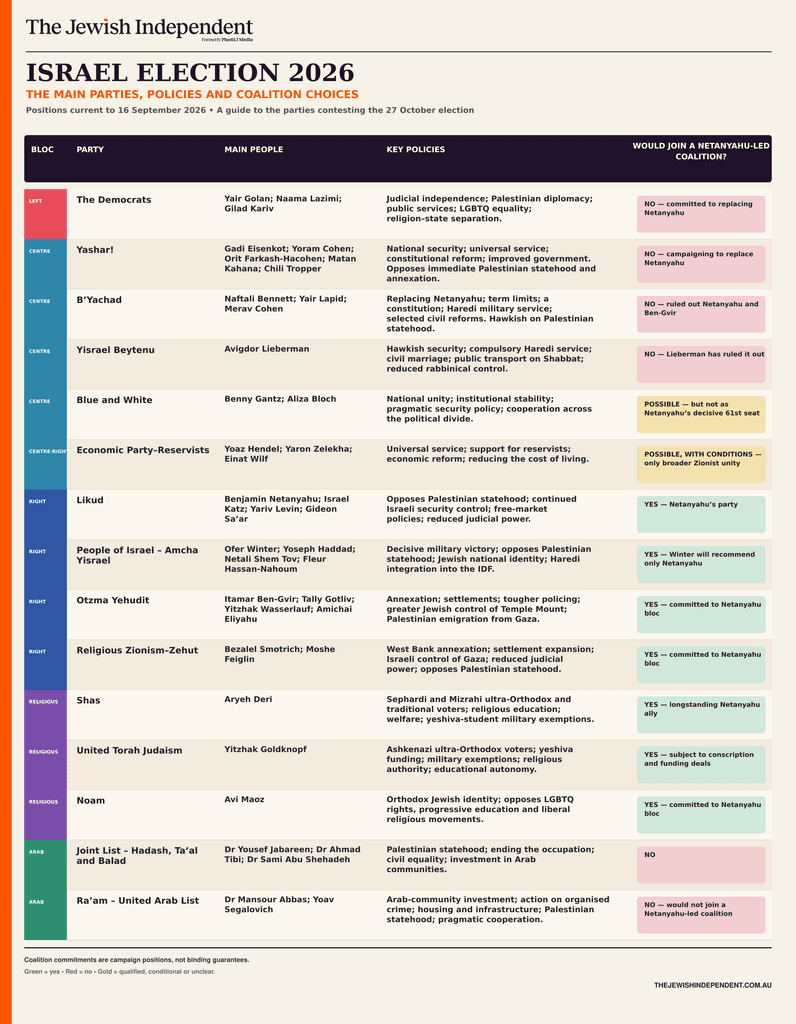
Israel’s political map is now fixed for the October 27 election. A total of 38 candidate lists were submitted to the Central Elections Committee.
With nominations closed, parties can no longer merge or form new electoral alliances. Months of negotiations, speculation and last-minute pressure have therefore produced a final field that is crowded but organised around five broad political camps: the left, centre, right, religious parties and Arab parties.
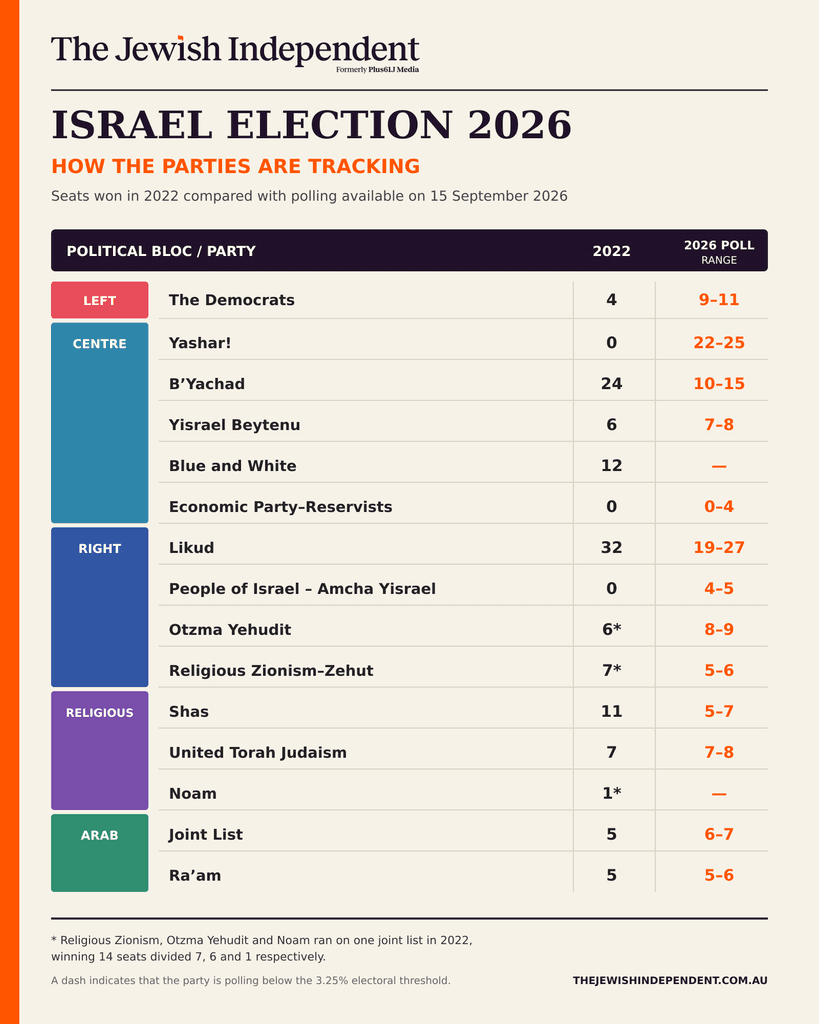
Several significant alliances were completed before the deadline. Former prime ministers Naftali Bennett and Yair Lapid brought their parties together under B’Yachad, reviving the partnership that formed the Government of Change in 2021. Labor and Meretz have consolidated their forces as The Democrats under Yair Golan, while Hadash, Ta’al and Balad are contesting the election as the Joint List. On the right, Bezalel Smotrich’s Religious Zionism has joined with Moshe Feiglin’s Zehut.
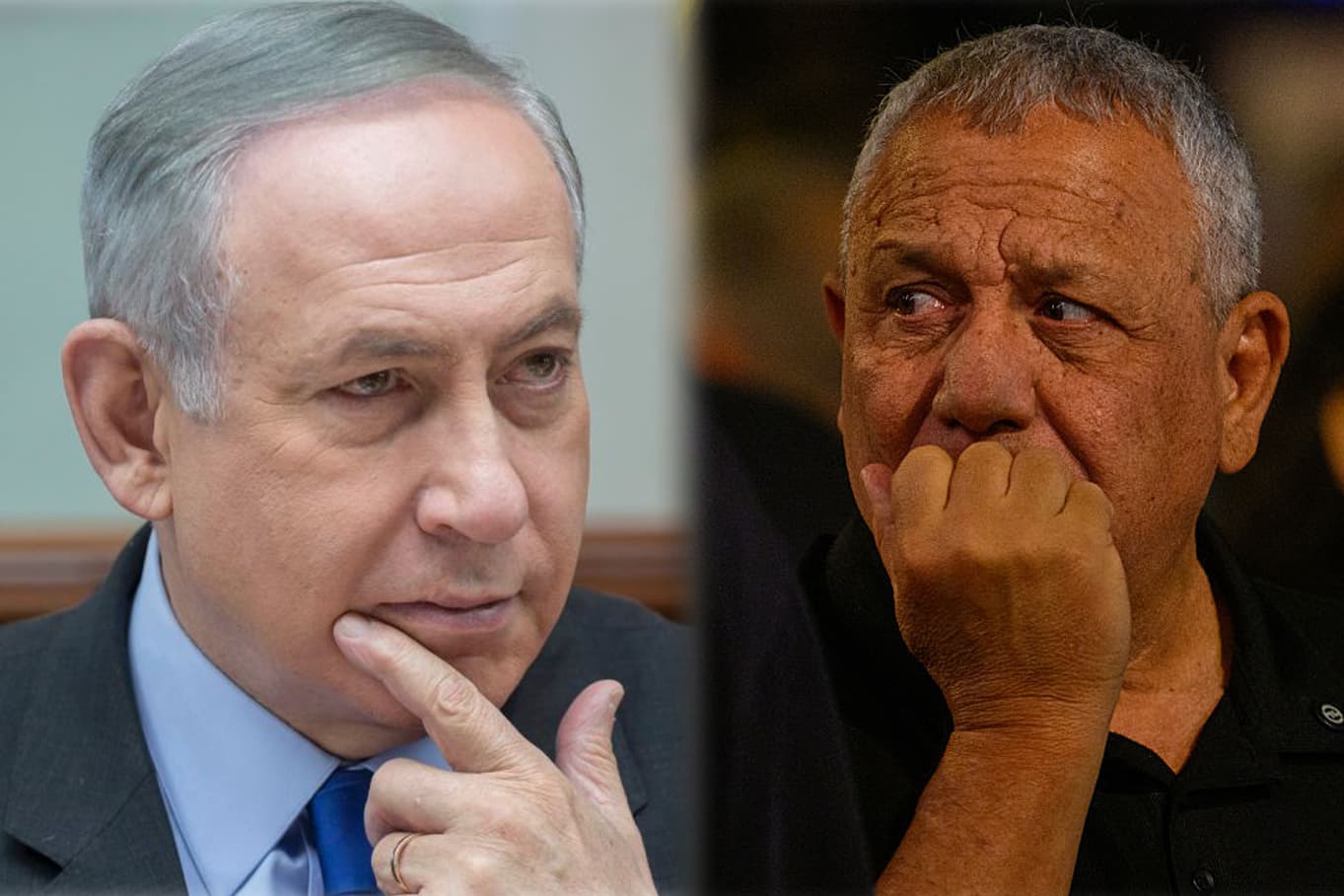
Other parties resisted pressure to merge. Gadi Eisenkot’s Yashar, Ofer Winter’s People of Israel and Itamar Ben-Gvir’s Otzma Yehudit submitted separate lists, despite concerns that fragmentation could leave votes stranded below the electoral threshold.
The final slates also reveal how parties are responding to the issues dominating the campaign. Shas retained most of its parliamentary core but elevated Yinon Azoulay to second place and placed Lieutenant-Colonel (Res.) Dror Amos sixth. Amos, who served in the IDF for 25 years, gives Shas a prominent candidate with military credentials as ultra-Orthodox conscription becomes a defining election issue.
United Torah Judaism also made a significant change, placing Yaakov Asher first, ahead of Yitzhak Goldknopf, Yitzhak Pindrus, Meir Porush and Moshe Rosenthal.
![[[:fr:Fez (coiffure)|Fez]] rouge à gland noir, en feutre.](/_next/image/?url=https%3A%2F%2Fjewishindependent.yourcreativeagency.com.au%2Fwp-content%2Fuploads%2F2026%2F10%2Ffez-cap-eisenkot-netanyahu.jpg&w=3840&q=75)
