Aa
  • Read, Watch, Listen
  • TJI Series
  • Community Action
  • Events
  • Zedi
Follow us and continue the conversation
  • LinkedIn
  • Instagram
  • FaceBook
  • X
  • YouTube
Test yourself with the TJI Quiz!

Adjust size of text

Aa

Follow us and continue the conversation

  • LinkedIn
  • Instagram
  • FaceBook
  • X
  • YouTube

Your saved articles

You haven't saved any articles

What are you looking for?

Original reporting, insightful analysis and diverse views, delivered straight to your inbox

  • LinkedIn
  • Instagram
  • FaceBook
  • X
  • YouTube
Your support fuels our mission to inform, entertain and inspire.

The Jewish Independent is bound by the Standards of Practice of the Australian Press Council. If you believe the Standards may have been breached, you may approach The Jewish Independent or make a complaint to the Australian Press Council in writing at www.presscouncil.org.au. The Council may also be contacted on 1800 025 712.

  • Our Story
  • Contact us
  • Our Team
  • Support us
  • Guidelines
  • Pitch your idea
  • Republishing us
  • Community Action
  • Our Awards
  • LinkedIn
  • Instagram
  • FaceBook
  • X
  • YouTube
Aboriginal FlagTorres Strait Islanders Flag

The Jewish Independent acknowledges Aboriginal and Torres Strait Islander peoples as the Traditional Owners and Custodians of Country throughout Australia. We pay our respects to Elders past and present, and strive to honour their rich history of storytelling in our work and mission.

© The Jewish Independent 2026All Rights Reserved
Website design and development by Your Creative, MelbourneTerms & ConditionsPrivacy Policy
HomeRead, Watch, ListenIsrael
Israel Votes 2026ExplainerIsrael

Eisenkot’s conditions for forming Israel’s next government

The former IDF chief’s demands could determine whether ultra-Orthodox and Arab parties can join his coalition.
Ruth Eglash
Print this
ISRAEL-TEL AVIV-PARLIAMENT ELECTION-EXIT POLLS

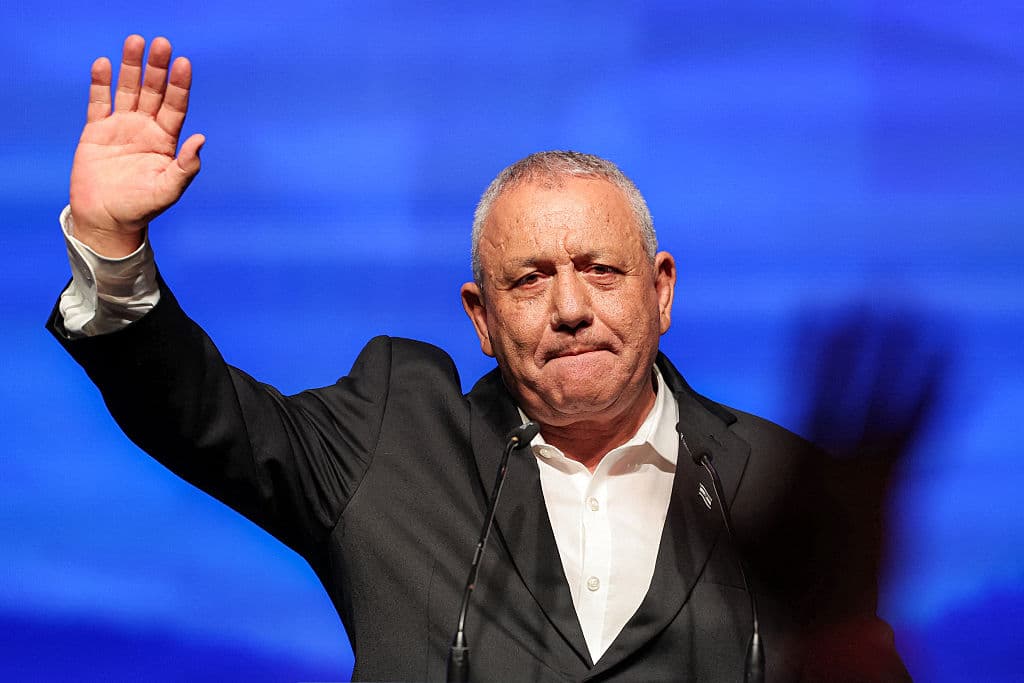
Gadi Eisenkot waves to his supporters at the Yashar party campaign headquarters in Tel Aviv, Israel, Oct. 28, 2026. (Photo by Gil Cohen Magen/Xinhua via Getty Images)

Published: 9 November 2026

Last updated: 9 November 2026

JTA – Israeli President Isaac Herzog tasked Gadi Eisenkot on Sunday with forming Israel’s next government, giving him up to six weeks to assemble a coalition with a total of 61 seats out of 120 in Israel’s parliament, the Knesset.

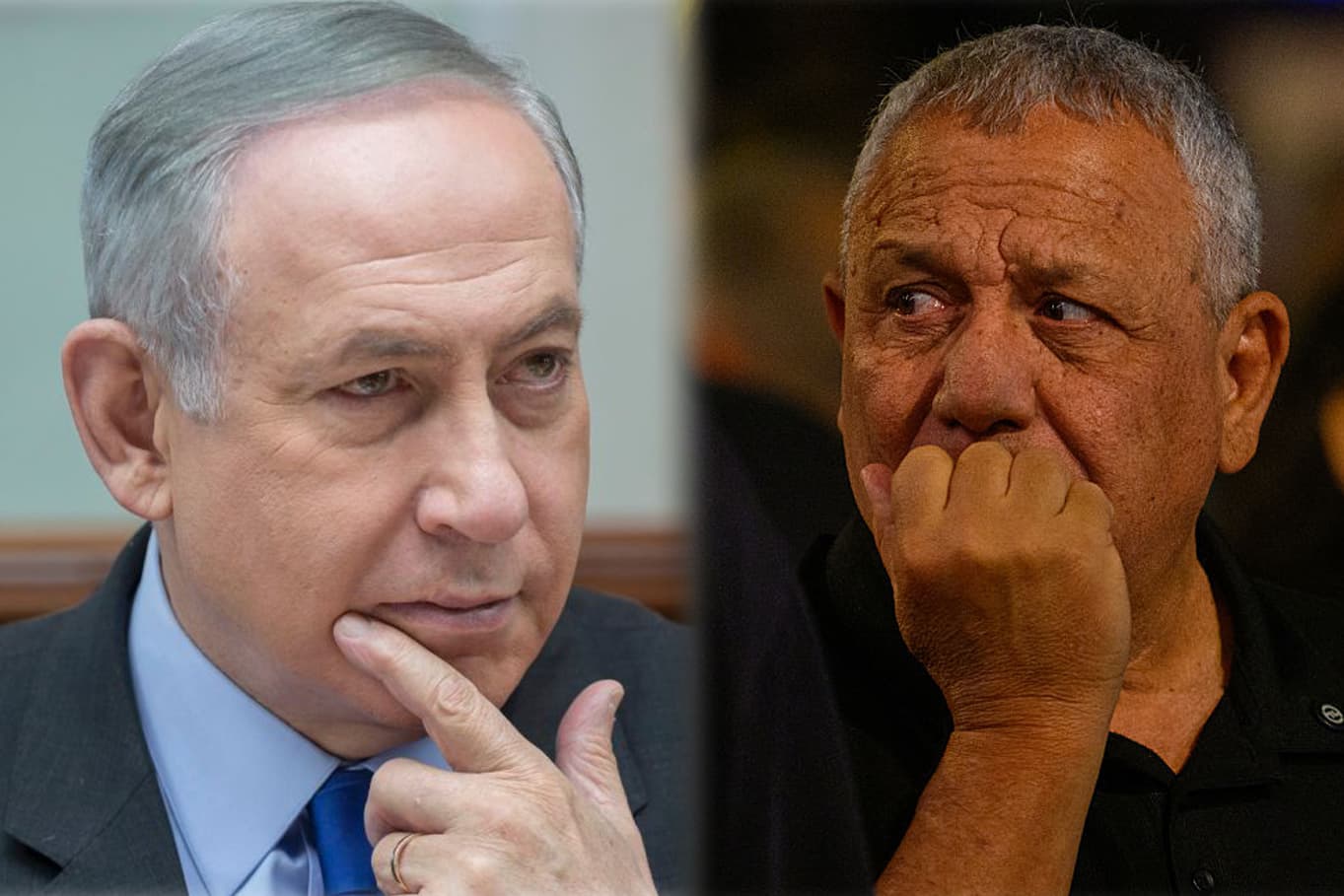
If he fails to do so, then the president can give another Knesset member the opportunity; most likely this will be incumbent Prime Minister Benjamin Netanyahu. For his part, Netanyahu, has urged Eisenkot to join him in an emergency national unity government that will keep Israel strong against ongoing threats.

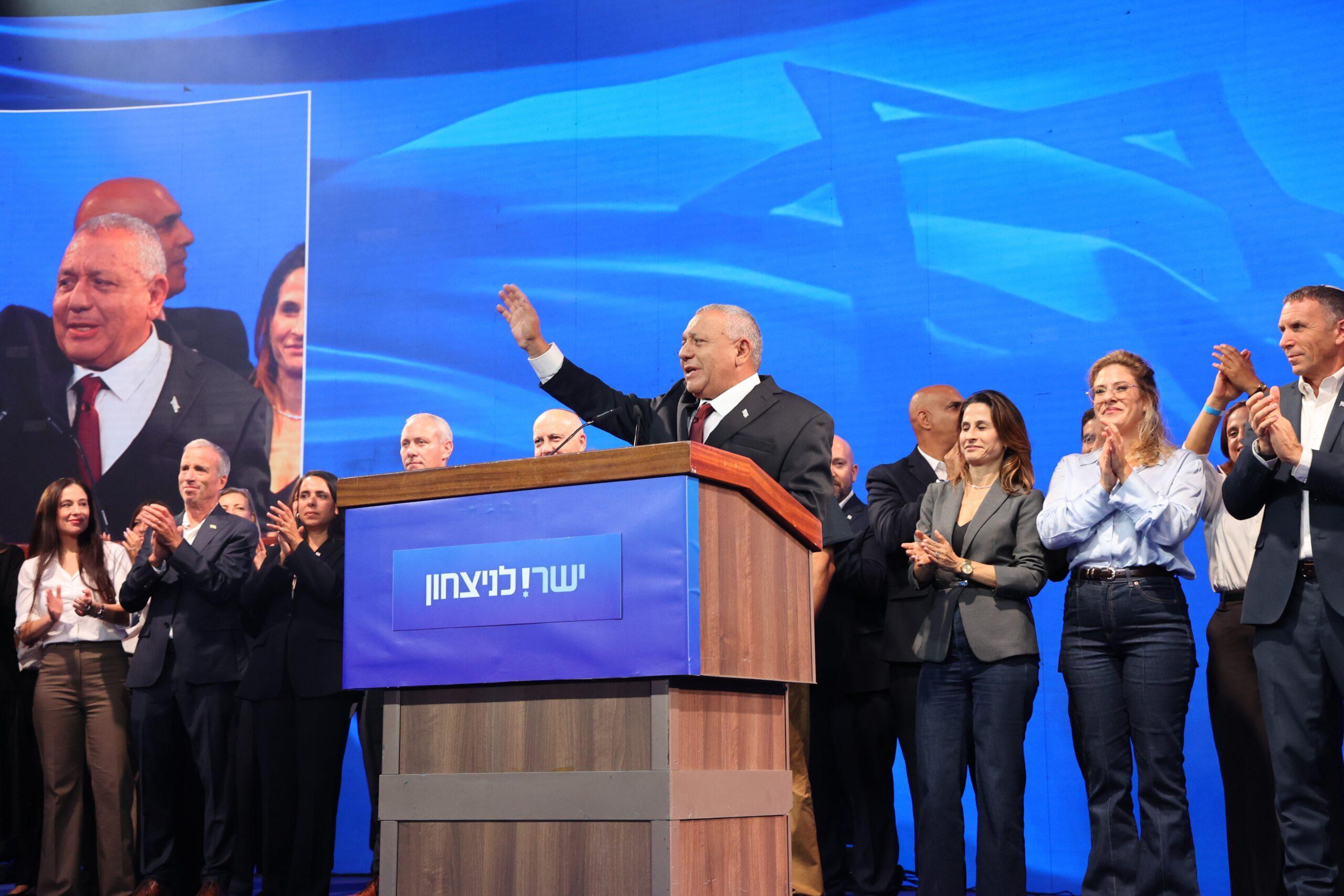
Eisenkot has responded that the “national emergency government” he will form will comprise the “four Zionist parties” of the change bloc – his own Yashar Party, B’Yachad headed by former prime ministers Naftali Bennett and Yair Lapid, Avigdor Liberman’s Yisrael Beitenu Party and the Democrats under Yair Golan.

He also said he would welcome “parties and Knesset members who support Yashar’s four principles” to join the coalition.

At the President’s Residence in Jerusalem on Sunday, Eisenkot said he would be sending out formal invitations as soon as possible “to every Knesset faction, calling on all their members, both as parties and as individuals, to take part in forming the government and bringing it to its swearing-in. 

“The rule is simple,” he added. “If you are prepared to sign on to the four principles I have set out, you are potential partners in a national emergency government under my leadership.” 
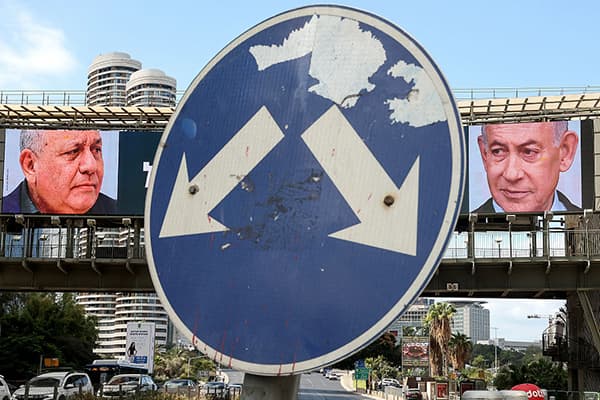
Throughout his campaign, and particularly since the Oct. 27 election, Eisenkot has emphasized these four principles as the basis for forming the next government. But what are they exactly? And who, out of the other 11 parties, will be able to accept them and join his coalition?

Recognition of the State of Israel as a Jewish and democratic state.

    Eisenkot wants to define his coalition as a government that is committed to Israel’s Jewish national identity and to democracy, not simply an alliance united by opposition to Netanyahu.

    Any party wanting to join must accept Israel’s identity as the national home of the Jewish people first. The requirement has historically been contentious for Israel’s two Arab parties, who represent 19 Knesset members.

    Parties must also accept the country’s democratic institutions, which uphold equality and rights for all citizens and prioritize the rule of law. 

    This means parties, such as the far-right and the ultra-Orthodox, that, as members of the outgoing government, have been pushing to overhaul the country’s judiciary – a key institution in Israel’s system of democratic checks and balances – might think twice about joining.

    Acceptance of the values of the Declaration of Independence

    Israel’s Declaration of Independence, proclaimed and signed on May 14, 1948, is a foundational document that has helped shape the country’s constitutional principles, although Israel does not have a single, formal written constitution.

    In it, the signatories laid out their vision for Israel, including the historical ties the Jewish people have to the land of Israel and its place as a safe haven for Jews around the world who are in trouble.

    For Eisenkot, the emphasis appears to be on one particular section that declares: “The State of Israel will foster the development of the country for the benefit of all its inhabitants; it will be based on freedom, justice and peace as envisaged by the prophets of Israel; it will ensure complete equality of social and political rights to all its citizens,​​ irrespective of religion, race or sex; it will guarantee freedom of religion, conscience, language, education and culture; and it will safeguard the Holy Places of all religions; and it will be faithful to the principles of the Charter of the United Nations.”

    By embracing the Declaration of Independence, Eisenkot is recognizing the place of Israel’s minority groups, highlighting their “full and equal citizenship.” A point mentioned twice in the declaration.

    The declaration also reaffirms that Israel is a country seeking peace, rather than endless conflict, at a time when Netanyahu has recently been criticized over his handling of the country’s wars on multiple fronts.

    Mandatory service for all — military, national, and civilian, to strengthen the IDF and expand its ranks

    Including this condition for joining the government is a direct message to the ultra-Orthodox parties, at least one of which is considering supporting Eisenkot’s coalition.

    United Torah Judaism, which has been aligned closely with Netanyahu’s bloc for at least the past two decades, on Thursday refused to recommend the prime minister as Israel’s next leader. Instead, the party, which holds seven seats, abstained from recommending any candidate.

    Both UTJ and the second ultra-Orthodox party, Shas, have resisted efforts that would include ultra-Orthodox young men studying in yeshiva under a universal draft law requiring all eligible Israelis to perform military service.

    Previous exemption laws have expired, and Israel’s Supreme Court has ruled that the state’s blanket exemption of yeshiva students from military service has no legal basis and violates principles of equality before the law.

    By including this condition, Eisenkot is telling the ultra-Orthodox – and even the Arab community, most of whose members are also exempt from mandatory military service – that everyone in Israel must do their part, whether through military service or some type of national or community service.

    This stipulation could either keep the ultra-Orthodox out of the government, even though Eisenkot’s partners have expressed willingness to allow their participation. Or it could force them to be more flexible on an issue that until now they have appeared unrelenting.

    Recognition of Hamas as a terrorist organization and commitment to dismantling its military and governing power

    Leaders of the two Arab parties, the Islamist Ra’am Party and the more nationalist Joint List, have refused to make this statement out loud.

    Ra’am leader Mansour Abbas, who has repeatedly condemned the Oct. 7 attack, has said he does have a clear position on this but refuses to state it publicly for several reasons ranging from concerns about his personal safety to his ties to the Muslim Brotherhood, to which Hamas is also affiliated. He has also questioned why Arab politicians are required to pass loyalty tests that are not applied equally to Jewish politicians.

    When President Herzog pressed him on the matter last week, Abbas said: “I have an unequivocal answer, but leave me space to be a bridge. To also influence the other side.” He argued that maintaining channels of communication with Palestinians requires him not to adopt language that would immediately alienate them.

    For the Joint List, the continued refusal to call Hamas a terror group appears to reflect the view that Hamas is part of the broader Palestinian political movement. Some of its members argue that labeling it a terrorist organization risks delegitimizing Palestinian political aspirations as a whole.

    Members of the 11-member faction have condemned the Oct. 7 massacre, but are unlikely to accept this particular condition because it could be used to justify Israel’s military campaigns in Gaza and the West Bank. Its leaders also want to preserve their credibility among Palestinian voters, many of whom see the conflict through the lens of occupation and Palestinian national rights.

    You might also like
    • Jews, Muslims and the new Democrat-dominated Congress
      Dan Coleman
    • Traumatech Nation: How Israel became a mental health leader
      Maayan Hoffman
    • Historic step forward for Arab Israelis
      Ben Lynfield
    logomark.67a07ee3
    We believe in the free flow of information

    Republish our articles for free, online or in print, by using our Creative Commons licence

    You might also like

      TOPSHOT-ISRAEL-POLITICS-ELECTION
      Israel Votes 2026ExplainerIsrael

      Your Israel election cheat sheet

      Deborah Stone
      Gadi Eisenkot
      Israel Votes 2026EditorialIsrael

      Normality or Sparta: Israel’s choice could hardly be clearer

      The Jewish Independent 1
      Netanyahu Eisenkot dubious
      Israel Votes 2026ExplainerIsrael

      Israel’s election fails to deliver a clear path to a government

      Shahar Burla 4

    About the author

    Ruth Eglash

    Ruth Eglash is a journalist with the Jewish Telegraphic Agency.

    More from the author

    AnalysisIsrael

    Do Israelis care that Trump has endorsed Netanyahu?

    NewsWorld

    British Greens equate Zionism with racism