Aa
  • Read, Watch, Listen
  • TJI Series
  • Community Action
  • Events
  • Zedi
Follow us and continue the conversation
  • LinkedIn
  • Instagram
  • FaceBook
  • X
  • YouTube
Test yourself with the TJI Quiz!

Adjust size of text

Aa

Follow us and continue the conversation

  • LinkedIn
  • Instagram
  • FaceBook
  • X
  • YouTube

Your saved articles

You haven't saved any articles

What are you looking for?

Original reporting, insightful analysis and diverse views, delivered straight to your inbox

  • LinkedIn
  • Instagram
  • FaceBook
  • X
  • YouTube
Your support fuels our mission to inform, entertain and inspire.

The Jewish Independent is bound by the Standards of Practice of the Australian Press Council. If you believe the Standards may have been breached, you may approach The Jewish Independent or make a complaint to the Australian Press Council in writing at www.presscouncil.org.au. The Council may also be contacted on 1800 025 712.

  • Our Story
  • Contact us
  • Our Team
  • Support us
  • Guidelines
  • Pitch your idea
  • Republishing us
  • Community Action
  • Our Awards
  • LinkedIn
  • Instagram
  • FaceBook
  • X
  • YouTube
Aboriginal FlagTorres Strait Islanders Flag

The Jewish Independent acknowledges Aboriginal and Torres Strait Islander peoples as the Traditional Owners and Custodians of Country throughout Australia. We pay our respects to Elders past and present, and strive to honour their rich history of storytelling in our work and mission.

© The Jewish Independent 2026All Rights Reserved
Website design and development by Your Creative, MelbourneTerms & ConditionsPrivacy Policy
HomeRead, Watch, ListenArts & Culture
NewsArts & Culture

Writer awards celebrate talent in face of discrimination

This year's winners include a Moroccan-Ashkenazi cookbook, a visual history of Sydney Jewry, and a unique story of a Japanese diplomat who helped save 6,000 Jews.
Sharon Berger
Print this
SC25_AJWA_079

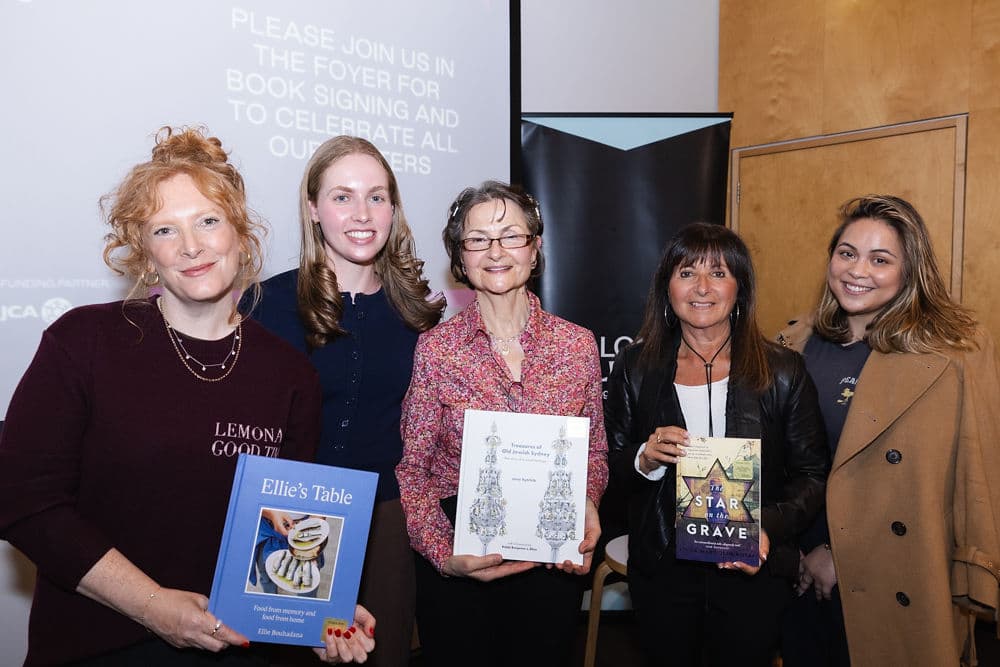
The winners of the 2025 Shalom Collective Australian Jewish Writer Awards (Image: Giselle Haber).

Published: 26 August 2025

Last updated: 26 August 2025

Australian Jewish writers report suffering discrimination since October 7. Award winners at the second annual Shalom Collective Australian Jewish Writers Awards, held on Sunday, told the audience they had experienced difficulty closing publishing deals. In some cases, booksellers had refused to restock sold-out books with Jewish themes.

Writers made the disclosures while in discussionn with Shalom Collective’s program director Alon Meltzer about the challenges of using their various genres to tell Jewish stories to larger audiences.

Meltzer described the 2025 awards as an opportunity to "celebrate the talent in our community".

The winners

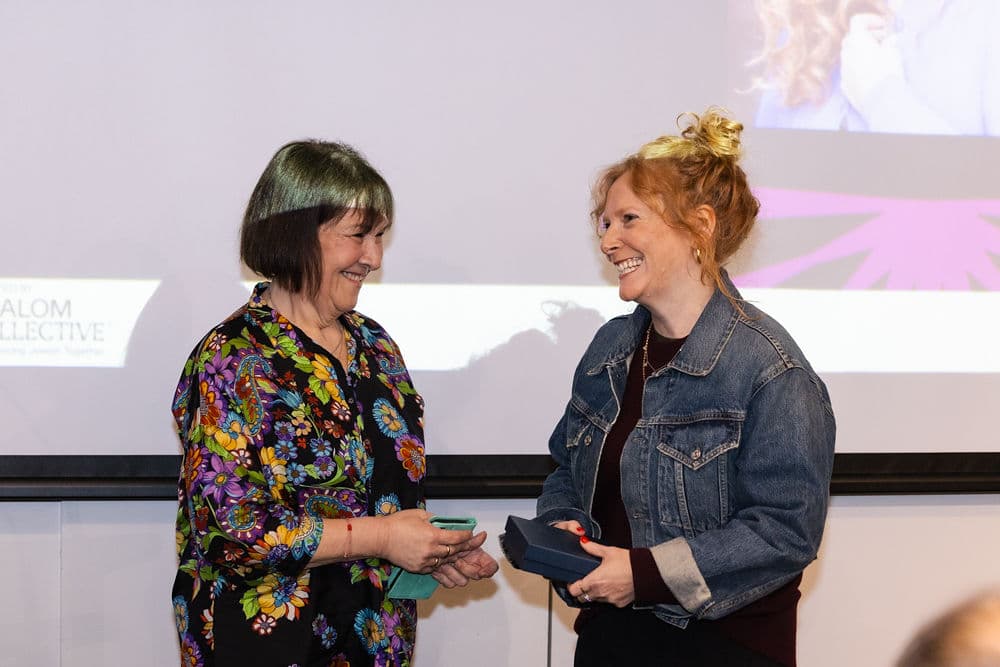
The Jewish Independent Young Jewish Writers Award ($5,000) went to self-taught chef Ellie Bouhadana for her enticing cookbook, Ellie’s Table: Food from Memory and Food from Home.

The Melbourne-based chef, who has an Instagram following of almost 58,000, was the former chef at Hope St Radio. Her cookbook taps into the bold flavours of her Jewish heritage, bringing delicious recipes to life from her father’s Moroccan background and her mother’s Ashkenazi roots.

The award is open to works of fiction and non-fiction on Jewish subjects by authors across Australia aged 18 to 40. Last year’s inaugural award was won by author and poet Anna Jacobson for her illustrated poetry collection Anxious in a Sweet Store. Jacobson was also shortlisted this year for How to Knit a Human: A Memoir.
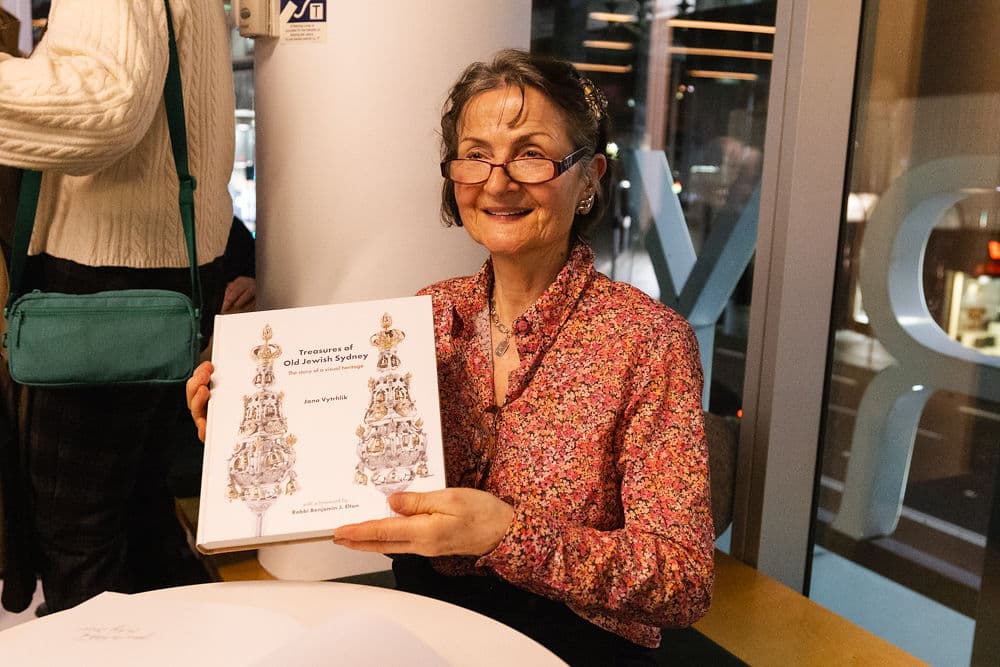
The Leslie and Sophie Caplan Award for Jewish Non-Fiction ($10,000) went to Dr Jana Vytrhlik for her work Treasures of Old Jewish Sydney. She noted that although the book was published last year, it took almost two decades to compile.

Dr Jana Vytrhlik with her winning work, Treasures of Old Jewish Sydney (Image: Giselle Haber).

Originally from Prague, Vytrhlik spoke about coming from a city that was filled with museums and empty synagogues but had no Jews – to arriving in Sydney in the 1980s, which had many Jews and synagogues but little Judaica. Her works uncovers this visual heritage, including the Jewish architectural highlights of Sydney.

Last year’s inaugural winner was journalist and former The Age editor Michael Gawenda for his renowned memoir, My Life as a Jew.

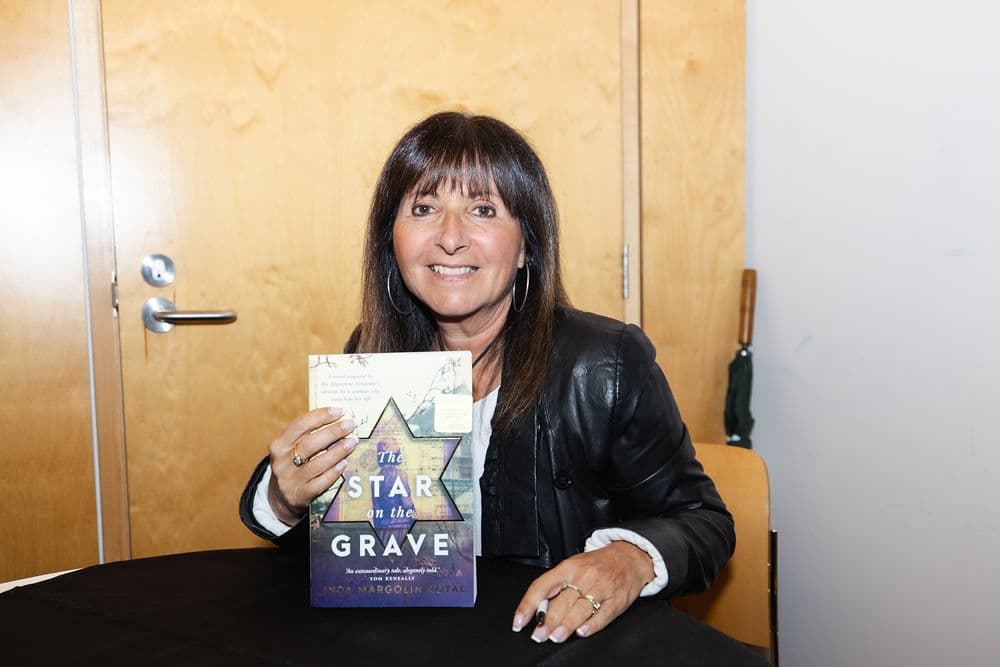
The inaugural Szymon (Simon) Klitenik Award for Jewish Fiction ($5,000) for an Australian fiction work written by a Jewish author was given to Linda Margolin Royal for The Star on the Grave, a novel which tells the unique story of Japanese diplomat Chiune Sugihara who helped refugees flee Europe, saving 6,000 Jews in the process.

Linda Margolin Royal with her winning work, The Star on the Grave (Image: Giselle Haber).

Margolin Royal's own family survived as one of the recipients of a visa issued by the diplomat against his government’s orders. Her debut novel weaves a fictional storyline with a parallel narrative that tells the true story of Sugihara’s life and aims to reach new audiences with the extraordinary efforts of the relatively unknown diplomat.  

The inaugural Edith Hausmann Award for Jewish Playwrights Aged 18-45 ($10,000) went to Elise Esther Hearst for her work Batsheva, a modern story inspired by the biblical tales of King David and the sparingly mentioned Bathseva. The one-woman monologue invites readers to respond individually, and Hearst spoke of how this reimagining from a period of over 2,000 years “opened up a world for [her]”.

Elise Esther Hearst accepting her award for her work, Batsheva (Image: Giselle Haber).

The Rosaline Sharabranee Meyer Awards for Young Jewish Storytellers ($500) for unpublished Sydney-based works went to Hayley Kaplan (short story) and Mimi Baron (poetry). Both young authors spoke of the importance of countering extreme antisemitism through their writing.

Kaplan’s piece, The Question in the Margin, speaks about the renewal of her Jewish identity through her decision to convert, and her developed connection and love of Judaism. Kaplan, whose father was Jewish, became increasingly vocal about her beliefs and found people faded in and out of her life. She encouraged all community members to be unapologetically Jewish, no matter what form that takes.

Baron’s piece, Letter to Liri, was written initially out of anger and focused on the difficulty of being a university student in an academic climate that continuously refuted her narrative, including direct threats to Jewish students to leave campus, which she regularly faced. However, she decided through poetry to tap into the story of a mutual friend Liri who was held hostage in Gaza for almost a year. Her poem is a letter to Liri about how she holds her pain within her. This deep sadness was best communicated via poetry, which Baron found meditative.

You might also like
  • Antisemitism, homophobia and a radical response to both
    Dennis Altman
  • Facing a new year with the knowledge life can be better
    The Jewish Independent
  • Was the barmi a shemozzle? How Australians use Jewish words 
    Caroline Hendy & Emma Breslow
logomark.67a07ee3
We believe in the free flow of information

Republish our articles for free, online or in print, by using our Creative Commons licence

You might also like

    Generation Change: Rachel Moshel
    Generation ChangeInterviewArts & Culture

    Rachel Moshel: Creating a space for Jewish art and joy

    Gideon Cohen
    haredi street guitar
    Photo EssayArts & Culture

    Jerusalemites through the lens

    Sharon Gabay
    Wake main 2nd
    FeatureArts & Culture

    New ‘spoken word’ festival in Sydney offers stories directly from creators

    Miriam Hechtman

About the author

Sharon Berger

Sharon Berger

Sharon Berger is the Events & Partnerships Manager at TJI. Sharon is a former journalist for The Jerusalem Post, Reuters, the Economist Intelligence Unit and the Australian Jewish News.

More from the author

ReflectionAustralia

No, I am not okay

NewsAustralia

TJI launches media internship in memory of Andrew Casey

InterviewIsrael

Yair Golan on Netanyahu, Israel’s ‘tribalism’ and believing in a two-state solution

Comments

No comments on this article yet. Be the first to add your thoughts.