Aa
  • Read, Watch, Listen
  • TJI Series
  • Community Action
  • Events
  • Zedi
Follow us and continue the conversation
  • LinkedIn
  • Instagram
  • FaceBook
  • X
  • YouTube
Test yourself with the TJI Quiz!

Adjust size of text

Aa

Follow us and continue the conversation

  • LinkedIn
  • Instagram
  • FaceBook
  • X
  • YouTube

Your saved articles

You haven't saved any articles

What are you looking for?

Original reporting, insightful analysis and diverse views, delivered straight to your inbox

  • LinkedIn
  • Instagram
  • FaceBook
  • X
  • YouTube
Your support fuels our mission to inform, entertain and inspire.

The Jewish Independent is bound by the Standards of Practice of the Australian Press Council. If you believe the Standards may have been breached, you may approach The Jewish Independent or make a complaint to the Australian Press Council in writing at www.presscouncil.org.au. The Council may also be contacted on 1800 025 712.

  • Our Story
  • Contact us
  • Our Team
  • Support us
  • Guidelines
  • Pitch your idea
  • Republishing us
  • Community Action
  • Our Awards
  • LinkedIn
  • Instagram
  • FaceBook
  • X
  • YouTube
Aboriginal FlagTorres Strait Islanders Flag

The Jewish Independent acknowledges Aboriginal and Torres Strait Islander peoples as the Traditional Owners and Custodians of Country throughout Australia. We pay our respects to Elders past and present, and strive to honour their rich history of storytelling in our work and mission.

© The Jewish Independent 2026All Rights Reserved
Website design and development by Your Creative, MelbourneTerms & ConditionsPrivacy Policy
HomeRead, Watch, ListenAustralia
ReflectionAustraliaLifestyle

Facing my mortality, the Book of Life is no metaphor

For a young woman with a life-threatening illness, the rituals of Yom Kippur take on new meaning.
Talia Slonim
Print this
chai necklace copy

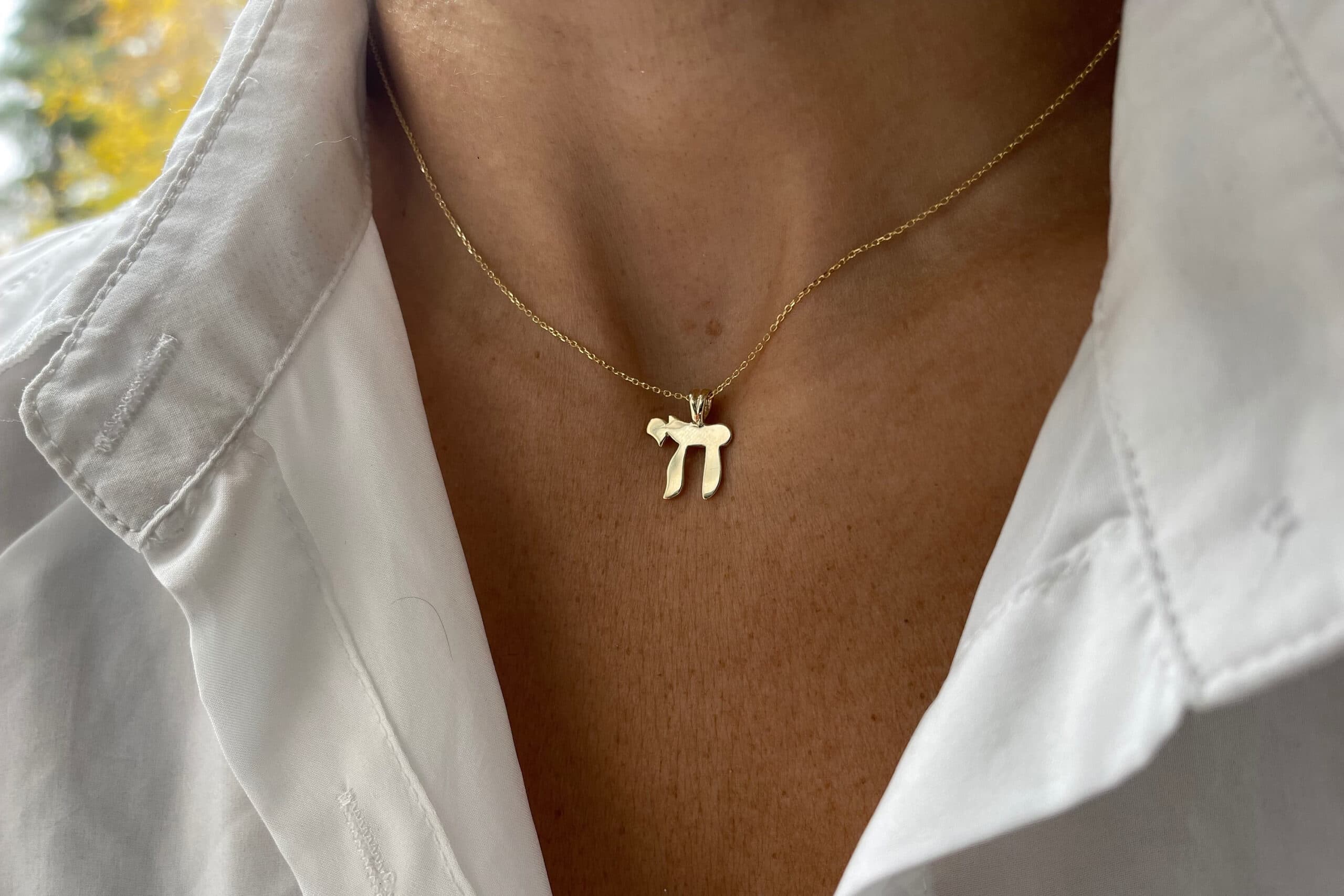
A pendant of the Hebrew word ‘chai’, meaning ‘life’ (Etsy)

Published: 17 September 2026

Last updated: 17 September 2026

I almost didn’t make it to Yom Kippur last year.

Driving to the Kol Nidre service, on the long road connecting Melbourne’s northern suburbs to its more heavily Jewish-populated south, I sat in peak-hour traffic contemplating whether I should turn around. Yom Kippur had always been my favourite chag. It has so much to offer the secular cultural Jew: the coming together of community, the opportunity for reflection, the ancient, repetitive rituals that cleanse the soul. Sitting for hours in shul, I often found myself surreptitiously crying at some point, succumbing to the solemn and pensive atmosphere of a community in deep introspection.

I felt at home at this shul, a secular-humanist music-based congregation - Kolenu - that centres humanity instead of God. The congregation sits in concentric circles, the musicians at the centre, forcing everyone to face one another.

But last year, I didn’t want to face my community. I was seething, picturing everyone performing the dramatic spectacle of chest pounding, shuckling and earnest prayer. I didn’t want to metaphorically plead, yet again, to be inscribed in the Book of Life – I felt that I had already done that enough this year, quite literally with my doctors. Imagining people engaging with life and death as an abstraction, only to be able to leave it at shul, filled me with rage.

Admittedly, this anger may have partly been due to the steroids pumping through my body. That morning, I spent eight hours in hospital undergoing yet another obscure test to determine whether I was in remission from Cushing’s Disease – a rare disorder from a pituitary tumour that causes excessive cortisol. Despite being minuscule, on a part of the brain the size of a pea, the tumour wreaked havoc, forcing me to be hospitalised five times within six months.
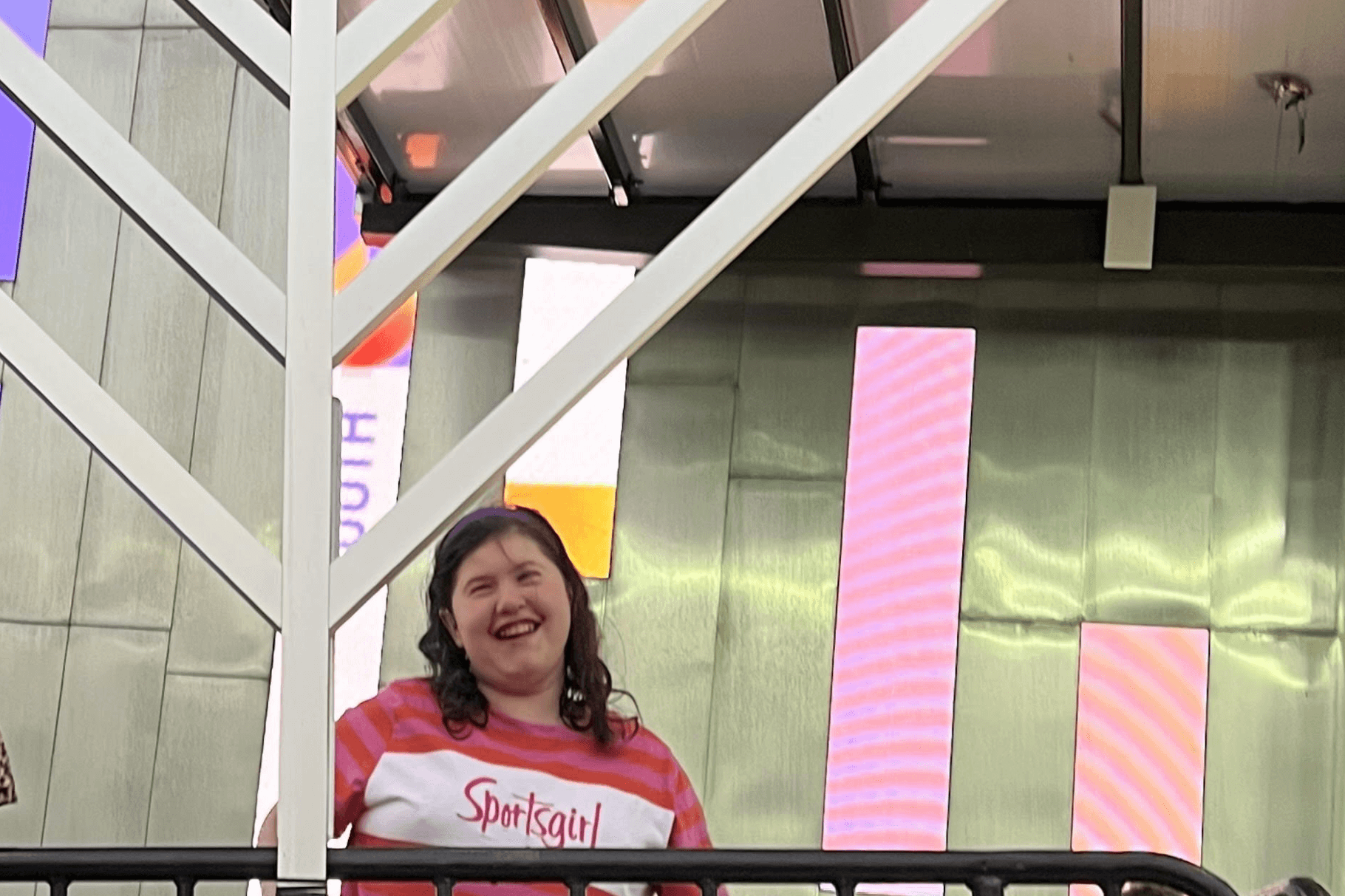
A few months before Yom Kippur, at 29, I underwent brain surgery to remove the elusive tumour that couldn’t be identified on dozens of scans. My doctors were reluctant to operate without a clear target, conscious of the enormous risk of this delicate procedure, performed through the nose. Arguing that life didn’t feel worth living in this condition, I pleaded with my doctors to perform this life-threatening/saving surgery.

To my doctors’ bewilderment, my cortisol levels immediately dropped, and the surgery was tentatively deemed successful - the junior doctor jumping up and down when he told me. Face bandaged, head too weak to lift off the pillow, I had finally been inscribed into the Book of Life.

But a week after being discharged, I returned to hospital from profuse, uncontrollable nose bleeding that was causing me to swallow mouthfuls of blood. When I presented to hospital dazed and emotional, it was simultaneously discovered that my sodium had dropped dangerously low, an uncommon complication from surgery. In a quiet voice, the doctor told me that ICU doctors would check on me every few hours. Immediately after she left, I vomited about a litre of blood. I lay listless in bed, my mind and body shutting down, my name being erased from the Book of Life.

I had never seriously considered that I could really die before the next Yom Kippur. Now the future felt too frightening to contemplate

The next morning, I looked at my face in the mirror – white from blood loss, swollen from cortisol that gave me a ‘moon face’, dead eyes from the disorientation of low sodium. I looked corpse-like, like I had rehearsed death. After a week of hourly blood tests and strict fluid restriction, I left hospital just in time to celebrate my thirtieth birthday.

It was only a couple of months later that my cortisol began to steadily rise again, flooding me with a familiar anxiety of what the future would hold. The high holiday season became dedicated to conducting further tests to determine my fate.

On the morning of Kol Nidre, I returned to the hospital I frequented so regularly that my phone suggested relabelling its address as ‘home’. I was cannulated in both arms, one injecting me with a high dose of steroids, the other drawing blood samples at seven precise times throughout the day – a series of specific, repeated rituals. I sat for eight hours in the day-treatment room with mostly cancer patients, our chairs forming a semi-circle to face each other and the musicians who came to lift our spirits. As they played ‘Somewhere Over the Rainbow’, I began to cry. It reminded me of the song Kol Ha’Olam Kulo, which we often sing on Yom Kippur: ‘The whole entire world is / a very narrow bridge/ and the main thing / is to have no fear at all.’

I wondered what my reaction would be to the emotional music I would encounter that night. The service always starts with niggunim, the collective humming transcending everyone into a higher spiritual setting, the cacophony of voices lifting the spirit outside of the body; something I so craved: to be freed from my physical self.

On the way to the service, the only emotion I felt was rage. Sitting in traffic, I stared at the results of that morning’s test on my phone. Texting back and forth with my sister, a doctor, we frantically tried to interpret the results. They were painting an increasingly clear picture that I was, in fact, not in remission.

My heart was broken.

I cried for the second time that day, this time the kind of deep wails emanating from the pit of your stomach. I didn’t want to front my peers, who couldn’t possibly understand what I was going through. I felt isolated in my rare condition; I didn’t know many other young people battling with their mortality.

I felt like Jonah, in the belly of the beast - no light, no obvious way out

Every year, I viewed Yom Kippur as an opportunity to reflect on how I wanted to improve myself and my life, to explore my ambitions and plan for the following year - the abstract notion of death a motivator. I had never seriously considered that I could really die before the next Yom Kippur. Now the future felt too frightening to contemplate, too tenuous and uncertain; I envied anyone with the privilege to plan. I felt like Jonah, in the belly of the beast - no light, no obvious way out.

When I arrived in the converted gymnasium hall for the service, I closed my eyes to listen to the drasha. Embittered and cynical, I didn’t want to see whatever smug smile delivered the preachy maxim I expected from a secular spiritualist. But as I listened to the words of Felicity Dinah Jun, I felt something in me begin to shift. She spoke of her battle with depression when she was younger, and how it paralysed her from moving forward with life. She spoke of Yom Kippur as a rehearsal for death.

‘Wrapped in shroud-like prayer shawls, wearing white, and refraining from food and water, we face God, who pulls out his infamous Books of Life and Death, writing us into one or the other.’

For the third time, I felt hot tears roll down my cheeks.

She continued, citing the renowned community leader and author Deborah Maisel, who died a few years earlier from breast cancer. In her book, Soul to Soul, Deborah reflects on how her cancer forced her to slow down and rediscover the simple joy of doing things without purpose or productivity. Faced with advanced cancer, Deborah was not fearful. She did not resist contemplating her death. Instead, she embraced these ominous questions, ones she suggested could open our hearts.

Felicity ended her speech by asking, ‘Consider your life and that one day you will die. The mystery of it all. How do you want to live your life this year, if it is your last?’ The question was not abstract or metaphorical; it met me exactly where I was.

I blinked open my eyes, still downcast to avoid any scrutinising faces. But when I looked up, I was surprised to see many others quietly crying too. Their pain-stricken faces reminded me that each person was on their own journey, also deeply suffering – if not in their personal lives, then in the global sense. In the past year, we witnessed the body count of the Israel-Palestine war grow, the acts of war become increasingly barbaric, and global antisemitism soar. Australia’s Jewish community was tense, distressed, grief-stricken.

I was glad to be part of a community tackling its uncertainty, fear and grief together.

Listening to the loud thumps of beating our chests during vidui, it struck me that we are adding bruises to our already broken hearts, but we do so willingly, to heal collectively. It reminded me of the words of another seminal leader, Mark Baker, who shared his personal contemplations of suffering before dying of pancreatic cancer: “Only a broken heart yearns to heal the world”, he wrote in The Fiftieth Gate.

Grief can turn us inwards, but these leaders instead opened their hearts to share their existentialism with their communities. Similarly, while Yom Kippur is a deeply personal experience, we go through this healing and introspection together, communally.

Because that’s what we do in Judaism. We have our texts, and then we have our commentary on the text and the commentary on the commentary. It’s through this accretion of insight that we make sense of it all. We study these wisdoms together in chevruta and practice these rituals collectively in minyanim, because we know that we aren’t meant to navigate these hard moments, these hard questions, alone.

I looked at the sea of faces at shul and didn’t know why each person was crying. I did know that the journey in front of me was unclear and terrifying. But I was glad to be part of a community tackling its uncertainty, fear and grief together.

***

Four months later, I underwent another brain surgery. Just as we repeat Yom Kippur, often returning to the same problems as the previous one, my doctors faced this surgery with the same issues as my first – no identifiable tumour to remove, just the urgency to save me from this disease. This time, my remission appears to have lasted, my cortisol remaining low for at least eight months.

When I think about the upcoming Yom Kippur, I am once again overwhelmed with emotion at the thought of reckoning with mortality, with having to plead to be placed in the Book of Life, particularly in this public space. Even though I often find it hard to assign meaning to the suffering I endured, I’m so glad that I’m still here to try to make sense of it, amongst a crowd of people also in the grips of their private suffering, trying to make sense of it, together.

You might also like
  • Jewish Futurism? We’ve been practising it for millennia 
    Renata Zimbarg
  • Nobody wants this, but as a student rabbi I can’t look away
    Merissa Nathan Gerson
  • Jonah’s unfinished story echoes louder after October 7
    Leah Justin
logomark.67a07ee3
We believe in the free flow of information

Republish our articles for free, online or in print, by using our Creative Commons licence

You might also like

    tame kostakidis west
    AnalysisAustralia

    How not to apologise

    Zac Klugman
    Generation change Template
    Generation ChangeInterviewAustralia

    Ash Densham: Building community through Humanistic Judaism

    Gideon Cohen
    neo-nazis white supremacists corowaTEST
    Royal CommissionOpinionAustralia

    Antisemitism, homophobia and a radical response to both

    Dennis Altman

About the author

Talia Slonim

Talia Slonim

Talia Slonim is a freelance writer and lawyer living in Naarm/Melbourne.

More from the author

Photo EssayArts & Culture

‘More urgent than ever’: Celebrating the last survivor at the legendary Buchenwald Ball

Comments4

  • Avatar of Larry Abel

    Larry Abel17 September at 11:44 am

    After going into remission with a lymphoma, the shehecheanyu took on a lot more significance. Excellent essay and hoping you’re finally in a stable rem.

  • Avatar of Felicity Dinah

    Felicity Dinah17 September at 11:31 am

    Tears as I read this article … thank you x

  • Avatar of Michael Jaku

    Michael Jaku17 September at 07:15 am

    Thanks so much for sharing Talia. xxx

  • Avatar of Leon Mann

    Leon Mann17 September at 06:22 am

    Dear Talia,
    Powerful, moving, informative, wise, and brilliant!.
    Kol Hakavod and G’mar Chatimah Tova.
    Papa and Nanny