Aa
  • Read, Watch, Listen
  • TJI Series
  • Community Action
  • Events
  • Zedi
Follow us and continue the conversation
  • LinkedIn
  • Instagram
  • FaceBook
  • X
  • YouTube
Test yourself with the TJI Quiz!

Adjust size of text

Aa

Follow us and continue the conversation

  • LinkedIn
  • Instagram
  • FaceBook
  • X
  • YouTube

Your saved articles

You haven't saved any articles

What are you looking for?

Original reporting, insightful analysis and diverse views, delivered straight to your inbox

  • LinkedIn
  • Instagram
  • FaceBook
  • X
  • YouTube
Your support fuels our mission to inform, entertain and inspire.

The Jewish Independent is bound by the Standards of Practice of the Australian Press Council. If you believe the Standards may have been breached, you may approach The Jewish Independent or make a complaint to the Australian Press Council in writing at www.presscouncil.org.au. The Council may also be contacted on 1800 025 712.

  • Our Story
  • Contact us
  • Our Team
  • Support us
  • Guidelines
  • Pitch your idea
  • Republishing us
  • Community Action
  • Our Awards
  • LinkedIn
  • Instagram
  • FaceBook
  • X
  • YouTube
Aboriginal FlagTorres Strait Islanders Flag

The Jewish Independent acknowledges Aboriginal and Torres Strait Islander peoples as the Traditional Owners and Custodians of Country throughout Australia. We pay our respects to Elders past and present, and strive to honour their rich history of storytelling in our work and mission.

© The Jewish Independent 2026All Rights Reserved
Website design and development by Your Creative, MelbourneTerms & ConditionsPrivacy Policy
HomeRead, Watch, ListenLifestyle
OpinionLifestyle

Jewish Futurism? We’ve been practising it for millennia 

Rosh Hashanah is a time for renewal. Traditional tools gel remarkably with contemporary understandings of strategising the future
Renata Zimbarg
Print this
Futurism

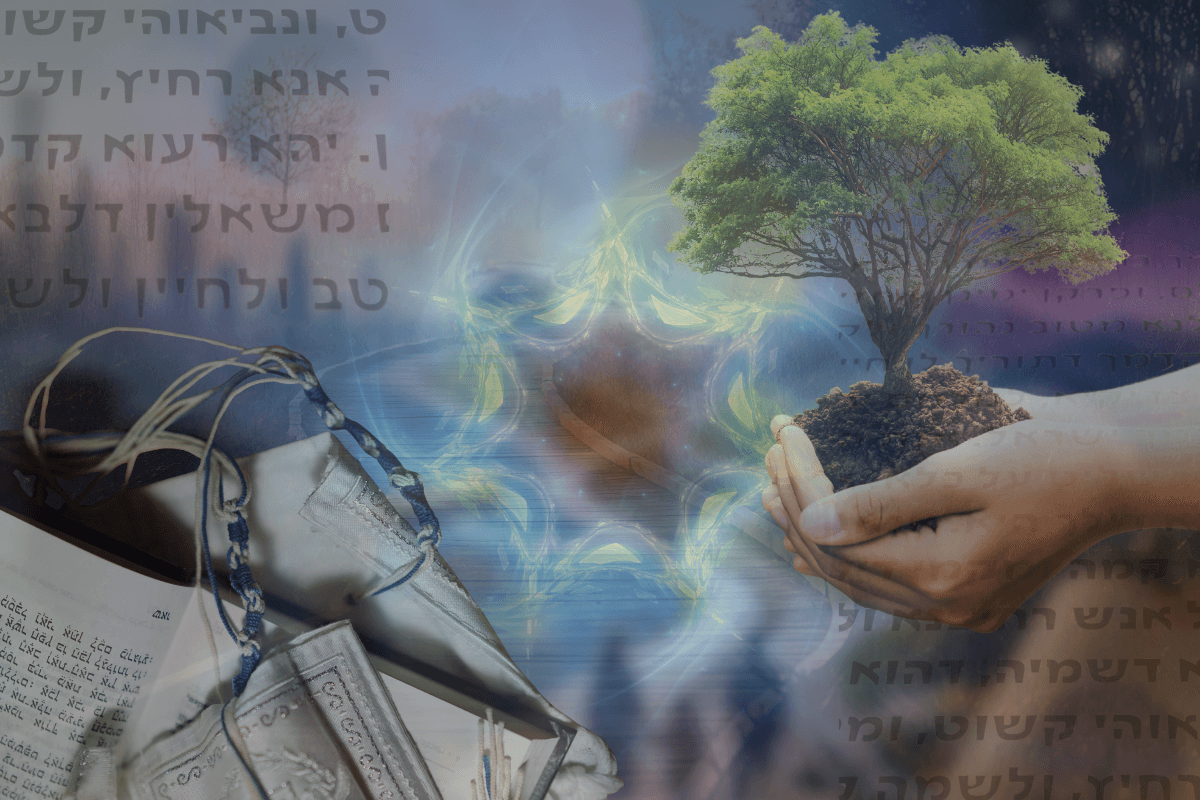
(Image: TJI)

Published: 8 September 2026

Last updated: 8 September 2026

Futures Thinking is an interdisciplinary field that brings together ideas from across disciplines to explore possible futures. Contrary to what many may assume, it isn't about predicting what will happen. Rather, it expands our imagination of what is possible. 

Evolving from Strategic Foresight, Futures Thinking is also a mindset that uses a range of tools and methods to challenge assumptions, explore multiple possible futures, and build our capacity to navigate uncertainty and shape what comes next.  

We are encouraged to challenge our fixed ideas about the future, so we can picture alternative scenarios that are completely different from what we are used to, unleashing imagination as a powerful tool for collective transformation. 

As a Jewish cultural strategist, I’ve come to realise Judaism already contains many of these tools, built into our practices and values. 

“The future is ancestral,” wrote Indigenous Brazilian thinker Ailton Krenak in his 2022 book reflecting on the way Indigenous knowledge traditions may influence new ways of thinking. 

Indigenous knowledge, including that of Aboriginal and Torres Strait Islander peoples in Australia and ancient Jewish traditions, emphasises ancestral, relational and intergenerational ways of thinking about time. 

Working with multicultural organisations, creatives, and Indigenous communities, I’ve recognised the important roles traditional and creative communities have to play in Futures Thinking. 

Thinking differently about time 

In Western cultures, time is seen as linear and chronological. The past stays in the past; the present is right now, and we imagine the future from the present and the past. This is how econometric models, trend analysis, and data analysis work. 

However, in Judaism, time is cyclical. Our calendar uses both lunar and solar cycles; we observe Shabbat every seventh day; we mark holidays according to nature’s cycles, using a complex leap year system to keep human life aligned with nature.

Every year we receive the Torah; every year we mourn the destruction of the Temples; every year we return to and are freed from Egypt and hope to be redeemed in Jerusalem next year. We relive our people’s stories over and over, for thousands of years. 

Twentieth-century rabbi and philosopher Abraham Joshua Heschel argued that Judaism is a religion that focuses on the sanctification of time rather than physical space. 

Judaism, past, present, and future coexist, and we circle through the same events again and again as we move toward the future – like a time spiral. 

Values that sustain and improve 

Being a futurist is an active role that uses our collective intelligence to imagine and create the future together. 

Jewish practice also gives us a model for this kind of thinking. 

Our emphasis on memory is a social technology that provides us not only with an understanding of where we come from but with a blueprint for who we are now and what we pass on, along with our knowledge and stories for future generations. 

The value teshuvah (repentance or returning), central to Rosh Hashanah and Yom Kippur, serves as a reminder to return to who we are, to self-assess, to grow, and to improve. 

Tikkun Olam (repairing the world) reflects the essence of Futures Thinking: collectively imagining and building a better place for everyone. Messianism enables us to imagine and work towards a future golden age, for which we are all preparing. 

For thousands of years, we've developed cultural tools for surviving uncertainty, adapting to change, overcoming adversity, and imagining hopeful futures even in the darkest moments. We've become experts at processing our past struggles and navigating intergenerational trauma. 

Jews have practised Futures Thinking for millennia, making us natural futurists: striving year after year to bring out the best in our humanity and build a better world for future generations. This Rosh Hashanah, my invitation is to return to Jewish Futurism: to return to our roots, reclaim these skills, and use them to overcome the challenges we face today and to reimagine and build a better tomorrow, together. 

You might also like
  • 10 little known Rosh Hashanah customs from around the world
    Menachem Posner
  • Netanyahu’s Iran strategy has failed
    Colin Shindler
  • Never tear us apart: a New Year reflection
    Ittay Flescher
logomark.67a07ee3
We believe in the free flow of information

Republish our articles for free, online or in print, by using our Creative Commons licence

You might also like

    Housing
    Australia

    Housing insecurity hits home in Jewish community

    Jarod Rhine-Davis 1
    Finding ouor why
    PodcastLifestyle

    Finding Our Why

    The Jewish Independent
    single – lead image
    FeatureLifestyle

    On my own (terms)

    Jarod Rhine-Davis

Comments

No comments on this article yet. Be the first to add your thoughts.

About the author

Renata Zimbarg

Renata Zimbarg

Renata Zimbarg is a Brazilian-born and Melbourne-based cultural strategist, futurist and researcher with over 10 years’ experience across the creative industries, cultural development and community engagement in Australia and Latin America. She holds a Master of Cultural and Creative Industries from Monash University and is the founder of Kaleidoscope Club, a platform for creative and futures-oriented community practice.