Aa
  • Read, Watch, Listen
  • TJI Series
  • Community Action
  • Events
  • Zedi
Follow us and continue the conversation
  • LinkedIn
  • Instagram
  • FaceBook
  • X
  • YouTube
Test yourself with the TJI Quiz!

Adjust size of text

Aa

Follow us and continue the conversation

  • LinkedIn
  • Instagram
  • FaceBook
  • X
  • YouTube

Your saved articles

You haven't saved any articles

What are you looking for?

Original reporting, insightful analysis and diverse views, delivered straight to your inbox

  • LinkedIn
  • Instagram
  • FaceBook
  • X
  • YouTube
Your support fuels our mission to inform, entertain and inspire.

The Jewish Independent is bound by the Standards of Practice of the Australian Press Council. If you believe the Standards may have been breached, you may approach The Jewish Independent or make a complaint to the Australian Press Council in writing at www.presscouncil.org.au. The Council may also be contacted on 1800 025 712.

  • Our Story
  • Contact us
  • Our Team
  • Support us
  • Guidelines
  • Pitch your idea
  • Republishing us
  • Community Action
  • Our Awards
  • LinkedIn
  • Instagram
  • FaceBook
  • X
  • YouTube
Aboriginal FlagTorres Strait Islanders Flag

The Jewish Independent acknowledges Aboriginal and Torres Strait Islander peoples as the Traditional Owners and Custodians of Country throughout Australia. We pay our respects to Elders past and present, and strive to honour their rich history of storytelling in our work and mission.

© The Jewish Independent 2026All Rights Reserved
Website design and development by Your Creative, MelbourneTerms & ConditionsPrivacy Policy
HomeRead, Watch, Listen

Dafna’s murder: the domestic violence statistic that became personal

Sharon Offenberger
Print this

Published: 23 November 2021

Last updated: 4 March 2024

On International Day for elimination of violence against women, SHARON OFFENBERGER remembers the night in 2014 her friend didn’t turn up at her bar in Tel Aviv

THE SUMMER OF 2014 was hands down the worst of my life, and it took a full year, perhaps more, for the knot of despair in my stomach to untangle. About a month into the relentless 50-day Gaza war, my husband came home with some uplifting news.  

“Remember, my friend Dafna?” he said. “She just opened a bar in the Jaffa Flea Market and is looking for some help. I’m going to join as a business partner.”  

During that warring summer, I juggled full-time work, hiding beside my car during rocket barrages, carpooling young kids on school holidays in oppressive heat, and now, thanks to my husband’s new business, convenient stopovers on my way home. Detox by intox.  

My job at the time was as program manager at the European Union Delegation in Israel. I had been appointed as the “gender expert” so it was my job to report on the state of gender inequality and violence against women in Israel.  

I knew the numbers and breakdown of domestic murders, disproportionately in the Arab and Ethiopian communities where there was a lack of resources for appropriate services, both shelters and policing.  

Nothing prepared me for the night my husband called and said: 'Dafna didn’t come to the bar. Something bad has happened'.

But nothing prepared me for the night my husband called at around 8pm and said: “Dafna didn’t come to the bar. Something bad has happened”.  

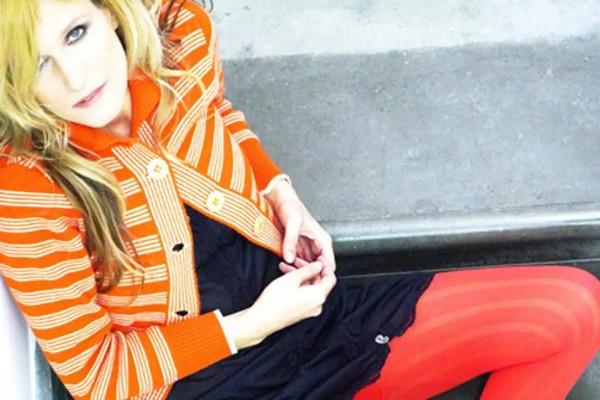
Dafna Bar Zion was a successful musician and restaurateur, accredited with opening the well-known Tel Aviv bar/restaurant Suzanna in fashionable Neve Tsedek and then Regina in the Tachana railway compound. Dafna was always gorgeous and sunny, both in looks and disposition. 
She was blonde and blue eyed, with at least one hit song and several albums to her credit. Looking way too young for it, she had an equally gorgeous daughter in her mid-20s. She came from a trio of sisters, all remarkable in different ways. She had a Wikipedia page and YouTube channel.  

Dafna could not be categorised as disadvantaged or disempowered. She had been supporting her second husband, musician Ilan Ben Ami, financially and emotionally, even though they were separated.

Until that night on August 14, 2014, when she reiterated to him that they were not getting back together, and he went at her with a hammer, killing her in cold blood.  

That night Dafna became a statistic for my reports, dryly articulated as such reports tend to be: In 2014, 14 women were killed by their domestic partners. This time I knew one of them personally.

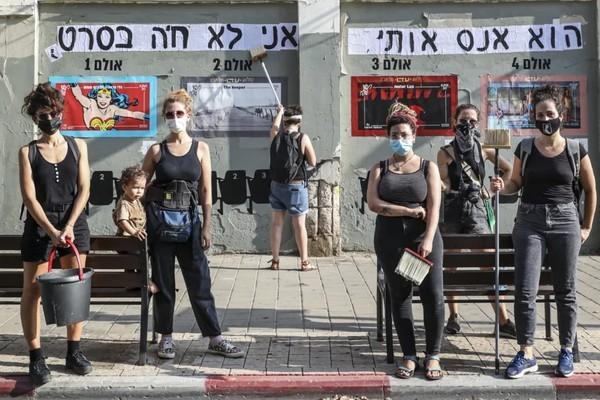
Members of the 'Sticker Women' group in Tel Aviv, August, 2020 (Ofer Vaknin)

From then on, every woman who was murdered became a name and not just a number to me. Domestic violence is on the rise, exacerbated by a lack of resources to dedicated to domestic violence prevention, and explosion of gun related crime in Arab towns.  

In 2020, the number of women killed in domestic settings reached 26. The battered women’s shelters are full. Support call centres overwhelmed.

It is no longer a one-off to hear about apparently normative homes that transform into the site of gruesome murders. Anat, Aliza, Nura, Ofira, Fadia, Hayat, Manal, Elizabeth, Iman, Yelena, Diana, the list goes on. Domestic murders that occur in the presence of children are also becoming commonplace.

Yet it is still only the stories of Jewish women that capture mainstream public attention. Michal Sela, Diana Raz and Shira Iskov are cases known to the public. Shira Iskov, who survived an horrific attempt on her life by her husband became a torch-bearer at the official State ceremony for Yom Haatzmaut (Independence Day), considered a great honour in Israeli society.

Similarly, Dafna’s funeral had its share of media coverage and the search for her missing killer was news – for a while.  

One of Dafna's album covers

Every year on November 25 – the International Day of Elimination of Violence against women and girls – NGOs sound the alarm. Hundreds of women march in various locations across the country. Israel has more than a few female Parliamentarians with activist credentials and there have been several attempts to address the issue in the Knesset.

The government recently announced a program funded by 50 million dollars to fighting it. Everyone is against it – an abomination, a scourge. But no one can stop it.

Dafna’s murder was a reminder that violence against women in Israel, or anywhere, does not happen within certain socio-economic groups. 

Domestic or intimate partner violence (as it is referred to in Australia) is always one of those things that happens “over there”, in the newspapers, but never up close and personal. Politically motivated violence attracts far more interest and resources. 

Certainly, in Israel a manhunt for six escaped Palestinian prisoners, as occurred earlier this year, can stop the nation. But gender-based violence continues as an unfortunate fact of life, a problem for the welfare system rather than security agencies. 

Dafna’s murder was a reminder that violence against women in Israel, or anywhere, does not only happen for cultural reasons or within certain socio-economic groups. 

And retelling Dafna’s story is a reminder that in Israel, one is always a heartbeat (or hammer) away from tragedy. 

WATCH: LISTEN TO MY VOICE

Photo: Dafna Bar Zion, murdered in 2014

You might also like
  • The ICJ has ruled on genocide in Myanmar. What does it mean for Israel?
    Shahar Burla
  • Looming fear of political violence in post-election Israel
    Dror Doron
  • Building future beyond fear: a conversation
    Deborah Stone & Orly Erez-Likhovski
logomark.67a07ee3
We believe in the free flow of information

Republish our articles for free, online or in print, by using our Creative Commons licence

You might also like

    brighton-cobbler-hands

    ‘This $50 is for your grave, you f***ing Jew’

    The Jewish Independent
    Israel Hamas War

    IDF: Hamas will steal fuel for tunnel ventilation systems and rockets

    TJI Wrap
    Funeral for top military commander of Hamas’ armed wing in Gaza
    Israel Hamas WarAnalysisIsrael

    Gaza ceasefire falters as Israel and Hamas prepare for next war

    Shahar Burla 1

About the author

Sharon Offenberger

Sharon Offenberger

Sharon Offenberger was raised in Melbourne and made aliyah in 2004. She spent over 15 years in various roles for the European Union, including managing the peacebuilding program, communications officer and spokesperson. She moved with her family in 2020 to Bellingen, NSW where she works as a writer and communications consultant.

More from the author

NewsIsrael

Diaspora Jews urge Israel’s change bloc to form a Jewish–Arab coalition

ExplainerIsrael

There are three likely outcomes in Israel’s election. None is simple

FeatureArts & Culture

Why we had to make Pita with Vegemite

Israel

The Contenders: a visual guide to Israel’s political blocs