Aa
  • Read, Watch, Listen
  • TJI Series
  • Community Action
  • Events
  • Zedi
Follow us and continue the conversation
  • LinkedIn
  • Instagram
  • FaceBook
  • X
  • YouTube
Test yourself with the TJI Quiz!

Adjust size of text

Aa

Follow us and continue the conversation

  • LinkedIn
  • Instagram
  • FaceBook
  • X
  • YouTube

Your saved articles

You haven't saved any articles

What are you looking for?

Original reporting, insightful analysis and diverse views, delivered straight to your inbox

  • LinkedIn
  • Instagram
  • FaceBook
  • X
  • YouTube
Your support fuels our mission to inform, entertain and inspire.

The Jewish Independent is bound by the Standards of Practice of the Australian Press Council. If you believe the Standards may have been breached, you may approach The Jewish Independent or make a complaint to the Australian Press Council in writing at www.presscouncil.org.au. The Council may also be contacted on 1800 025 712.

  • Our Story
  • Contact us
  • Our Team
  • Support us
  • Guidelines
  • Pitch your idea
  • Republishing us
  • Community Action
  • Our Awards
  • LinkedIn
  • Instagram
  • FaceBook
  • X
  • YouTube
Aboriginal FlagTorres Strait Islanders Flag

The Jewish Independent acknowledges Aboriginal and Torres Strait Islander peoples as the Traditional Owners and Custodians of Country throughout Australia. We pay our respects to Elders past and present, and strive to honour their rich history of storytelling in our work and mission.

© The Jewish Independent 2026All Rights Reserved
Website design and development by Your Creative, MelbourneTerms & ConditionsPrivacy Policy
HomeRead, Watch, ListenArts & Culture
FeatureArts & Culture

Eight Jewish and Israeli video games you should check out 

From a rabbinical murder mystery to an Australian woman unpacking a mezuzah in a new home, Jewish and Israeli stories are turning up in some unexpected corners of videogames.
Jarod Rhine-Davis
Print this
Picture 1

Israeli video game ‘Haifa’ follows a small group of friends searching the city for someone they have lost during wartime. (Image source: Steam)

Published: 5 October 2026

Last updated: 5 October 2026

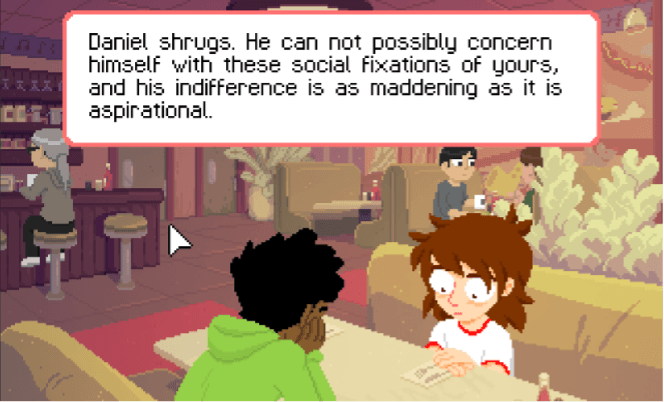
A coming-of-age video game with a Jewish character, will be part of Melbourne International Games Week Showcase at the Australian Centre for the Moving Image (ACMI).  But there are many more Jewish games out there.  

To celebrate Melbourne International Games Week from 2 to 11 October, we introduce you to a murder mystery, Israeli comedy, an interactive novel, Holocaust stories and a puzzle about unpacking moving boxes. 

The Shivah 

2006 (remastered 2013) · New York · Dave Gilbert / Wadjet Eye Games · Murder mystery 

Rabbi Russell Stone runs a struggling New York synagogue. When a former congregant dies and unexpectedly leaves the synagogue a large sum of money, Stone sets out to discover why. 

The Jewish setting drives the game. Its title refers to the Jewish mourning period; Stone wrestles with faith, conscience and communal responsibility; and players question characters and solve puzzles while investigating the death. 

Creator Dave Gilbert has said the idea developed after time spent in Asia made him newly conscious of being Jewish. Returning to New York, he wanted to make something with a Jewish theme as a way of reconnecting with that part of himself. 

Producer Wadjet Eye promotes The Shivah as a rabbinical murder mystery, complete with “rabbinical conversation methods” and “Talmudic combat”. 
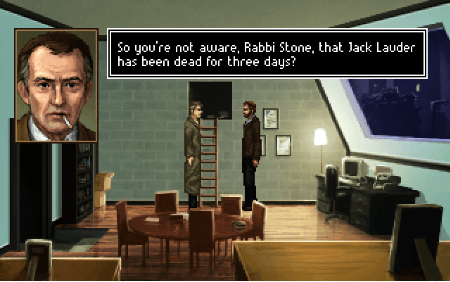
Why play it: Few murder mysteries put a rabbi, Jewish ethics and religious argument at the centre of the investigation. 

For: mystery readers and people who enjoy story and conversation more than fast action. 

(Image source: wadjeteyegames.com)

Piposh 

2021 · Israel · Guillotine · Hebrew-language comedy adventure 

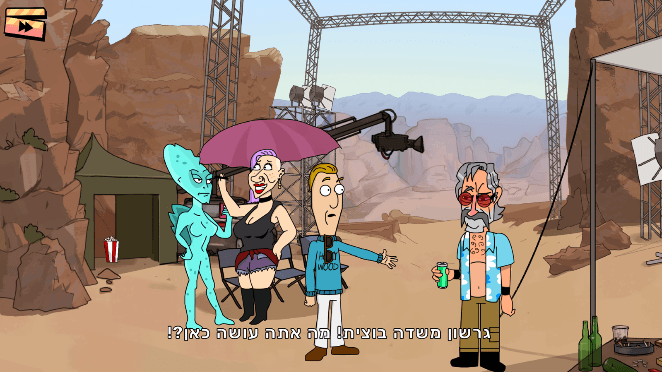
Herzi Piposh is a talentless actor who finally lands a role in a science-fiction movie. Unfortunately, he is playing an alien corpse. 

Instead of staying dead in the background, Piposh tries to manipulate his way into a bigger role, schmoozing with the film crew and interfering with the production. 

The 2021 game revived an Israeli comedy-adventure videogame series created by brothers Renan and Roy Gluzman in the late 1990s. Its humour, performers, Hebrew dialogue and cultural references are aimed squarely at an Israeli audience. 

Piposh is an example of an Israeli game in which Israel is not a battlefield or history lesson; it is simply the setting for an absurd show-business comedy. The game is entirely in Hebrew. 

Why play it: It offers something rarely accessible to overseas audiences — a videogame made primarily to make Israelis laugh at themselves. 

For: Hebrew speakers, comedy fans and players who enjoy character-driven adventures. 

(Image source: piposh.itch.io)

Unpacking 

2021 · Brisbane · Witch Beam · Puzzle game about moving house 

There is almost no dialogue in Unpacking. Instead, players learn about a woman by opening her moving boxes and deciding where her possessions belong. 

Across eight moves, childhood objects give way to adult belongings and new homes. Among them are a dreidel, menorah, hamsa and mezuzahs. 

Creative director Wren Brier is culturally Jewish and says that part of her identity “felt important to include in the game”. 

The game's official promotion focuses on the wider idea of discovering an unseen character through her possessions rather than foregrounding her Jewishness. The Jewish objects are encountered in the same way as books, clothes, kitchenware and childhood toys. 

Why play it: The player discovers an entire life without being told the story directly. Jewish identity is something you notice by paying attention. 

For: puzzle fans, people who enjoy organising spaces and readers who normally assume videogames are not for them. 

(Image Source: unpackinggame.com)

The Light in the Darkness 

2023 · Los Angeles · Luc Bernard / Voices of the Forgotten · Holocaust narrative 

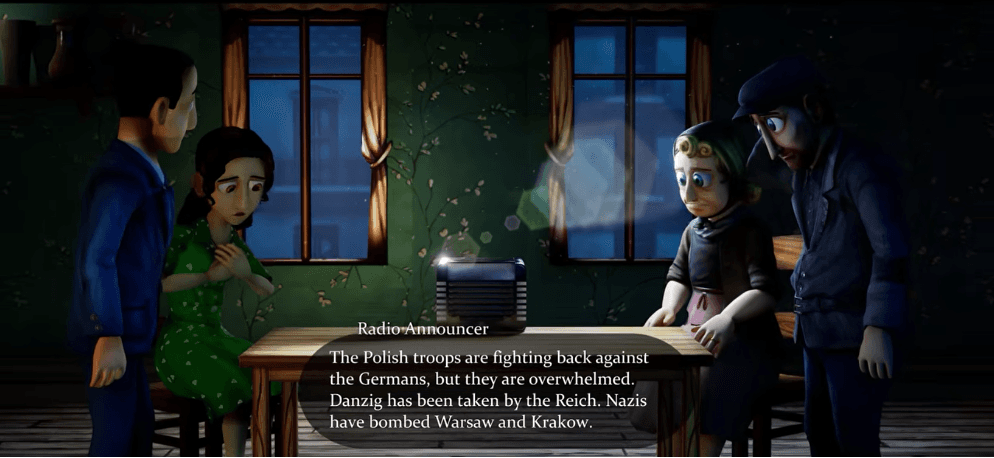
The Light in the Darkness follows a Polish-Jewish family living in France as antisemitic laws, discrimination and Nazi occupation progressively close around them. 

Instead of playing as a soldier, the player experiences the period through a Jewish civilian family. 

Director Luc Bernard founded Voices of the Forgotten, a Los Angeles-based nonprofit devoted to Holocaust education through games and digital storytelling. Its promotion of The Light in the Darkness is explicitly educational: the organisation describes its purpose as preserving Holocaust memory and reaching younger audiences through interactive media. 

The original game was released free, and a 2026 Director's Cut expanded the story, environments and presentation while keeping the Holocaust-remembrance mission at its centre. 

Why play it: It approaches the familiar history of the Holocaust through civilian experience rather than the combat mechanics common to Second World War games. 

For: people interested in historical narratives, Holocaust education and interactive storytelling. 

(Image Source: voicesoftheforgotten.com)

Emil: A Hero's Journey – Prologue 

2024 · Israel · Ohad Tadmor / Starkids Studios · Cinematic puzzle adventure 

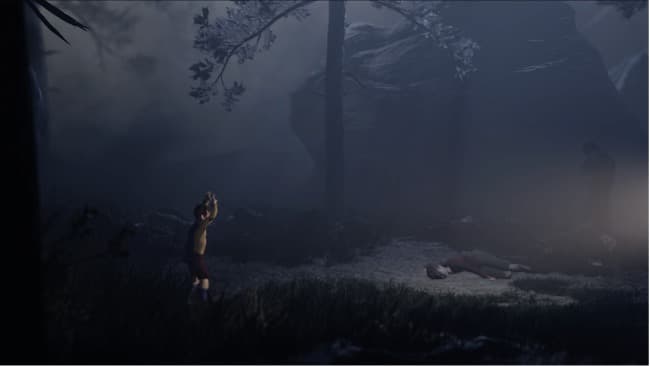
Israeli developer Ohad Tadmor began Emil: A Hero's Journey with the story of his grandfather, who survived the Holocaust alone as a child. 

After Nazi forces take his father away, the young protagonist sets out to find him, with the player guiding him through dangerous environments and solving problems along the way. 

The project openly presents its connection to Holocaust testimony. Tadmor describes it as Jewish cultural work in “the same broad cultural space as films, documentaries and literature”, but in a medium “spoken more fluently by a younger generation”. 

The free prologue was released in March 2024 and is described publicly as being inspired by real Second World War testimony. 

Why play it: A family survival story normally encountered as testimony becomes a world through which the player has to guide a child. 

For: players interested in cinematic stories, puzzles and history. 

(Image source: store.steampowered.com)

The Ghost and the Golem 

2024 · Benjamin Rosenbaum / Choice of Games · Jewish historical fantasy 

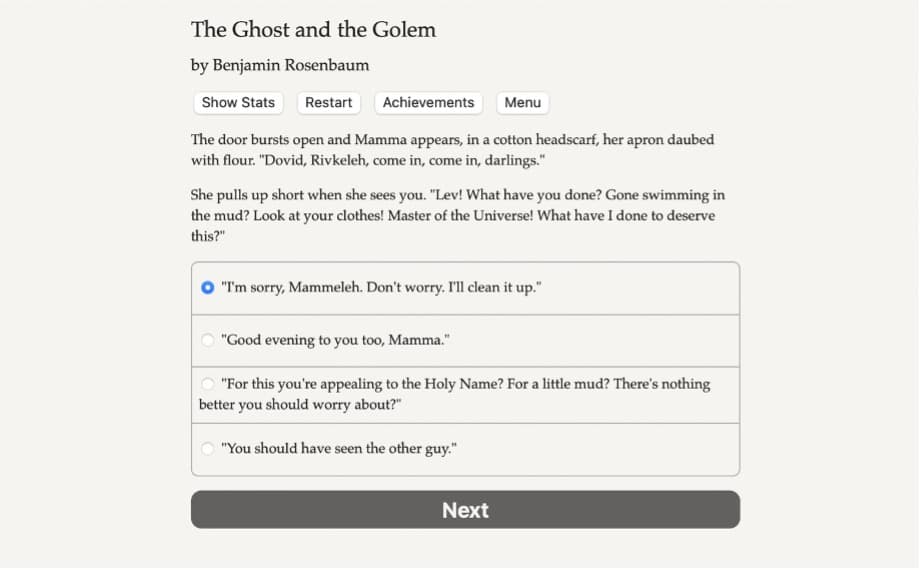
The Ghost and the Golem takes place in a Jewish village on the Polish-Ukrainian border in 1881. There are matchmakers, weddings, synagogue study, klezmer musicians, political arguments, pogroms, demons and, potentially, a golem. 

There are no graphics or sound effects. Instead, Benjamin Rosenbaum's game contains about 450,000 words and hundreds of choices. Players determine relationships, beliefs and alliances as the story develops. 

Its Jewish identity is central to its promotion: publisher Choice of Games calls it a Jewish historical fantasy. Rosenbaum researched the setting down to details of Jewish ritual and the calendar, concluding there was only one Sunday in May 1881 on which the story could plausibly begin. 

It was later named a finalist for the Nebula Award for game writing. 

Why play it: It offers the depth of a long historical novel while allowing the reader to decide what its Jewish protagonist believes and does. 

For: novel readers, folklore fans and people who prefer choices to hand-eye coordination. 

(Image source: store.steampowered.com) 

Perfect Tides: Station to Station 

2026 · Philadelphia · Meredith Gran / Three Bees · Coming-of-age adventure 

Mara Whitefish is 18, leaving home and trying to become a writer. 

Perfect Tides: Station to Station follows her through friendships, relationships, work, creative ambition and the instability of early adulthood. Mara is also Jewish. 

Creator Meredith Gran says Mara's Jewishness cannot be separated from the larger coming-of-age story. “There's so much space for silence and the mundane in games,” Gran says. “You can ‘live’ in that world at your own pace.” 

Philadelphia studio Three Bees promotes the game primarily as a story about the “momentum and whiplash” of young adulthood rather than foregrounding Mara's Jewish identity. 

Melbourne readers can try it during Melbourne International Games Week, when it will be part of ACMI's Games Week Showcase from 3-11 October. 

Why play it: It lets a Jewish character have a story about becoming an adult without requiring her Jewishness to become the problem she must solve. 

For: coming-of-age fiction readers, narrative-game fans and anyone nostalgic for the early 2000s. 

(Image source: perfect-tides.com)

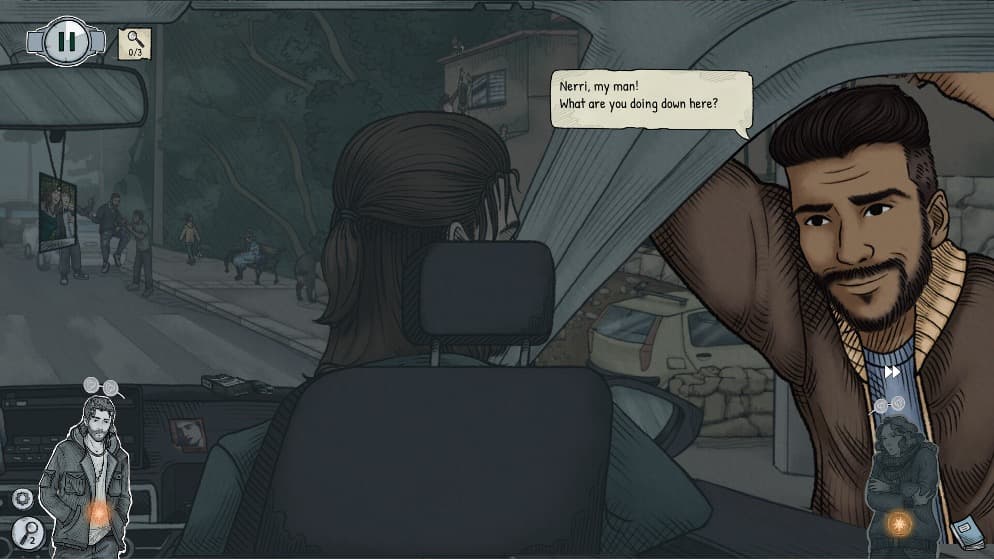
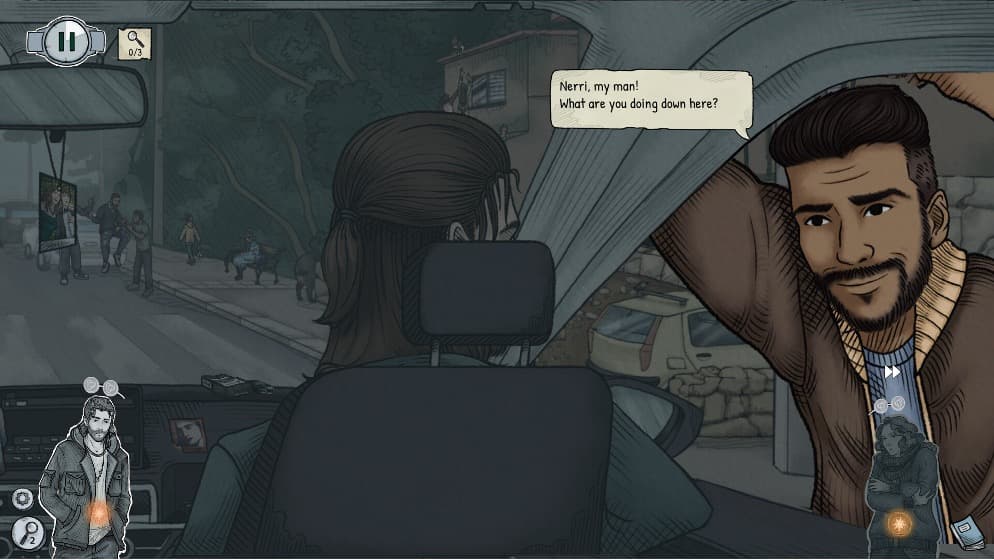
Haifa 

2026 · Haifa, Israel · Team Ashan · Hidden-object story 

Haifa follows a small group of friends searching the city for someone they have lost during wartime. 

Players examine hand-drawn streets, homes and other locations for clues and significant objects. Some discoveries comfort the characters; others bring back painful memories as the mystery develops. 

Israeli independent studio Team Ashan developed the game around real locations in Haifa. The game is Israeli rather than explicitly Jewish. Its creators promote it as a story about friendship, emotional scars and maintaining hope during war, not as a work about Jewish religion or identity. 

Rather than combat, the player spends the game searching, noticing and piecing together what happened. 

Why play it: It presents an Israeli city as a lived-in home rather than simply a location on a news map. 

For: hidden-object fans and players who prefer illustrated, character-led stories to action. 

(Image source: store.steampowered.com)
You might also like
  • Most Israeli Jews untroubled by reports of Gaza famine, survey finds
    Shahar Burla
  • Binge the best new Jewish TV
    Ruby Kraner-Tucci
  • LISTEN: Video game aims to raise awareness of the Holocaust experience
    TJI Pick
logomark.67a07ee3
We believe in the free flow of information

Republish our articles for free, online or in print, by using our Creative Commons licence

You might also like

    JA06
    FeatureArts & Culture

    From Bondi to the Tree of Life

    Gideon Cohen
    melbourne jewish book week
    VideoArts & Culture

    Highlights from Melbourne Jewish Book Week

    The Jewish Independent
    Generation Change: Rachel Moshel
    Generation ChangeInterviewArts & Culture

    Rachel Moshel: Creating a space for Jewish art and joy

    Gideon Cohen

About the author

Jarod Rhine-Davis

Jarod Rhine-Davis

Jarod Rhine-Davis is a Melbourne-based Jewish LGBTQ+ community leader and founder of Jewmos, a grassroots initiative creating spaces for queer Jews to connect, celebrate, and explore identity. Through his work, he advocates for inclusion and belonging at the intersection of Jewish and LGBTQ+ life. He works at The Jewish Independent, helping produce community events.

More from the author

NewsAustralia

Melbourne Chevra Kadisha implicitly recognises LGBTQ+ families

FeatureLifestyle

Surrogate families battle fine print under both Australian and Jewish law

NewsIsrael

LGBT asylum seekers caught between Palestinian violence and Israeli bureaucracy

FeatureLifestyle

The right to an ordinary Jewish life