Aa
  • Read, Watch, Listen
  • TJI Series
  • Community Action
  • Events
  • Zedi
Follow us and continue the conversation
  • LinkedIn
  • Instagram
  • FaceBook
  • X
  • YouTube
Test yourself with the TJI Quiz!

Adjust size of text

Aa

Follow us and continue the conversation

  • LinkedIn
  • Instagram
  • FaceBook
  • X
  • YouTube

Your saved articles

You haven't saved any articles

What are you looking for?

Original reporting, insightful analysis and diverse views, delivered straight to your inbox

  • LinkedIn
  • Instagram
  • FaceBook
  • X
  • YouTube
Your support fuels our mission to inform, entertain and inspire.

The Jewish Independent is bound by the Standards of Practice of the Australian Press Council. If you believe the Standards may have been breached, you may approach The Jewish Independent or make a complaint to the Australian Press Council in writing at www.presscouncil.org.au. The Council may also be contacted on 1800 025 712.

  • Our Story
  • Contact us
  • Our Team
  • Support us
  • Guidelines
  • Pitch your idea
  • Republishing us
  • Community Action
  • Our Awards
  • LinkedIn
  • Instagram
  • FaceBook
  • X
  • YouTube
Aboriginal FlagTorres Strait Islanders Flag

The Jewish Independent acknowledges Aboriginal and Torres Strait Islander peoples as the Traditional Owners and Custodians of Country throughout Australia. We pay our respects to Elders past and present, and strive to honour their rich history of storytelling in our work and mission.

© The Jewish Independent 2026All Rights Reserved
Website design and development by Your Creative, MelbourneTerms & ConditionsPrivacy Policy
HomeRead, Watch, ListenAustralia
NewsAustralia

Israel seeks Australian doctors amid critical shortage

Israel aims to attract 2000 international doctors over the next five years, including mental health and trauma specialists.
Gideon Cohen
Print this
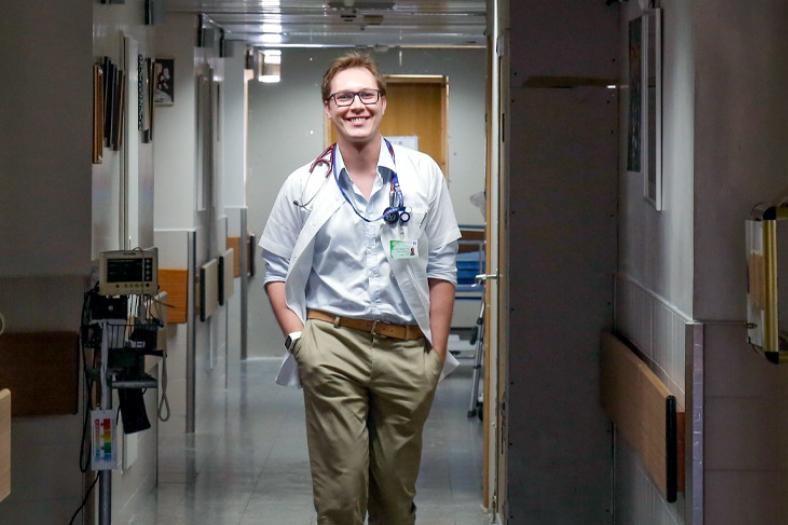
Israeli doctor Anatoly Budylev walks hospital corridors

Like many Israeli doctors Anatoly Budylev immigrated from Russia. Now Israel is looking further afield for migrant doctors (Jewish Agency)

Published: 3 November 2025

Last updated: 7 November 2025

Israel is running an international medical migration program which hopes to attract doctors to fill a burgeoning shortage in the Israeli healthcare system.  

The International Medical Aliyah Program (IMAP) held MedEx events in Sydney and Melbourne last week, as part of a campaign to recruit 2000 international doctors over five years, particularly for the Negev and Galilee regions.

Over 100 doctors attended the MedEx events, where they were offered a notary for credential recognition, advice on grants, licensing, and relocation; and online job interviews with leading healthcare institutions in Israel, including Hadassah, Rambam, Kaplan, and the Galilee Medical Center. 

Previous MedEx events have taken place in Paris, New York, Buenos Aires, and London and, since the beginning of 2024, approximately 650 doctors have immigrated to Israel. Knesset member Michael Biton, who was in Australia for the events, highlighted the need for human resources to help Israel recover from the Gaza war, including mental health and trauma specialists. 

“We need psychiatrists. We need psychologists. We need many professionals that deal with trauma, because we have hundreds and thousands of Israelis citizens and soldiers that have experienced trauma over two years, and they need treatment. So, all the professionals around the issue of trauma, psychology, resilience, all those professionals will be in high demand in Israel.” 
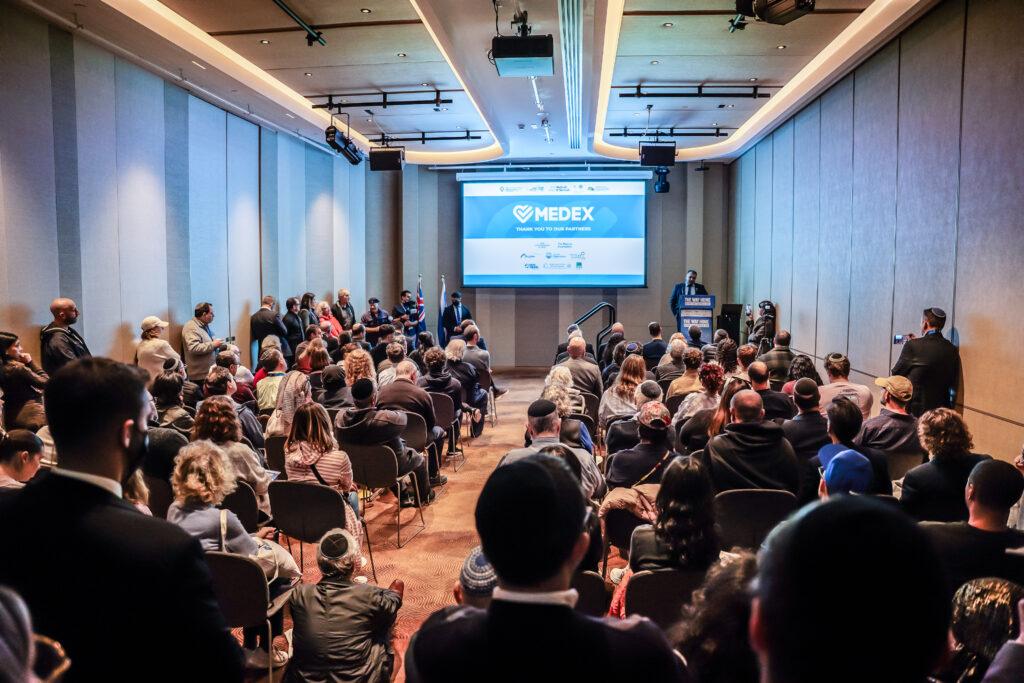
Israel's Minister of Aliyah and Integration, Ofir Sofer, speaks at the Melbourne MedEx event (Scott Ehler / Active Star Productions Pty Ltd. Reproduction)

Reliance on migration 

Israel has long relied on migration to boost its medical ranks.  In the 1990s, the wave of one million migrants from the former Soviet Union was characterised by a cohort of highly skilled professionals, including an estimated 14,000 doctors. 

But many of those doctors are now reaching retirement age. A recent study published by the Organisation for Economic Co-operation and Development (OECD) showed that Israel has one of the highest rates of physicians over 55 years old. 
 
“There is a huge demand now for doctors, because we had a wave of immigrants, one million Russians, who came in the 90s, and they are all retired or retiring. We’re going to have a shortage of doctors and medical professionals,” Biton said. 

Compounding the problem, Israel is tightening its medical regulation. Starting this year, Israel’s Ministry of Health will end its recognition of medical degrees from Eastern European universities, where both Israeli citizens and immigrants have studied. This will be especially detrimental in Israel’s peripheral regions, where over 60% of physicians have studied at these universities. Although the reforms aim to improve the quality of international medical degrees, they willexacerbate the shortage of doctors. 

Why can’t Israel produce its own replacement doctors? 

To replace the doctors retiring, Israel would need to graduate an additional 900 doctors a year, and it would have needed to begin the process 10 years ago.   

But according to the OECD, Israel is ranked as one of the lowest countries per capita to graduate physicians from its medical schools. Only 7 out of 1000 Israeli citizens graduate as doctors, compared to the average 13.5 in other OECD countries. 

Recruiting doctors is much cheaper. Each medical student costs the Israeli government $200,000 to graduate, not including their speciality. Biton said Israel is increasing the number of medical students, but there will be a gap of several years before new doctors are trained and ready to treat patients.  

“This shortage of doctors is crucial to the recovery, the resilience of Israel, and we're going to deal with it from both sides,” says Biton.  

“We’re going to expand the [number of] medical students in Israel, but you also need some new blood and new people that will come immediately with their knowledge, like an emergency solution. In the future, the long-term plan is to create more medical students, but it's going to take 10 years until they are experts and relevant to serve at a high level.” 

Israel’s Minister of Aliyah and Integration Ofir Sofer, who visited Australia for the MedEx events, said he is focussed on making migration process as easy as possible, from providing financial aid for tuition and rent to creating new training programs in doctors’ native languages, while improving Hebrew education. “In the last month, I just moved from the Galilee to Jerusalem, and I feel how it’s so difficult for me and my family to do that, and I didn’t change my culture, and I didn’t change my country,” said Sofer. 

“The message that we want to convey to the community is that aliyah from Australia, and aliyah from all of the diaspora, is important for Israel. And we will do everything to improve the process to make it smooth. We understand that this is a difficult process.”

He added that he was impressed by the enthusiasm of Australians for Israel. “It's amazing what we see in the room, a lot of people that came after two years of war in Israel, and want to come to Israel or are interested in Aliyah.”

MedEx is an initiative of Nefesh B’Nefesh, in partnership with Israel’s Ministry of Aliyah and Integration, Ministry of Health, and Ministry of the Negev, Galilee, and National Resilience, in cooperation with The Jewish Agency for Israel."

You might also like
  • Palestinians in West Bank count the days until they can work again
    Ben Lynfield
  • Coming or going? Israel’s migration equation post Oct 7
    TJI Wrap
  • ‘I can breathe here’: Israelis moving to Thailand
    TJI Pick
logomark.67a07ee3
We believe in the free flow of information

Republish our articles for free, online or in print, by using our Creative Commons licence

You might also like

    Josh Frydenberg
    FeatureAustralia

    Josh Frydenberg weighs political return as he releases his new memoir

    Gideon Cohen
    sydney jewish museum education
    AnalysisAustralia

    The secret to successful Holocaust education

    Lauren Chalk & David Slucki 1
    Posner main
    InterviewAustralia

    ‘For 80 years we lived in a kind of fairyland. It’s over’

    Vic Alhadeff 1

About the author

Gideon Cohen

Gideon Cohen

Gideon Cohen is a Melbourne-based journalist and a content creator and editorial assistant at TJI. He holds a master's degree in journalism from the University of Melbourne and his work has appeared in various publications including Broadsheet and The Jewish Chronicle.

More from the author

InterviewAustralia

The Israelis who flew home to vote

FeatureAustralia

Josh Frydenberg weighs political return as he releases his new memoir

FeatureAustralia

From the footy field to the film festival: the AJAX story onscreen

FeatureAustralia

‘Our children already belong’: Petition calls Jewish schools to cooperate for disabled support