Aa
  • Read, Watch, Listen
  • TJI Series
  • Community Action
  • Events
  • Zedi
Follow us and continue the conversation
  • LinkedIn
  • Instagram
  • FaceBook
  • X
  • YouTube
Test yourself with the TJI Quiz!

Adjust size of text

Aa

Follow us and continue the conversation

  • LinkedIn
  • Instagram
  • FaceBook
  • X
  • YouTube

Your saved articles

You haven't saved any articles

What are you looking for?

Original reporting, insightful analysis and diverse views, delivered straight to your inbox

  • LinkedIn
  • Instagram
  • FaceBook
  • X
  • YouTube
Your support fuels our mission to inform, entertain and inspire.

The Jewish Independent is bound by the Standards of Practice of the Australian Press Council. If you believe the Standards may have been breached, you may approach The Jewish Independent or make a complaint to the Australian Press Council in writing at www.presscouncil.org.au. The Council may also be contacted on 1800 025 712.

  • Our Story
  • Contact us
  • Our Team
  • Support us
  • Guidelines
  • Pitch your idea
  • Republishing us
  • Community Action
  • Our Awards
  • LinkedIn
  • Instagram
  • FaceBook
  • X
  • YouTube
Aboriginal FlagTorres Strait Islanders Flag

The Jewish Independent acknowledges Aboriginal and Torres Strait Islander peoples as the Traditional Owners and Custodians of Country throughout Australia. We pay our respects to Elders past and present, and strive to honour their rich history of storytelling in our work and mission.

© The Jewish Independent 2026All Rights Reserved
Website design and development by Your Creative, MelbourneTerms & ConditionsPrivacy Policy
HomeRead, Watch, ListenIsrael
Israel Votes 2026ExplainerIsrael

Israel votes on the 27th. But the election may start on the 28th.

Sharon Offenberger
Print this

Published: 14 October 2026

Last updated: 14 October 2026

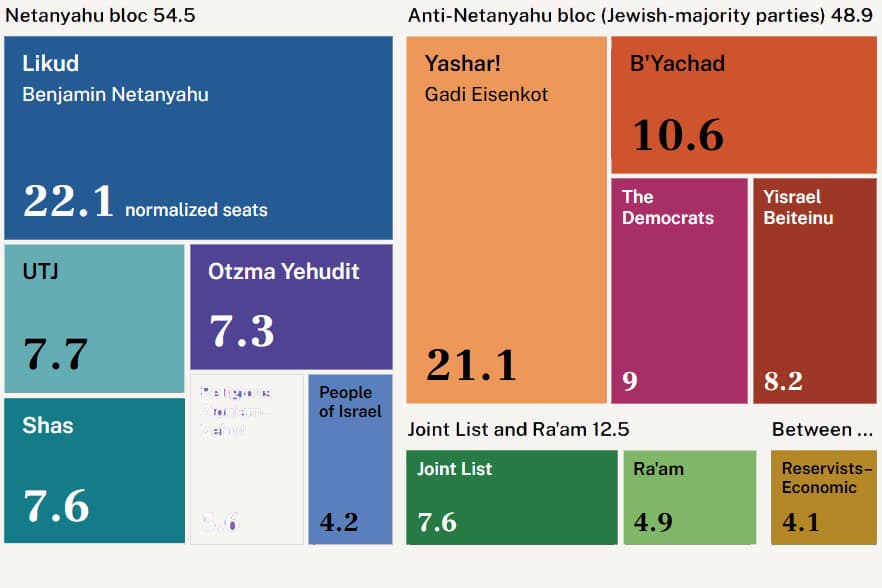
Two weeks out from the 27 October election, and Israel has seen this movie before. Netanyahu's coalition and the opposition are more or less tied, and neither bloc has a path to a majority without the Arab parties.

The déjà vu is real. Between 2019 and 2022, Israel went through four deadlocked elections. But this time there is one major difference. In previous deadlocks, a small change in voting could have delivered a coalition.

This time, both blocs are so far short of a majority that a seat here and there won't get either of them over the line.

So, what could tip the balance? Aside from campaigning, security disasters and social media, here are three things to watch for.

1. Voter Turnout. Voting isn't compulsory in Israel, and turnout rises and falls from one election to the next. It also varies sharply between communities. Jewish Israeli voters average around 68%; the ultra-Orthodox (Haredi) turn out in much higher numbers, and Arab voters in much lower ones. When the blocs are this close, who stays home matters as much as who votes, and the parties intentionally try to rile up voters out of political apathy.

2. Small parties and the threshold. A party needs 3.25% of the vote – four seats – to enter the Knesset. Several new and small parties are hovering around that line.. Their fate could determine the whole election.

But it isn't only their fate at stake; it's the whole election's. Ofer Winter's far right Amcha Israel (People of Israel) is currently polling above the threshold. If he succeeds it may add additional seats to the current right-wing coalition at the expense of the opposition. Other small and new parties may not be so lucky, and previous centre-bloc leader Benny Gantz’s Blue and White is polling around 1 seat. He is unlikely to make it into the Knesset and many on his side of politics thinks he is wasting precious votes by continuing his campaign.

3. Vote sharing and waster votes. Two parties can enter a vote sharing agreement so that excess votes can be distributed in the event that they do not make up a full Knesset seat. Vote-sharing agreements must be finalised by 16 October, and the pairings are largely set: Likud with Smotrich, Bennett/Lapid with Lieberman, Eisenkot with Yair Golan's Democrats, the ultra-Orthodox parties with each other, and the Arab parties with their own arrangements. The one still left in the cold is Ben Gvir, who is talking to Ofer Winter. The big risk is that if a party fails to reach 3.25%, none of its votes count towards the vote sharing deal.

So, what happens next?

If neither bloc has a path to a majority, three outcomes are the likely ones:

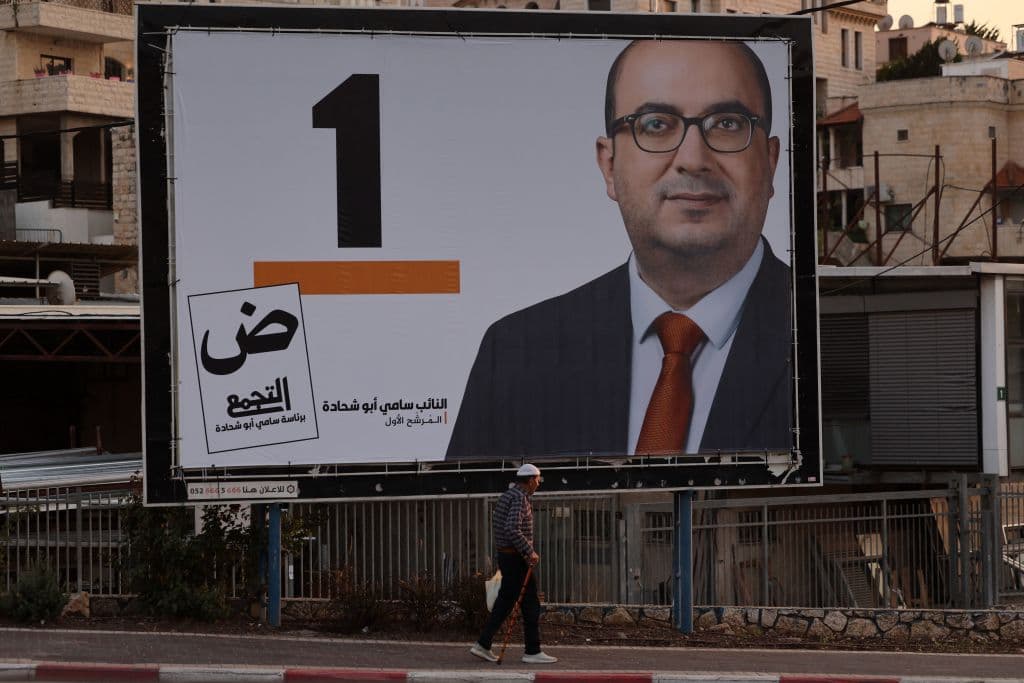
1. An alliance with the Arab parties – plural. The Arab parties are now the potential kingmakers, a role once held by the ultra-Orthodox. So far, only the opposition has entertained the idea, and only with Mansour Abbas' Ra'am, the conservative Islamist party which has seeks to become part of Israel’s government. On current polling, even that isn't enough to take the opposition to 61 seats. It would need the other Arab parties, which are running together as The Joint List – an alliance of Arab parties spanning Palestinian nationalism to socialism. That is a much bigger ask. Netanyahu and his ilk are campaigning hard against the Arab alliance, because being anti-Arab riles up their base, and ‘kashering’ the Arab parties would benefit the opposition too much.

2. An alliance with each other – the "Zionist bloc". Naftali Bennett has floated a big tent of his own: Netanyahu could serve as a minister in a Bennett cabinet, if he accepts a state inquiry into October 7, universal military conscription and a constitution to protect Israel’s democracy. Eisenkott, Lieberman and Golan have insisted Netanyahu, but not necessarily Likud, must be excluded from the next government. While Netanyahu calls his opponents ‘traitors’ in public, he would be secretly happy with a broad unity government – with him at the top, of course.

3. Repeat elections. If neither alliance comes together, Israelis may be heading back to the polls, with the current government staying on as a caretaker with limited powers. The last round of deadlocked elections was close. This time the gap is large – and if it holds, and the refusal to sit with the Arab parties, or with each other, continues, it is hard to see what another election would change. Again, this option suits Netanyahu who likes a holding pattern that keeps him in power.

With both blocs current polling far below the 61 seats required, there are likely to be bitter pills to swallow in all directions. Israel votes on the 27th, but the real campaign may start on the 28th.

Follow our podcast Politica – Israeli Politics Explained for weekly updates ahead of the election.

View Post↗

You might also like
  • Planned non-Zionist Jewish school part of a growing US trend
    Shira Li Bartov
  • Terror plot to kill hundreds of Arab Israelis thwarted
    Ben Lynfield
  • British Greens equate Zionism with racism
    Ruth Eglash
logomark.67a07ee3
We believe in the free flow of information

Republish our articles for free, online or in print, by using our Creative Commons licence

You might also like

    Israel Marks Anniversary Of Hamas October 7 Attacks
    OpinionIsrael

    Even on October 7, we are not united

    Ittay Flescher 1
    Sami Abu Shehadeh
    AnalysisIsrael

    Arab party ban won’t hold but reveals a changed Israel

    Ben Lynfield
    party map copy
    Israel Votes 2026NewsIsrael

    Parties, polls, processes: detailed election guide

    The Jewish Independent

About the author

Sharon Offenberger