Aa
  • Read, Watch, Listen
  • TJI Series
  • Community Action
  • Events
  • Zedi
Follow us and continue the conversation
  • LinkedIn
  • Instagram
  • FaceBook
  • X
  • YouTube
Test yourself with the TJI Quiz!

Adjust size of text

Aa

Follow us and continue the conversation

  • LinkedIn
  • Instagram
  • FaceBook
  • X
  • YouTube

Your saved articles

You haven't saved any articles

What are you looking for?

Original reporting, insightful analysis and diverse views, delivered straight to your inbox

  • LinkedIn
  • Instagram
  • FaceBook
  • X
  • YouTube
Your support fuels our mission to inform, entertain and inspire.

The Jewish Independent is bound by the Standards of Practice of the Australian Press Council. If you believe the Standards may have been breached, you may approach The Jewish Independent or make a complaint to the Australian Press Council in writing at www.presscouncil.org.au. The Council may also be contacted on 1800 025 712.

  • Our Story
  • Contact us
  • Our Team
  • Support us
  • Guidelines
  • Pitch your idea
  • Republishing us
  • Community Action
  • Our Awards
  • LinkedIn
  • Instagram
  • FaceBook
  • X
  • YouTube
Aboriginal FlagTorres Strait Islanders Flag

The Jewish Independent acknowledges Aboriginal and Torres Strait Islander peoples as the Traditional Owners and Custodians of Country throughout Australia. We pay our respects to Elders past and present, and strive to honour their rich history of storytelling in our work and mission.

© The Jewish Independent 2026All Rights Reserved
Website design and development by Your Creative, MelbourneTerms & ConditionsPrivacy Policy
HomeRead, Watch, ListenIsrael
OpinionIsrael

Even on October 7, we are not united

Three years on memorial ceremonies for victims of Oct 7 expose the fault lines in Israeli society.
Ittay Flescher
Print this
Israel Marks Anniversary Of Hamas October 7 Attacks

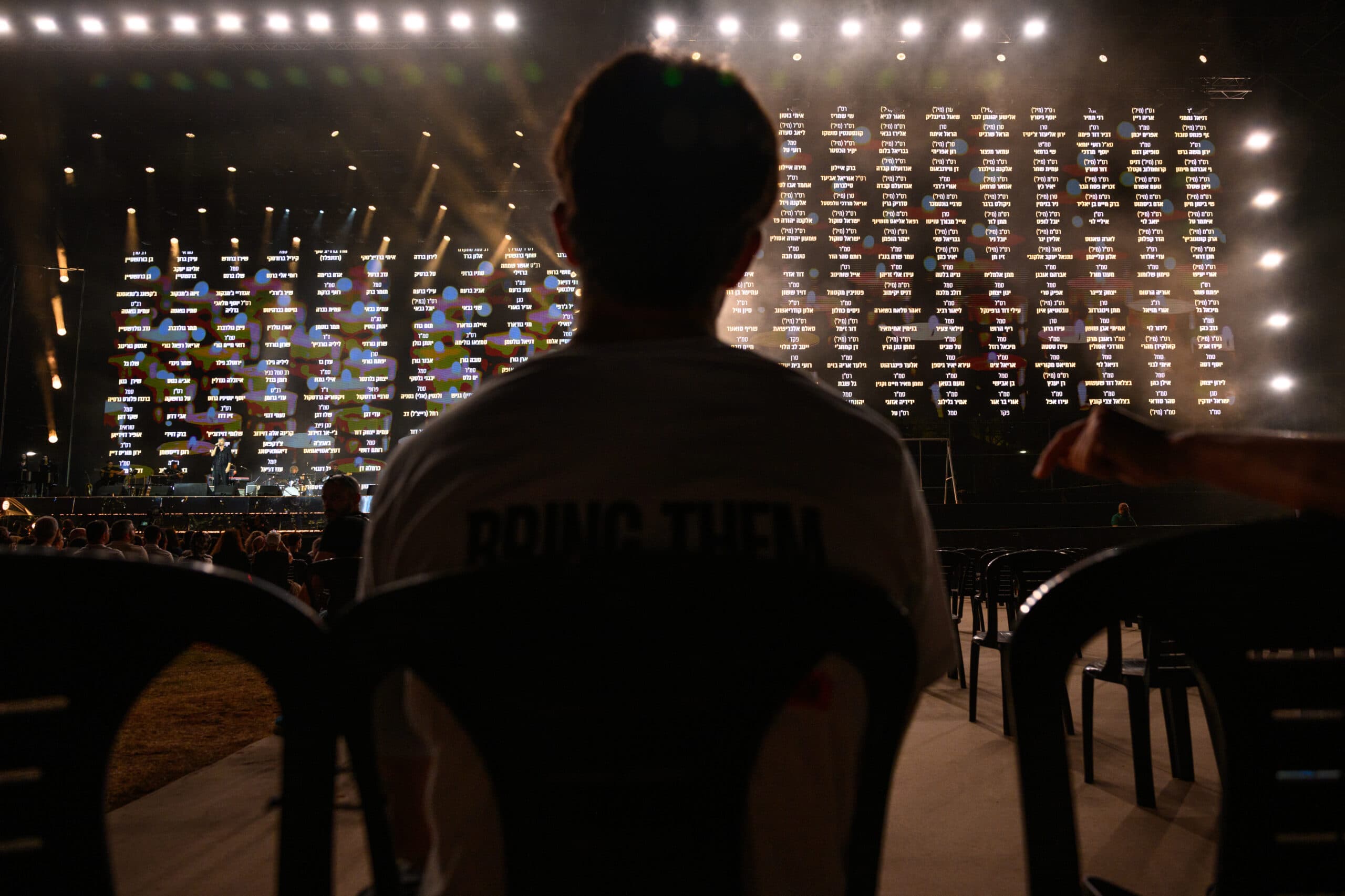
A person watches the names of people killed on October 7th d during the National ceremony commemorating the first anniversary since the attacks at Yarkon Park on October 07, 2024 in Tel Aviv, Israel. (Photo by Alexi J. Rosenfeld/Getty Images)

Published: 1 October 2026

Last updated: 1 October 2026

It has been often said that the Israel was most divided was October 6, 2023 and the day Israel was most united was October 8.  

On that dark Saturday, all Israelis were under attack, children and the elderly, secular and religious, Jewish and Arab, right and left.  

It would follow that a national day of remembrance for October 7 would serve as a unifying sanctuary for all of us. Yet over the past two years, the opposite has happened, and as we approach the third anniversary next week, the divide remains stark. 

For the first anniversary in 2024, the Netanyahu government tasked Minister Miri Regev with directing an official state ceremony in Ofakim, where more than 50 people were murdered. Citing security risks, the government chose to prerecord the ceremony without a live audience. To many, this was a transparent attempt to avoid direct confrontation with grieving families and hostages' relatives, who were incensed by the government's handling of the crisis. 

In response, grassroots movement Kumu Israel ("Rise Up") founded by survivors and families of victims, organised a crowd-funded alternative ceremony at Ganei Yehoshua in Tel Aviv. This public ceremony gave the voices of hostage families centre stage and drew thousands who sought a genuine, collective space to grieve. 

At the second anniversary in 2025, Israel remained a nation in limbo, with 48 hostages still held in Gaza. The official government event, shifted to the Knesset, drew little public interest or viewership. 
Once again, the public gathered in massive numbers, this time at Yarkon Park for Kumu’s civilian memorial. Some 30,000 people filled the grounds. At the centre stood a burned car from the Gaza border settlements surrounded by red crown anemones, alongside a bullet-riddled bomb shelter. Beside the stage, 48 empty yellow chairs served as a haunting reminder of those still held in captivity. 

The defining moment of that ceremony was a sharp speech by Yonatan Shamriz, brother of Alon Shamriz, who was tragically killed by IDF fire in Gaza. Shamriz declared that October 7 is "not just a day of remembrance for the people we lost; it is a day of remembrance for abandonment, lack of leadership, and fleeing responsibility". The ceremony was broadcast live on every major TV network except the right-wing Channel 14, which boycotted the broadcast over its explicit calls for political accountability. 

Now in 2026, as the third anniversary approaches, the government has yet to announce a formal plan. Meanwhile, civil society is stepping up once again. 

Kumu Israel and the October 7 Council have organised a week-long series of memorials and public demonstrations starting Saturday night, October 3, following Simchat Torah 

On Wednesday, October 7, the day will begin at 6:29 a.m. with a national minute of silence, followed by memorial installations and protests in Caesarea, Jerusalem, and the Gaza border region. At 7:00 a.m., activists will gather outside the homes of ministers who served during the 2023 attacks for a public "wake-up call." Shortly after, a protest convoy dubbed the "Path of Abandonment" will head toward Tel Aviv, alongside women’s installations at Trumpeldor Beach and regional convoys converging at Ben Shemen Forest. 

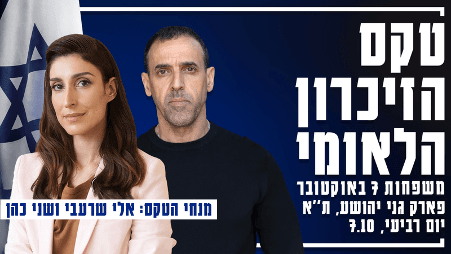
The central civilian ceremony at Ganei Yehoshua will be hosted by two deeply resonant figures: Eli Sharabi, a survivor of Kibbutz Be'eri who was held hostage in Gaza for 491 days and Shani Cohen, the prominent Israeli actress and comedian who has been an outspoken advocate for the hostages' release. The event will be broadcast across the country, including at Hostages Square in Tel Aviv. 

In outlining the agenda of the Memorial, the October 7 council noted: "Three years after Oct. 7, this day must not become just another date on the calendar. Behind the numbers are people, families, and entire lives that were cut short, and behind the disaster, there are still questions the Israeli public deserves answers to." 

The fact that Israelis cannot stand together in a single memorial ceremony three years later lays bare our deepest fractures.  

With an election only three weeks after the anniversary, responsibility for the attack has become a political fault line between Prime Minister Netanyahu. 

On the right, the narrative places the blame on intelligence and security chiefs who failed to alert the Prime Minister in time. This distrust runs so deep that, according to a Maariv poll, nearly 40% of Israelis believe the baseless conspiracy theory of "treason from within" the idea that Israeli security forces aided Hamas, motivated by their hatred of Netanyahu.  

For many others, the blame rests squarely on Netanyahu, who presided over years of policy failure and ignored explicit warnings leading up to that morning.  

As we fight over responsibility, we risk ignoring the most urgent questions about our future: Are Israelis genuinely any safer today than we were three years ago? Has our society learned anything about the dangers of internal polarization, or are we simply accelerating down the same path? How do we engage in honest moral reflection about the destruction and loss of life in Gaza without diluting our own national pain? How do we build a framework for eventual healing, not only among ourselves, but between us and the Palestinians? 

Until we find the courage to confront these questions with honesty, humility, and mutual solidarity, true national recovery will remain out of reach. We owe nothing less to those we lost, those who survived, and those who will inherit the state we build tomorrow. 

Watch a live stream of the Kumu Oct 7 Memorial Ceremony here. 

The Jewish Independent
You might also like
  • Three years after Oct 7: an anniversary of reckoning
    The Jewish Independent
  • Arab party ban won’t hold but reveals a changed Israel
    Ben Lynfield
  • Arab women topple politician accused of sexual harassment in landmark case
    Ben Lynfield
logomark.67a07ee3
We believe in the free flow of information

Republish our articles for free, online or in print, by using our Creative Commons licence

You might also like

    Btselem
    NewsIsrael

    ‘Israel is systemically eliminating Palestinian collective life’:  Israeli human rights report

    Deborah Stone 2
    Oded, one of five protaganists, in the film Rising: Voices of Hope and Protest speaks into a public address system and raises his arm in protest.
    Israel Votes 2026OpinionIsrael

    The leadership a wounded society needs

    Esther Takac 2
    Woman with land and houses behind her
    NewsAustralia

    Australia to increase sanctions against West Bank settlements

    Deborah Stone 2

Comments

No comments on this article yet. Be the first to add your thoughts.

About the author

Ittay Flescher

Ittay Flescher

Ittay Flescher is the Jerusalem Correspondent for The Jewish Independent. For over twenty years, he has worked as an educator, journalist, and peacebuilder in Melbourne and Jerusalem. His book, The Holy and the Broken: A Cry for Israeli-Palestinian Peace from a Land that Must Be Shared, was longlisted for the 2025 Walkley Book Awards.

More from the author

AnalysisArts & Culture

Fauda and the illusion of vengeance

AnalysisIsrael

What ‘Zionism’ means in Israel:  it’s not what you think

AnalysisIsrael

From haven to hotbed: how Israel’s perception of Australia has changed