Aa
  • Read, Watch, Listen
  • TJI Series
  • Community Action
  • Events
  • Zedi
Follow us and continue the conversation
  • LinkedIn
  • Instagram
  • FaceBook
  • X
  • YouTube
Test yourself with the TJI Quiz!

Adjust size of text

Aa

Follow us and continue the conversation

  • LinkedIn
  • Instagram
  • FaceBook
  • X
  • YouTube

Your saved articles

You haven't saved any articles

What are you looking for?

Original reporting, insightful analysis and diverse views, delivered straight to your inbox

  • LinkedIn
  • Instagram
  • FaceBook
  • X
  • YouTube
Your support fuels our mission to inform, entertain and inspire.

The Jewish Independent is bound by the Standards of Practice of the Australian Press Council. If you believe the Standards may have been breached, you may approach The Jewish Independent or make a complaint to the Australian Press Council in writing at www.presscouncil.org.au. The Council may also be contacted on 1800 025 712.

  • Our Story
  • Contact us
  • Our Team
  • Support us
  • Guidelines
  • Pitch your idea
  • Republishing us
  • Community Action
  • Our Awards
  • LinkedIn
  • Instagram
  • FaceBook
  • X
  • YouTube
Aboriginal FlagTorres Strait Islanders Flag

The Jewish Independent acknowledges Aboriginal and Torres Strait Islander peoples as the Traditional Owners and Custodians of Country throughout Australia. We pay our respects to Elders past and present, and strive to honour their rich history of storytelling in our work and mission.

© The Jewish Independent 2026All Rights Reserved
Website design and development by Your Creative, MelbourneTerms & ConditionsPrivacy Policy
HomeRead, Watch, ListenArts & Culture
Israel Hamas WarAnalysisArts & CultureIsrael

Fauda and the illusion of vengeance

The new season Israel's most famous cultural export confronts an unflinching truth about trauma and retaliation.
Ittay Flescher
Print this
Fauda

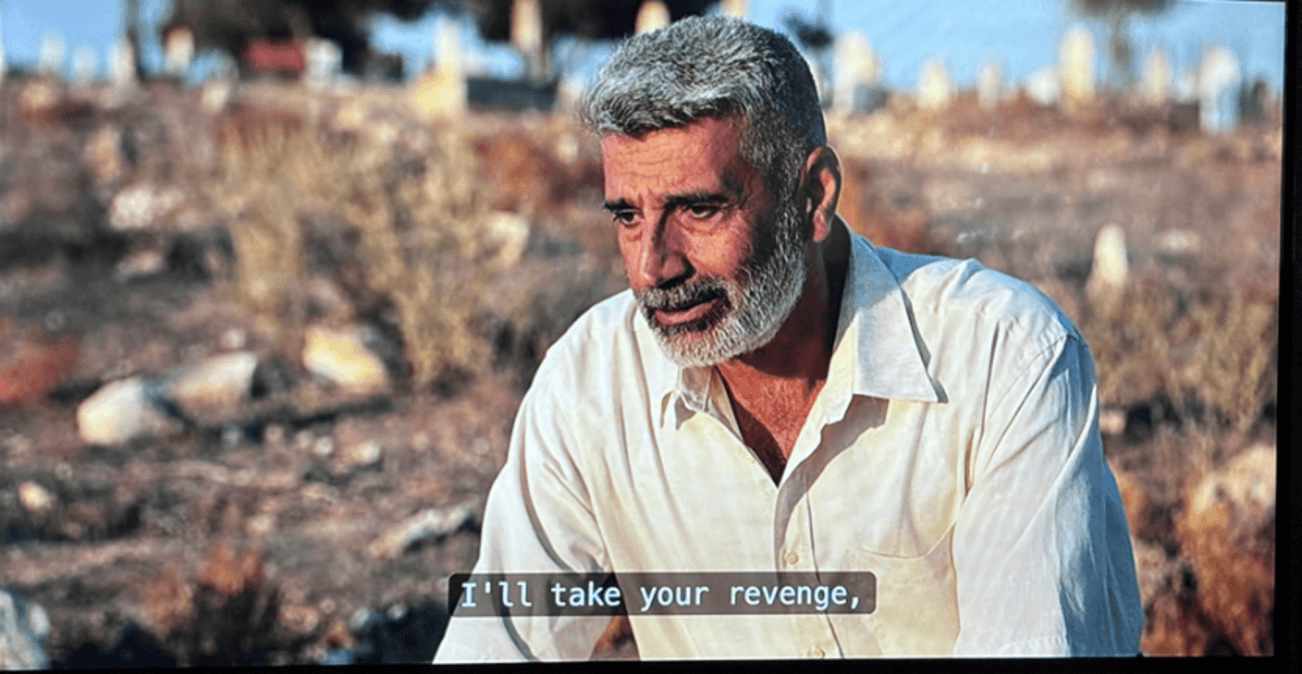
Fauda character Salem vows revenge for his son Yusef, who was killed by Hamas on October 7 (Fauda)

Published: 22 September 2026

Last updated: 22 September 2026

Season 1 of the Israeli hit show Fauda introduced millions of viewers worldwide to the title Arabic word meaning "chaos" or "anarchy."

Season 5 introduces another defining term: tha’r, or blood revenge. The opening seconds of the premiere spell it out explicitly, defining tha’r as "restoring violated honour or avenging injustice." Though the Israeli and Palestinian characters originate from vastly different worlds, revenge becomes the single, devastating thread that drives them all.

This shared obsession transcends borders, factions, and personal backgrounds. Salem demands blood for his son Yusef, a Bedouin worker killed on a kibbutz on October 7 trying to defend a Jewish family. Eli is propelled by blinding, personal agony after his wife and two teenage children are murdered in their home. Palestinian characters and their European allies are equally consumed by a drive for retaliation against Israel.

While Fauda primarily examines trauma through the fear-based lens of PTSD, NAZA captures the soul-crushing weight of moral injury,

The series dismantles the tragic myth powering each character. It enforces a painful realization: though everyone craves revenge, it offers no catharsis, cannot restore lost loved ones, and resolves nothing. Instead, it operates as a self-destructive engine that hollows out those who seek it, consuming their humanity until nothing remains.

The protagonist, Doron Kavillio (Lior Raz), embodies this destruction through his ongoing mental distress. Urged by his wife Gali to attend therapy, Doron suffers from severe memory loss, blacking out on eight hours of his life from October 7. This dissociation illustrates classic Post-Traumatic Stress Disorder (PTSD), a fear-based threat response where the brain attempts to shield itself from overwhelming horror.
Towards the end of the series, the narrative reveals those missing hours in two meticulous flashback episodes to the morning of October 7, depicting Doron’s desperate attempt to rescue partygoers at the Nova festival and Eli’s family. He is tragically unsuccessful on both fronts. These episodes likely represent the most widely viewed cinematic account of October 7 to date, with the series reaching the top 10 in 43 countries, including number 1 in Lebanon.

The 20-minute scene of Hamas gunmen banging on the door of a mamad (shelter) while a young kibbutz family tries with all their might to hold it shut, only to later face an attempt to burn them alive, are images I will never unsee. It’s hard not to see myself in that situation. Imagining what if anything I would differently to save those whom I love most in the world.

Because of the visceral nature in which October 7 is depicted, many Israelis viewed the season as a Hasbara (public relations) victory, providing global audiences with context for Israel's severe military actions in Gaza.

Yet, the exact same week Fauda debuted, Naza was also released, a documentary by Yuval Abraham and Rachel Szor featuring interviews with 24 anonymous military and intelligence insiders from Unit 8200.

Where Fauda omits images of the immense destruction inside Gaza, Naza offers little graphic detail of the horror inside Israel on October 7. These parallel omissions highlight a complementary psychological dynamic: Moral Injury. Coined by psychiatrist Dr. Jonathan Shay in his seminal study of combat veterans, moral injury occurs when individuals commit, witness, or fail to prevent acts that deeply violate their moral codes, or when they experience profound systemic betrayal.

While Fauda primarily examines trauma through the fear-based lens of PTSD, NAZA captures the soul-crushing weight of moral injury, showcasing young Israelis on the rooftops of Tel Aviv struggling with their conscience over state-sanctioned destruction according to director Yuval Avraham. Ultimately, Doron’s arc in Fauda demonstrates how untreated PTSD and moral injury collapse into one another, leaving individuals unable to reconcile their actions or failures with their basic sense of humanity.

In the thousands of hours of Israeli Palestinian dialogue, I have facilitated in Jerusalem over the past eight years, I have learned that when you allow vengeance to guide your hands, you do not defeat chaos, you surrender to it.

Fauda Season 5 is not easy to watch, and I don’t recommend it for anyone who wants to sleep soundly at night. It strips away all romanticism surrounding retribution, forcing its characters to face a brutal reality: fighting for revenge will never save what you have lost; it will only consume whatever you have left.

You might also like
  • Israel election explainer: the main parties
    Shahar Burla
  • Sanctioning settlements is a defence of Israel, not an attack
    Elisheva Madar
  • Sanctions must influence, not just perform disapproval
    Adam Slonim
logomark.67a07ee3
We believe in the free flow of information

Republish our articles for free, online or in print, by using our Creative Commons licence

You might also like

    jiff26-cancelled.jpg
    ReflectionArts & Culture

    On despair: A reflection after watching ‘Cancelled’

    Deborah Stone
    ISRAEL-LGBTQ-PRIDE-PARADE-PALESTINIAN-CONFLICT-HOSTAGES
    NewsIsrael

    LGBT asylum seekers caught between Palestinian violence and Israeli bureaucracy

    Jarod Rhine-Davis
    Rozana Beit Oula
    PeacebuildingOpinionIsrael

    Peacebuilding through the eyes of a sceptic

    Ron Finkel

About the author

Ittay Flescher

Ittay Flescher

Ittay Flescher is the Jerusalem Correspondent for The Jewish Independent. For over twenty years, he has worked as an educator, journalist, and peacebuilder in Melbourne and Jerusalem. His book, The Holy and the Broken: A Cry for Israeli-Palestinian Peace from a Land that Must Be Shared, was longlisted for the 2025 Walkley Book Awards.

More from the author

AnalysisIsrael

What ‘Zionism’ means in Israel:  it’s not what you think

AnalysisIsrael

From haven to hotbed: how Israel’s perception of Australia has changed

FeatureIsrael

New wave of Russian-speaking migrants may be key to Israel’s future

AnalysisIsrael

How a new International Peace Fund could make a tangible difference

Comments

No comments on this article yet. Be the first to add your thoughts.